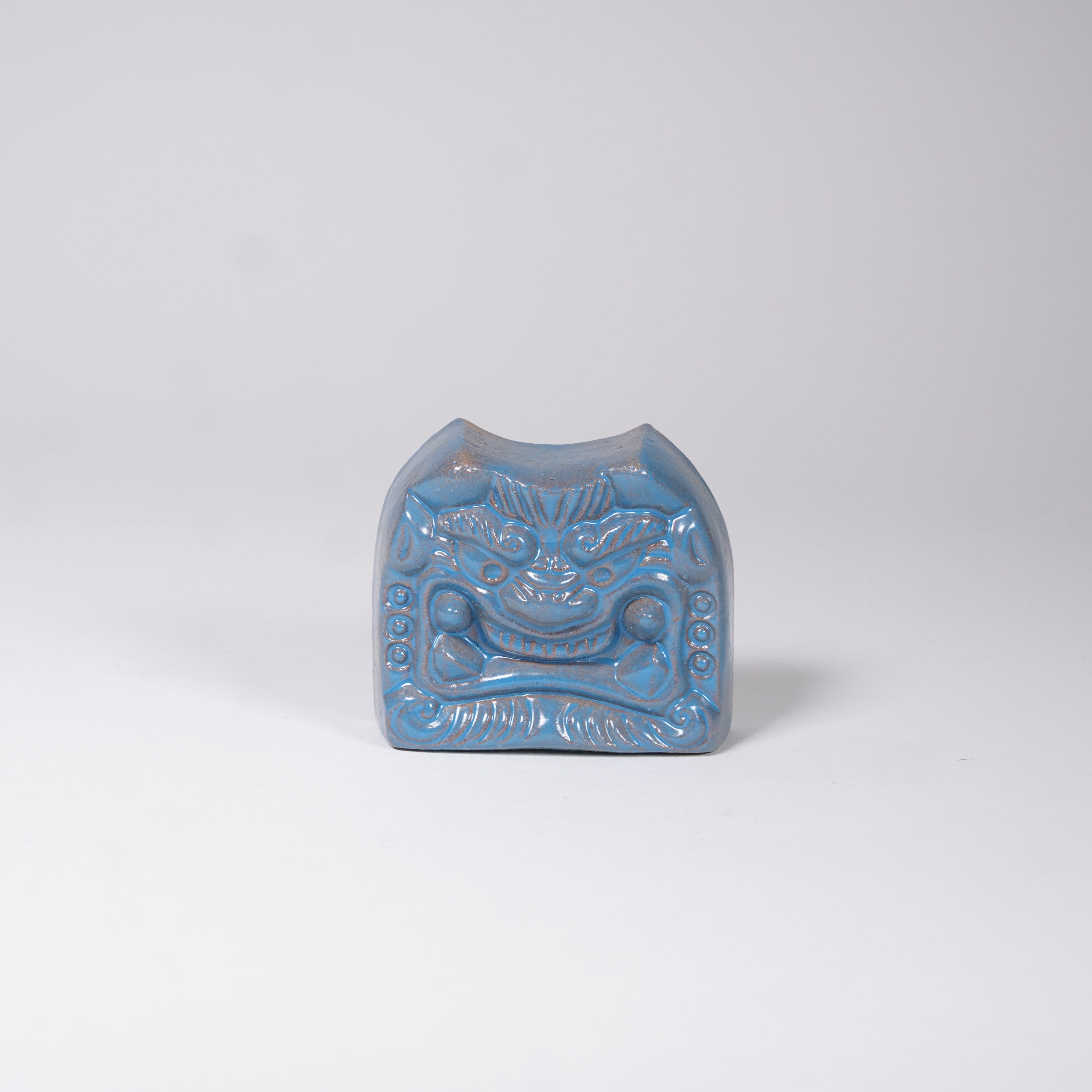
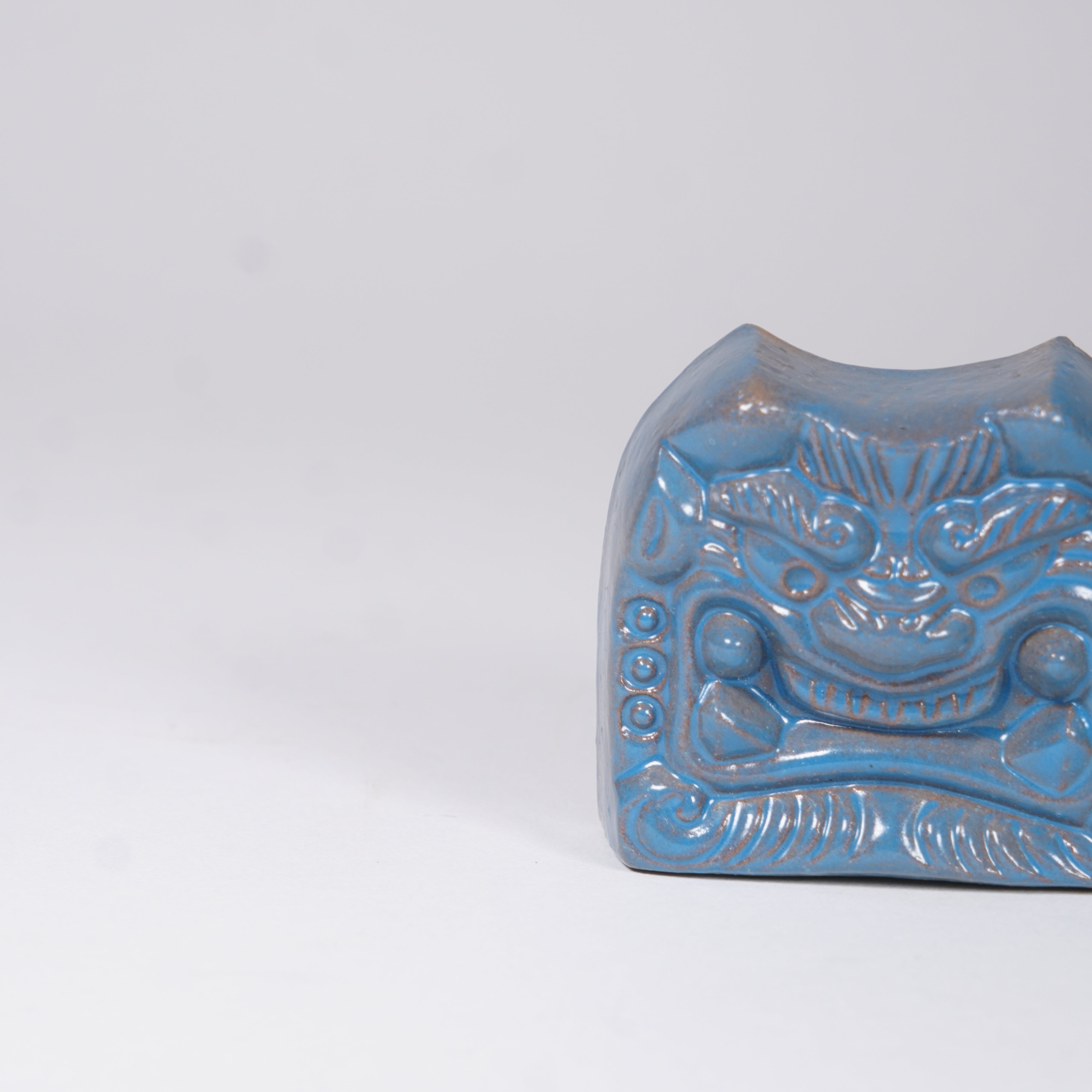
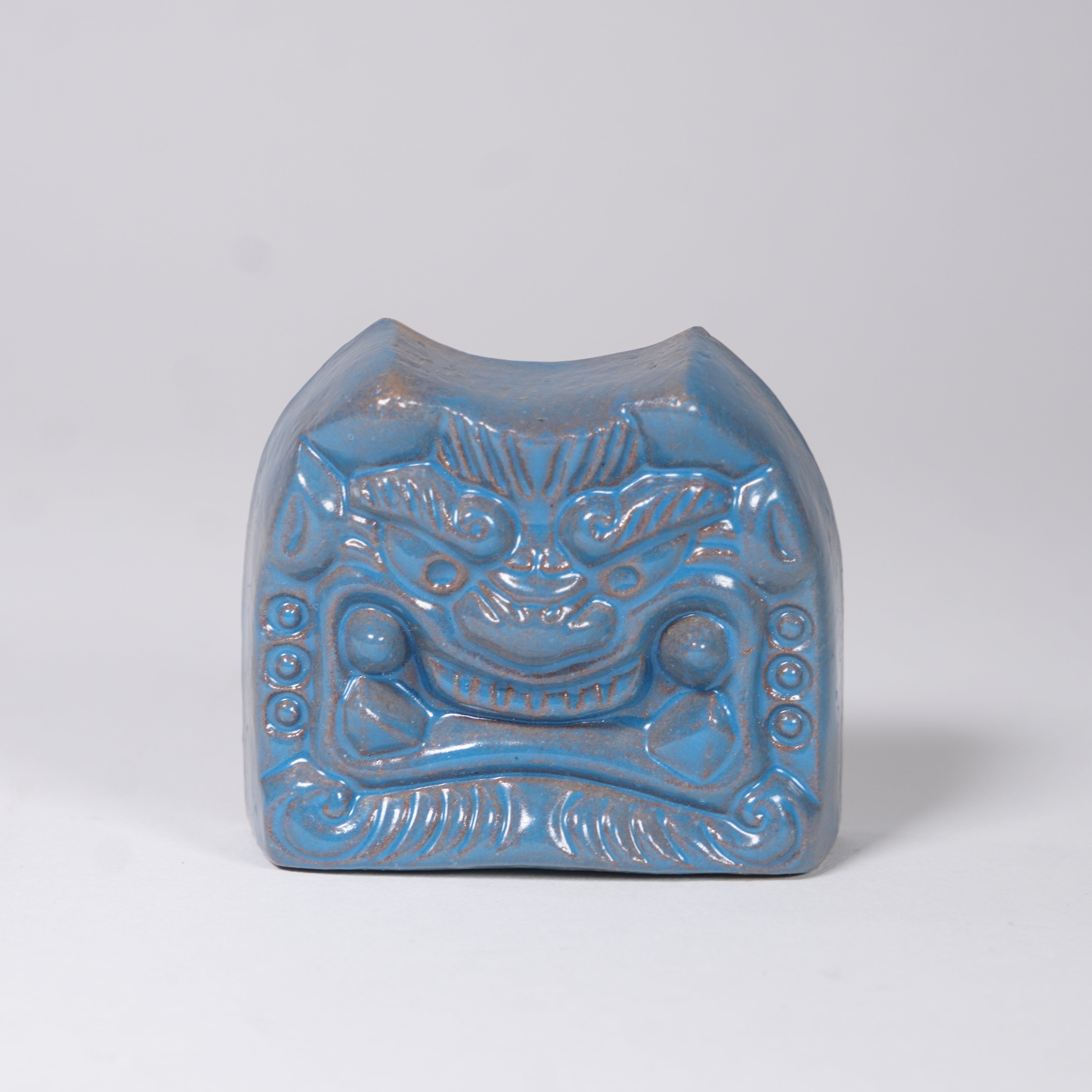
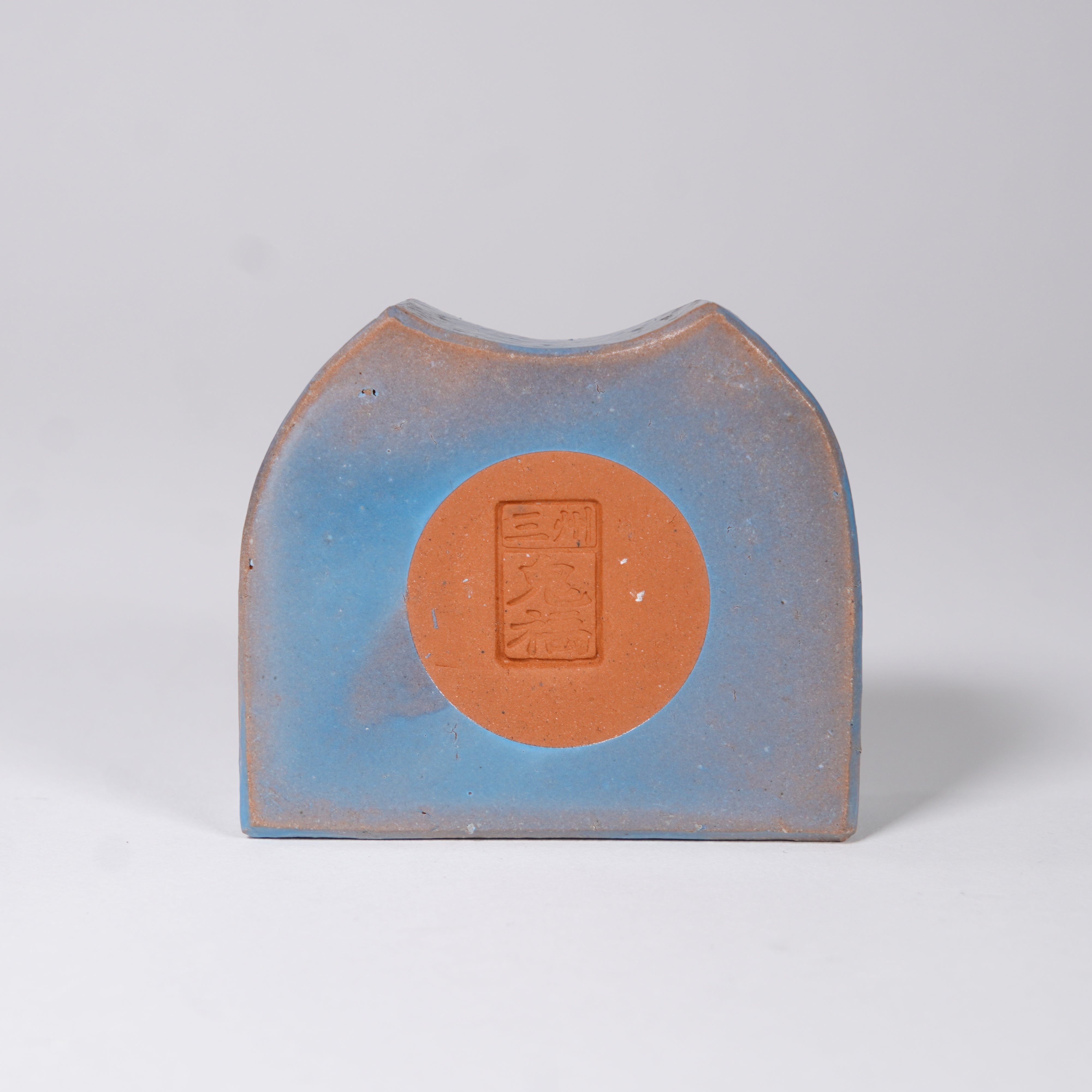
SANSHU ONIGAWARA / SANSHU ORNAMENTAL ROOF TILES
About 300 years ago / 1720s / Edo Period (1603–1868)
Sanshu ornamental roof tiles grew from the great tile industry of western Mikawa, Aichi. After Tokugawa Yoshimune encouraged fire-resistant tiled roofs in 1720, abundant clay along the Yahagi River and convenient sea transport helped Sanshu become a major production center. Specialist “oni-shi” craftsmen formed dramatic ridge-end ornaments by hand.
In Japan, onigawara are both functional roof components and protective symbols associated with warding off misfortune and safeguarding the household. Today the same skills serve major cultural-property restoration as well as smaller sculptures, plaques and decorative objects.
The characteristic silver-gray surface comes not from glaze but from ibushi firing, which creates a carbon film under oxygen-restricted conditions at high temperature. And “oni” tiles are not always demons: lions, mythical fish, plants and family crests can all be modeled to order, making the artisan part tile maker and part sculptor.