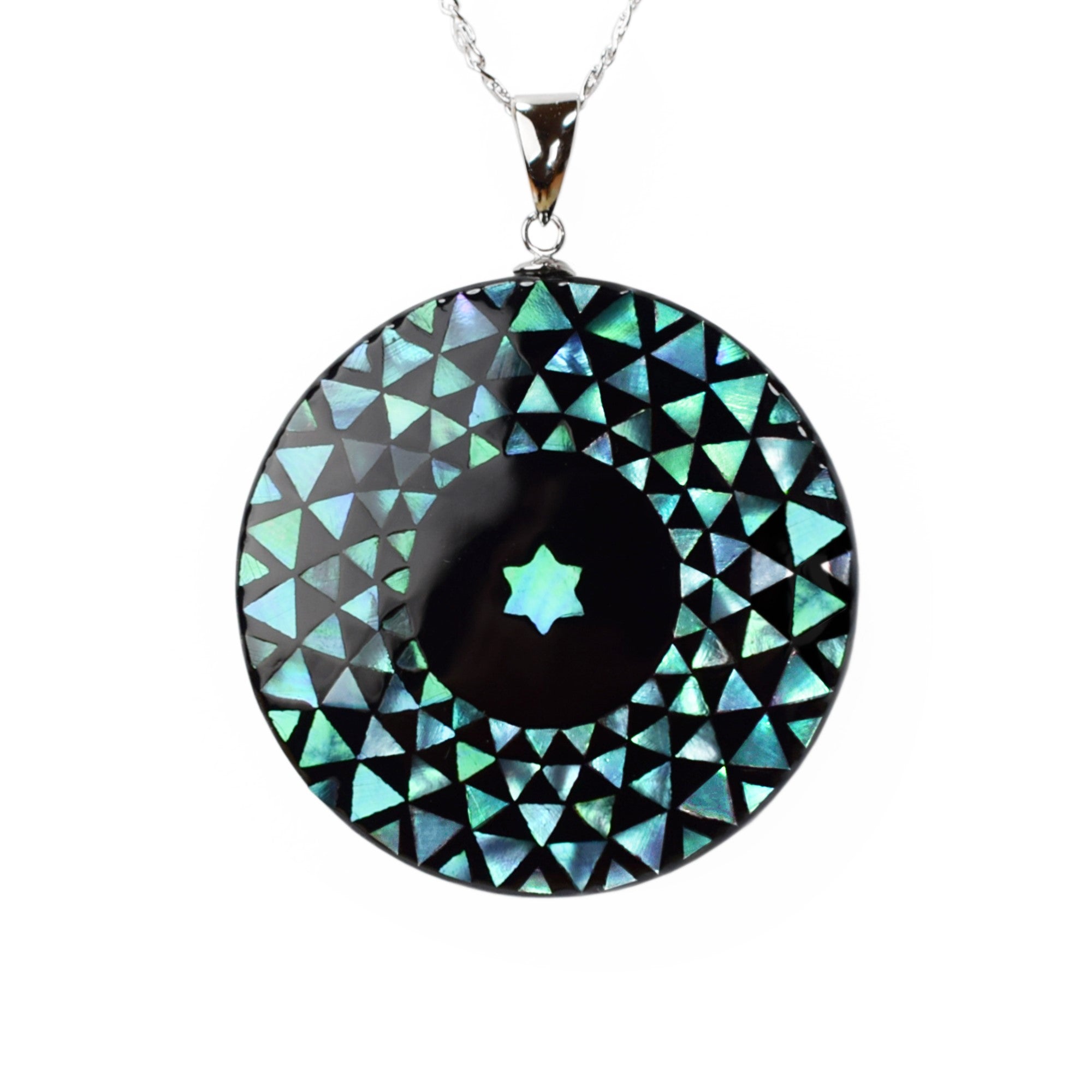
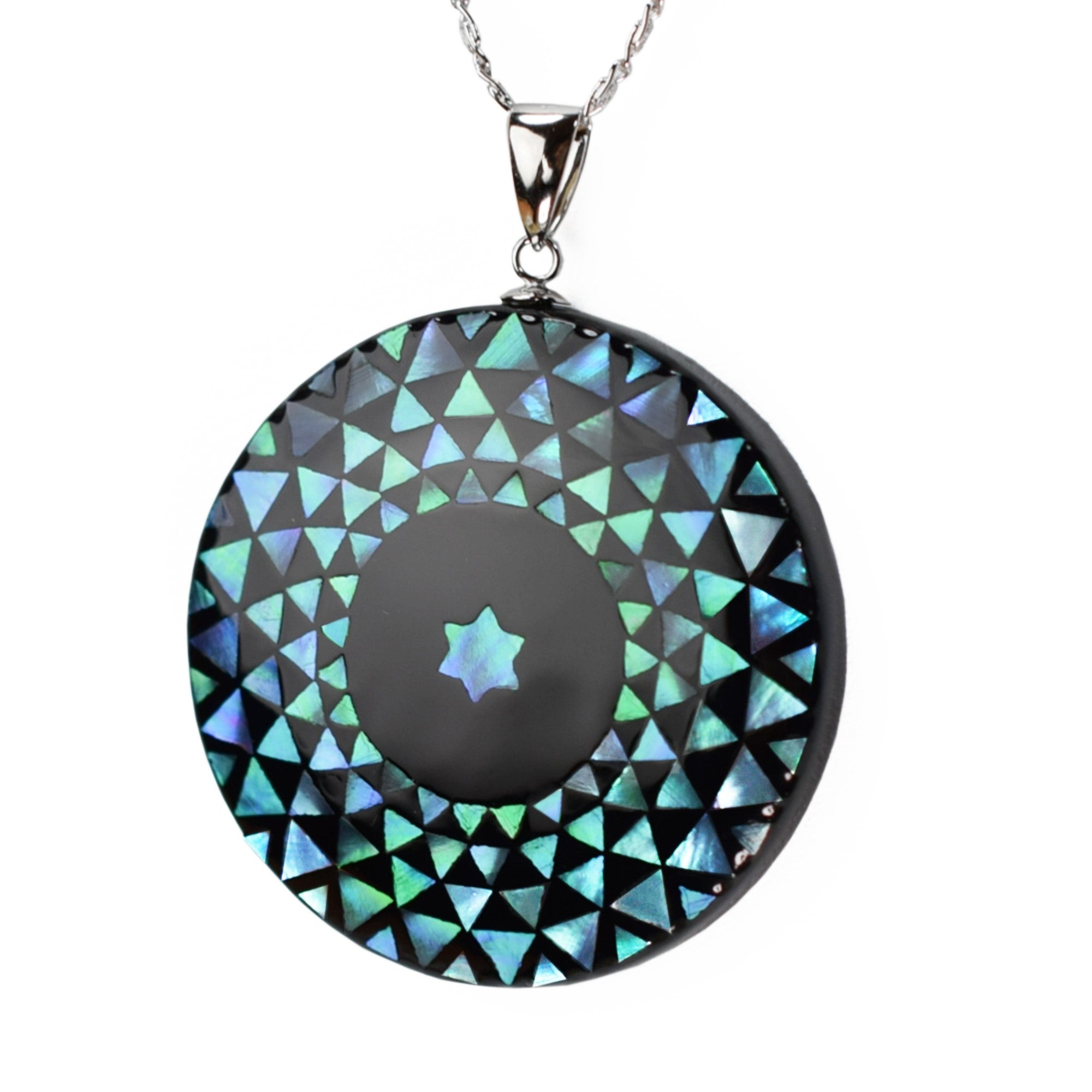
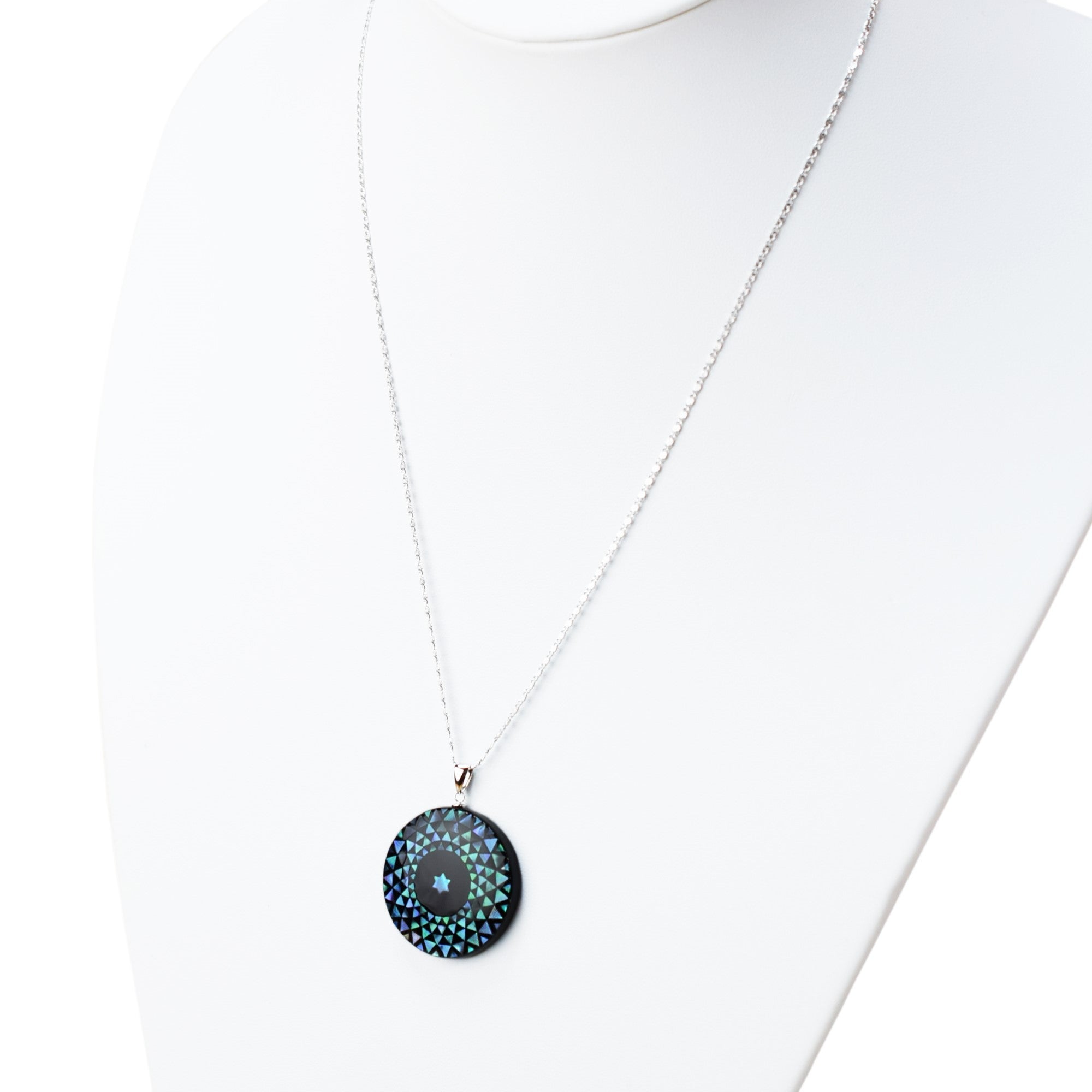
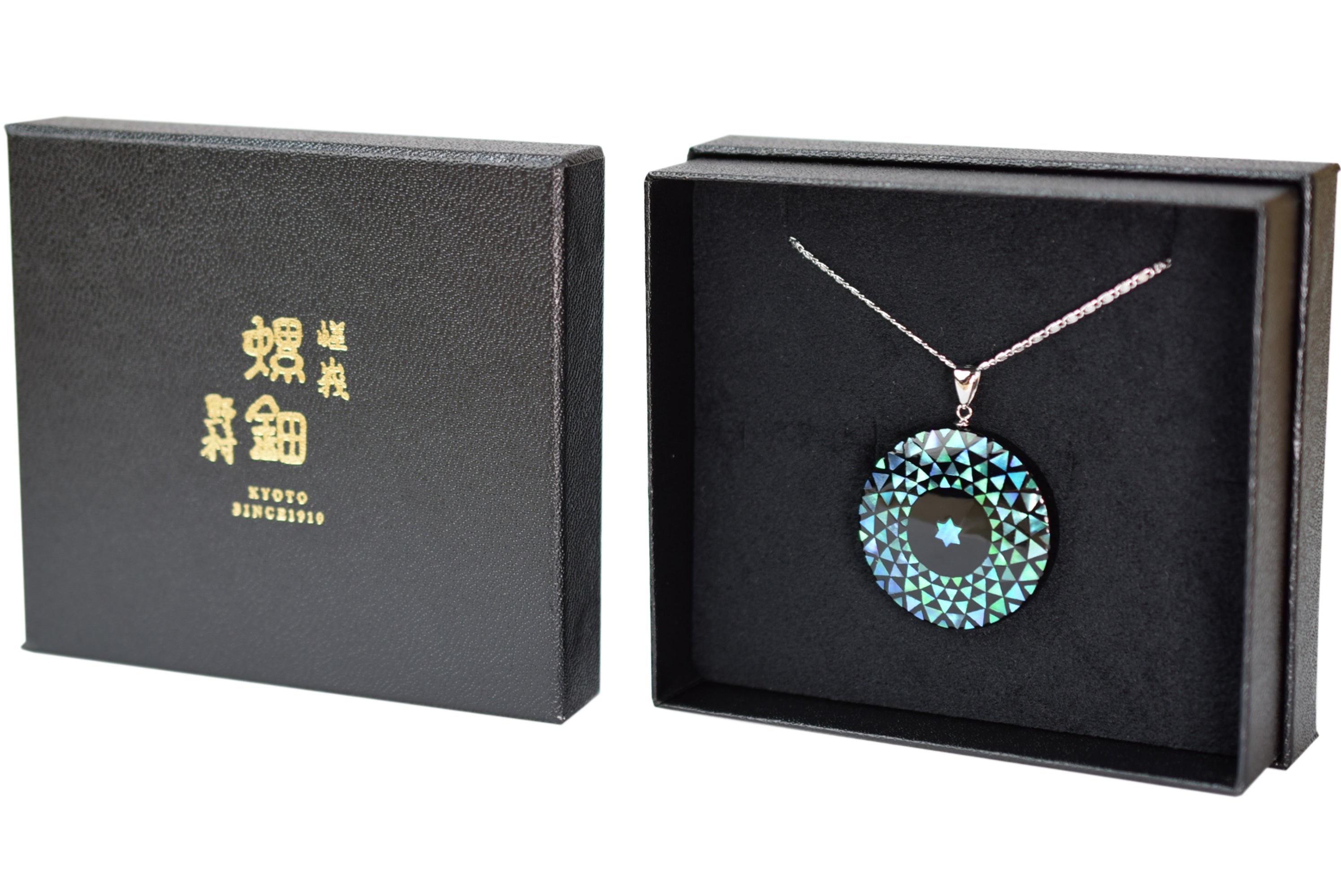
RADEN / JAPANESE MOTHER-OF-PEARL INLAY
About 1,300 years ago / 700s / Nara Period (710–794)
Raden decorates lacquered or wooden surfaces with thin pieces of nacre from shells such as turban shell, white-lip pearl oyster and abalone. The technique reached Japan from continental Asia by the Nara period, and extraordinary examples survive in the Shosoin. It later combined with maki-e on boxes, furniture and musical instruments.
In Japan, raden is synonymous with iridescent luxury against dark lacquer and has appeared on Buddhist objects, writing boxes, sword fittings and obi ornaments. Contemporary makers apply it to jewelry, watches and art.
The color is not pigment. Microscopic layers in nacre interfere with light, shifting through blue, green and purple as the viewing angle changes. The artisan is not “painting” color but cutting and arranging a natural optical structure.