【Kumiko】The Nail-Free Art of Japanese Wood Joinery

Introduction of Kumiko
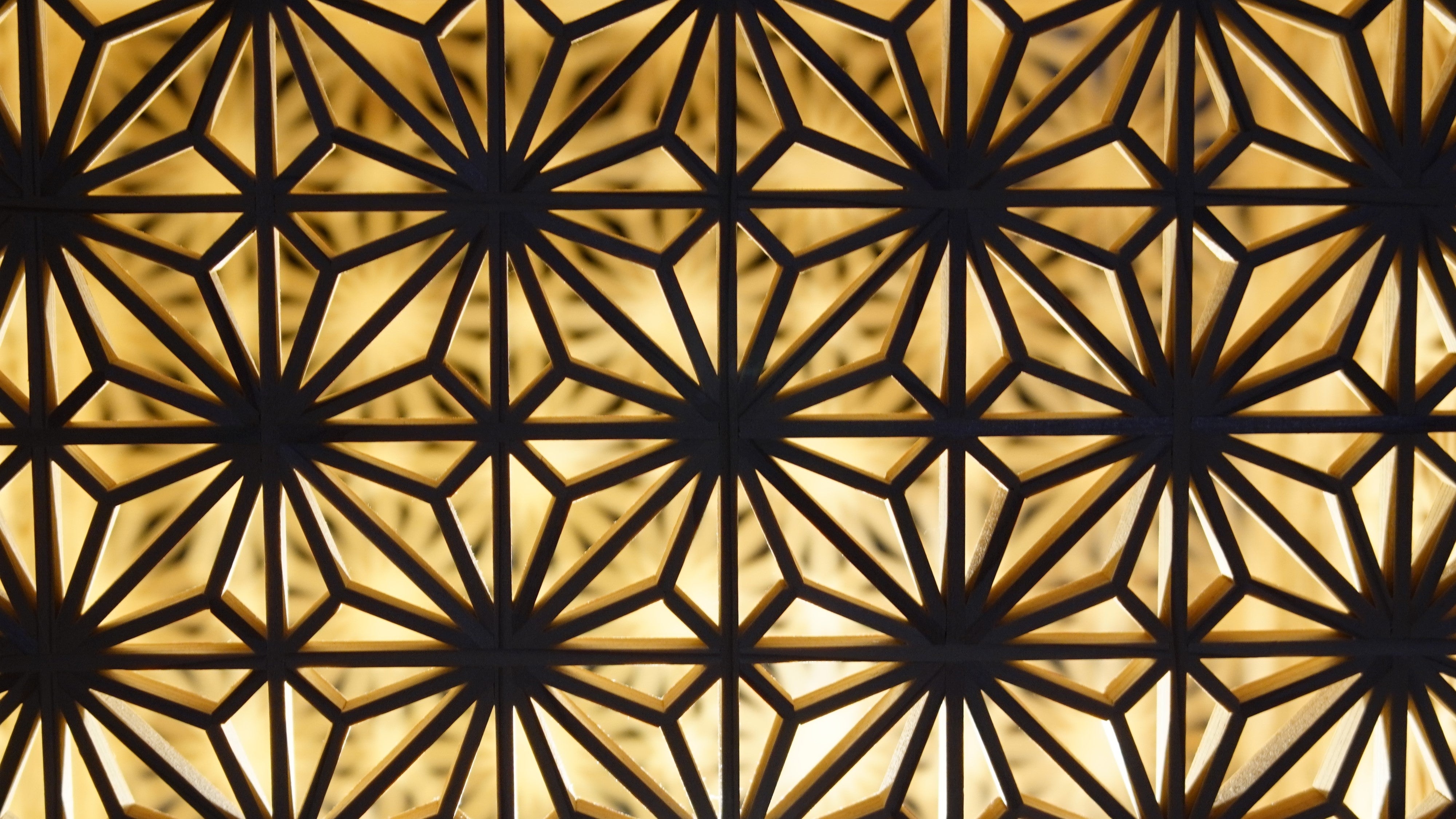
Kumiko is a traditional Japanese woodworking technique that involves assembling intricate geometric patterns from finely cut wooden pieces—without using a single nail. This elegant craft emerged from Japan’s architectural traditions, where it was used to decorate sliding doors (shoji), transoms (ranma), and screens. With a history stretching back over 1,400 years, Kumiko reflects Japan’s deep respect for nature and harmony, where even the smallest wooden elements are arranged with balance and precision. Its delicate lattice patterns—symbolizing motifs such as cherry blossoms, snowflakes, and tortoiseshells—embody both aesthetic refinement and spiritual meaning. Through centuries of evolution, Kumiko has become more than just decoration; it represents the philosophy of coexistence between people, wood, and space.
What makes Kumiko truly extraordinary is its construction method. Each tiny wooden strip is carefully hand-cut, grooved, and fitted together using traditional joinery techniques known as hōzo and shiguchi. The process demands immense patience, mathematical accuracy, and an intuitive understanding of wood grain. Artisans use Japan’s finest timbers—such as Kiso cypress, Akita cedar, and Aomori hiba—valued for their fragrance and durability. For the most delicate details, only the softest, highest-quality “sashimi-grade” portion of the wood is chosen. The result is an artwork that glows with natural warmth, allowing light to filter softly through its geometric patterns. Today, Kumiko continues to captivate people around the world as a living art form that bridges traditional craftsmanship with modern design.
History of Kumiko
Origins in Ancient Architecture
The story of Kumiko begins in the Asuka period (6th–7th century), when Buddhist architecture and carpentry techniques were introduced to Japan. Early examples, such as the “Manji-kuzushi Kumiko” patterns found in the railings of Horyu-ji Temple’s Golden Hall, show how geometric wooden designs were already valued for their spiritual and decorative functions. These architectural elements became the foundation for Japan’s intricate joinery traditions.

Flourishing Through the Age
By the Heian and Muromachi periods, as aristocratic and warrior residences developed into refined architectural spaces, Kumiko craftsmanship evolved into an art form. The technique was perfected within shoin-style architecture, where artisans added intricate lattice details to shoji screens and transoms, symbolizing elegance and order. During this time, Kumiko became an essential expression of Japanese aesthetics—subtle, balanced, and deeply harmonious.

Edo Period Expansion and Legacy
In the Edo period (1603–1868), Japan’s booming wooden architecture and urban development fueled unprecedented demand for Kumiko fittings. Artisans created over 200 distinct patterns, ranging from natural motifs like cherry blossoms to auspicious shapes such as shippo (seven treasures). These designs were passed down through generations and continue to define the beauty of Japanese interiors today.

Features of Kumiko
Harmony of Geometry and Nature
The essence of Kumiko lies in its geometric precision and natural rhythm. Each piece of wood is meticulously shaped to interlock perfectly, forming patterns that evoke natural beauty—snowflakes, blossoms, or waves. The repetition of these symmetrical forms creates a sense of tranquility, reflecting the Japanese principle of wa (harmony). Beyond its visual appeal, Kumiko transforms light and shadow into living art, changing appearance with the time of day. It is a craft that bridges structural function with spiritual serenity.

The Spirit of the Artisan
Every Kumiko piece represents the artisan’s patience, intuition, and mastery of wood. No two works are identical; the smallest variations in humidity or wood grain can affect assembly. Skilled craftsmen must understand the wood’s life—its texture, direction, and even scent. Their tools, often handmade, are an extension of their hands. This dedication to perfection, coupled with the use of Japan’s finest timbers, elevates Kumiko beyond design—it becomes a dialogue between human touch and natural material, expressing timeless Japanese sensibility.

Modern Applications
In modern Japan, Kumiko has transcended its traditional use in architecture to inspire contemporary interior design and global art. Today, it adorns hotels, museums, and private residences as decorative panels, lighting fixtures, and furniture. Some artisans also craft Kumiko jewelry, smartphone cases, and wall art—blending ancient craftsmanship with modern lifestyles. Its minimalist elegance continues to resonate with people worldwide seeking beauty in precision and harmony.