

Momoyama Shoki / Kabuki
DESCRIPTION
DÉTAILS
SIZE
MATERIAL
ARTISAN
KOGEI
Attention
Momoyama Shoki / Kabuki
Prix de vente$1,459,200
Choisir les options
Momoyama Shoki / Kabuki
Prix de vente$1,459,200
Pays
Langue
Panier
Votre panier est vide
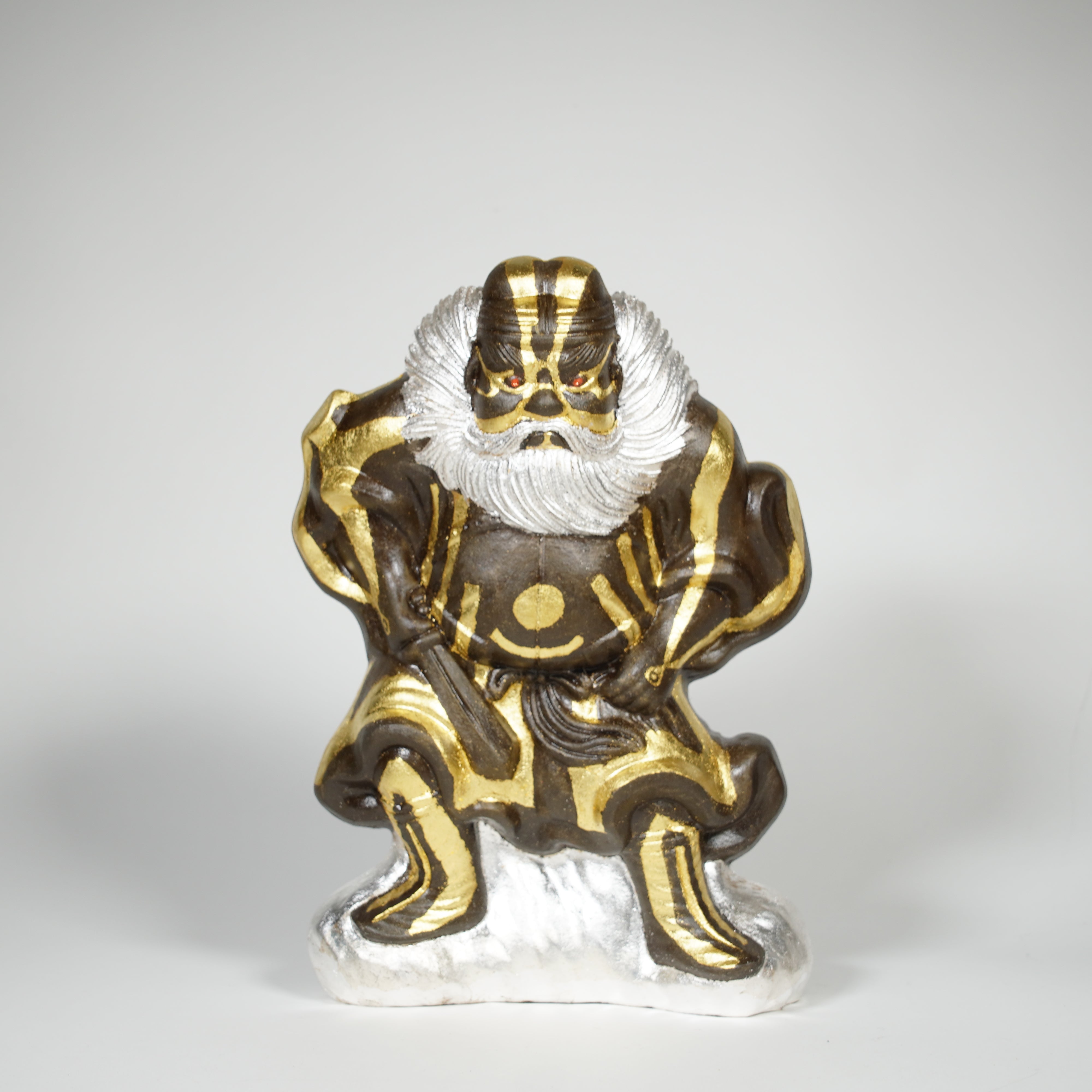
Il s’agit d’un produit unique qui associe des éléments du dieu gardien Shoki à des personnages d’anime.
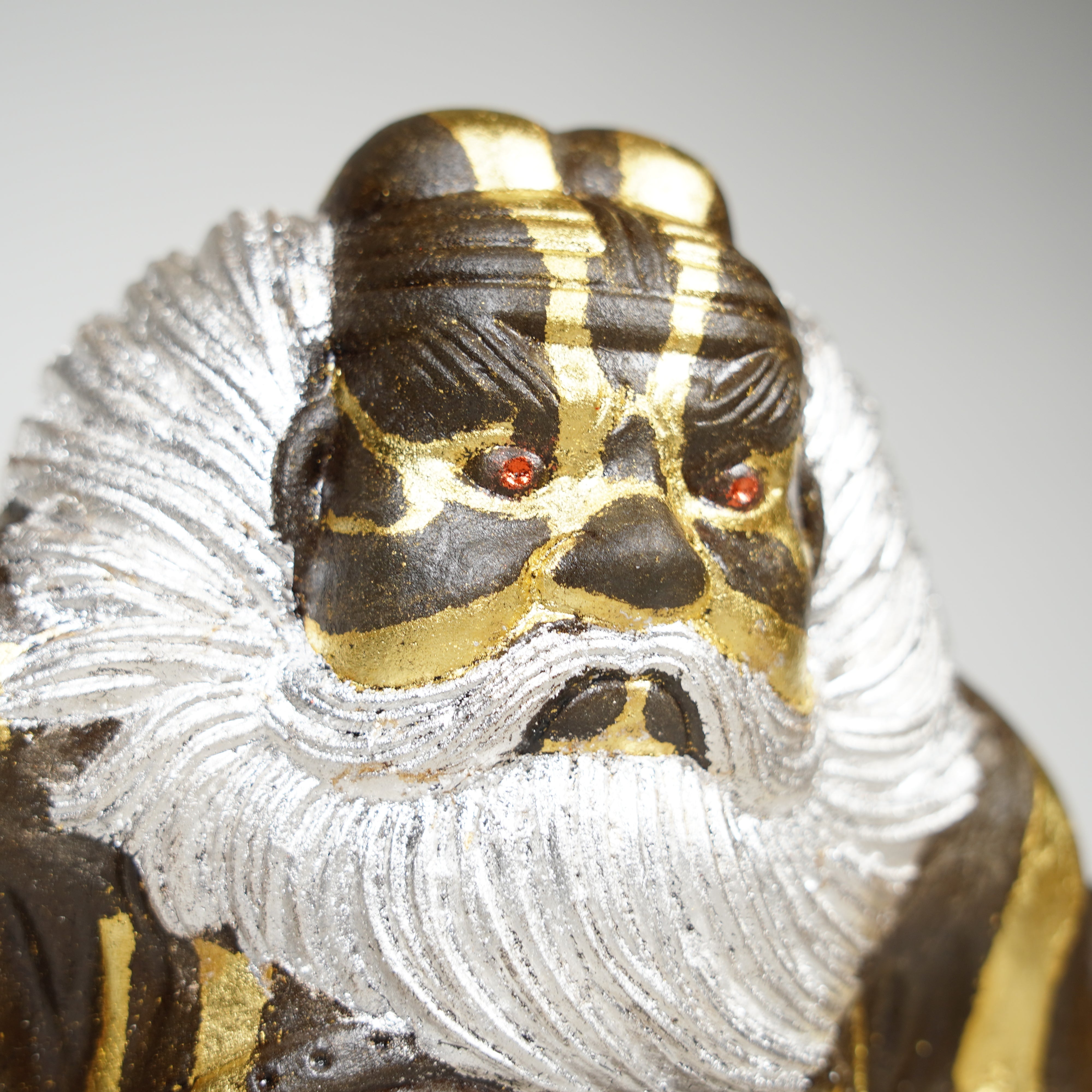
L’artiste, Sho Sawanoi, s’est inspiré d’un personnage d’anime et a appliqué sur la statue de Shoki la technique traditionnelle de Kyoto du « marquage à chaud à la feuille ».
Une grande quantité de feuilles d’or et d’argent est utilisée pour donner à la statue une apparence somptueuse et magnifique.
Qui est Shoki ?
Un dieu taoïste chinois aux longues moustaches et aux yeux qui semblent fixer intensément quelque chose.
On dit que l’exposition d’une statue de Shoki est efficace pour éloigner les maladies et le mal, et favoriser la réussite scolaire.
Nous espérons que vous l’exposerez comme divinité gardienne de votre foyer !
SIZE
Largeur:20cm
Profondeur:10cm
Hauteur:28cm
Poids:3 000g
MATERIAL
Terre
Feuille d'or
Feuille d'argent
HAKUTONBO
"Tradition x Subculture"
I thought that even if I became a person who produces in the conventional way, I would not be able to catch up with my predecessors. So, I came up with the idea of using traditional industry techniques to produce products in a field where no one else has tried.
I have been working in an anime store for many years, and I use my knowledge of the field I love and my traditional handiwork I learned from master to create products every day.
I would like to work so that the technique of foil stamping can reach more people in general.
ARTISAN STORY
Hakutonbo / Sho Sawanoi
Sho Sawanoi is the third generation of Hakutonbo, which has been continuing the tradition of foil stamping in Kyoto for more than 80 years. After working at an anime store for two years after graduating from university, he became an apprentice at Hakutonbo in 2013 as its successor.
He started to combine his previous hobby of subculture and foil stamping, and has been recognized for the high quality of his work.
ACHIEVEMENTS
・Shin Godzilla with foil stamping
KYO BUTSUDAN / KYOTO BUDDHIST ALTARS
About 1,000 years ago / 1000s / Heian Period (794–1185)
Kyoto Buddhist altars developed after the Heian period as temple building concentrated sculptors, woodworkers, lacquerers, gilders and decorative metal specialists in the capital. During the Edo period, the growth of major Buddhist sects and household worship increased demand, turning Kyoto into a center for highly sophisticated altars and ritual fittings.
In Japan, a household altar is a place to address ancestors and remember the dead. Large traditional altars have become less common in compact urban homes, but smaller prayer spaces and furniture-like designs continue to adapt the practice to modern life.
A Kyoto altar is rarely the work of one craftsperson. Wood construction, carving, lacquer, gold leaf, maki-e, metal fittings and final assembly can be divided among numerous specialists. In a single cabinet, many of Kyoto’s most important craft traditions are brought together—almost like a miniature temple.
Différences individuelles
Chaque pièce étant fabriquée à la main individuellement, de légères variations de couleur, de motif, de forme et de texture peuvent survenir. Ces subtiles différences sont une caractéristique naturelle des créations artisanales, rendant chaque pièce véritablement unique. Nous espérons que vous apprécierez ces variations individuelles comme faisant partie de la beauté et du caractère de l'artisanat japonais.
Délai de production
Si un article n'est pas actuellement en stock, il peut être fabriqué sur commande par l'artisan. Comme chaque pièce est soigneusement fabriquée à la main, la production peut prendre plusieurs mois selon l'article et le planning de l'artisan. Nous vous remercions de votre patience et de votre compréhension.
Choisir les options