박수와 테논
DESCRIPTION
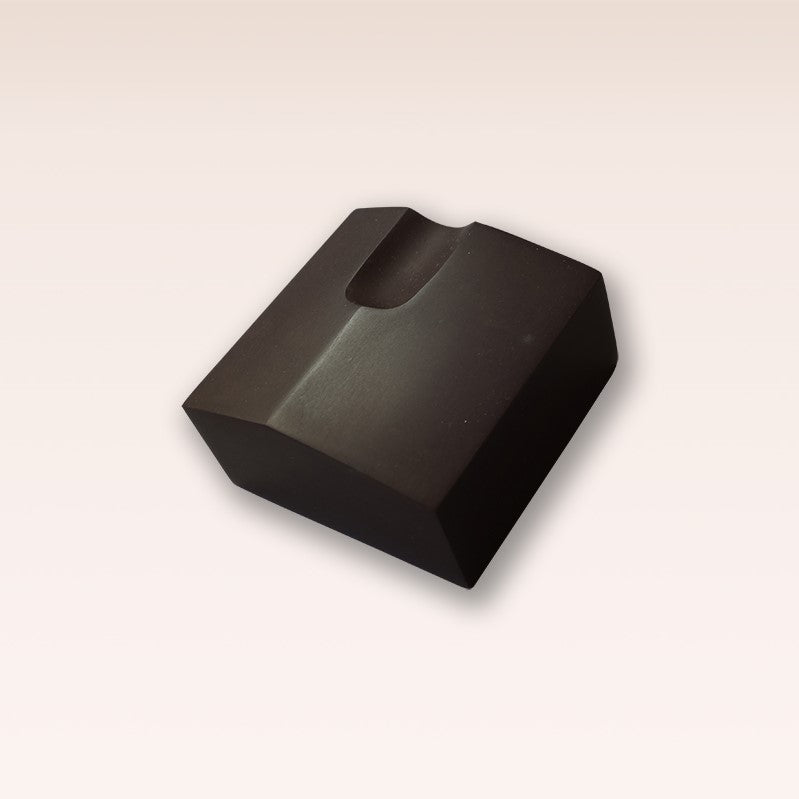
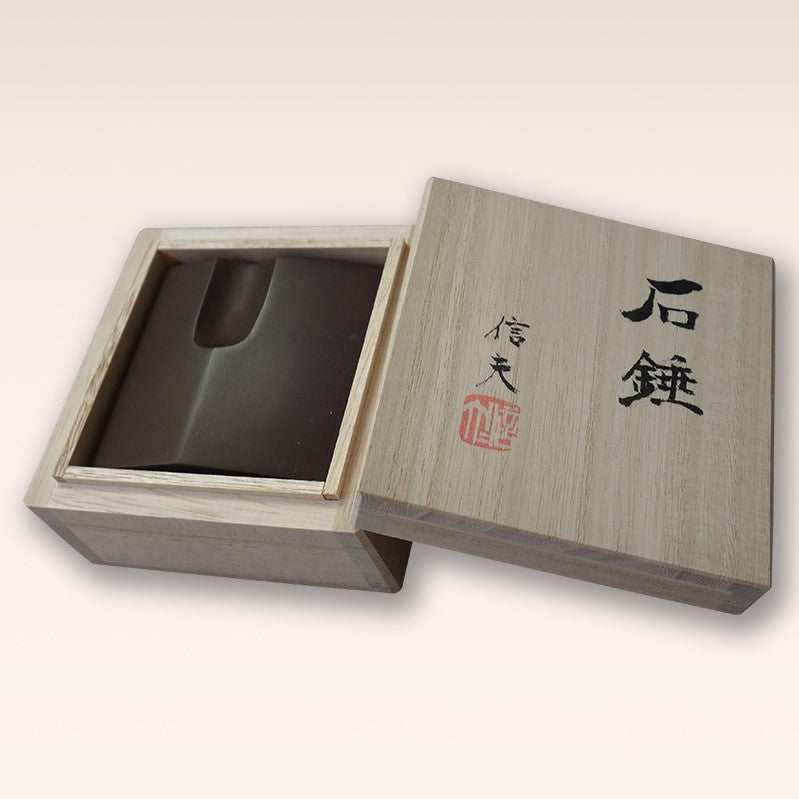
This paperweight is made of Akama stone, which used to make Akama inkstone. The sophisticated design of this paperweight makes it suitable for interior decoration.
We hope you will take it in your hand and experience firsthand the traditional skills of the Akama inkstone craftsmen. It would surely be a very nice gift!
The inkstone was made by Nobuo Horio, the holder of the Akama inkstone, which is designated as an intangible cultural property by Yamaguchi Prefecture, and is inscribed on the bottom with the name "Nobuo".
DETAILS
SIZE
Width:6cm
Depth:6cm
Height:3cm
Weight:310g
MATERIAL
Akama stone
ARTISAN
GYOKKODO
"My goal is to surpass my father"
I think it is important to seek evolution even as I approach 80 years of age. The difference between a craftsman and an artist is that a craftsman can make the same thing 100 times. An artist builds on that foundation to create something flexible and dreamlike. Based on the foundation taught to me by my father and mentor, I will continue to pursue ways to make the most of stone.
ARTISAN STORY
Nobuo Horio / Gyokkodo
Gyokkodo was founded in 1909 and they have 20 inkstone shops at one time, but the number continued to decline as the demand changed. it is because the Shimonoseki air raid of 1945 was the decisive factor, leaving only one inkstone shop (Gyokkodo) after the war. The store and techniques passed down from the previous generation have been preserved, and now Nobuo Horio, the fourth generation of Gyokkodo, is producing the products.
ACHIEVEMENTS
・Received the Chairman's Prize at the 56th Japan Traditional Crafts Exhibition
・Dedicated by Yamaguchi Prefecture to the Emperor and Empress of Japan on their visit to Yamaguchi National Stadium
・Acquired by the National Museum of Modern Art, Tokyo
・He has received many other awards for their work.
KOGEI
AKAMA SUZURI / AKAMA INKSTONE
About 800 years ago / 1200s / Kamakura Period (1185–1333)
Akama inkstones are carved from reddish Akama stone found around Shimonoseki, Yamaguchi, and were already known by the Kamakura period. During the Edo era, the Choshu domain controlled and encouraged production, and the stones gained prestige as formal gifts associated with daimyo travel.
In Japan, an inkstone is a working tool for grinding solid ink, yet Akama examples are also appreciated for the color and natural strata of the stone itself. Makers produce everything from professional calligraphy stones to highly carved pieces with lids and sculptural decoration.
What matters is not simply hardness. The grinding surface contains microscopic texture known as ho-bo, tiny abrasive points that slowly shave solid ink into liquid. A stone that looks polished and smooth to the eye is, at a microscopic level, covered with countless miniature cutting edges.
Caution
Individual Differences
As each piece is individually handcrafted, slight variations in color, pattern, shape, and texture may occur. These subtle differences are a natural characteristic of handcrafted works, making each piece truly unique. We hope you will enjoy these individual variations as part of the beauty and character of Japanese craftsmanship.
Production Time
If an item is not currently in stock, it may be made to order by the artisan. As each piece is carefully handcrafted, production may take several months depending on the item and the artisan's schedule. We appreciate your patience and understanding.

옵션 선택