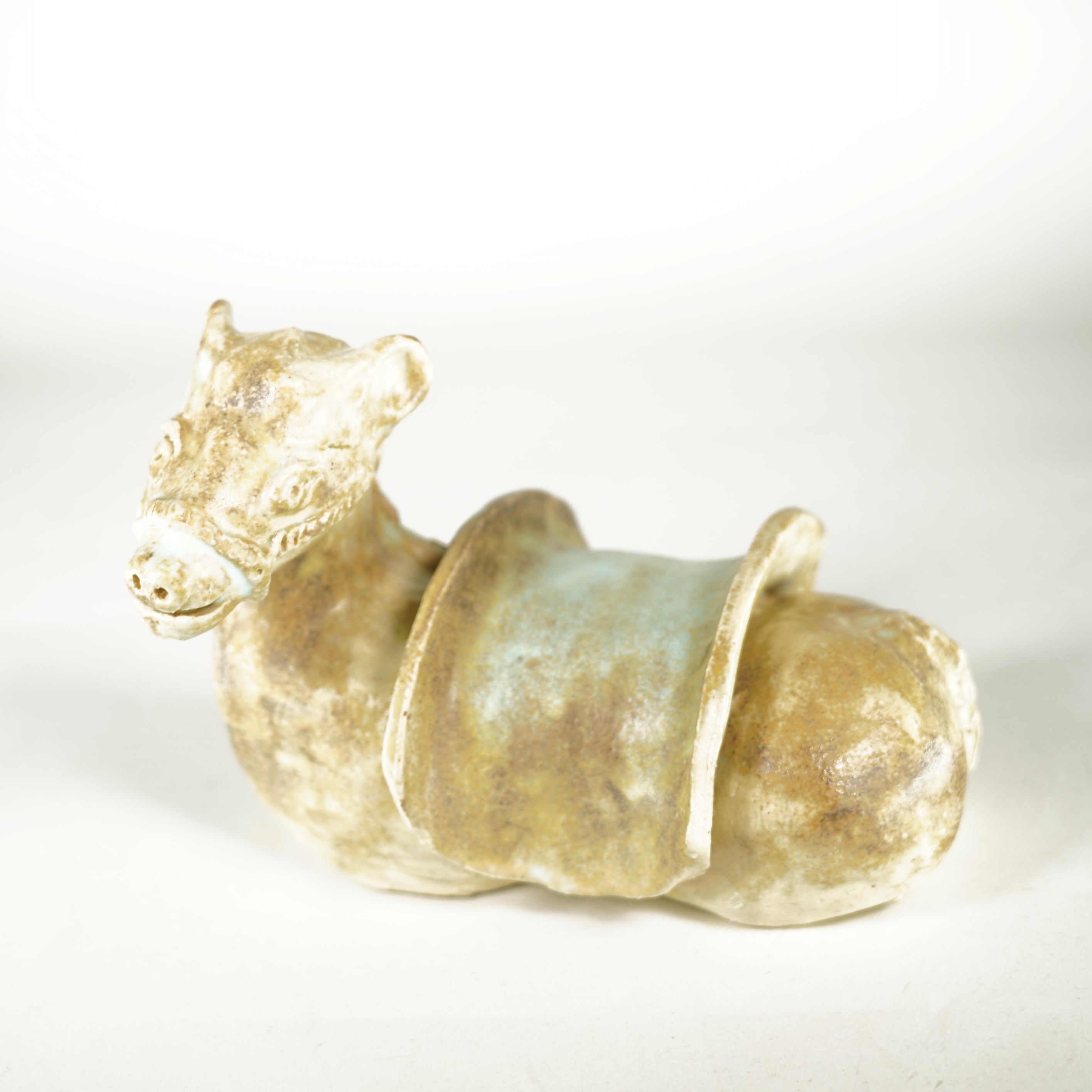
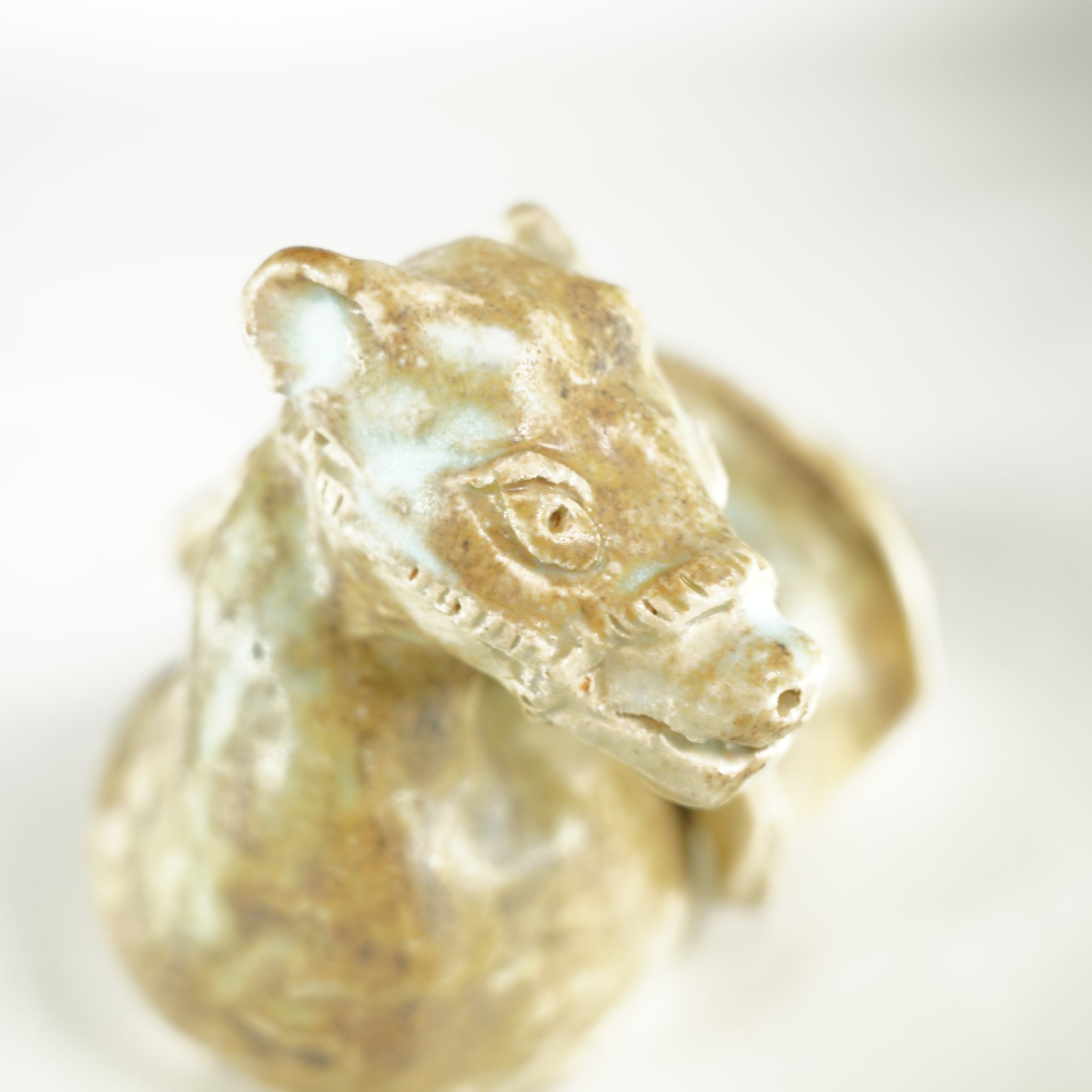


تمثال حصان سيراميك 1
الوصف
التفاصيل
SIZE
MATERIAL
حِرَفِيّ
كوجي
تحذير
تمثال حصان سيراميك 1
السعر بعد الخصم¥1,225.00
حدِّد الخيارات
تمثال حصان سيراميك 1
السعر بعد الخصم¥1,225.00
البلد
اللغة
سلة المشتريات
سلة مشترياتك فارغة
هذا التمثال الصغير للحصان مستوحى من مشهد في مسرحية نوو "شاكيو" (الجسر الحجري). وقد طُلي سرج الحصان بمزيج من اللونين الصدئي والأزرق، ليمثل الجسر الحجري الذي يرى الراهب جاكوشو مشهداً إعجازياً عليه خلال رحلته في المسرحية. آمل أن تستمتع بعالم القصة بوضعه على رف كتبك أو رف العرض لديك.
SIZE
العرض : 17 سم
الارتفاع : 12.5 سم
العمق : 9 سم
الوزن : 1,100 جم
MATERIAL
سيراميك
SHUKO KAWAHARA
"Fusing Tradition and Creativity"
Based on traditional Kiyomizu-ware techniques, I am exploring entirely new shapes and concepts of imaginary animals, aiming to provide viewers with fresh surprises and joy. These ceramic creatures offer moments of delight in daily life, captivating hearts with their delicacy and creativity.
ARTISAN STORY
Shuko Kawahara
Shuko Kawahara is a ceramic artist based in Kyoto. She creates artworks centered around imaginary animals, utilizing traditional glazes. These pieces are small enough to fit in the palm of your hand, shaped like droplets or water pitchers, and possess a unique charm that soothes the viewer's heart. Ms. Kawahara aims to bring moments of joy into everyday life with these tiny beings, carefully crafting each piece to achieve this goal.
KIYOMIZU WARE
About 400 years ago / 1600s / Edo Period (1603–1868)
Kiyomizu ware takes its name from ceramics historically produced around Kiyomizu-dera and Kyoto’s eastern hills. It grew during the Edo period with tea culture and temple pilgrimage, absorbing the brilliant decoration associated with Ninsei and Kenzan as well as porcelain, blue-and-white and many other techniques.
In Japan, the name suggests refined Kyoto tableware, ranging from formal tea and kaiseki vessels to everyday dishes. Even after many kilns moved to districts such as Yamashina, the tradition retained an unusual stylistic diversity: each workshop may look completely different from the next.
Despite the name, many contemporary Kiyomizu workshops are no longer located near Kiyomizu-dera. Urban development and environmental concerns led to relocation, while the old place-name remained as a brand remembering the craft’s origin. Geography moved, but the name stayed.
الاختلافات الفردية
نظرًا لأن كل قطعة تُصنع يدويًا بشكل مستقل، فقد تطرأ اختلافات طفيفة في اللون والنمط والشكل والملمس. وتُعد هذه الاختلافات الدقيقة من الخصائص الطبيعية للأعمال اليدوية، ما يجعل كل قطعة فريدة من نوعها حقًا. نأمل أن تستمتعوا بهذه الاختلافات الفردية كجزء من جمال الحرفية اليابانية وطابعها المميز.
مدة الإنتاج
إذا لم يكن المنتج متوفرًا في المخزون حاليًا، فقد يقوم الحرفي بتصنيعه حسب الطلب. ونظرًا إلى أن كل قطعة تُصنع يدويًا بعناية، فقد يستغرق الإنتاج عدة أشهر، وذلك حسب المنتج وجدول الحرفي. نقدر صبركم وتفهمكم.
حدِّد الخيارات