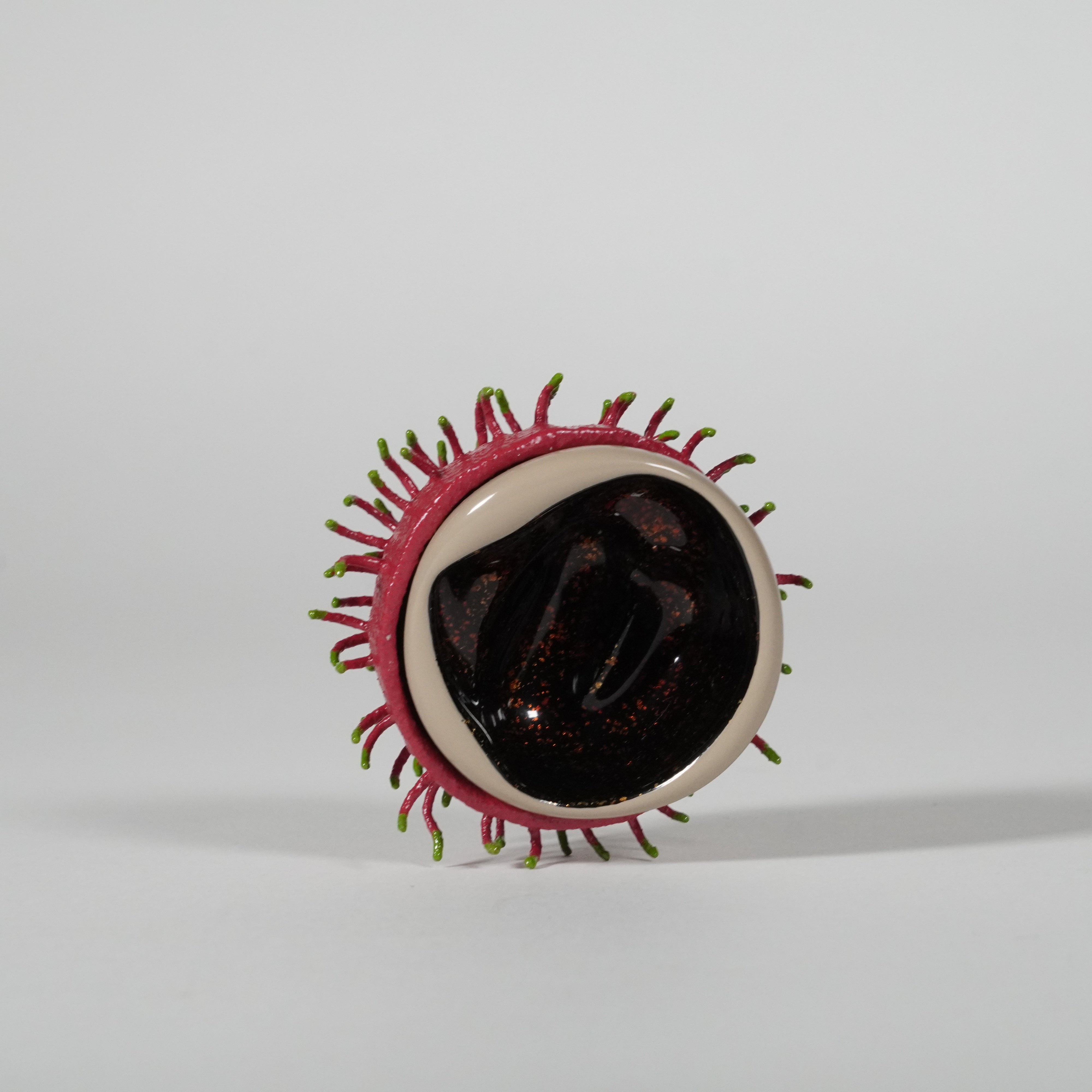
أعمال لاك هيروشيما / زخارف رامبوتان / منحوت يدوياً
الوصف
التفاصيل
SIZE
MATERIAL
حِرَفِيّ
كوجي
تحذير
حدِّد الخيارات


أعمال لاك هيروشيما / زخارف رامبوتان / منحوت يدوياً
السعر بعد الخصمKHR2,871,000.00
البلد
اللغة
سلة المشتريات
سلة مشترياتك فارغة


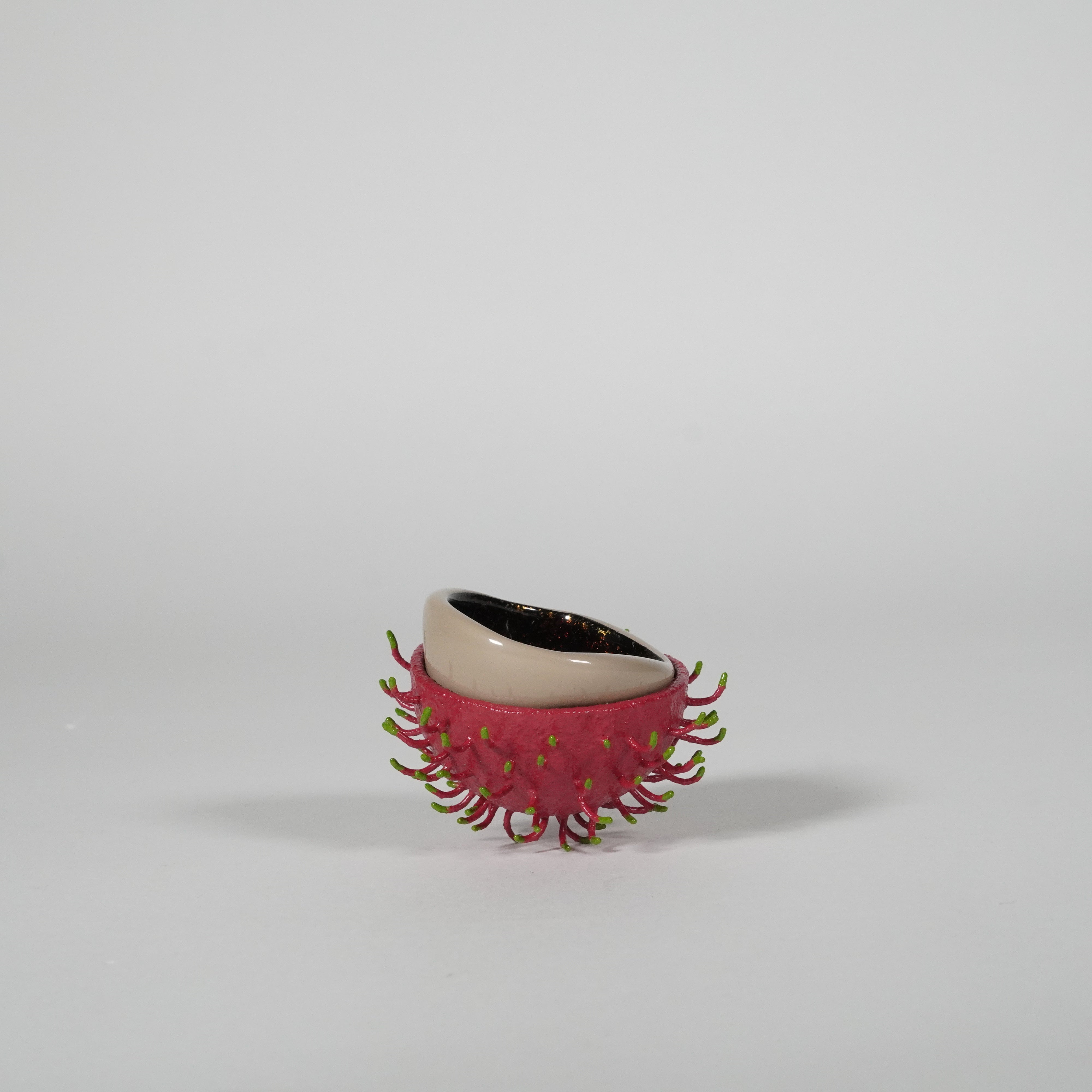
يمثل هذا العمل غلافًا خارجيًا واقيًا، مع شكل داخلي يوحي بوجود هيئة بشرية بمجرد أن يستقر بداخلها.
يمكن تقديره كقطعة زخرفية، أو استخدامه وظيفيًا لحفظ وحماية الأشياء الثمينة في الداخل.
SIZE
العرض: 5 سم
العمق: 5 سم
الارتفاع: 4 سم
الوزن: 20 غ
MATERIAL
طلاء جاف
طلاء
KAORI FUJITA
Your back. Someone’s back. Or is someone's back a mirror that reflects oneself?
Using the back, whose own one cannot see, I try to visualize the changes that occur in people's relationships to each other, their differences, and the ambiguity and inability to grasp such things.
ARTISAN STORY
Kaori Fujita
I work on the theme of the human body, mainly the back.
For my three-dimensional works, I mainly use dry lacquer technique and combine it with other materials. Two-dimensional works are also painted with colored lacquer and, depending on the work, shells and metal powder are sometimes used.
While training in lacquer under Noaya Takayama, he is also pursuing his own artistic practice.
KYO WARE & KIYOMIZU WARE
About 1,200 years ago / 800s / Heian Period (794–1185)
Kyoto ceramics reach back to kilns operating before and during the Heian period, then expanded with tea culture in the Muromachi and Momoyama eras. In the seventeenth century, Nonomura Ninsei perfected brilliant overglaze decoration, followed by innovators such as Ogata Kenzan, Okuda Eisen and Aoki Mokubei, whose diverse approaches shaped today’s Kyo and Kiyomizu ware.
In Japan, these ceramics are famous precisely because there is no single fixed style. Tea bowls, kaiseki dishes and everyday tableware may use overglaze painting, blue-and-white decoration, gold, sancai-inspired color and many other techniques. The craft sits at the heart of Kyoto’s culture of pairing vessels with cuisine and tea.
The surprising point is that Kyoto was never defined by a single major clay deposit. Potters drew on materials such as Amakusa porcelain stone, techniques arriving from other regions, and the tastes of artists and patrons gathered in the capital. Freedom from one local material helped make Kyoto ceramics unusually hybrid and stylistically diverse.
الاختلافات الفردية
نظرًا لأن كل قطعة تُصنع يدويًا بشكل مستقل، فقد تطرأ اختلافات طفيفة في اللون والنمط والشكل والملمس. وتُعد هذه الاختلافات الدقيقة من الخصائص الطبيعية للأعمال اليدوية، ما يجعل كل قطعة فريدة من نوعها حقًا. نأمل أن تستمتعوا بهذه الاختلافات الفردية كجزء من جمال الحرفية اليابانية وطابعها المميز.
مدة الإنتاج
إذا لم يكن المنتج متوفرًا في المخزون حاليًا، فقد يقوم الحرفي بتصنيعه حسب الطلب. ونظرًا إلى أن كل قطعة تُصنع يدويًا بعناية، فقد يستغرق الإنتاج عدة أشهر، وذلك حسب المنتج وجدول الحرفي. نقدر صبركم وتفهمكم.

حدِّد الخيارات