
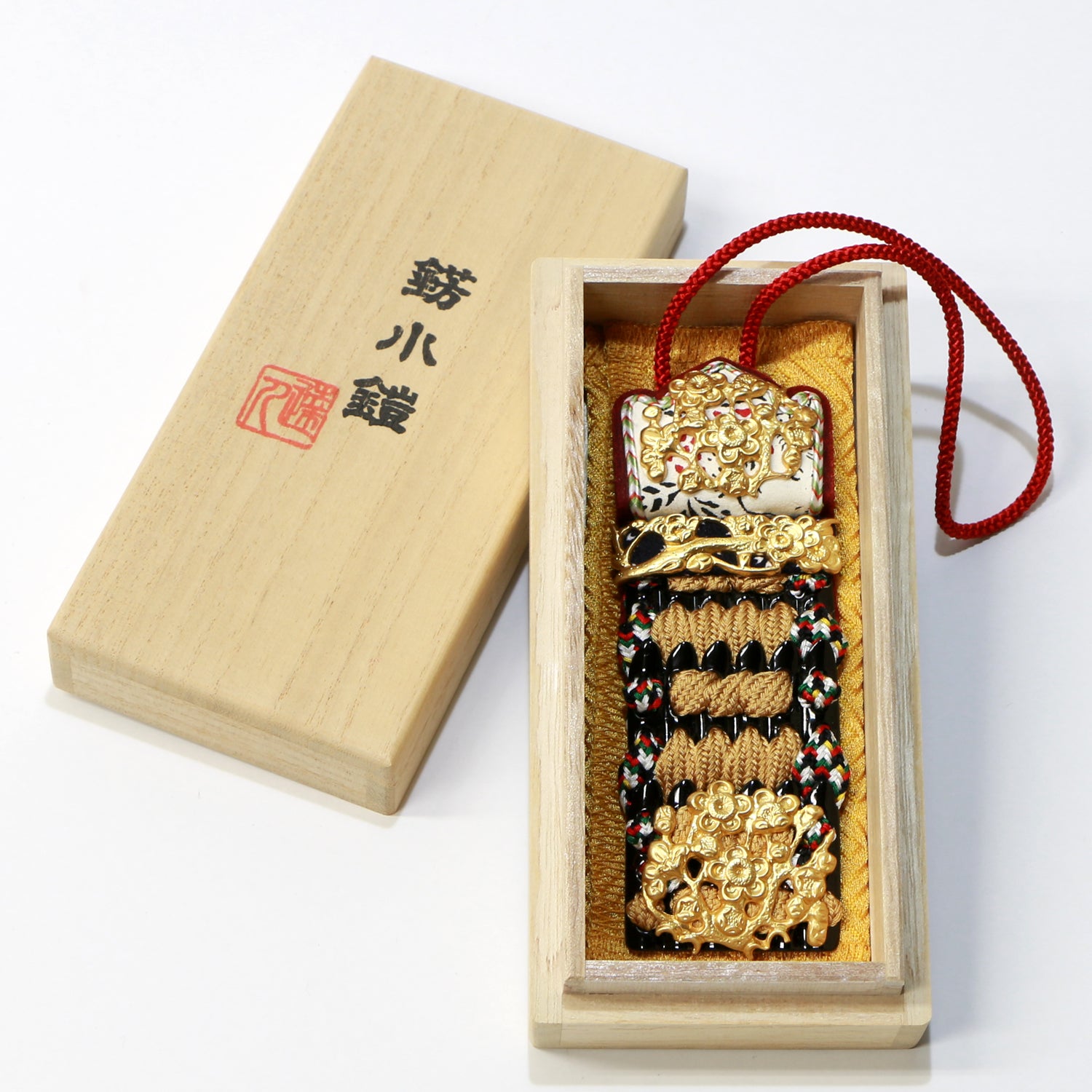
ملحق درع نيكيتاما / أومي أويسو
الوصف
التفاصيل
SIZE
MATERIAL
حِرَفِيّ
كوجي
تحذير
حدِّد الخيارات

ملحق درع نيكيتاما / أومي أويسو
السعر بعد الخصمK1,008,000.00
البلد
اللغة
سلة المشتريات
سلة مشترياتك فارغة

تميمة سهلة الحمل صنعها حرفي تقليدي في كيوتو.
قطعة تحمل روح اليابان القديمة التي تقود إلى روح ياماتو داشي والبوشيدو.
جوهرة صنعها حرفي بقلبه وروحه في تصميم «سندان نو إيتا» الذي يحمي النقاط الحيوية في صدر الدرع.
SIZE
العرض : 4 سم
الارتفاع : 11 سم
الوزن : 100 جم
MATERIAL
نحاسي
ضفيرة حريرية
KYOTO ARMOR
Connecting the thoughts of all who cherish parents and their children.
The philosophy behind this enduring armor-making tradition is to focus on materials and handcrafting. I always aim to produce high-quality crafts through meticulous handcrafting down to the finest details. The role of festival decorations is to celebrate milestones by displaying them annually, creating many memories and strong bonds each time. For this, the craft must be of such excellence that it withstands repeated viewings.
Furthermore, crafts made from carefully selected quality materials develop a deeper character over time. The Heianju Ichisui armor, growing alongside your son, will age over the years and eventually become a unique decoration like no other.
ARTISAN STORY
Kyoto Armor
In Taisho year 14 (1925), in Eikando-cho at the foot of the Higashiyama mountain range in Kyoto, the traditional Kyoto armor-making craft of Kazari Katchu was initiated by the armor fabric master, Zenjiro Imamura, under the name Heianju Ichisui. Since then, the techniques have been passed down through generations and further refined, continuing to this day.
KYO NINGYO / KYOTO SAMURAI ARMOR DOLLS
About 400 years ago / 1600s / Edo Period (1603–1868)
The custom of displaying armor for the Boys’ Festival grew from warrior culture, and by the Edo period craftsmen were producing miniature helmets and suits of armor for seasonal display. Kyoto makers drew on real armor-making skills—metalwork, leather, braided cord, lacquer and textiles—to create highly detailed festival pieces.
In Japan, these miniature armors are less symbols of warfare than protective objects. Families display them with wishes that children grow strong and remain safe from misfortune. Modern versions may be compact for contemporary homes, yet still preserve traditional lacing and helmet forms.
Even a tiny helmet can follow the construction of real armor with remarkable fidelity. Small scales are laced together, metal fittings are attached and leather details are applied. Miniaturization does not remove the complexity; it forces craftsmen to reproduce full-scale techniques at a dramatically reduced size.
الاختلافات الفردية
نظرًا لأن كل قطعة تُصنع يدويًا بشكل مستقل، فقد تطرأ اختلافات طفيفة في اللون والنمط والشكل والملمس. وتُعد هذه الاختلافات الدقيقة من الخصائص الطبيعية للأعمال اليدوية، ما يجعل كل قطعة فريدة من نوعها حقًا. نأمل أن تستمتعوا بهذه الاختلافات الفردية كجزء من جمال الحرفية اليابانية وطابعها المميز.
مدة الإنتاج
إذا لم يكن المنتج متوفرًا في المخزون حاليًا، فقد يقوم الحرفي بتصنيعه حسب الطلب. ونظرًا إلى أن كل قطعة تُصنع يدويًا بعناية، فقد يستغرق الإنتاج عدة أشهر، وذلك حسب المنتج وجدول الحرفي. نقدر صبركم وتفهمكم.

حدِّد الخيارات
