
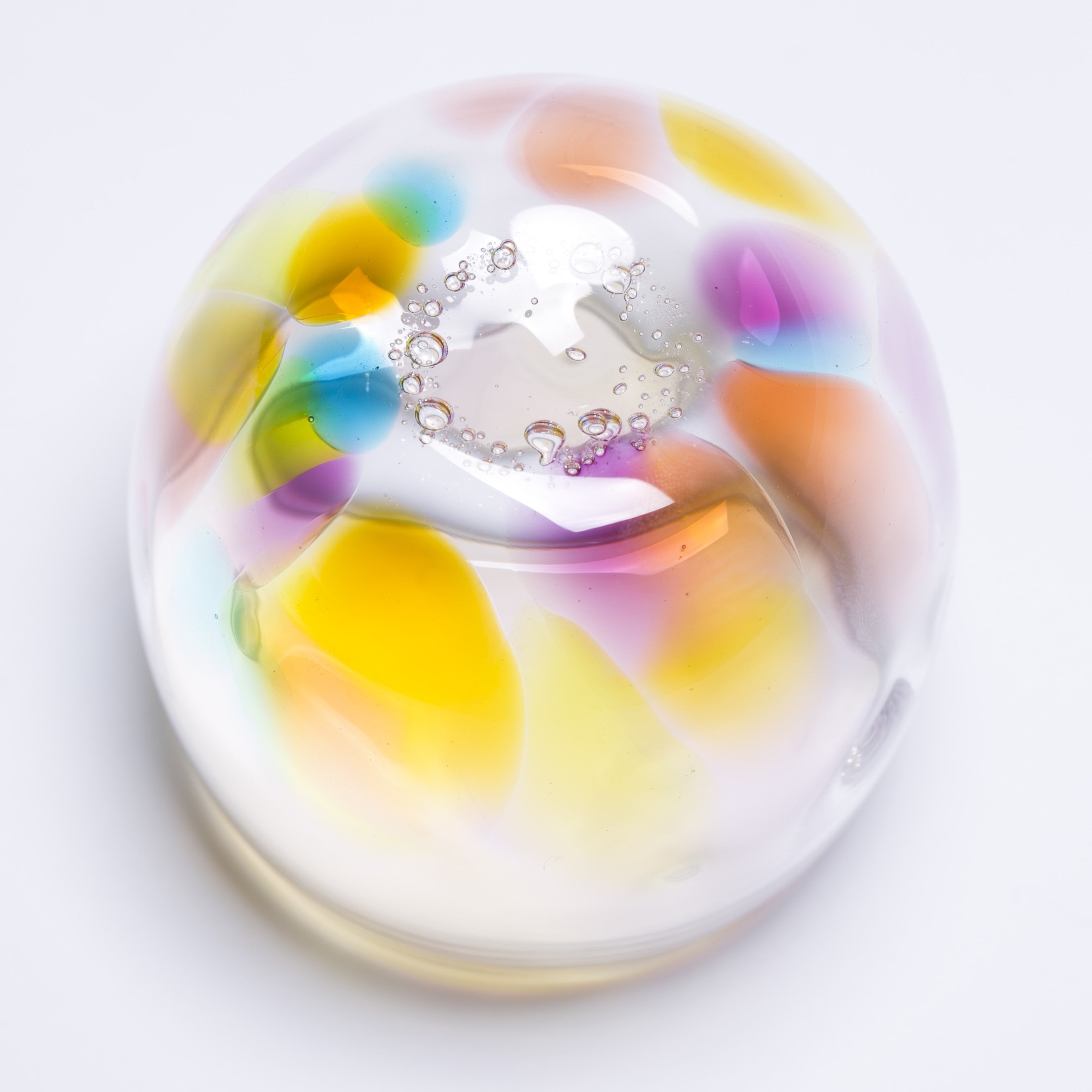


قوس قزح الزجاج الملون
الوصف
التفاصيل
SIZE
MATERIAL
حِرَفِيّ
كوجي
تحذير
قوس قزح الزجاج الملون
السعر بعد الخصم$ 1,144.00
حدِّد الخيارات
قوس قزح الزجاج الملون
السعر بعد الخصم$ 1,144.00
البلد
اللغة
سلة المشتريات
سلة مشترياتك فارغة
يتميز بشكل دائري يشبه كأس النبيذ لمنع الروائح من الهروب، كما أنه عملي عند تقديم النبيذ.
يحب الكثيرون هذا قوس قزح من الألوان، والذي يتم التعبير عنه باستخدام خمسة ألوان مختلفة من الزجاج الملون.
يختلف شكل كل قطعة قليلاً لأنه مصنوع يدوياً عن طريق النفخ فيه وتشكيله على هيئة كرة، وهو ما يبرز جودة الصناعة اليدوية.
تم تصميم السطح عمداً ليكون غير مستوٍ لإعطاء الألوان مظهراً أكثر تعبيراً وتعزيز الملمس المصنوع يدوياً.
SIZE
القطر: 6.5 سم
الارتفاع: 7 سم
السعة: 250 مل
MATERIAL
زجاج
GLASS STUDIO SOEJIMA
"Rich and Colorful Lifestyles"
Our goal and philosophy is to provide a richer and more colorful life to people around the world.
Through our handmade glass, we are committed to helping our customers to enrich their lives, even if just a little bit, and to help them to spend moments of happiness.
ARTISAN STORY
Soejima Glass Studio
Founded in Saga City, Saga Prefecture in 1903, Soejima Glass Studio celebrates its 120th anniversary in 2023.
We have inherited the handmade glass-making techniques handed down from that time and continue to work hard every day.
We continue to search for the next 100 years and are always striving to create products that will be in demand for the next 100 years.
HIZEN VIDRO / HIZEN GLASSWARE
About 175 years ago / 1850s / Late Edo Period
Hizen Vidro began in 1852 at Seiren-kata, a scientific research facility established by Saga lord Nabeshima Naomasa, where glass was needed for chemical vessels and experimental equipment. A craft industry thus emerged directly from late-Edo scientific modernization and later passed into private production.
In Japan, Hizen Vidro is known for soft free-blown forms and vivid color. It remains practical tableware and sake ware while also carrying the unusual historical identity of a traditional craft born from nineteenth-century science and technology.
Its signature “Japan blowing” method is especially rare. Instead of relying only on an iron blowpipe, craftsmen use two glass rods so the hot vessel touches little except air, helping create an exceptionally smooth surface. Manipulating the two rods has earned the process the nickname “two-sword blowing.”
الاختلافات الفردية
نظرًا لأن كل قطعة تُصنع يدويًا بشكل مستقل، فقد تطرأ اختلافات طفيفة في اللون والنمط والشكل والملمس. وتُعد هذه الاختلافات الدقيقة من الخصائص الطبيعية للأعمال اليدوية، ما يجعل كل قطعة فريدة من نوعها حقًا. نأمل أن تستمتعوا بهذه الاختلافات الفردية كجزء من جمال الحرفية اليابانية وطابعها المميز.
مدة الإنتاج
إذا لم يكن المنتج متوفرًا في المخزون حاليًا، فقد يقوم الحرفي بتصنيعه حسب الطلب. ونظرًا إلى أن كل قطعة تُصنع يدويًا بعناية، فقد يستغرق الإنتاج عدة أشهر، وذلك حسب المنتج وجدول الحرفي. نقدر صبركم وتفهمكم.
حدِّد الخيارات