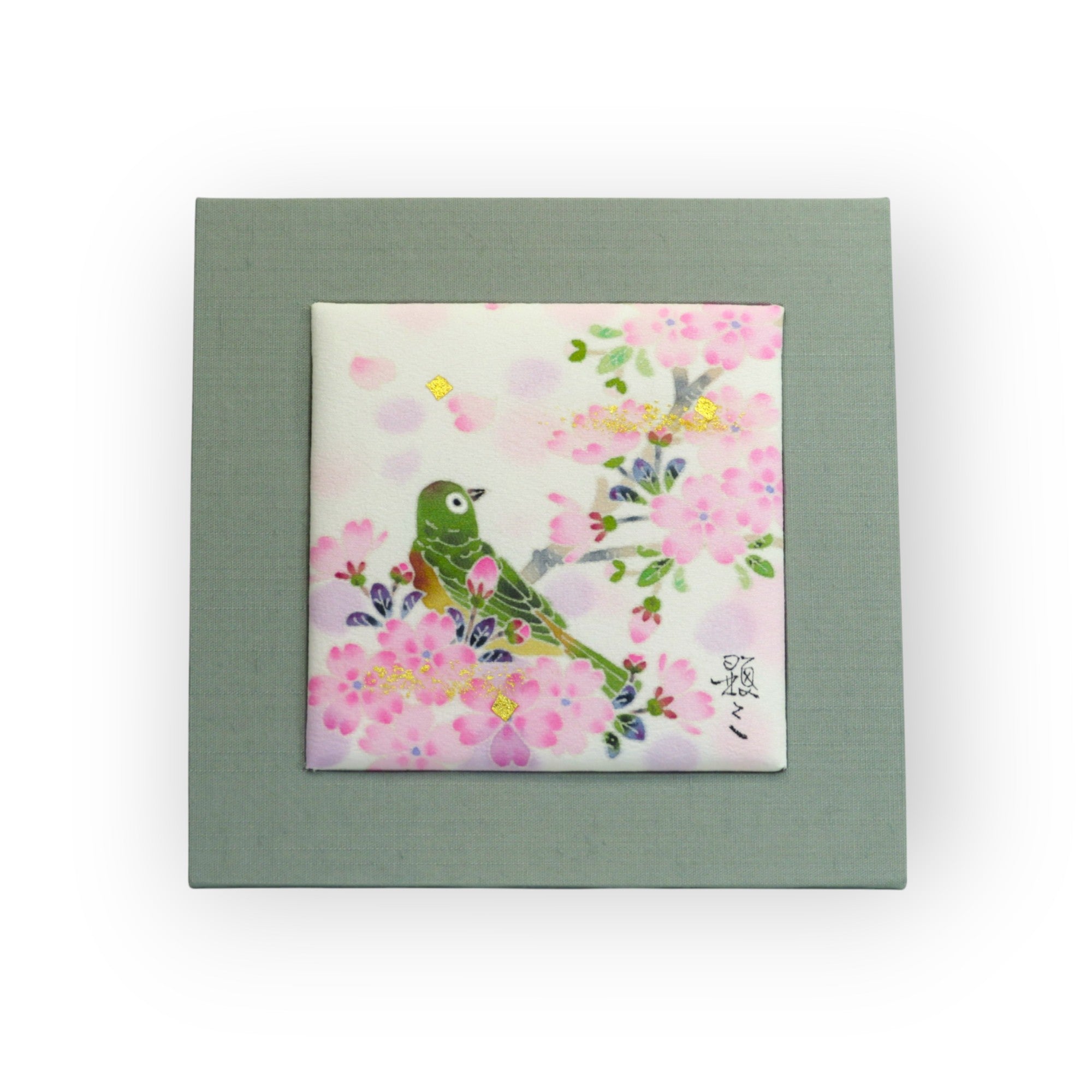
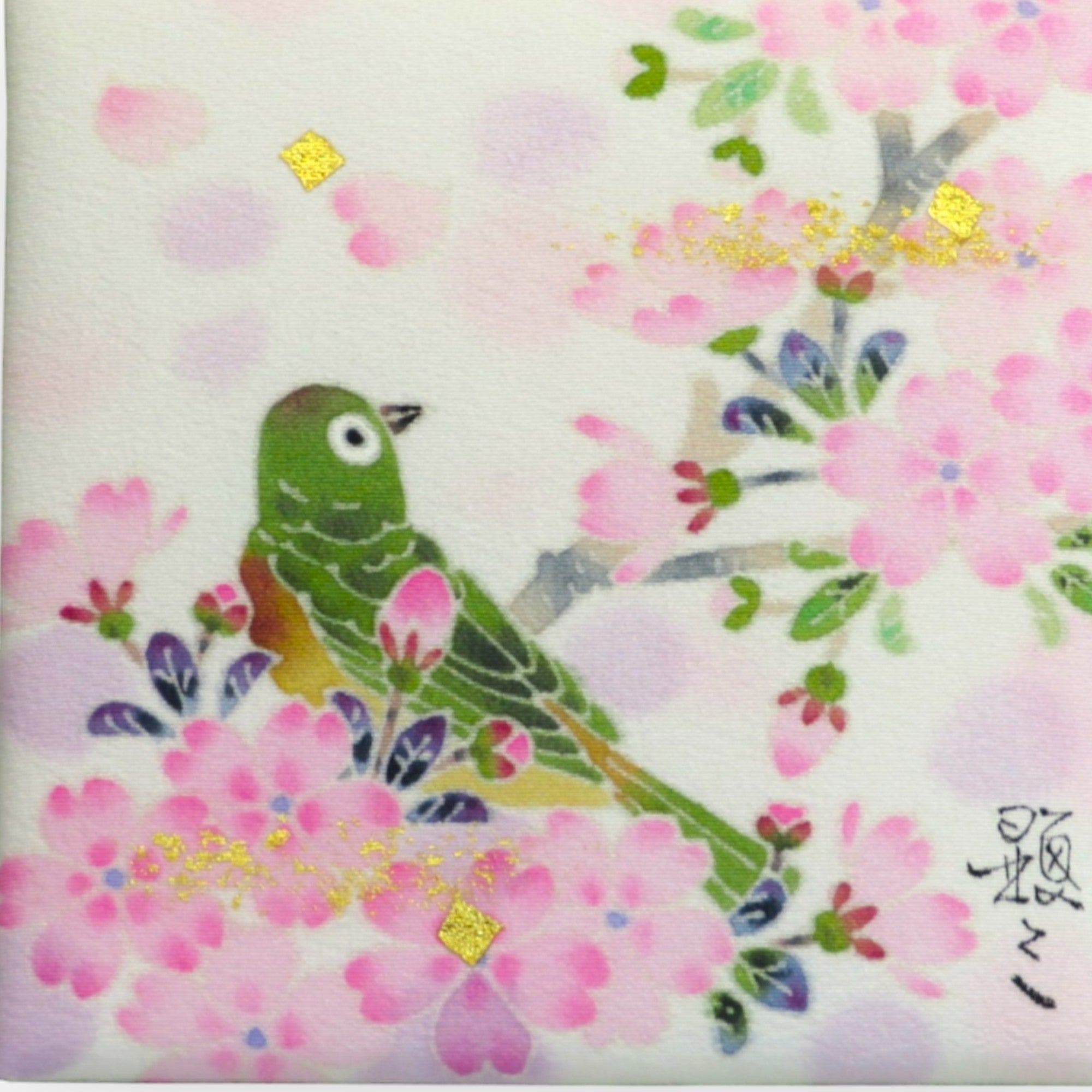
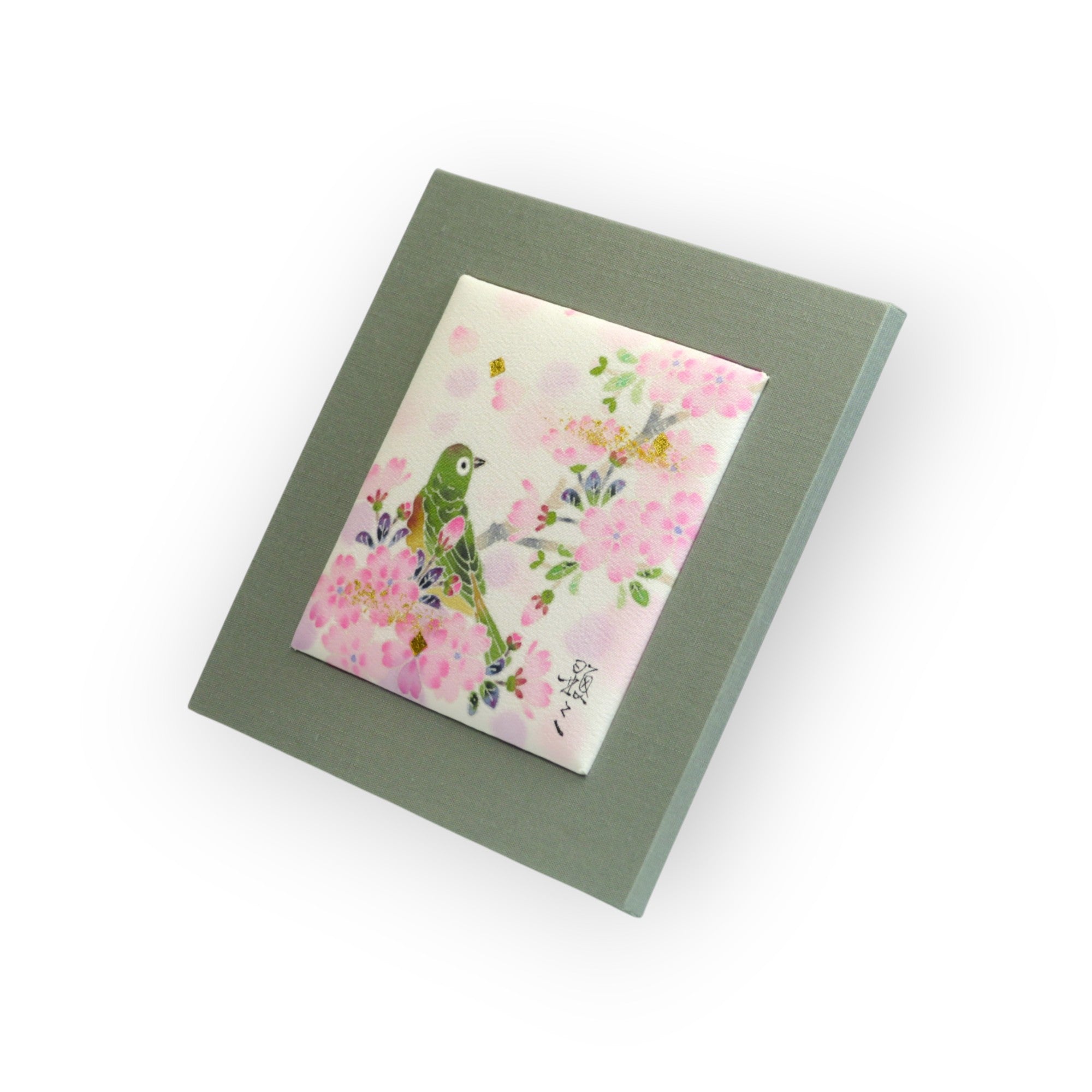
KAGA YUZEN / KAGA SILK DYEING
About 500 years ago / 1500s / Muromachi–Sengoku Period
Kaga Yuzen grew from older plain-dyeing traditions in the Kaga region, with patterned dyeing developing during the seventeenth century. In the early eighteenth century, designs associated with Kyoto fan painter Miyazaki Yuzensai and paste-resist techniques influenced Kanazawa, where the craft matured into a highly naturalistic local style.
In Japan, Kaga Yuzen is regarded as a formal kimono tradition with restrained elegance. Its palette is often associated with the “Kaga Five Colors”—deep red, indigo, ochre, green and ancient purple—and its motifs are observed from nature with painterly care. Today the technique also appears on scarves and smaller accessories.
One particularly fascinating detail is the deliberate depiction of insect bites or withered areas on leaves. Rather than presenting flawless flowers, artisans may show nature aging and changing. Within luxurious decoration, imperfection becomes a sign of realism and life itself.