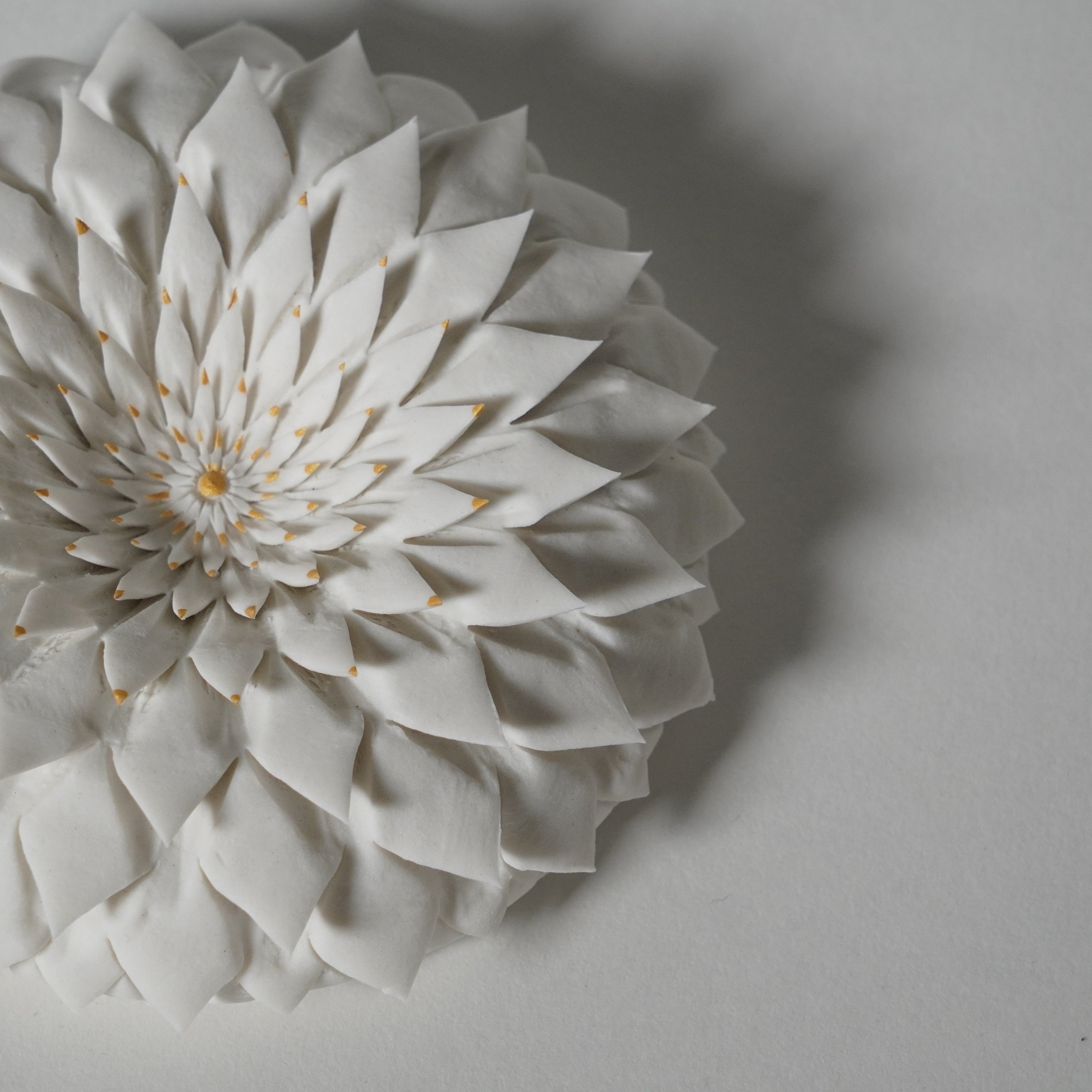
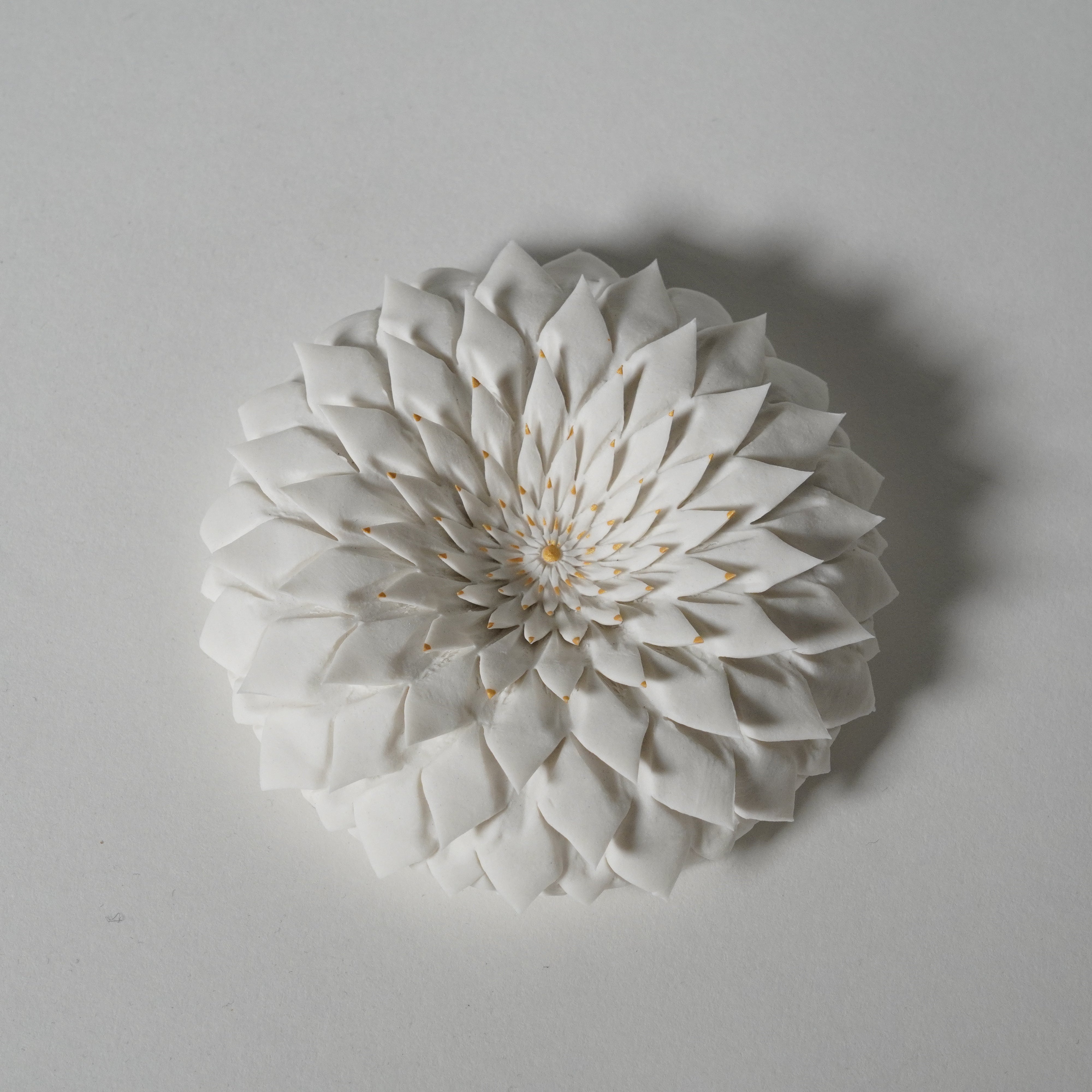
ثقالة ورق / كوسونغاما / أذريون
الوصف
التفاصيل
SIZE
MATERIAL
حِرَفِيّ
كوجي
تحذير
حدِّد الخيارات


ثقالة ورق / كوسونغاما / أذريون
السعر بعد الخصم$210.00
البلد
اللغة
سلة المشتريات
سلة مشترياتك فارغة


صُنعت ثقالة الورق هذه باستخدام تقنية فريدة لقص الفخار بالمقص قبل حرقه.
مستوحاة من تقنيات الحلويات اليابانية التقليدية، تنعكس جمالية زهور الأقحوان في بتلات الأقحوان المصنوعة بالمقص.
SIZE
العرض:9 سم
العمق:9 سم
الارتفاع:5 سم
الوزن:270 جم
MATERIAL
السيراميك
KOSONGAMA
Pursuing, challenging, and refining the art of ceramics.
Inspired by the traditional Japanese sweet-making technique Hasamigiku, I developed a unique method of cutting into unfired clay with scissors, which I call Tsuchibasami—“Scissoring Clay.” I apply this delicate and intricate pattern mainly to flower vases and illuminators. Many of my works reflect the beauty of chrysanthemums, but I also explore other motifs such as feathers and fish scales.
ARTISAN STORY
Yuko Hayashi / Koson Kiln
“Koson Kiln” has a history of over 100years on the slopes of Chawan-Zaka next to the famous Kiyomizu temple in Kyoto. We have mainly been producing vessels which are made of white and celadon porcelain.
I entered the ceramic world when I was 21 years old.
I have been helping my father with his work whilst also raising children
and I have been challenging, improving, and pursuing my own ceramic style as a craftsperson….
KYO WARE & KIYOMIZU WARE
About 1,200 years ago / 800s / Heian Period (794–1185)
Kyoto ceramics reach back to kilns operating before and during the Heian period, then expanded with tea culture in the Muromachi and Momoyama eras. In the seventeenth century, Nonomura Ninsei perfected brilliant overglaze decoration, followed by innovators such as Ogata Kenzan, Okuda Eisen and Aoki Mokubei, whose diverse approaches shaped today’s Kyo and Kiyomizu ware.
In Japan, these ceramics are famous precisely because there is no single fixed style. Tea bowls, kaiseki dishes and everyday tableware may use overglaze painting, blue-and-white decoration, gold, sancai-inspired color and many other techniques. The craft sits at the heart of Kyoto’s culture of pairing vessels with cuisine and tea.
The surprising point is that Kyoto was never defined by a single major clay deposit. Potters drew on materials such as Amakusa porcelain stone, techniques arriving from other regions, and the tastes of artists and patrons gathered in the capital. Freedom from one local material helped make Kyoto ceramics unusually hybrid and stylistically diverse.
الاختلافات الفردية
نظرًا لأن كل قطعة تُصنع يدويًا بشكل مستقل، فقد تطرأ اختلافات طفيفة في اللون والنمط والشكل والملمس. وتُعد هذه الاختلافات الدقيقة من الخصائص الطبيعية للأعمال اليدوية، ما يجعل كل قطعة فريدة من نوعها حقًا. نأمل أن تستمتعوا بهذه الاختلافات الفردية كجزء من جمال الحرفية اليابانية وطابعها المميز.
مدة الإنتاج
إذا لم تكن القطعة متوفرة في المخزون حاليًا، فقد يقوم الحرفي بصنعها حسب الطلب. ونظرًا إلى أن كل قطعة تُصنع يدويًا بعناية، فقد يستغرق الإنتاج عدة أشهر، وذلك حسب القطعة والجدول الزمني للحرفي. نقدر صبركم وتفهمكم.

حدِّد الخيارات