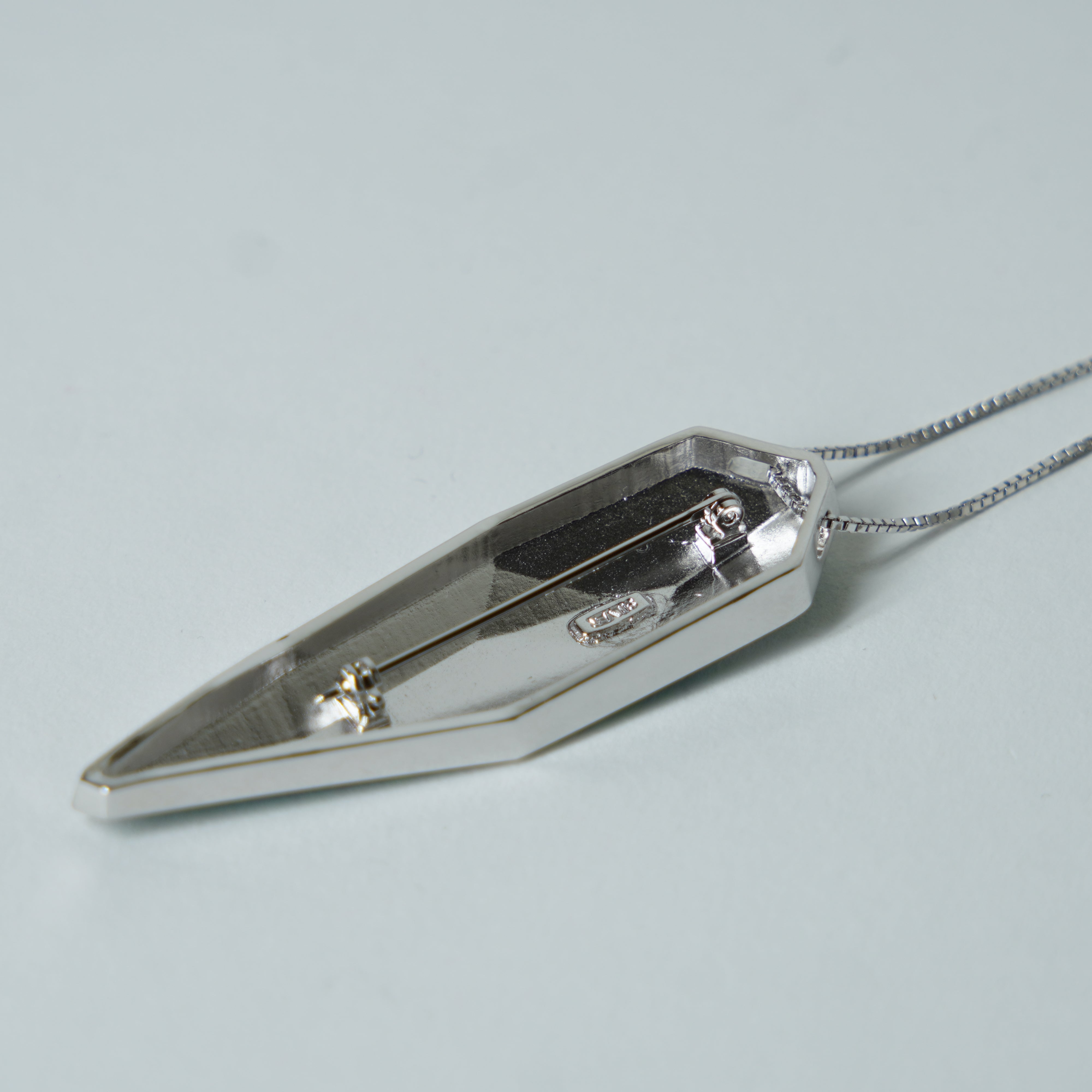
Silberkyoto Opal Anhänger und Brosche / Ruri
الوصف
التفاصيل
SIZE
MATERIAL
حِرَفِيّ
كوجي
تحذير
Optionen auswählen


Silberkyoto Opal Anhänger und Brosche / Ruri
AngebotDhs. 4,796.00
Land
Sprache
Warenkorb
Dein Warenkorb ist leer


صُممت هذه القلادة والدبوس لتتجاوز حدود تصميم "اللاكر" و"الطراز الياباني".
روري هو لون منعش يجمع بين الأزرق السماوي والأخضر الفاتح، ليمنحك إحساسًا بالانتعاش. ستستمتع ببريق يتغير بجمال حسب زاوية الرؤية أو حسب الليل والنهار.
لماذا لا ترتدي براعة حرفي لاكر ماهر؟
SIZE
العرض:1.8 سم
الطول:6.3 سم
الارتفاع:9 مم
الوزن:20 جم
السلسلة:60 سم
MATERIAL
أوبال
لاكيه ياباني
فضة إسترلينية
طلاء بالروديوم
LACQUER STUDIO MATSUDA
"Repainting traditional art into modern art"
With the demand for lacquer decreasing rapidly, we want to convey the beauty of lacquer to a wider variety of people. With this in mind, we have incorporated the traditional techniques we have cultivated over the years into accessories to make lacquer more accessible to people.
ARTISAN STORY
Tsutomu Matsuda / Matsuda Lacquer Studio
He has been engaged in lacquering Buddhist altars and ritual articles for more than 50 years in Kyoto. He sublimates the techniques and experience he has cultivated over the past 50 years into accessories that glamorously adorn the body and soul of people. He produces genuine handmade crafts that stubbornly stick to handcrafting.
ACHIEVEMENTS
・Designated as a traditional craftsman in 2014
・Received award for Master Craftsman of Kyoto
・Received award for the Order of the Sacred Treasure, Silver and Silver Rays
・He has received many other awards for their work.
KYO BUTSUDAN / KYOTO BUDDHIST ALTARS
About 1,000 years ago / 1000s / Heian Period (794–1185)
Kyoto Buddhist altars developed after the Heian period as temple building concentrated sculptors, woodworkers, lacquerers, gilders and decorative metal specialists in the capital. During the Edo period, the growth of major Buddhist sects and household worship increased demand, turning Kyoto into a center for highly sophisticated altars and ritual fittings.
In Japan, a household altar is a place to address ancestors and remember the dead. Large traditional altars have become less common in compact urban homes, but smaller prayer spaces and furniture-like designs continue to adapt the practice to modern life.
A Kyoto altar is rarely the work of one craftsperson. Wood construction, carving, lacquer, gold leaf, maki-e, metal fittings and final assembly can be divided among numerous specialists. In a single cabinet, many of Kyoto’s most important craft traditions are brought together—almost like a miniature temple.
الاختلافات الفردية
نظرًا لأن كل قطعة تُصنع يدويًا بشكل مستقل، فقد تطرأ اختلافات طفيفة في اللون والنمط والشكل والملمس. وتُعد هذه الاختلافات الدقيقة من الخصائص الطبيعية للأعمال اليدوية، ما يجعل كل قطعة فريدة من نوعها حقًا. نأمل أن تستمتعوا بهذه الاختلافات الفردية كجزء من جمال الحرفية اليابانية وطابعها المميز.
مدة الإنتاج
إذا لم يكن المنتج متوفرًا في المخزون حاليًا، فقد يقوم الحرفي بتصنيعه حسب الطلب. ونظرًا إلى أن كل قطعة تُصنع يدويًا بعناية، فقد يستغرق الإنتاج عدة أشهر، حسب المنتج وجدول الحرفي. نقدر صبركم وتفهمكم.

Optionen auswählen