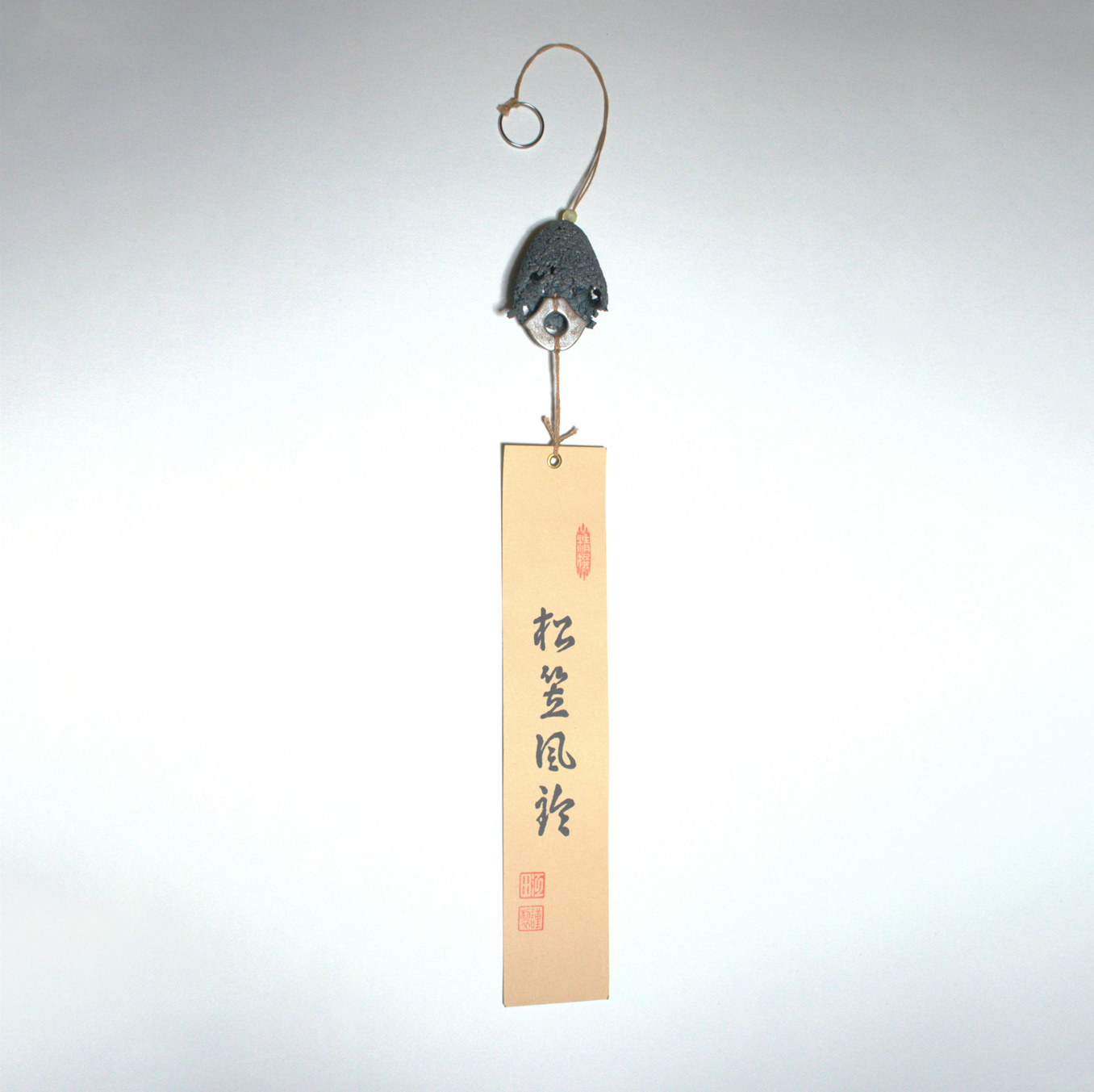
Matsukasa Wind Chime / 002
DESCRIPTION
DETAILS
SIZE
MATERIAL
ARTISAN
KOGEI
Caution
Matsukasa Wind Chime / 002
Angebot595,00 kr
Optionen auswählen
Matsukasa Wind Chime / 002
Angebot595,00 kr
Land
Sprache
Warenkorb
Dein Warenkorb ist leer
This is the only wind chime made of iron sand in Japan that has been in use for over 400 years.
It is characterized by its light, clear tone, and its price range varies depending on the tone. The rough surface of the cast iron is covered with a pattern of countless holes.
We hope you enjoy this one-of-a-kind item!
SIZE
Width:4.5cm
Height:35cm
Depth:4.5cm
Weight:70g
MATERIAL
Iron
KOUNDO
"No two things are ever made the same"
Each wind chime is made differently depending on the temperature and other environmental conditions of the day. Each wind chime has a different shape and tone, making it one-of-a-kind. We hope you will enjoy this product created by chance.
ARTISAN STORY
Kei Eda / Koundo
He was born as the 23rd head of the Eda family of foundries, he is the only domestic craftsman who produces iron sand wind chimes in Miyagi Prefecture. The technique, which has been used for over 400 years, is considered as a secret and has been passed down from one generation to the next, never to be seen outside the family. In the past, the wind chimes were purchased by the Japanese royal family, and their value as a craft is immeasurable.
ACHIEVEMENTS
・Received the Japan Crafts Association East Japan Received Branch Director Award at the East Japan Traditional Crafts Exhibition
・Received the Grand Prize at the Sano Renaissance Metal Casting Exhibition.
・Received the Minister of Education, Culture, Sports, Science and Technology Prize at the Japan Traditional Crafts Kinzoku Exhibition.
・He has received many other awards for their work.
MATSUKASA FURIN / JAPANESE WIND CHIME
About 300 years ago / 1700s / Edo Period (1603–1868)
Matsukasa wind chimes combine metalworking and casting with a sculptural form inspired by a pine cone. They belong to the broader Japanese wind-chime culture that flourished in the Edo period, turning the movement of summer air into sound.
In Japan, a furin does not actually lower the temperature, yet its ringing creates a strong psychological sense of coolness. Suspended under an eave, the paper strip catches the breeze and makes invisible wind audible, becoming one of the most recognizable sensory symbols of summer.
The pine-cone form is technically demanding because its surface contains many recesses and projections. Metal must flow cleanly into thin details and release from the mold without losing definition. The object is simultaneously a small bell and a piece of sculpture inspired by nature.
Individual Differences
As each piece is individually handcrafted, slight variations in color, pattern, shape, and texture may occur. These subtle differences are a natural characteristic of handcrafted works, making each piece truly unique. We hope you will enjoy these individual variations as part of the beauty and character of Japanese craftsmanship.
Production Time
If an item is not currently in stock, it may be made to order by the artisan. As each piece is carefully handcrafted, production may take several months depending on the item and the artisan's schedule. We appreciate your patience and understanding.
Optionen auswählen