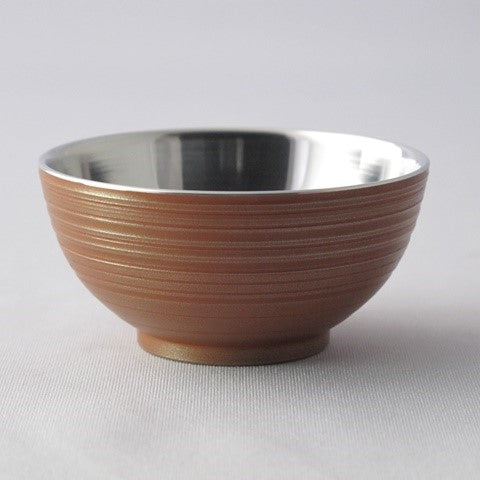
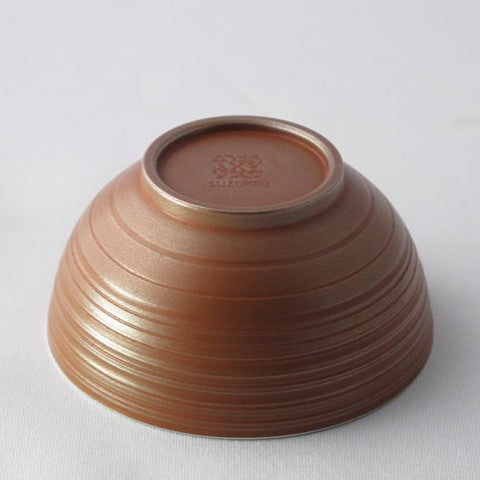
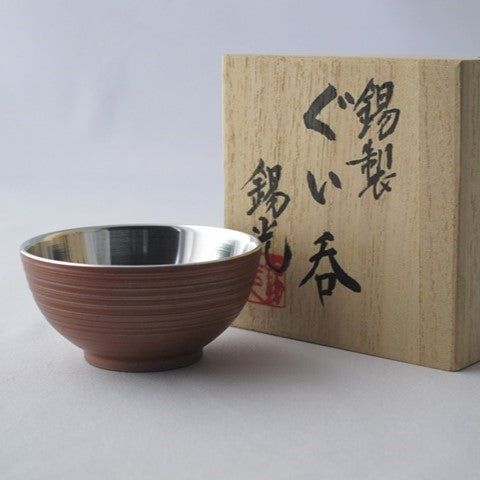
Sake Cup / Flat / Autum
DESCRIPTION
DETAILS
SIZE
MATERIAL
ARTISAN
KOGEI
Caution
Sake Cup / Flat / Autum
Angebot483,00 zł
Optionen auswählen
Sake Cup / Flat / Autum
Angebot483,00 zł
Land
Sprache
Warenkorb
Dein Warenkorb ist leer
It is shaped to be held between the two ends of the rim of the large open bore, and lightly elevated with a quick snap. Recommended for cold to hot sake.
The color of the lacquer represents the four seasons. The four seasons are represented by the color of the lacquer: young grass in spring, bright golden yellow in summer, orange in autumn, and red in winter.
The autumn orange color is reminiscent of the fragrant buds in autumn, and the word for the flower is "humble".
Properties of Tin
It is said that tin makes a drink taste more mild and is maily used for drinking vessels because of its excellent heat and cold retention properties. It is also used for tea containers because of its excellent corrosion resistance and its ability to keep moisture away. This is why tin foil is applied to the inside of large tea boxes found in tea shops.
SIZE
Width:6.7cmDepth:6.7cmHeight:3.2cmWeight:90g
MATERIAL
Tin
SUZUKOU
"Dedicate to your one task, bright up a corner."
Tin has been found in the imperial court, shrines, and temples since ancient times, and it was also used by the common people during the Edo period. Tin has remained intact over the years until the present day. There is no doubt that tin was a suitable material for sake and tea utensils. We are proud to "light a corner" as one of the few workshops that specialize in tin with its special characteristics and make tinware by hand, making full use of the potter's wheel.
ARTISAN STORY
My predecessor founded Suzukoin 1987. I entered the world of tin working under the tutelage of my predecessor.
Every day I watched and learned my predecessor's techniques up close, and at the same time, I learned about his passion for tin, his work, and the importance of tradition.
We have inherited from our predecessors not only the traditional handcrafted manufacturing methods, but also to pass them on to the next generation, and to strive to make tin more attractive to as many people as possible.
ACHIEVEMENTS
・Received "Grand Prize" in Saitama Prefecture New Product AWARD 2021.
SUZU KOGEI / JAPANESE TINWARE
About 1,300 years ago / 700s / Nara Period (710–794)
Tin has been used in Japan since ancient times, and tin objects survive in the eighth-century Shosoin collection. In the early modern period it became common for sake ware, tea utensils and Buddhist implements, with casting and hammering techniques taking advantage of the metal’s softness.
In Japan, tin is especially popular for sake cups, tea caddies and vases. Its subdued silver color and satisfying weight feel luxurious, while contemporary designers have also explored bendable vessels and minimalist tableware.
Tin is surprisingly soft for a metal. High-purity pieces can sometimes be bent slightly by hand, and crystalline structures may produce a faint crackling sound—known as “tin cry”—when flexed. It is a material that quietly contradicts the expectation that metal must be rigid.
Individual Differences
As each piece is individually handcrafted, slight variations in color, pattern, shape, and texture may occur. These subtle differences are a natural characteristic of handcrafted works, making each piece truly unique. We hope you will enjoy these individual variations as part of the beauty and character of Japanese craftsmanship.
Production Time
If an item is not currently in stock, it may be made to order by the artisan. As each piece is carefully handcrafted, production may take several months depending on the item and the artisan's schedule. We appreciate your patience and understanding.
Optionen auswählen