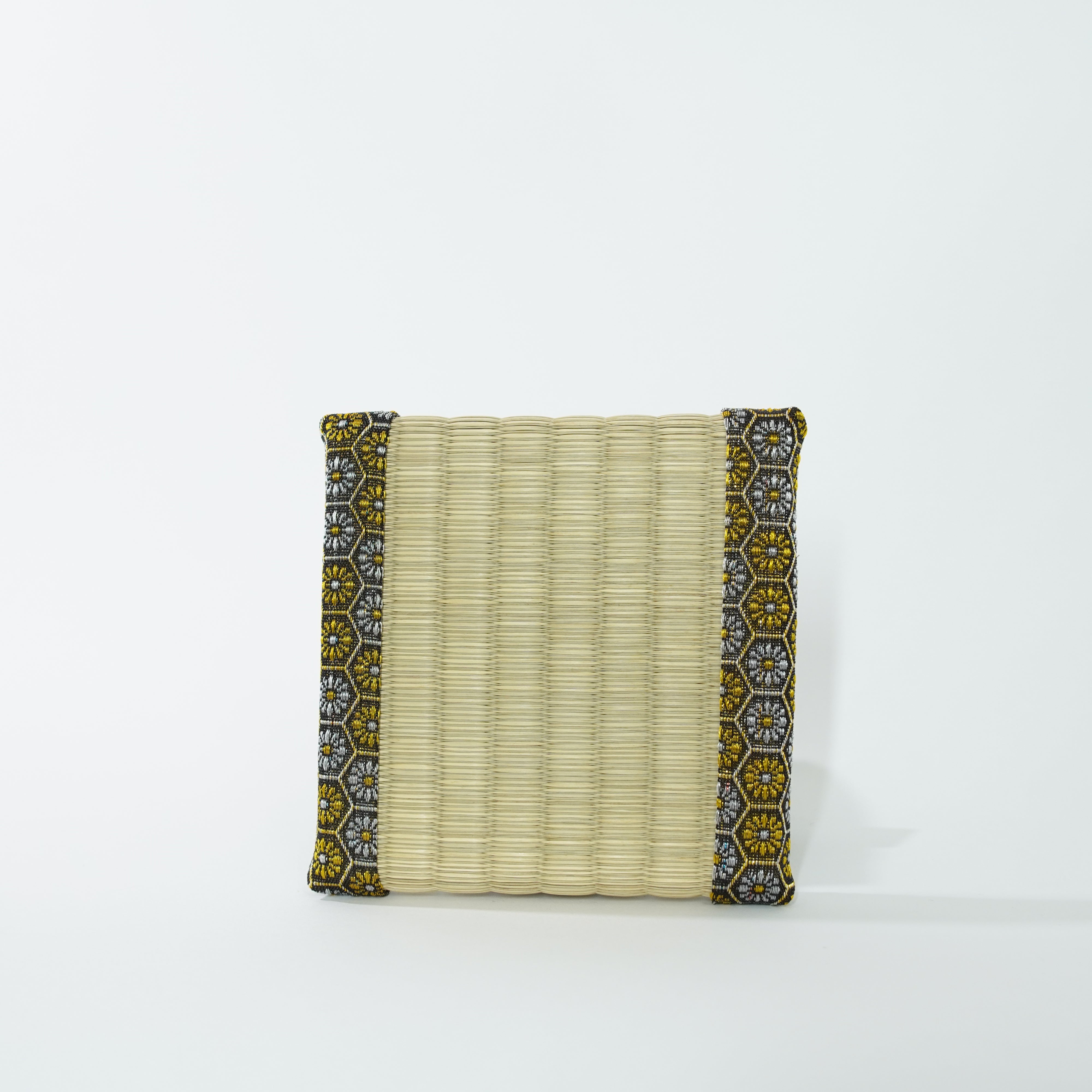
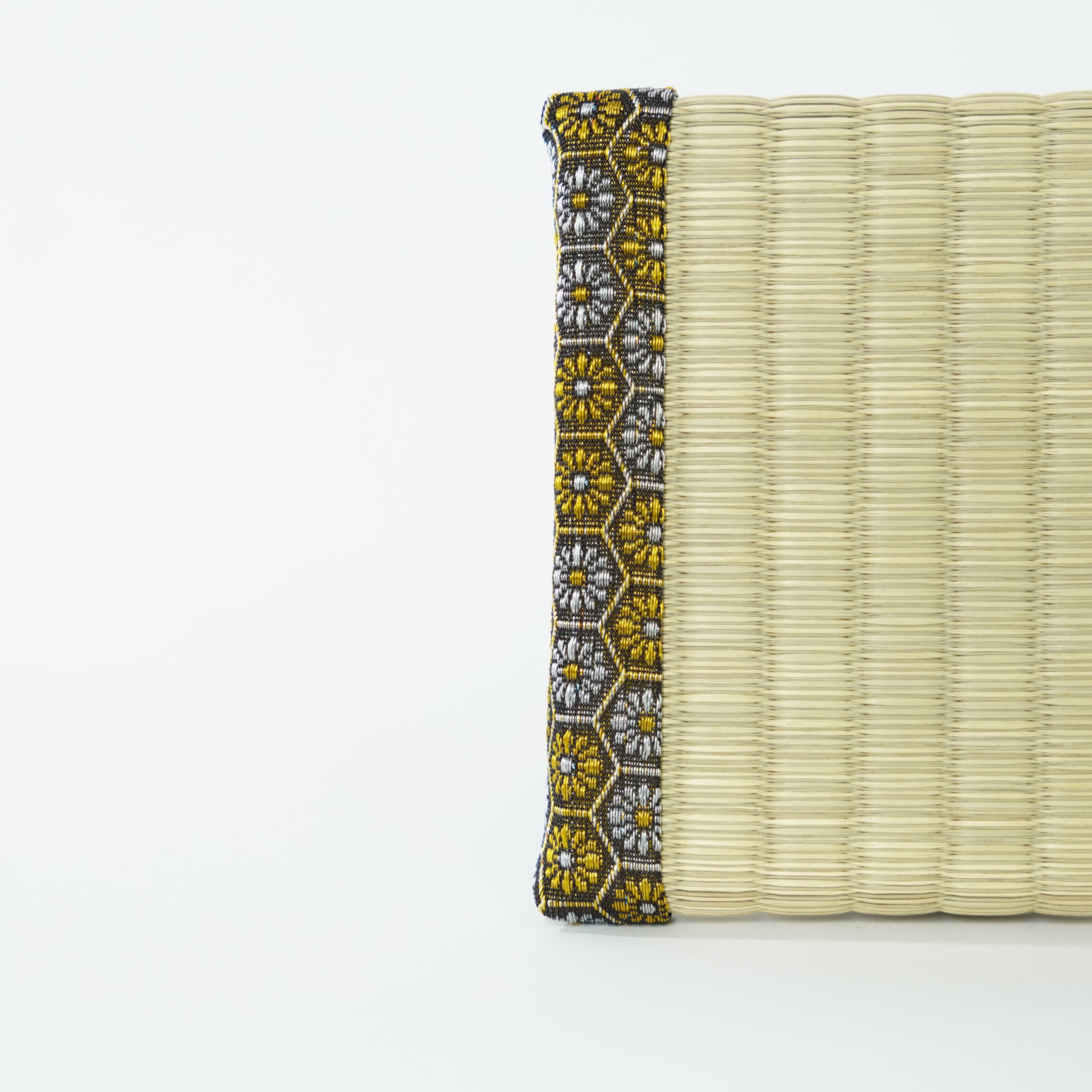
KYO TATAMI / KYOTO TATAMI MATS
About 1,200 years ago / 800s / Heian Period (794–1185)
Tatami began as portable mats used by aristocrats and were placed only where needed in the Heian period. From the Muromachi era onward, entire rooms came to be covered. In Kyoto, dimensions, edging and laying patterns became highly specialized for tea rooms, temples, palaces and residences.
For Japanese people, tatami is more than flooring—it is a unit of life. Room size is still described as “six mats” or “eight mats,” and activities such as sitting, sleeping and serving tea are shaped by the surface. Tatami remains a defining material in traditional rooms, inns and tea spaces.
The size is not uniform across Japan. Kyoto’s kyoma mats are larger than standard Edo-style mats, meaning regional architecture itself was based on different modules. In tea rooms, even the direction of the woven surface and the position of the hearth affect etiquette, making tatami part of the choreography of space.