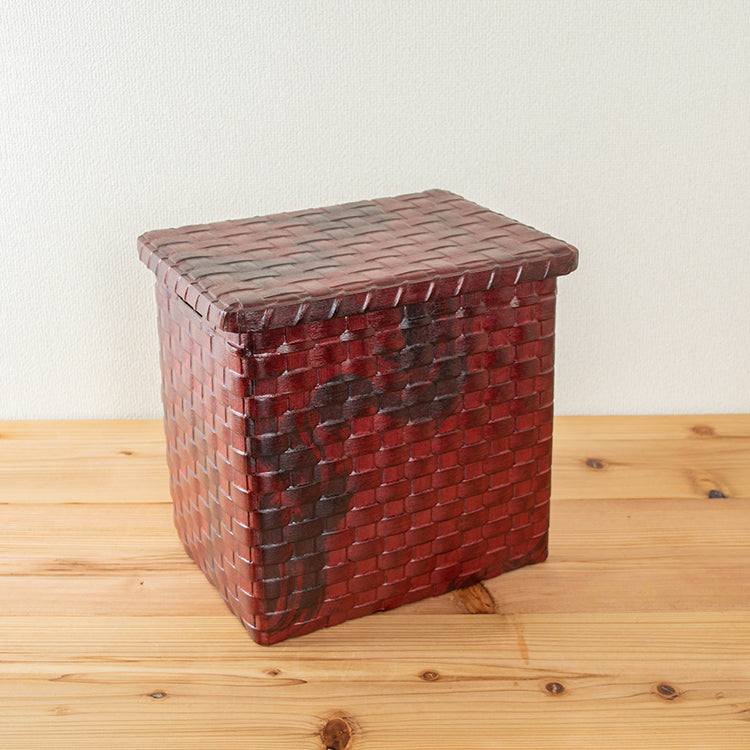
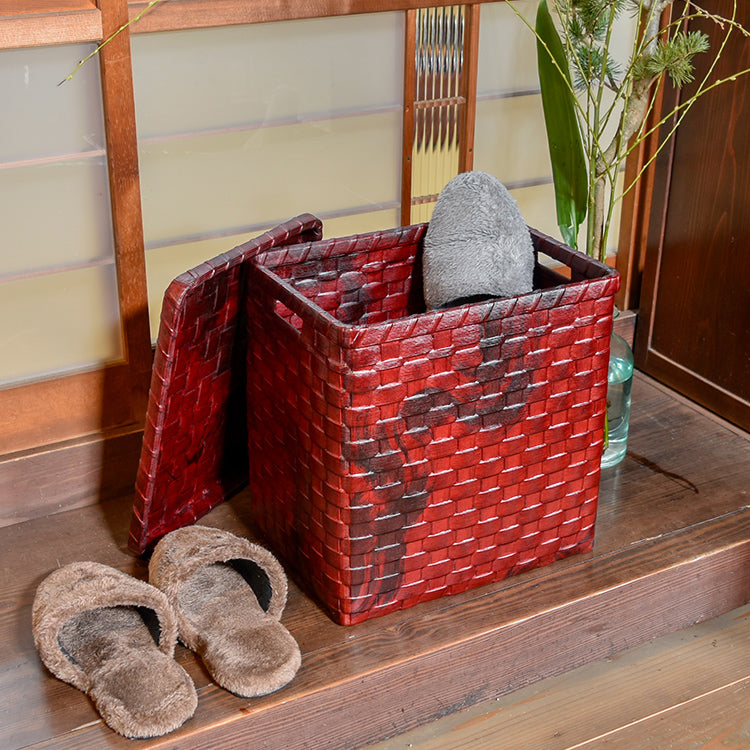
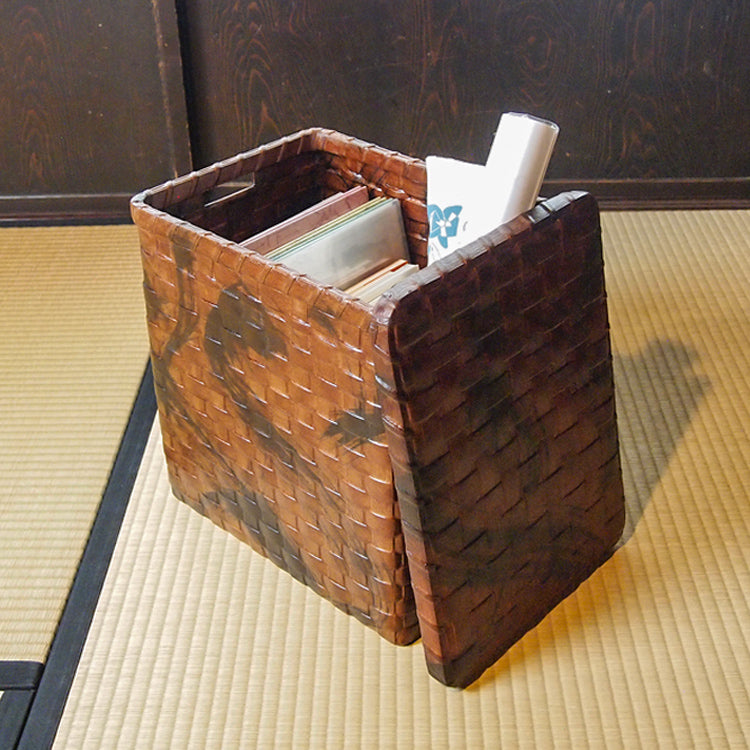
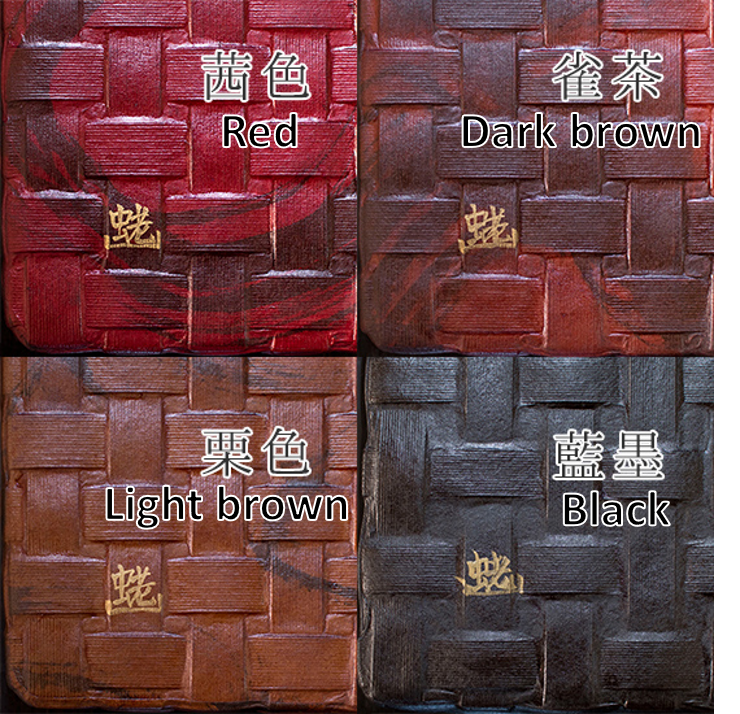
OMI IKKANBARI / OMI LACQUERED PAPER CRAFT
About 400 years ago / 1600s / Edo Period (1603–1868)
Ikkanbari is made by layering washi over bamboo baskets or wooden forms and finishing the surface with persimmon tannin or lacquer. One tradition traces the technique to the Chinese-born craftsman Hirai Ikkan in the early Edo period. In Omi it became connected with tea utensils and practical household containers.
In Japan, Ikkanbari bowls and boxes are admired because they are lighter than wood yet far stronger than people expect from paper. The technique appears in tea ware, confectionery containers, baskets and bags, and contemporary makers sometimes incorporate old printed paper or calligraphy to create unique surfaces.
Its greatest surprise is that paper becomes a structural material. A single sheet tears easily, but layers placed in different fiber directions and hardened with tannin or lacquer become remarkably durable. The principle resembles a composite material—turning weakness into strength through lamination centuries before modern engineering.