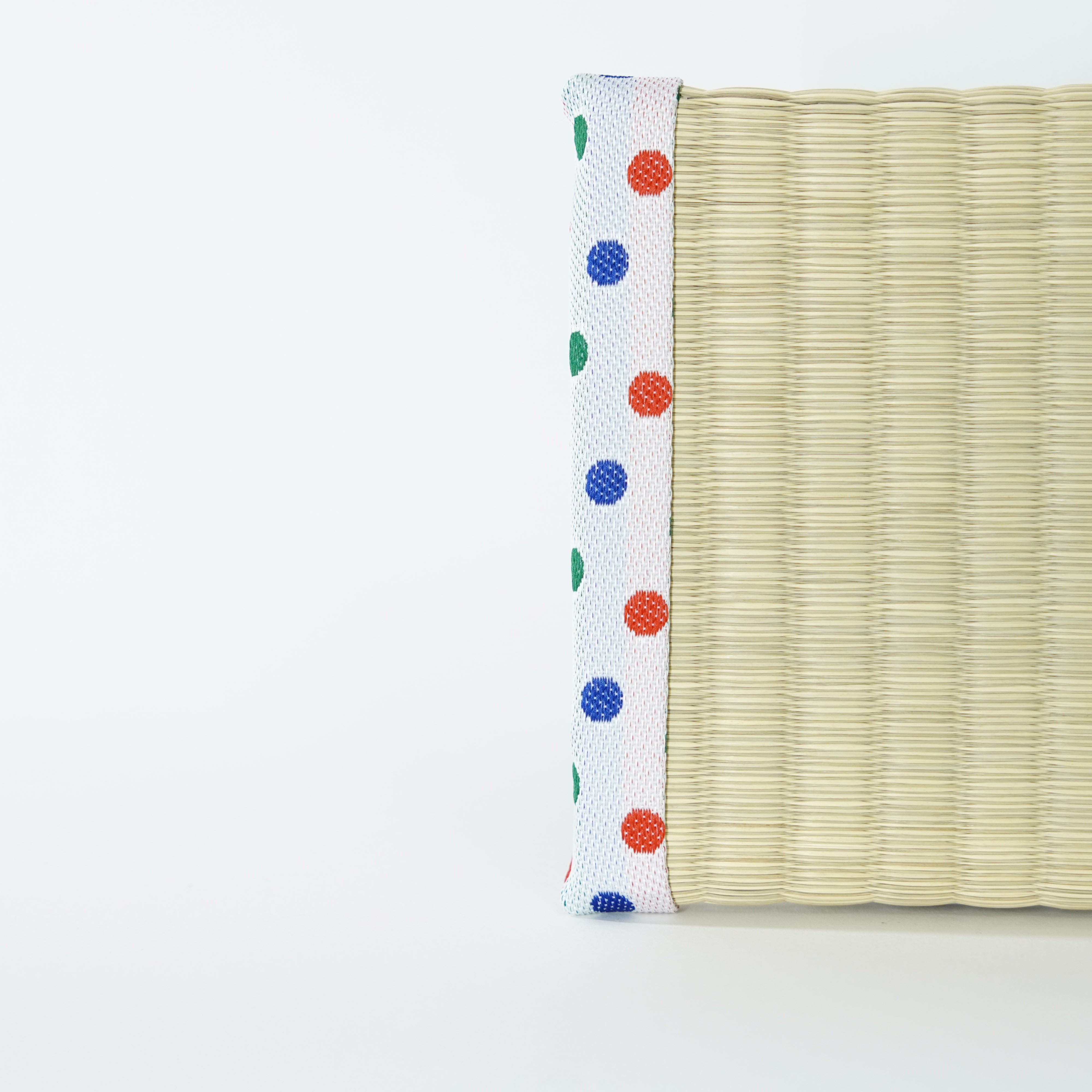
Mini Tatami Display Base / Polka Dot Pattern
DESCRIPTION
DETAILS
SIZE
MATERIAL
ARTISAN
KOGEI
Caution
Choose options


Mini Tatami Display Base / Polka Dot Pattern
Sale price$970.00
Country
Language
Cart
Your cart is empty


Mini Tatami mats are handmade by skilled Kyoto Tatami craftsmen. The unique aroma of Tatami has various effects such as relaxing and stress-relieving, and you can feel healing just by smelling it!
It can be used for various purposes, such as a place for small items in the living room, a decorative stand for interior decorations, or a place for keys at the entrance.
Why don't you feel healing with mini Tatami mats?
SIZE
Length:14.5cm
Width:14cm
Weight:85g
MATERIAL
Rush
Polyester
FUJII TATAMI
"There is nothing more important than doing a careful job."
I feel most gratified and rewarded when customers say "Thank you for making / cleaning my tatami mats" after doing a careful job with the customer's best interest in mind.
ARTISAN STORY
Yoshihisa Fujii / Fujii Tatami
A craftsman who has been making Kyoto tatami since 1868 in Kyoto Prefecture. It has been 17 years since he took over the business as the 6th generation and he put his efforts to promote tatami culture. In addition to the tatami used in Japanese houses, the company also produces mini-tatami mats, bags, and other products that fit easily into modern lifestyles.
KYO TATAMI / KYOTO TATAMI MATS
About 1,200 years ago / 800s / Heian Period (794–1185)
Tatami began as portable mats used by aristocrats and were placed only where needed in the Heian period. From the Muromachi era onward, entire rooms came to be covered. In Kyoto, dimensions, edging and laying patterns became highly specialized for tea rooms, temples, palaces and residences.
For Japanese people, tatami is more than flooring—it is a unit of life. Room size is still described as “six mats” or “eight mats,” and activities such as sitting, sleeping and serving tea are shaped by the surface. Tatami remains a defining material in traditional rooms, inns and tea spaces.
The size is not uniform across Japan. Kyoto’s kyoma mats are larger than standard Edo-style mats, meaning regional architecture itself was based on different modules. In tea rooms, even the direction of the woven surface and the position of the hearth affect etiquette, making tatami part of the choreography of space.
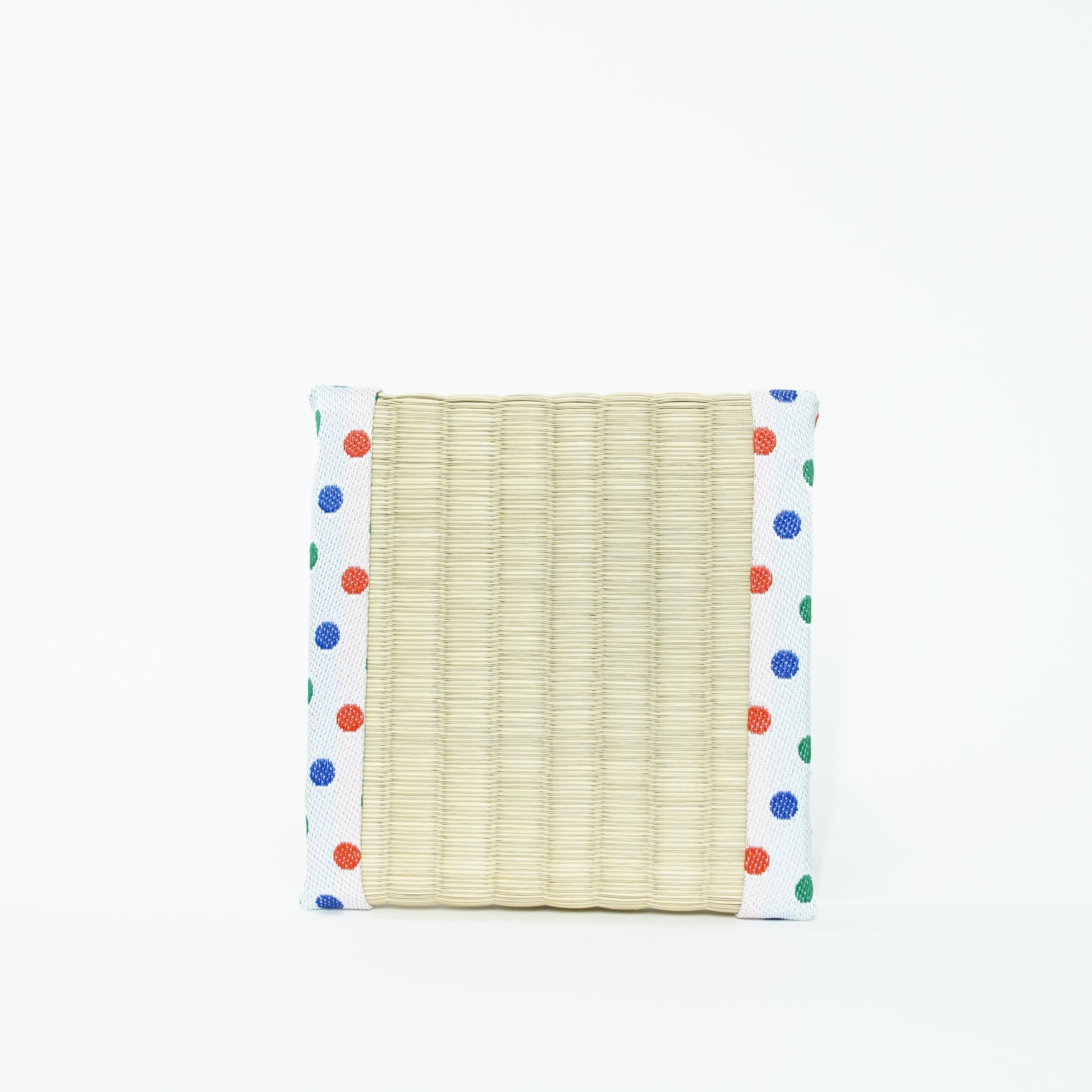
Individual Differences
As each piece is individually handcrafted, slight variations in color, pattern, shape, and texture may occur. These subtle differences are a natural characteristic of handcrafted works, making each piece truly unique. We hope you will enjoy these individual variations as part of the beauty and character of Japanese craftsmanship.
Production Time
If an item is not currently in stock, it may be made to order by the artisan. As each piece is carefully handcrafted, production may take several months depending on the item and the artisan's schedule. We appreciate your patience and understanding.

Choose options