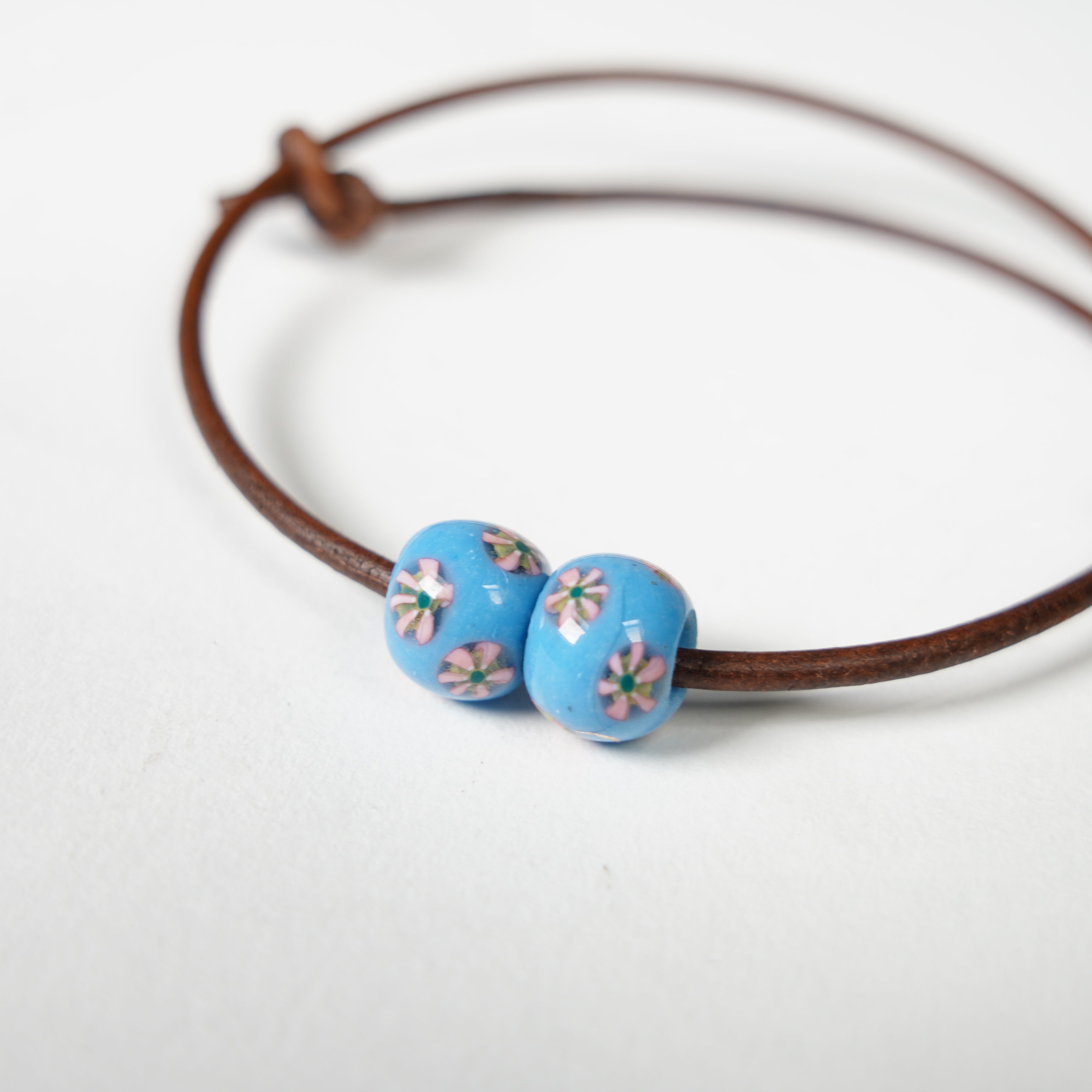
Brazalete de vidrio / azul turquesa
الوصف
التفاصيل
SIZE
MATERIAL
حِرَفِيّ
كوجي
تحذير
Elige opciones


Brazalete de vidrio / azul turquesa
Precio de ofertaDhs. 637.00
País
Idioma
Cesta
La cesta está vacía


هذا السوار مصنوع من خرز اليعسوب الأزرق الفيروزي. ويحتوي على خيط جلدي يمكن من خلاله تعديل المقاس. كما يستخدم خرز اليعسوب بنقشة الزهور الذي يمثل أعمال استوديو تومبو داما فوجيمورا. وقد استُخدم الزجاج الكريستالي في صناعة الزجاج، ما يمنحه وزنًا فريدًا وجمالًا متلألئًا.
يُستخدم الفحم طوال العملية بأكملها، بدءًا من إنتاج نسيج الزجاج، ولف الزجاج الملون حول اللب الزجاجي، وصولًا إلى تركيب الأجزاء المنقوشة.
تخلق التقلبات الطبيعية في درجات الحرارة الناتجة عن نار الفحم عمقًا، ما ينتج عنه خرز يعسوب فريد وجذاب ومعبّر.
تُعد الملمس أيضًا من خصائص هذه الحرفة، ومن خلال زيادة نسبة الأصباغ، يتم تعزيز تباين الأنماط، ما ينتج عنه لون كثيف وغني.
SIZE
خرز
العرض: 1 سم (0.39 بوصة)
العمق: 1 سم (0.39 بوصة)
الارتفاع: 1 سم (0.39 بوصة)
الوزن: 4 غ
MATERIAL
زجاج
TOMBODAMA STUDIO FUJIMURA
ARTISAN STORY
Shigeki Fujimura / Fujimura Tombodama Studio
In the present day, the majority of Japanese glass beads are made using modern equipment such as gas or oil burners and lamps, utilizing pre-made glass. However, when it comes to restoring especially ancient beads, the limitations of using pre-made colored glass become apparent. Shigeki Fujimura's Tombodama Workshop adheres to the traditional methods of the Edo period, as intended by the predecessor, creating colored glass from scratch and finishing the beads entirely with charcoal fire. It is the only workshop that continues to replicate and preserve these ancient techniques. The depth of the colors achieved through this traditional method emits the cherished brilliance loved by people in ancient times.
ACHIEVEMENTS
・Creating exceptional products with a commitment to the beauty of the ancient world without ceasing to be beautiful.
・We produce all of our Japanese glass beads by hand, one by one, using a traditional method that has been in use since the Edo period.
・Please enjoy the deep coloring unique to the traditional crafting method.
TONBODAMA / JAPANESE GLASS BEADS
About 1,300 years ago / 700s / Nara Period (710–794)
Glass beads—the ancestors of today’s tombodama—reached Japan through ancient exchange with continental Asia and regions farther west. By the Nara period they were treasured as ornaments and luxury objects. Domestic glassworking expanded in the Edo period, and patterned beads came to decorate netsuke, hair ornaments and personal accessories.
In contemporary Japan, tombodama are accessible as jewelry, yet workshops devoted to reconstructing old beads or preserving Edo-period methods approach the craft almost like historical research. Because beads can be made one by one at a small flame, Japan also has a lively culture of independent studio artists.
Their greatest surprise is that the decoration is not simply painted on the surface. Patterns are built inside molten glass by layering, winding and stretching tiny glass rods. A flower only a few millimeters wide may contain an intricate internal structure that becomes visible only after the bead is formed.
الاختلافات الفردية
نظرًا لأن كل قطعة تُصنع يدويًا بشكل مستقل، فقد تطرأ اختلافات طفيفة في اللون والنمط والشكل والملمس. وتُعد هذه الاختلافات الدقيقة من الخصائص الطبيعية للأعمال اليدوية، ما يجعل كل قطعة فريدة من نوعها حقًا. نأمل أن تستمتعوا بهذه الاختلافات الفردية كجزء من جمال الحرفية اليابانية وطابعها المميز.
مدة الإنتاج
إذا لم تكن القطعة متوفرة في المخزون حاليًا، فقد يقوم الحرفي بصنعها حسب الطلب. ونظرًا إلى أن كل قطعة تُصنع يدويًا بعناية، فقد يستغرق الإنتاج عدة أشهر، وذلك حسب القطعة والجدول الزمني للحرفي. نقدر صبركم وتفهمكم.

Elige opciones


Beads are beautiful. Shipping was prompt. Could not recommend more. Thank you