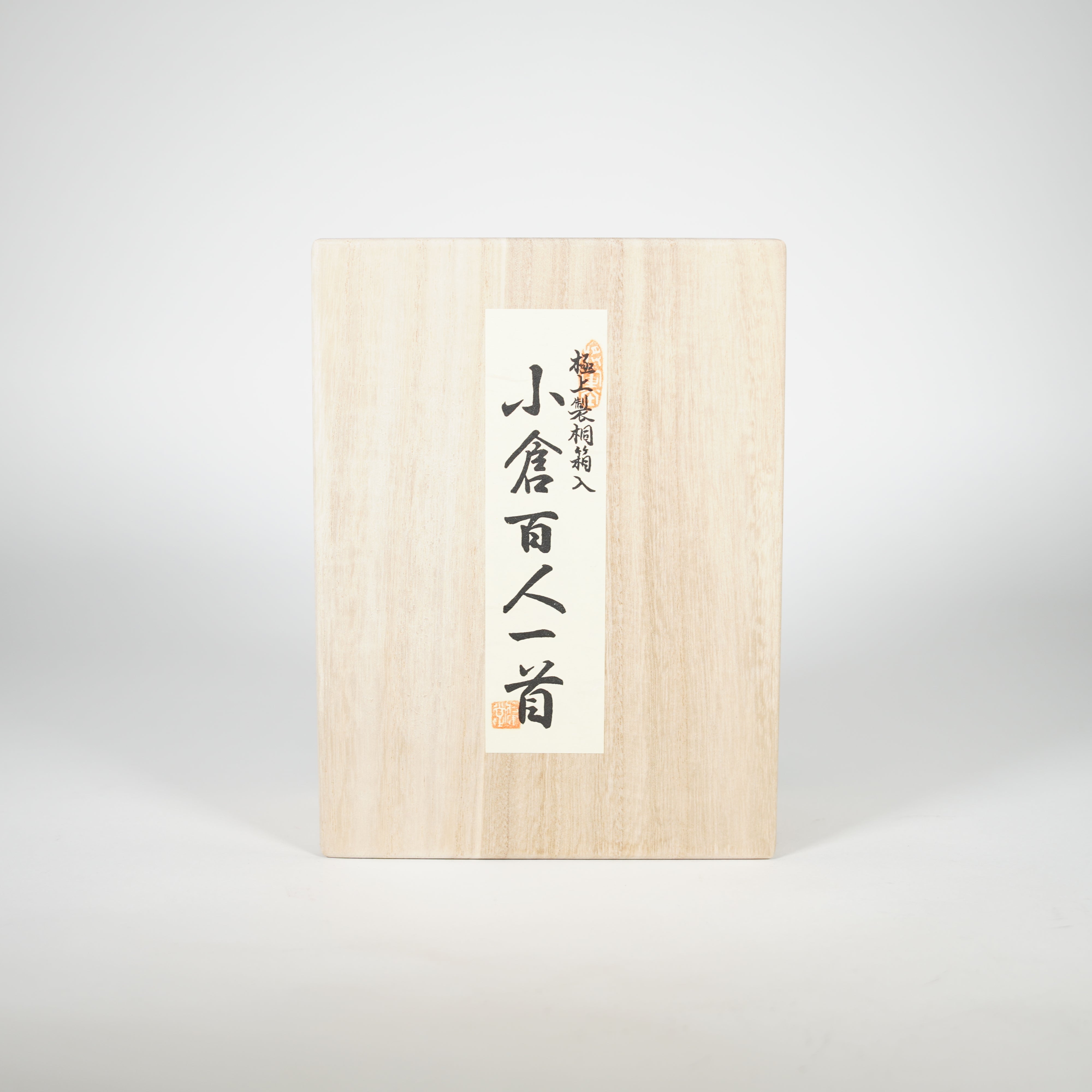


Hyakunin-
DESCRIPTION
DETAILS
SIZE
MATERIAL
ARTISAN
KOGEI
Caution
Hyakunin-
Precio de oferta€245,95
Elige opciones
Hyakunin-
Precio de oferta€245,95
País
Idioma
Cesta
La cesta está vacía
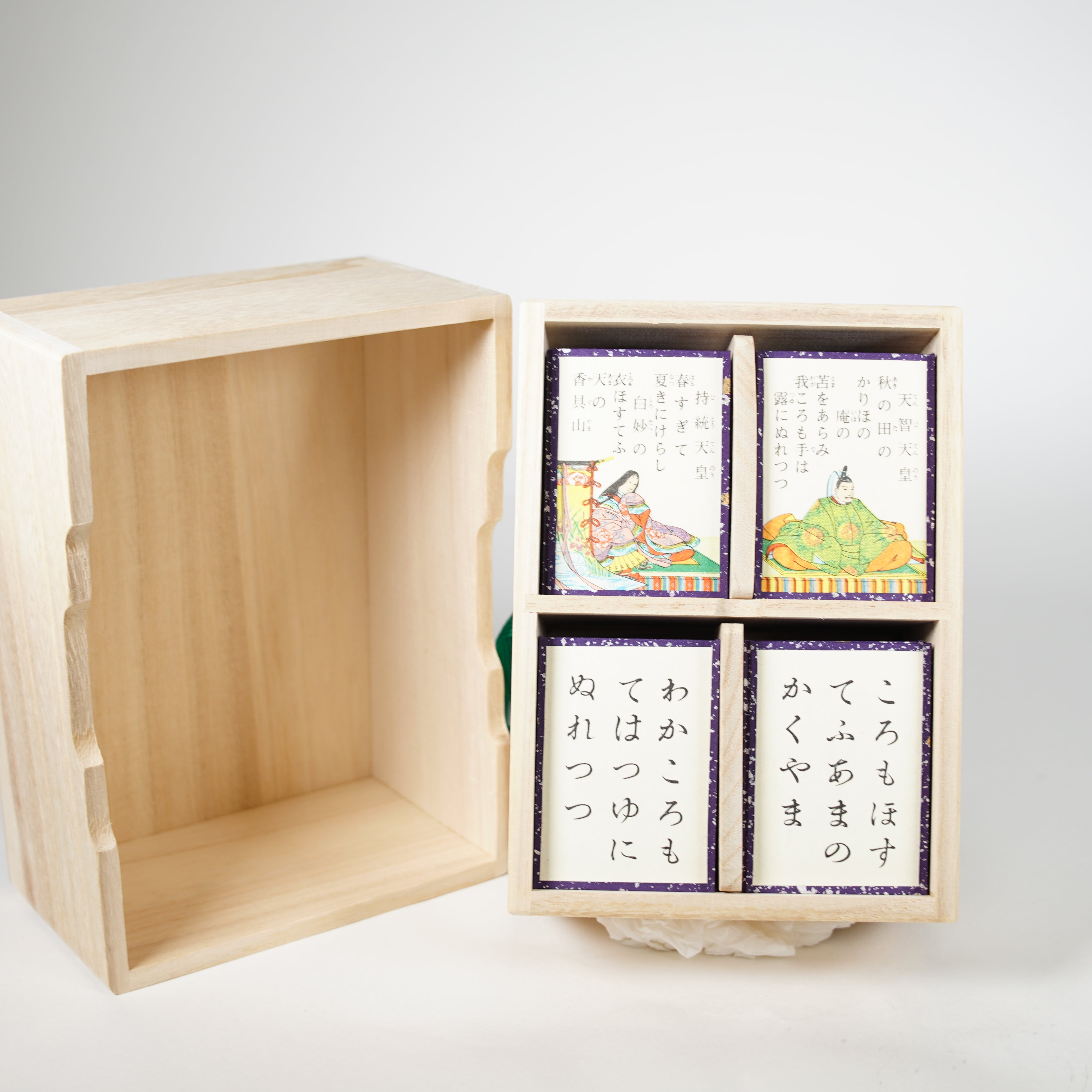
The front of the card is made of beautiful and elegant Washi paper, which is said to be durable and resistant to deterioration, and the back is covered with gold and silver leaf.
The luxurious appearance and feel of this carefully handcrafted product can be enjoyed.
What is the Hyakunin Isshu?
The Hyakunin Isshu is a collection of waka poems by 100 representative poets from the Asuka period to the early Kamakura period.
The object of the game is to listen to the first verse of the poem read by the reader and try to get the card with the last verse written on it as quickly as possible.
Hyakunin Isshu is a traditional Japanese game, and its appeal is that it allows players to experience its history and culture.
SIZE
Width:15.5cmDepth:20cmHeight:11cmWeight:1123g
MATERIAL
Japanese paper
TAMURA SHOGUNDO
"The warmth that only handmade paper can bring"
We have maintained the traditions of the past without changing our methods.
We produce our products using techniques that have been refined over many years, taking advantage of the characteristics of each type of paper.
The handmade Japanese playing cards will become more and more attractive as the years go by, giving it a warmth that only handmade Japanese playing cards can provide, and will be used by our customers for many years to come.
ARTISAN STORY
Satoshi Tamura / Tamura Shogundo
Tamura Shogundo was founded in 1921. Satoshi Tamura was born into a family of craftsmen specializing in Japanese playing cards, and following in his father's footsteps, he is now a craftsman specializing in Japanese playing cards who is dedicated to handcrafting Japanese playing cards every day.
Tamura Shogundo's Hyakunin Isshu is also used in the traditional "Karuta Hajime New Year's Card Game" held at Yasaka Shrine in Kyoto on January 3 every year.
KARUTA / JAPANESE PLAYING CARDS
About 450 years ago / 1500s / Azuchi–Momoyama Period (1573–1603)
Karuta developed after Portuguese playing cards reached Japan in the sixteenth century and encountered older Japanese matching and poetry games. During the Edo period, distinctively Japanese forms such as Hyakunin Isshu and iroha karuta became established, while competitive karuta was later organized as a modern sport.
In Japan, karuta is familiar as a New Year family game and an educational tool for children. Hyakunin Isshu also serves as an accessible doorway into classical waka poetry. Competitive karuta remains vibrant today, with school clubs and national tournaments attracting players regardless of age or gender.
The name itself is a clue to its international history: “karuta” derives from the Portuguese word carta. A European card game was transformed in Japan into a world of poetry, literacy and lightning-fast athletic competition—an unusually vivid example of foreign culture being completely reimagined.
Individual Differences
As each piece is individually handcrafted, slight variations in color, pattern, shape, and texture may occur. These subtle differences are a natural characteristic of handcrafted works, making each piece truly unique. We hope you will enjoy these individual variations as part of the beauty and character of Japanese craftsmanship.
Production Time
If an item is not currently in stock, it may be made to order by the artisan. As each piece is carefully handcrafted, production may take several months depending on the item and the artisan's schedule. We appreciate your patience and understanding.
Elige opciones