

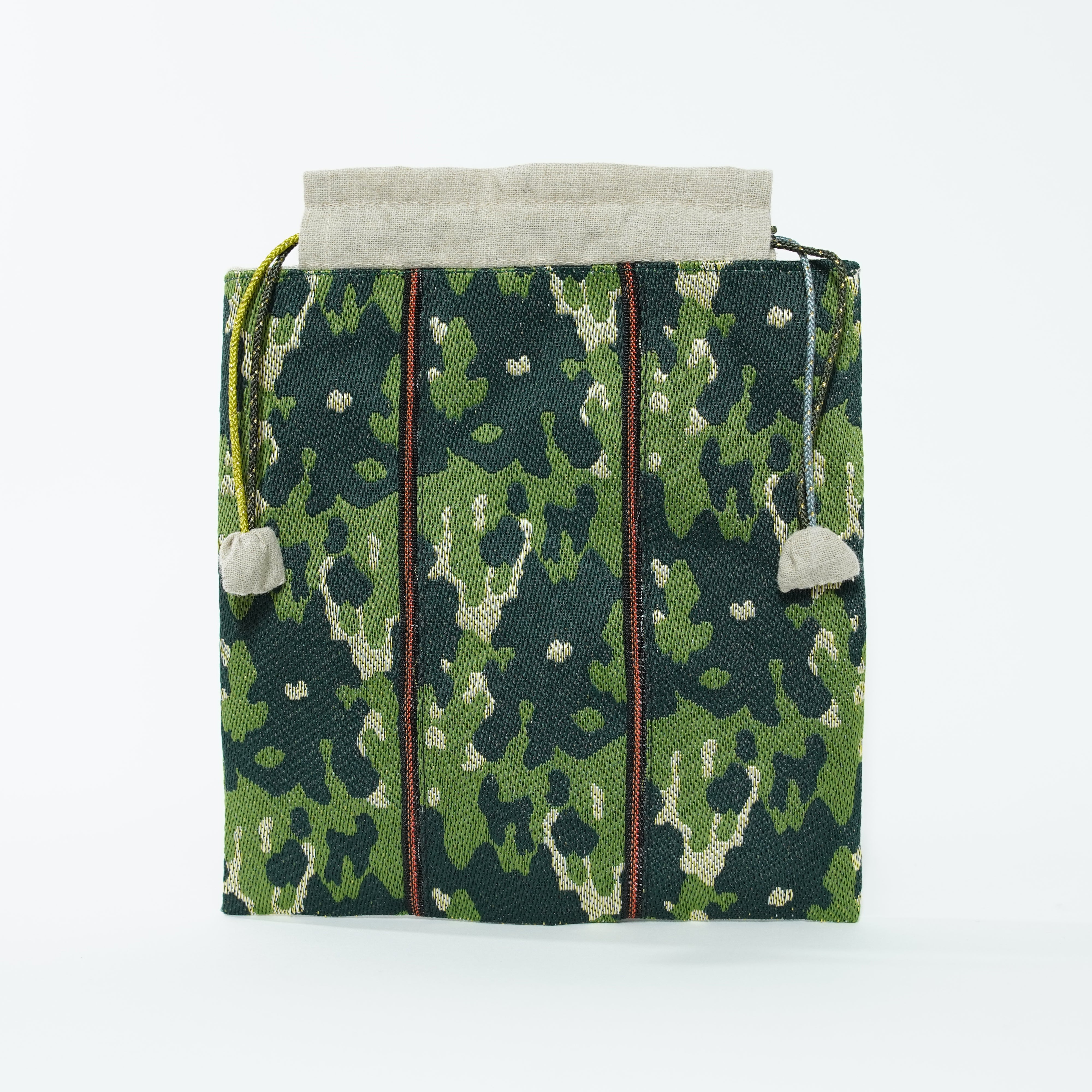
Sac tatami / camouflage
DESCRIPTION
DÉTAILS
SIZE
MATERIAL
ARTISAN
KOGEI
Attention
Sac tatami / camouflage
Prix de vente1.115,00 Kč
Choisir les options
Sac tatami / camouflage
Prix de vente1.115,00 Kč
Pays
Langue
Panier
Votre panier est vide
Ce sac est fabriqué à partir des chutes utilisées pour les tapis de tatami. Il présente un design unique et adorable que vous ne trouverez nulle part ailleurs, et c'est un accessoire qui peut apporter une touche d'originalité à votre style habituel !
Le sac est très léger et de la taille idéale pour transporter un portefeuille, un smartphone et d'autres petits objets, il peut donc également être utilisé pour de courts trajets !
SIZE
Longueur:19cm
Largeur:19cm
Poids:47g
MATERIAL
Polyester
FUJII TATAMI
"There is nothing more important than doing a careful job."
I feel most gratified and rewarded when customers say "Thank you for making / cleaning my tatami mats" after doing a careful job with the customer's best interest in mind.
ARTISAN STORY
Yoshihisa Fujii / Fujii Tatami
A craftsman who has been making Kyoto tatami since 1868 in Kyoto Prefecture. It has been 17 years since he took over the business as the 6th generation and he put his efforts to promote tatami culture. In addition to the tatami used in Japanese houses, the company also produces mini-tatami mats, bags, and other products that fit easily into modern lifestyles.
KYO TATAMI / KYOTO TATAMI MATS
About 1,200 years ago / 800s / Heian Period (794–1185)
Tatami began as portable mats used by aristocrats and were placed only where needed in the Heian period. From the Muromachi era onward, entire rooms came to be covered. In Kyoto, dimensions, edging and laying patterns became highly specialized for tea rooms, temples, palaces and residences.
For Japanese people, tatami is more than flooring—it is a unit of life. Room size is still described as “six mats” or “eight mats,” and activities such as sitting, sleeping and serving tea are shaped by the surface. Tatami remains a defining material in traditional rooms, inns and tea spaces.
The size is not uniform across Japan. Kyoto’s kyoma mats are larger than standard Edo-style mats, meaning regional architecture itself was based on different modules. In tea rooms, even the direction of the woven surface and the position of the hearth affect etiquette, making tatami part of the choreography of space.
Différences individuelles
Chaque pièce étant fabriquée à la main individuellement, de légères variations de couleur, de motif, de forme et de texture peuvent survenir. Ces différences subtiles sont une caractéristique naturelle des créations artisanales, ce qui rend chaque pièce véritablement unique. Nous espérons que vous apprécierez ces variations individuelles comme faisant partie de la beauté et du caractère de l'artisanat japonais.
Délai de production
Si un article n'est pas actuellement en stock, il peut être fabriqué sur commande par l'artisan. Comme chaque pièce est soigneusement fabriquée à la main, la production peut prendre plusieurs mois selon l'article et le planning de l'artisan. Nous vous remercions de votre patience et de votre compréhension.
Choisir les options