
Matsukasa Wind Chime / 001
DESCRIPTION
DÉTAILS
SIZE
MATERIAL
ARTISAN
KOGEI
Attention
Choisir les options

Matsukasa Wind Chime / 001
Prix de vente1.338,00 Kč
Pays
Langue
Panier
Votre panier est vide

C'est le seul carillon à vent au Japon fabriqué en sable de fer qui soit en usage depuis plus de 400 ans.
Il se caractérise par son son léger et cristallin, et son prix varie en fonction de la tonalité. La surface rugueuse de la fonte est recouverte d'un motif de trous innombrables.
Nous espérons que vous apprécierez cet objet unique !
SIZE
Largeur:4,5 cm
Hauteur:35 cm
Profondeur:4,5 cm
Poids:70 g
MATERIAL
Fer
KOUNDO
"No two things are ever made the same"
Each wind chime is made differently depending on the temperature and other environmental conditions of the day. Each wind chime has a different shape and tone, making it one-of-a-kind. We hope you will enjoy this product created by chance.
ARTISAN STORY
Kei Eda / Koundo
He was born as the 23rd head of the Eda family of foundries, he is the only domestic craftsman who produces iron sand wind chimes in Miyagi Prefecture. The technique, which has been used for over 400 years, is considered as a secret and has been passed down from one generation to the next, never to be seen outside the family. In the past, the wind chimes were purchased by the Japanese royal family, and their value as a craft is immeasurable.
ACHIEVEMENTS
・Received the Japan Crafts Association East Japan Received Branch Director Award at the East Japan Traditional Crafts Exhibition
・Received the Grand Prize at the Sano Renaissance Metal Casting Exhibition.
・Received the Minister of Education, Culture, Sports, Science and Technology Prize at the Japan Traditional Crafts Kinzoku Exhibition.
・He has received many other awards for their work.
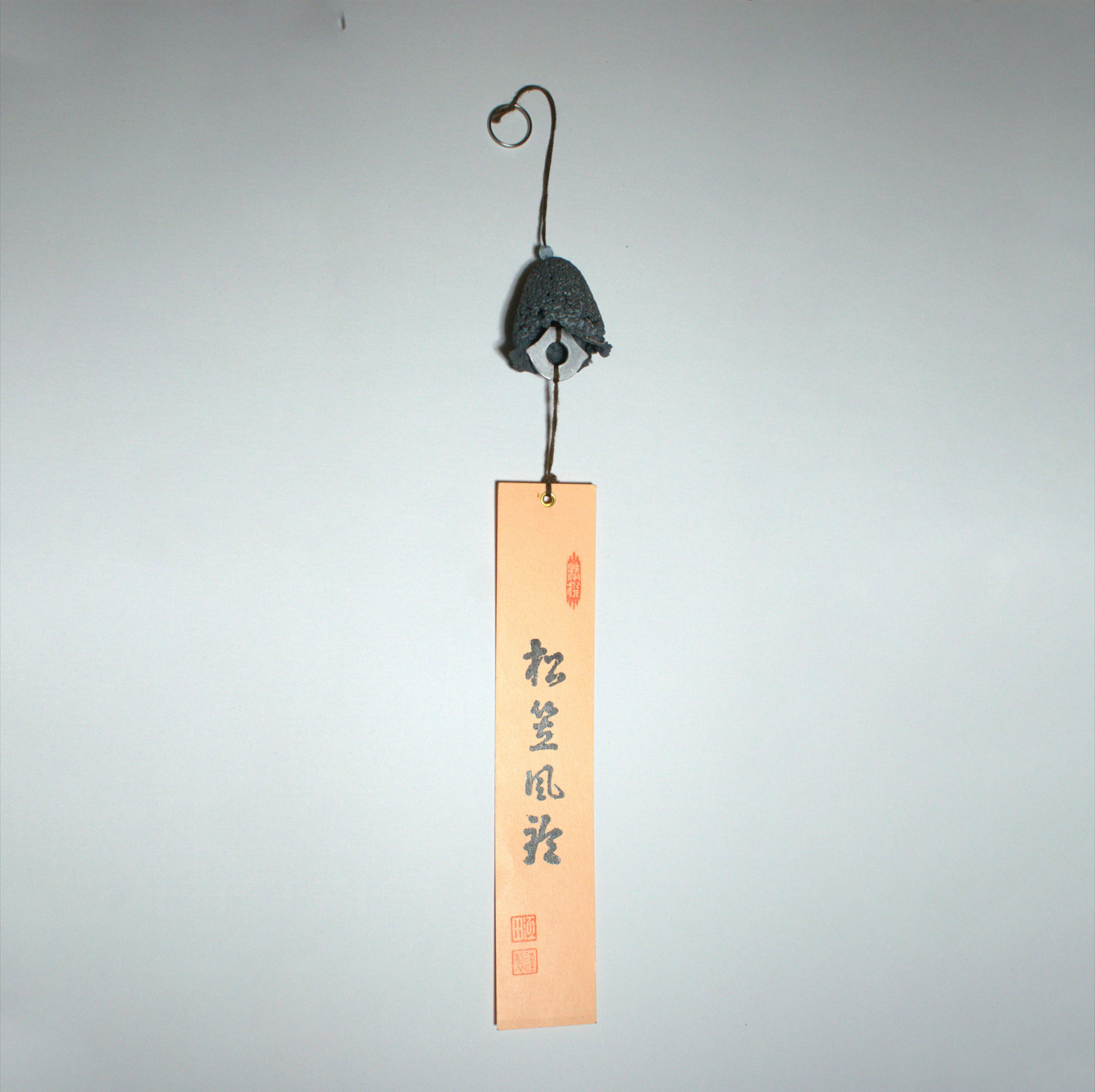
MATSUKASA FURIN / JAPANESE WIND CHIME
About 300 years ago / 1700s / Edo Period (1603–1868)
Matsukasa wind chimes combine metalworking and casting with a sculptural form inspired by a pine cone. They belong to the broader Japanese wind-chime culture that flourished in the Edo period, turning the movement of summer air into sound.
In Japan, a furin does not actually lower the temperature, yet its ringing creates a strong psychological sense of coolness. Suspended under an eave, the paper strip catches the breeze and makes invisible wind audible, becoming one of the most recognizable sensory symbols of summer.
The pine-cone form is technically demanding because its surface contains many recesses and projections. Metal must flow cleanly into thin details and release from the mold without losing definition. The object is simultaneously a small bell and a piece of sculpture inspired by nature.
Différences individuelles
Chaque pièce étant fabriquée à la main individuellement, de légères variations de couleur, de motif, de forme et de texture peuvent survenir. Ces différences subtiles sont une caractéristique naturelle des créations artisanales, ce qui rend chaque pièce véritablement unique. Nous espérons que vous apprécierez ces variations individuelles comme faisant partie de la beauté et du caractère de l'artisanat japonais.
Délai de production
Si un article n'est pas actuellement en stock, il peut être fabriqué sur commande par l'artisan. Comme chaque pièce est soigneusement fabriquée à la main, la production peut prendre plusieurs mois selon l'article et le planning de l'artisan. Nous vous remercions de votre patience et de votre compréhension.

Choisir les options

Sound of Japan 🇯🇵