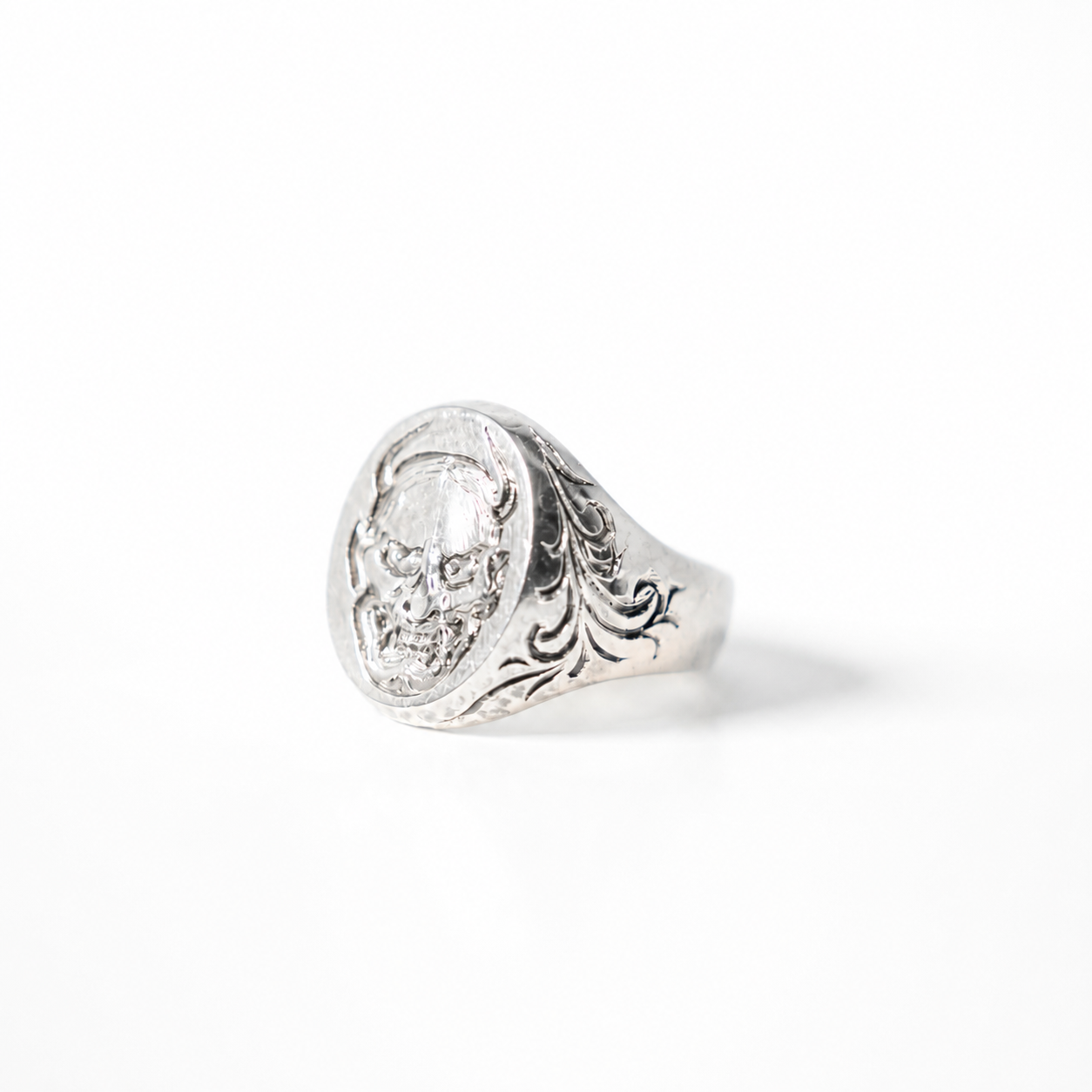
Anneau d'argent / Hannya
DESCRIPTION
DÉTAILS
SIZE
MATERIAL
ARTISAN
KOGEI
Attention
Choisir les options


Anneau d'argent / Hannya
Prix de vente5.402,00 kr
Pays
Langue
Panier
Votre panier est vide


Cette bague est en argent sterling.
Il s’agit d’une pièce unique qui ne sera pas revendue.
Chaque pièce est fabriquée à la main par des artisans et réalisée avec le plus grand souci du détail.
Qu’est-ce que Hannya ?
Hannya est l’un des masques utilisés dans le théâtre Nô, un art traditionnel japonais, et représente le masque d’une effrayante démoniaque. À l’origine, le mot « Hannya » est un terme bouddhiste signifiant « sagesse du Bouddha », dérivé du mot pali « pannya », qui signifie également « sagesse du Bouddha ». Plusieurs théories existent quant à l’origine de ce masque, dont l’une selon laquelle il aurait été nommé d’après un talentueux fabricant de masques de théâtre Nô nommé « Hannya-bo ».
Qu’est-ce que le Sutra du Cœur ?
Le Hannya Shingyo est « un enseignement important pour atteindre l’éveil grâce à la capacité de percevoir la vérité et l’essence. C’est un court sutra, mais il résume le concept de vacuité. La vacuité désigne « l’absence de substance » et la réalisation que « rien dans ce monde n’est éternel.
Les choses changent constamment, mais leur essence profonde demeure la même. Le ciel dans le Sutra du Cœur exprime l’importance d’être conscient de l’essence des choses sans se laisser emporter par le changement.
Pourquoi ne pas vivre votre quotidien avec les chefs-d’œuvre d’artisans qui se consacrent à la fabrication d’objets en argent depuis plus de 40 ans ?
SIZE
Taille de bague
6 (US)
Hauteur:1,7 cm
Poids:18 g
MATERIAL
Argent Sterling
IZUMIKEN
"Throughout a conversation with silver, guide it to the shape it wants to be"
Silver can take on any form, and we place the utmost importance on how natural it can be. We are committed to creating products that are pleasant to use for both the silver and the customer.
ARTISAN STORY
Kenichiro Izumi / Izumiken
A craftsman who has been making Tokyo silverware in Tokyo since 1979. After graduating from an art school, he travelled around Japan for a year. He sometimes delivered newspapers to earn money. During the time, he was thinking about his future and ended up with making silverware. The company is known for making not only silverware, but also rings, buckles and other products that are in tune with the modern age. Careful and detailed handwork fascinates those who seethe making process.
ACHIEVEMENTS
・Received the World Gold Council Award at the All Japan Gold and Silver Creation Exhibition.
・Received the President's Award of the Association for the Promotion of Traditional Craft Industries.
・Designated as a traditional craftsman.
・They have received many other awards for their work.
TOKYO GINKI / TOKYO SILVERWARE
About 300 years ago / 1700s / Edo Period (1603–1868)
Silversmithing in Edo grew through demand from samurai households, wealthy townspeople and religious institutions for sake vessels, smoking accessories, ornaments and ritual objects. After the Meiji Restoration, Western tableware entered the market and Tokyo smiths increasingly produced both Japanese and Western forms.
In Japan, Tokyo silverware is valued as metalware that develops through use—teapots, sake vessels and cutlery change color as silver reacts with sulfur compounds in the air. Polishing away tarnish becomes part of the long relationship between owner and object.
In hammer raising, a flat sheet of silver is struck thousands of times and periodically annealed to soften the metal after work-hardening. The process alternates force and rest: hammer, heat, hammer again. The finished vessel is literally shaped by a history of countless impacts.
Différences individuelles
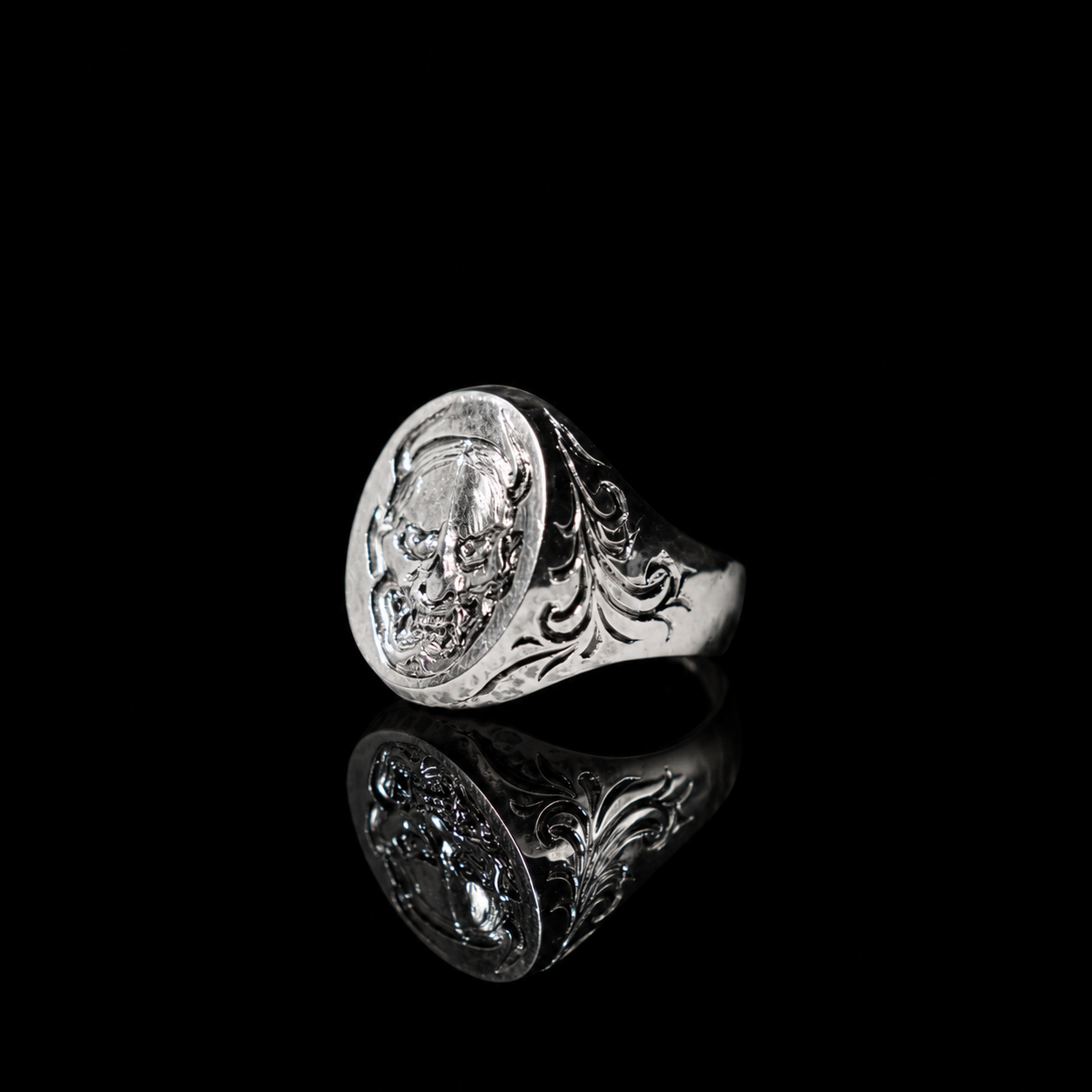
Chaque pièce étant fabriquée à la main individuellement, de légères variations de couleur, de motif, de forme et de texture peuvent survenir. Ces différences subtiles sont une caractéristique naturelle des créations artisanales, ce qui rend chaque pièce véritablement unique. Nous espérons que vous apprécierez ces variations individuelles comme faisant partie de la beauté et du caractère de l'artisanat japonais.
Délai de production
Si un article n'est pas actuellement en stock, il peut être fabriqué sur commande par l'artisan. Comme chaque pièce est soigneusement fabriquée à la main, la production peut prendre plusieurs mois selon l'article et le planning de l'artisan. Nous vous remercions de votre patience et de votre compréhension.

Choisir les options