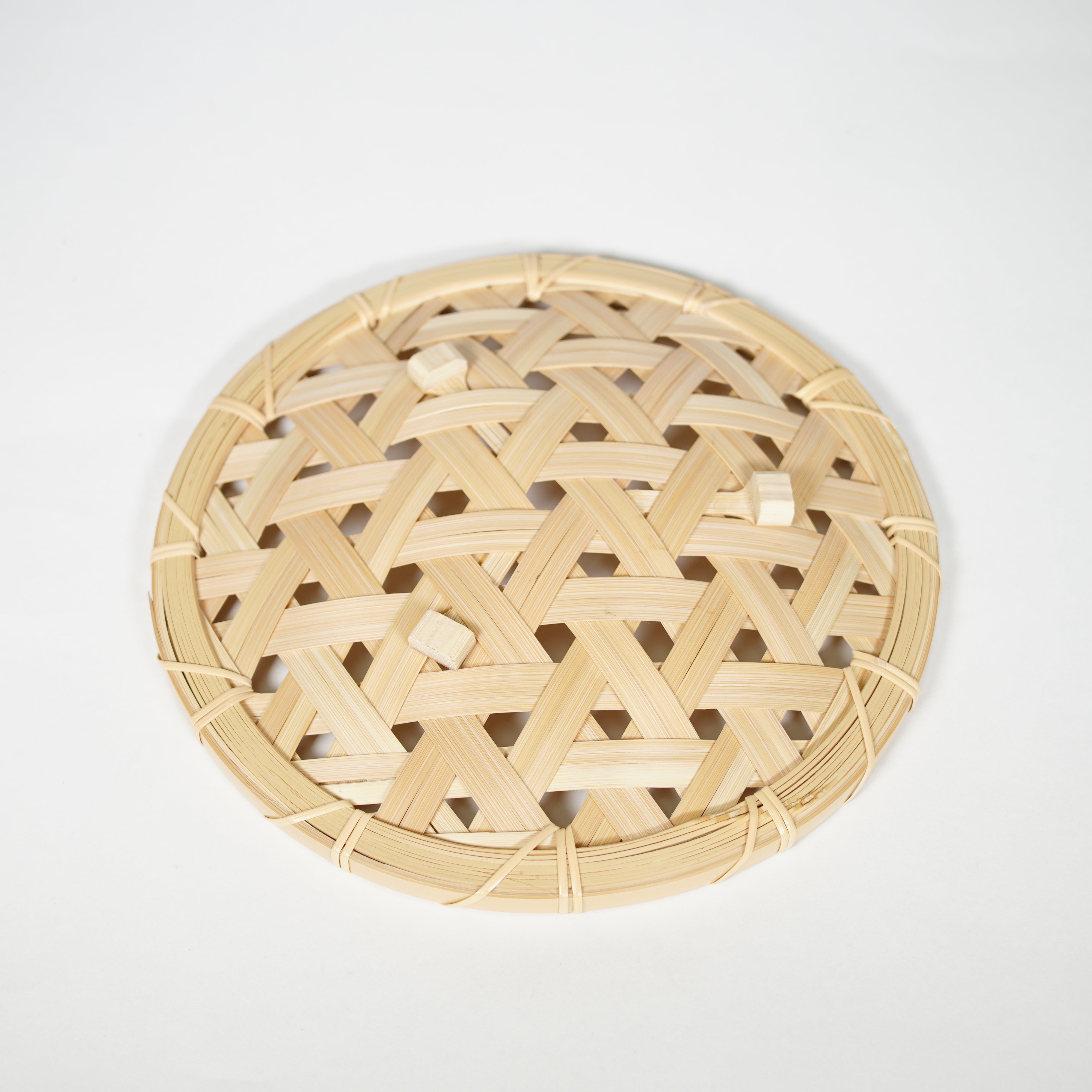
Plaque de tricot en bambou
DESCRIPTION
DÉTAILS
SIZE
MATERIAL
ARTISAN
KOGEI
Attention
Choisir les options


Plaque de tricot en bambou
Prix de venteKHR500,000.00
Pays
Langue
Panier
Votre panier est vide


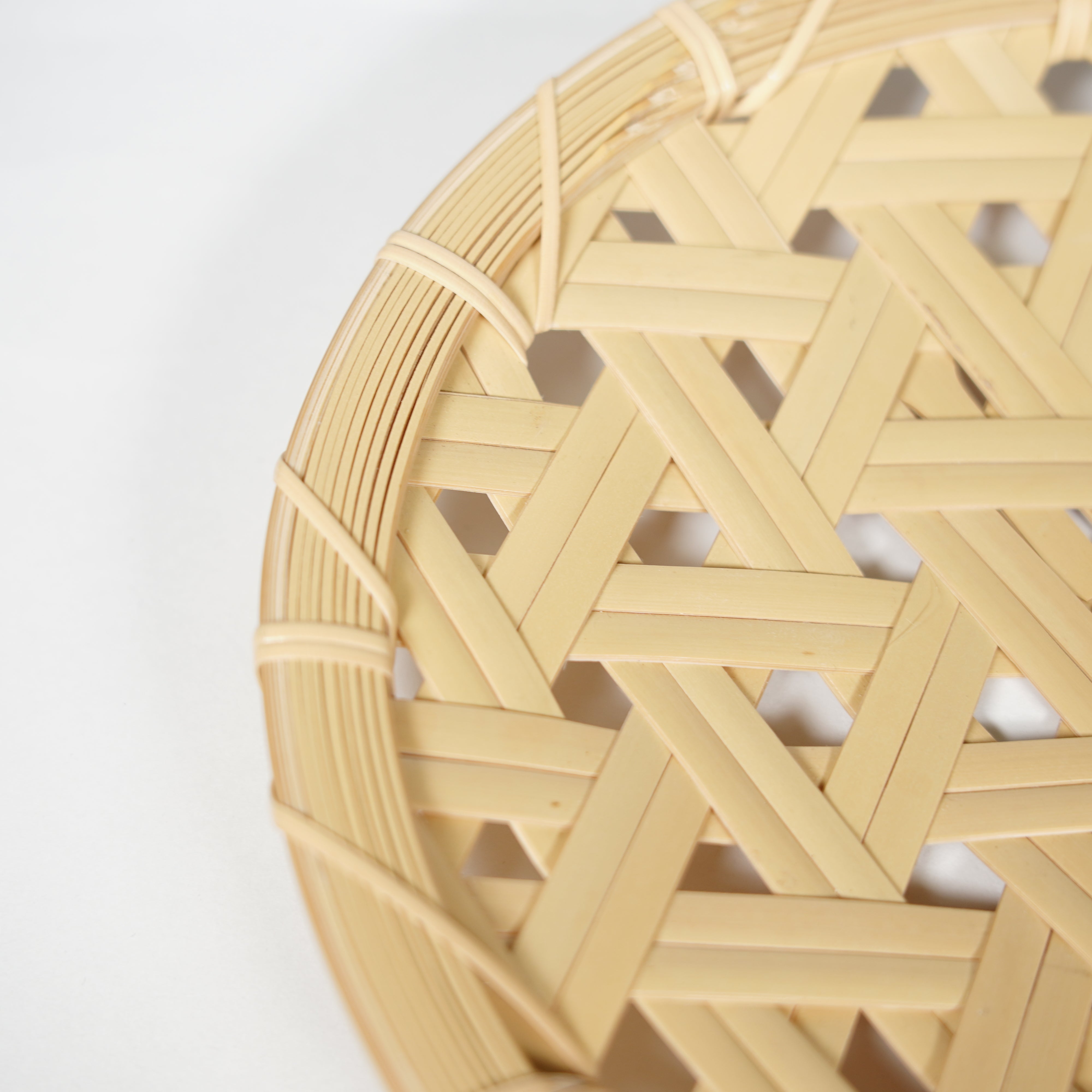
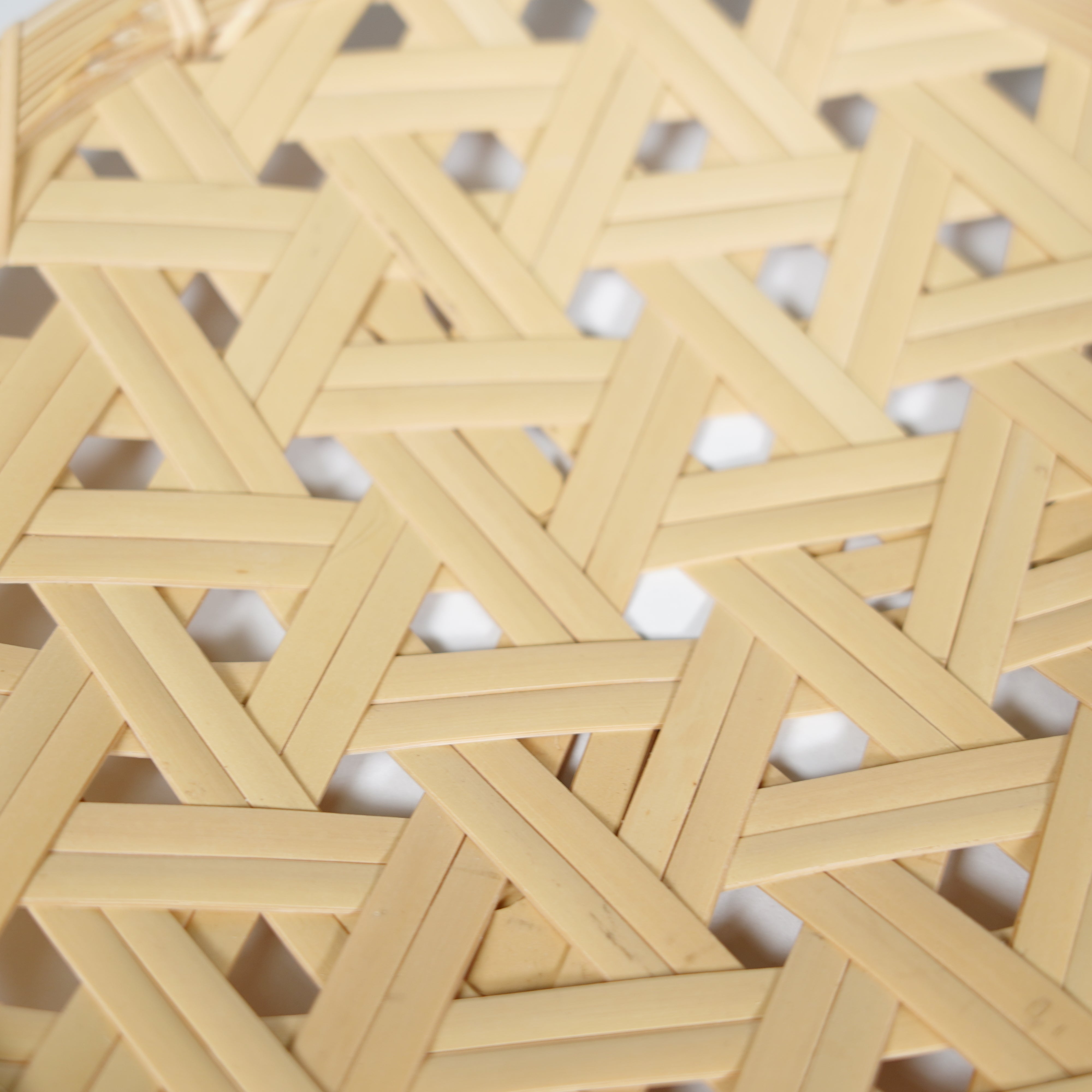
Assiette en bambou tressé. Elle sera appréciée lorsque vous recevrez des invités.
Caractéristiques du bambou
Le bambou est un matériau très résistant et élastique, doté d’une excellente résistance à la flexion et à la compression, ce qui le rend résistant à la déformation et très durable.
Avec le temps, le bambou change également de couleur pour prendre une teinte vive rappelant le bonbon, vous permettant ainsi de l’utiliser tout en appréciant son évolution au fil du temps !
SIZE
Largeur:24cm
Profondeur:24cm
Hauteur:3cm
Poids : 141
MATERIAL
Bambou
NISHIKAWA
"Bamboo in Everyday Life"
Bamboo blends into our daily life and gives us a sense of color. We continue to create bamboo crafts to convey the charm of bamboo that you may have never encountered before and the infinite possibilities of bamboo.
We want people from all over the world to hold our products in their hands and experience the charm of bamboo firsthand.
ARTISAN STORY
Founded in Kyoto in 1831. The company has been in business for 193 years.
During the second generation, the company devised and popularized the "go-noren" (bamboo blind), which had been used only by the imperial court and warrior class, so that it could be used by the general public.
Bamboo crafts in Kyoto, which until then consisted mostly of daily utensils such as colanders, were introduced to the culture of the tea ceremony and flower arrangement, and together with "SUDARE," laid the foundation for the present Kyoto bamboo crafts.
TAKE KOGEI / JAPANESE BAMBOO CRAFT
About 2,000 years ago / Ancient Japan
Bamboo has been used in Japan since prehistoric times for baskets and practical tools. Techniques for splitting culms into strips, weaving, bending and joining them spread from agriculture and fishing equipment to kitchenware and tea utensils, with different regions favoring madake, moso and other species.
In Japan, bamboo is deeply embedded in daily objects—colanders, baskets, chopsticks and tea whisks. Plastic replaced many traditional uses in the twentieth century, but bamboo is now being reconsidered because it is light, fast-growing and repairable.
Bamboo is not a tree but a giant grass, and some species can grow tens of centimeters in a day. The stem is hollow yet reinforced by strong longitudinal fibers, allowing it to be split extremely thin without losing strength. That natural engineering explains why the material can serve everything from baskets to architecture.
Différences individuelles
Chaque pièce étant fabriquée à la main individuellement, de légères variations de couleur, de motif, de forme et de texture peuvent survenir. Ces subtiles différences sont une caractéristique naturelle des créations artisanales, rendant chaque pièce véritablement unique. Nous espérons que vous apprécierez ces variations individuelles comme faisant partie de la beauté et du caractère de l'artisanat japonais.
Délai de production
Si un article n'est pas actuellement en stock, il peut être fabriqué sur commande par l'artisan. Comme chaque pièce est soigneusement fabriquée à la main, la production peut prendre plusieurs mois selon l'article et le planning de l'artisan. Nous vous remercions de votre patience et de votre compréhension.

Choisir les options