Saratsuya - dichromatique
DESCRIPTION
DÉTAILS
SIZE
MATERIAL
ARTISAN
KOGEI
Attention
Choisir les options


Saratsuya - dichromatique
Prix de venteMOP$908.00
Pays
Langue
Panier
Votre panier est vide


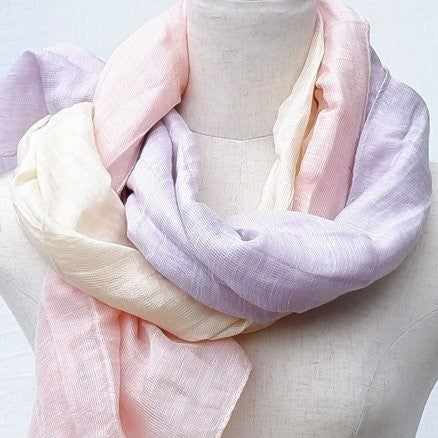
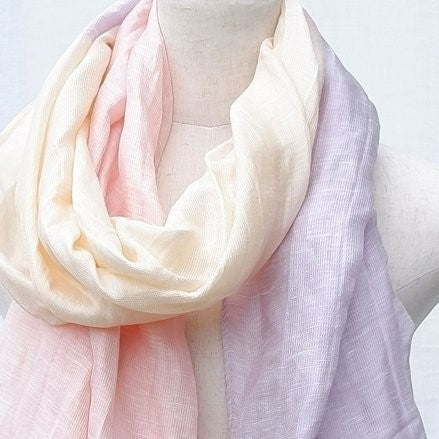
L'éclat de la soie et la fraîcheur du lin. Nous proposons trois couleurs différentes qui sont faciles à assortir et permettent d'apprécier leurs différences !
Il peut être porté autour du cou comme une cape, ou comme un hijab. Il est parfait pour une courte sortie ! Pourquoi ne pas l'essayer et découvrir la qualité du textile Gunnai ?
SIZE
Largeur:48cm
Longueur:208cm
Poids:100g
MATERIAL
Lin
Soie
ATELIER FUJIZAKURA
"What do you wish and what do you believe?"
Peace and happiness for my family / To live with gratitude and to cherish our relationships / To be victorious in the face of battle. In Japan, there is a long history and culture of expressing wishes and belief in designs and colors. Ties of Fujizakura Kobo are based on these wishes. We would be more than happy if you could use our ties with your wishes in mind.
ARTISAN STORY
Atelier-Fujizakura
The name Fujizakura Kobo is derived from the Fuji cherry tree, which is depicted as a symbol on the lining of our ties and in our brand name. Fuji cherry tree can be seen at the altitude of 2000 meter and withstand extreme cold temperatures as low as -20℃. The blossoms are small, but also the color and smell are not strong. It is a wild species of mountain cherry tree that is popularly known as a symbol of harmony and patience.
GUNNAI ORIMONO / GUNNAI TEXTILES
About 400 years ago / 1600s / Edo Period (1603–1868)
Gunnai textiles developed in eastern Yamanashi during the Edo period, when farm households produced silk cloth as supplementary work. Proximity to Edo helped Kainushi become famous as luxury lining for kimono and haori. After the Meiji Restoration, the region repeatedly reinvented itself through umbrella cloth, neckties and Western apparel fabrics.
In Japan, Gunnai is known within the fashion industry less as a consumer brand than as a source of exceptionally high-quality cloth. Today it produces neckties, scarves, apparel and interiors in small, varied runs, often collaborating directly with designers.
Soft water from the Mount Fuji area has long benefited dyeing. Some workshops also deliberately preserve old shuttle looms because their slower movement creates fullness and density difficult to reproduce on modern high-speed equipment. In Gunnai, weaving more slowly can actually create greater value.
Différences individuelles
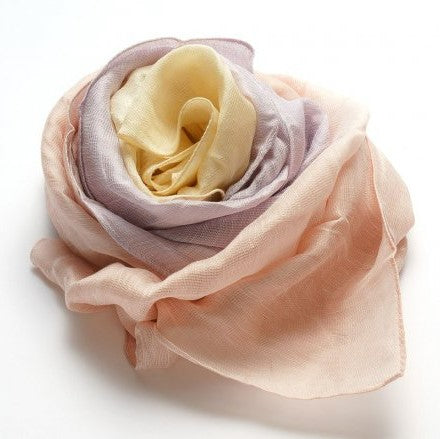
Chaque pièce étant fabriquée à la main individuellement, de légères variations de couleur, de motif, de forme et de texture peuvent survenir. Ces subtiles différences sont une caractéristique naturelle des créations faites à la main, rendant chaque pièce véritablement unique. Nous espérons que vous apprécierez ces variations individuelles comme faisant partie de la beauté et du caractère de l'artisanat japonais.
Délai de production
Si un article n'est pas actuellement en stock, il peut être fabriqué sur commande par l'artisan. Comme chaque pièce est soigneusement fabriquée à la main, la production peut prendre plusieurs mois selon l'article et le planning de l'artisan. Nous vous remercions de votre patience et de votre compréhension.

Choisir les options