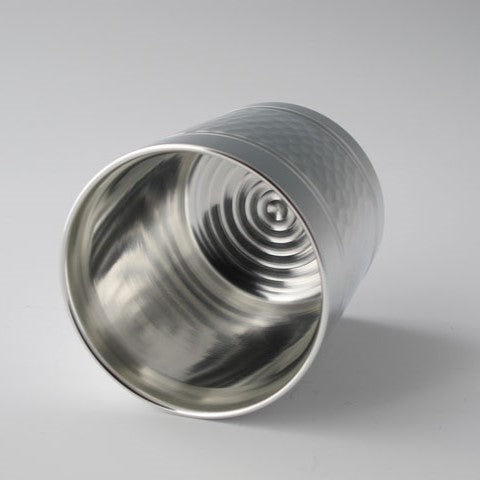
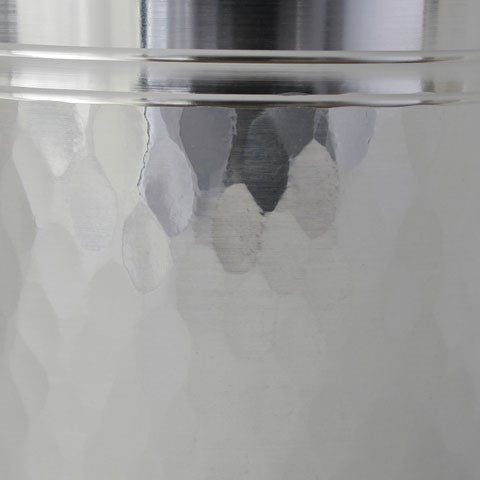
Tobus / vieux / 7oz / diamant
DESCRIPTION
DÉTAILS
SIZE
MATERIAL
ARTISAN
KOGEI
Attention
Choisir les options


Tobus / vieux / 7oz / diamant
Prix de vente$395.00
Pays
Langue
Panier
Votre panier est vide


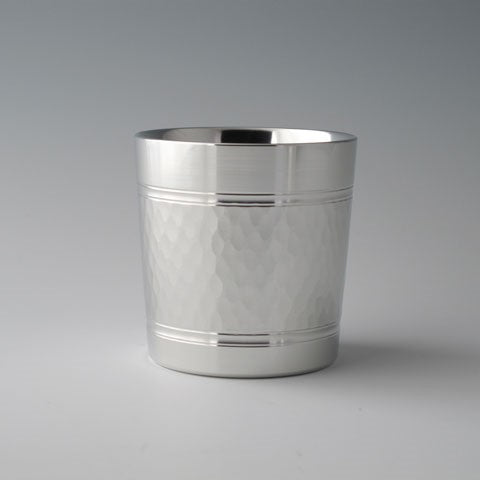
Ce gobelet est épais et solidement reconstitué. L'étain a une conductivité thermique inférieure à celle de matériaux tels que le cuivre et l'aluminium. En revanche, il est plus épais et conserve sa fraîcheur plus longtemps.
Propriétés de l'étain
On dit que l'étain rend le goût d'une boisson plus doux et qu'il est principalement utilisé pour les récipients à boire en raison de ses excellentes propriétés de rétention de la chaleur et du froid. Il est également utilisé pour les contenants à thé en raison de son excellente résistance à la corrosion et de sa capacité à éloigner l'humidité. C'est pourquoi une feuille d'étain est appliquée à l'intérieur des grandes boîtes à thé que l'on trouve dans les boutiques de thé.
SIZE
Largeur:7,3cmProfondeur:7,3cmHauteur:7,4cmPoids:300g
MATERIAL
Étain
SUZUKOU
"Dedicate to your one task, bright up a corner."
Tin has been found in the imperial court, shrines, and temples since ancient times, and it was also used by the common people during the Edo period. Tin has remained intact over the years until the present day. There is no doubt that tin was a suitable material for sake and tea utensils. We are proud to "light a corner" as one of the few workshops that specialize in tin with its special characteristics and make tinware by hand, making full use of the potter's wheel.
ARTISAN STORY
My predecessor founded Suzukoin 1987. I entered the world of tin working under the tutelage of my predecessor.
Every day I watched and learned my predecessor's techniques up close, and at the same time, I learned about his passion for tin, his work, and the importance of tradition.
We have inherited from our predecessors not only the traditional handcrafted manufacturing methods, but also to pass them on to the next generation, and to strive to make tin more attractive to as many people as possible.
ACHIEVEMENTS
・Received "Grand Prize" in Saitama Prefecture New Product AWARD 2021.
SUZU KOGEI / JAPANESE TINWARE
About 1,300 years ago / 700s / Nara Period (710–794)
Tin has been used in Japan since ancient times, and tin objects survive in the eighth-century Shosoin collection. In the early modern period it became common for sake ware, tea utensils and Buddhist implements, with casting and hammering techniques taking advantage of the metal’s softness.
In Japan, tin is especially popular for sake cups, tea caddies and vases. Its subdued silver color and satisfying weight feel luxurious, while contemporary designers have also explored bendable vessels and minimalist tableware.
Tin is surprisingly soft for a metal. High-purity pieces can sometimes be bent slightly by hand, and crystalline structures may produce a faint crackling sound—known as “tin cry”—when flexed. It is a material that quietly contradicts the expectation that metal must be rigid.
Différences individuelles
Chaque pièce étant fabriquée à la main individuellement, de légères variations de couleur, de motif, de forme et de texture peuvent survenir. Ces subtiles différences sont une caractéristique naturelle des créations artisanales, rendant chaque pièce véritablement unique. Nous espérons que vous apprécierez ces variations individuelles comme faisant partie de la beauté et du caractère de l'artisanat japonais.
Délai de production
Si un article n'est pas actuellement en stock, il peut être fabriqué sur commande par l'artisan. Comme chaque pièce est soigneusement fabriquée à la main, la production peut prendre plusieurs mois selon l'article et le planning de l'artisan. Nous vous remercions de votre patience et de votre compréhension.

Choisir les options