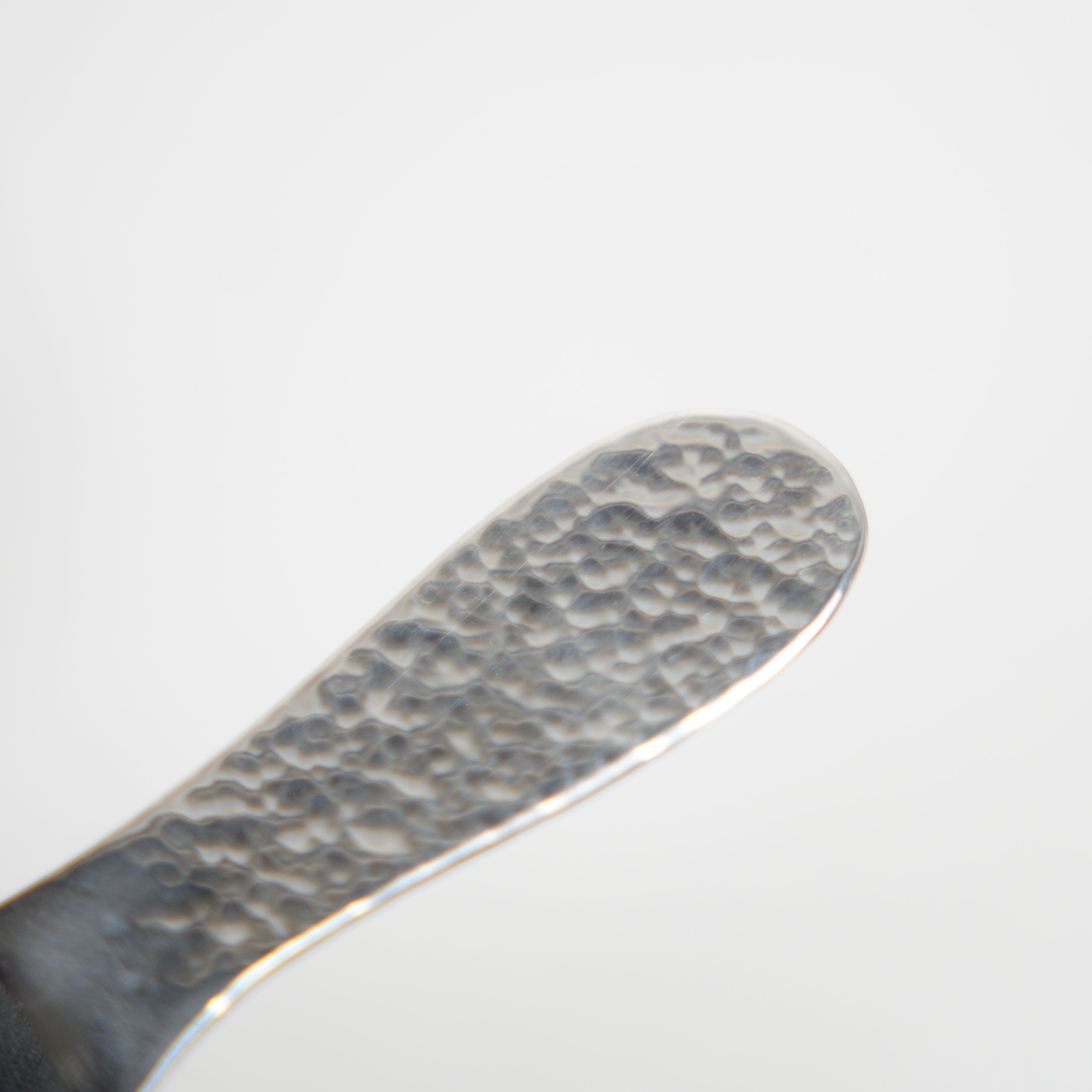
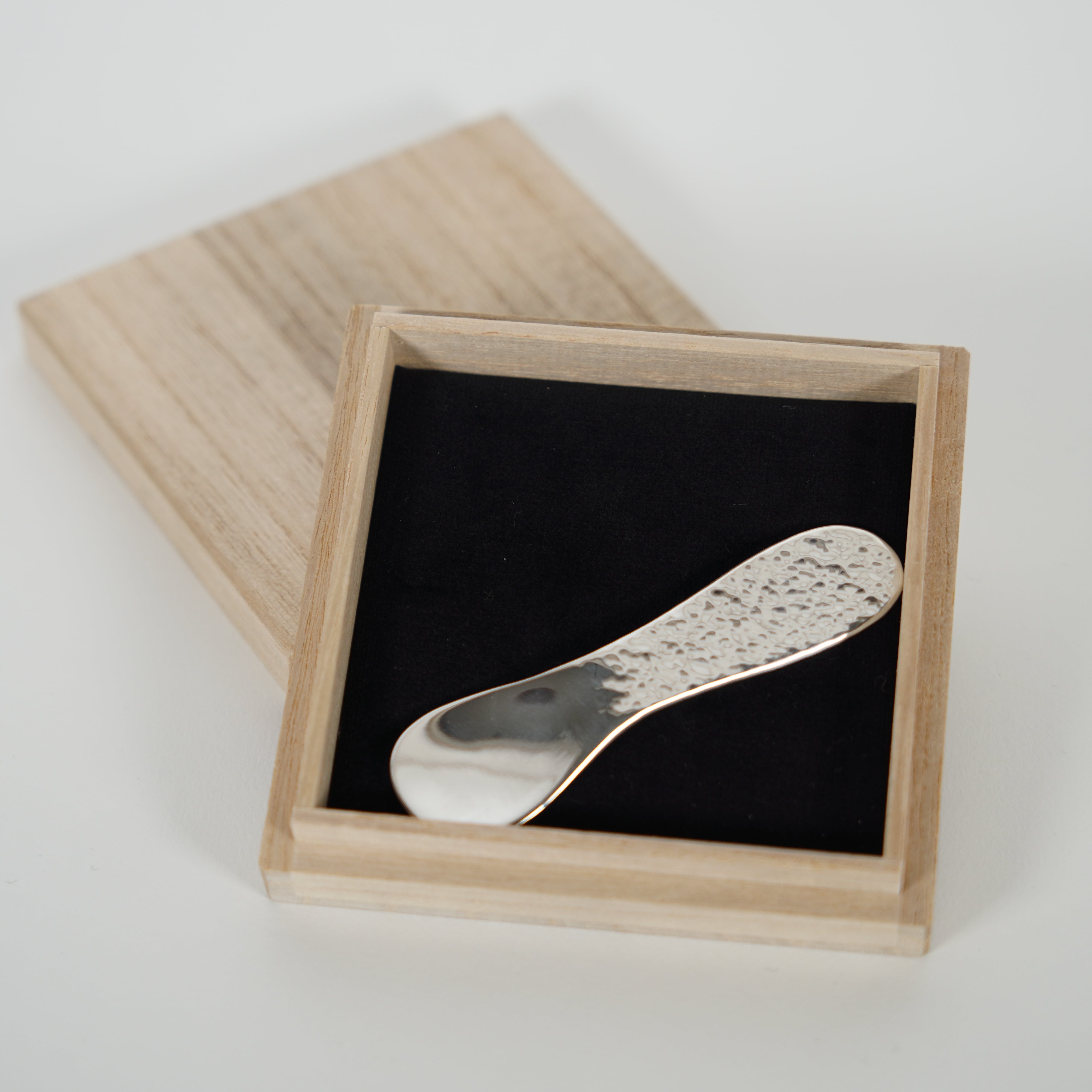
Cuillère à glace en argent sterling / à la main
DESCRIPTION
DÉTAILS
SIZE
MATERIAL
ARTISAN
KOGEI
Attention
Choisir les options


Cuillère à glace en argent sterling / à la main
Prix de vente₱11,800.00
Pays
Langue
Panier
Votre panier est vide


Cuillère à glace en argent pur à 99,9 %.
Cette cuillère à glace en argent sterling est un véritable bijou qui, grâce aux propriétés de ce métal précieux, fait fondre la glace à la température de votre main. Vous n’avez plus besoin d’attendre que la glace fonde et pouvez profiter du luxe unique de l’argent sterling, qui la rend onctueuse et facile à déguster. Elle est également appréciée comme cuillère pour bébé et convient parfaitement comme cadeau de naissance ou de mariage. Pourquoi ne pas l’offrir dans un coffret de qualité en bois de paulownia ?
SIZE
Largeur:8cmProfondeur:2,3cmÉpaisseur:0,2cmPoids:20g
MATERIAL
Argent 99,9 %
NISSHIN KIKINZOKU
"We are conscious of the simple beauty of handcrafted forms, and we pay high attention on the user's comfort while crafting our products"
We deliver the warmth that can be felt only by handmade silverware. In a word, "striking silver" is an act, but every stroke is made in pursuit of the user's comfort. We swear that our silverware, which combines practicality and beauty, is the world-class.
ARTISAN STORY
Souhaku Kamikawa / Nisshin Kikinzoku
A family of traditional craftsmen has been making Tokyo silverware in Tokyo for 12 generations since the late Edo period (1800s). He aspired to become a craftsman after experiencing the gentle rhythm of hammering and numerous gestures on his grandfather's knee for as long as he can remember. He has been making products that are popular among men and women of all ages by thoroughly creating products that become beautiful when used.
ACHIEVEMENTS
・Selected for the 3rd All Japan Gold and Silver Creation Exhibition
・Received the Tokyo Governor's Award for Successors to the Traditional Craft Industries
・He has received more awards for their work.
TOKYO GINKI / TOKYO SILVERWARE
About 300 years ago / 1700s / Edo Period (1603–1868)
Silversmithing in Edo grew through demand from samurai households, wealthy townspeople and religious institutions for sake vessels, smoking accessories, ornaments and ritual objects. After the Meiji Restoration, Western tableware entered the market and Tokyo smiths increasingly produced both Japanese and Western forms.
In Japan, Tokyo silverware is valued as metalware that develops through use—teapots, sake vessels and cutlery change color as silver reacts with sulfur compounds in the air. Polishing away tarnish becomes part of the long relationship between owner and object.
In hammer raising, a flat sheet of silver is struck thousands of times and periodically annealed to soften the metal after work-hardening. The process alternates force and rest: hammer, heat, hammer again. The finished vessel is literally shaped by a history of countless impacts.
Différences individuelles
Chaque pièce étant fabriquée à la main individuellement, de légères variations de couleur, de motif, de forme et de texture peuvent survenir. Ces subtiles différences sont une caractéristique naturelle des créations artisanales, rendant chaque pièce véritablement unique. Nous espérons que vous apprécierez ces variations individuelles comme faisant partie de la beauté et du caractère de l'artisanat japonais.
Délai de production
Si un article n'est pas actuellement en stock, il peut être fabriqué sur commande par l'artisan. Comme chaque pièce est soigneusement fabriquée à la main, la production peut prendre plusieurs mois selon l'article et le planning de l'artisan. Nous vous remercions de votre patience et de votre compréhension.

Choisir les options


Beautifully made and nicely packaged! Love it!
Thank you so much for your positive feedback!!
We are glad to hear that;)