
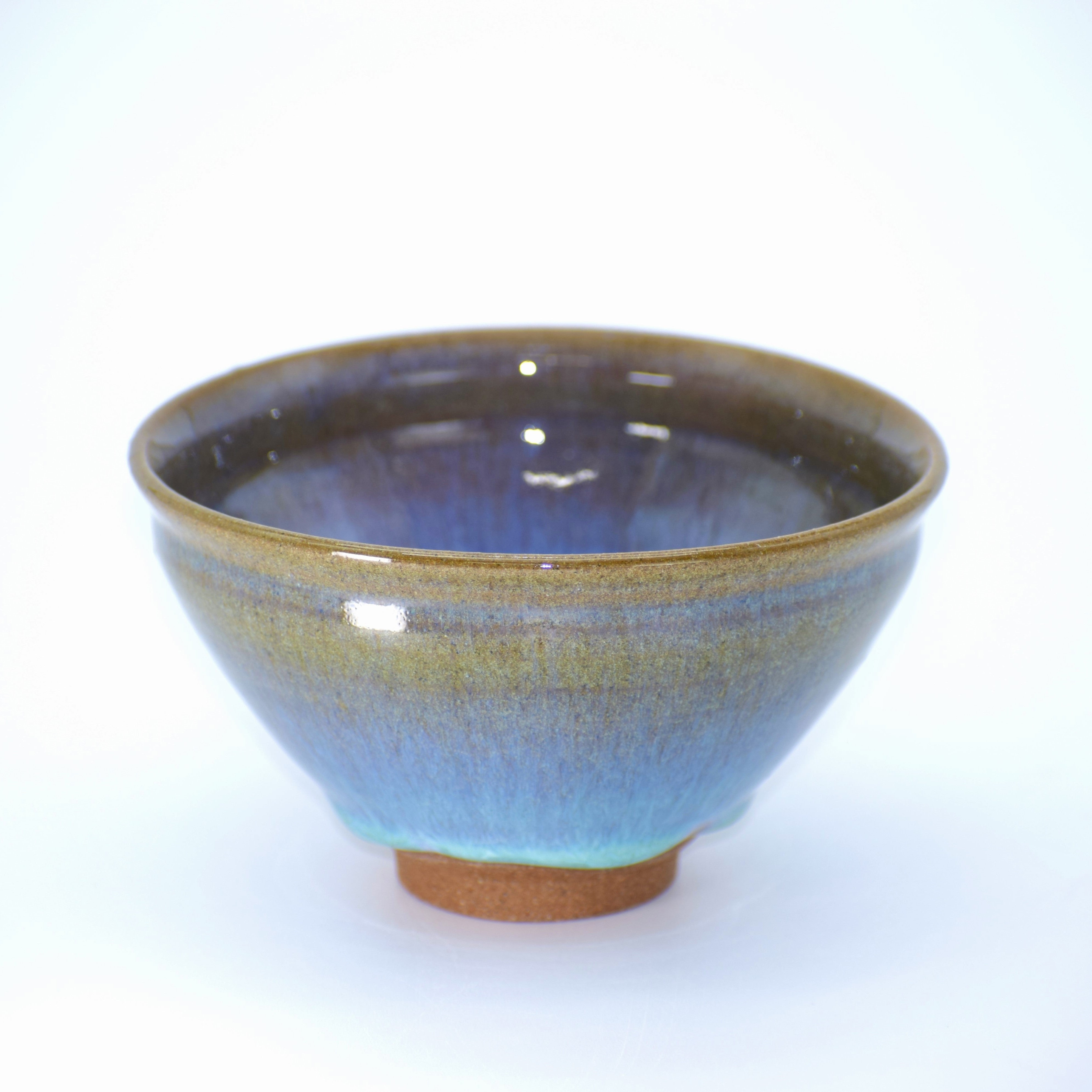
Tasse à thé Tenmoku / Lune bleue
DESCRIPTION
DÉTAILS
SIZE
MATERIAL
ARTISAN
KOGEI
Attention
Choisir les options

Tasse à thé Tenmoku / Lune bleue
Prix de vente₱75,400.00
Pays
Langue
Panier
Votre panier est vide

Le dégradé de teintes jaunâtres sur la base bleu turquoise vif est créé par l'intuition des artisans du four Munakata fondée sur leur expérience.
Cela rendra votre pièce plus somptueuse si vous l'exposez comme un bol d'usage quotidien ou comme une décoration pour votre intérieur. Pourquoi ne pas en prendre un et ressentir la beauté traditionnelle du Japon ?
SIZE
Largeur:12,2 cm
Profondeur:1,8 cm
Hauteur:7 cm
Poids:215 g
MATERIAL
Argile
MUNAKATAGAMA
"It is important to draw out the potential power of the soil"
Since ancient times, the Japanese have cherished a culture of appreciating things through the five senses. We will continue to focus on pottery making to embody this spirit.
ARTISAN STORY
Toshihiro Munakata & Toshinori Munakata / Munakatagama
Aizu Hongo Pottery has been made in Fukushima Prefecture for nine generations by a father and his son. The ancestors of Munakatagama were missionaries of Munakata Taisha Shrine in Fukuoka Prefecture and established Munakata Shrine in Aizu. He began to make pottery while serving as a priest, and feeling that he had a talent for pottery, he resigned from the priesthood and began to devote himself to the pottery business. This was the beginning of the Munakatagama. The most distinctive feature of Munakatagama is its works with fuzzy colors created by using unique glazes. Both father and son have made inroads into Paris, New York, and other countries.
ACHIEVEMENTS
・Received the 36th Pola Prizes for Traditional Culture and Regional Awards
・Received the Tohoku Bureau of Economy, Trade and Industry Director-General's Award
・They have received many other awards for their work.
AIZU HONGO WARE
About 430 years ago / 1590s / Azuchi–Momoyama Period
Aizu Hongo ware began with roof tiles and utilitarian pottery produced under Gamo Ujisato in the late sixteenth century. In the seventeenth century, the Aizu domain under Hoshina Masayuki also encouraged porcelain. The district consequently developed into an unusual production center where both pottery and porcelain traditions coexist.
In Japan, Aizu Hongo is strongly associated with practical vessels—tableware, sake ware and storage jars—rather than only luxury ceramics. Today each kiln has its own clay, glazes and visual language, so the region combines the identity of a historic production center with the individuality of studio pottery.
Its most distinctive feature is precisely that dual heritage. Visitors can compare the warmth and texture of earthen pottery with the crisp whiteness of porcelain within the same village. Few ceramic regions offer such a clear, side-by-side lesson in the difference between the two materials.
Différences individuelles
Chaque pièce étant fabriquée à la main individuellement, de légères variations de couleur, de motif, de forme et de texture peuvent survenir. Ces subtiles différences sont une caractéristique naturelle des créations artisanales, rendant chaque pièce véritablement unique. Nous espérons que vous apprécierez ces variations individuelles comme faisant partie de la beauté et du caractère de l'artisanat japonais.
Délai de production
Si un article n'est pas actuellement en stock, il peut être fabriqué sur commande par l'artisan. Comme chaque pièce est soigneusement fabriquée à la main, la production peut prendre plusieurs mois selon l'article et le planning de l'artisan. Nous vous remercions de votre patience et de votre compréhension.

Choisir les options
