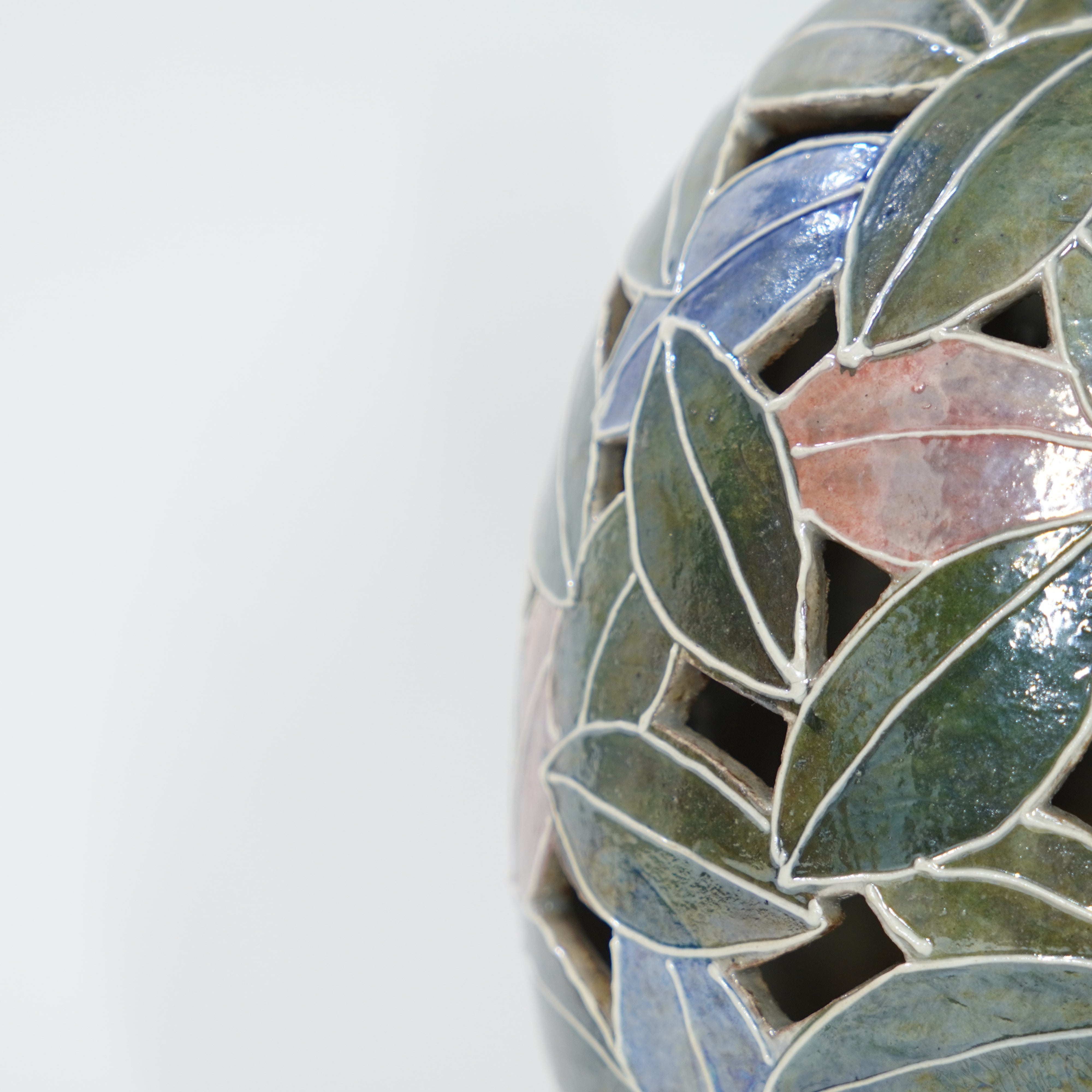
Vase à fleurs unique conçu par la feuille
DESCRIPTION
DÉTAILS
SIZE
MATERIAL
ARTISAN
KOGEI
Attention
Choisir les options


Vase à fleurs unique conçu par la feuille
Prix de vente2.942,00 lei
Pays
Langue
Panier
Votre panier est vide


Ce vase pour une seule fleur est fabriqué selon la technique de la transparence à double couche.
La partie transparente est sculptée pour reproduire le motif d’une feuille fraîche. La coloration nacrée confère au vase un aspect scintillant, faisant de lui une pièce précieuse qui vous égayera rien qu’en la regardant. Si vous placez ce vase près d’une fenêtre par une journée ensoleillée, il absorbe la lumière et rayonne de toutes les couleurs de l’arc-en-ciel ! Recommandé à ceux qui souhaitent rehausser leur intérieur et à ceux qui aiment les objets d’exception.
SIZE
Largeur:15cm
Profondeur:15cm
Hauteur:24cm
Poids:1 100g
MATERIAL
Argile
SHUNZAN MORI
"I don't seek rewards for myself. I hope they will come to the next generation."
His father supported and cared for many craftsmen in his workshop. Today, he feels blessed to have received kindness in return for the generosity his father showed to others. For this reason, he does not seek rewards for himself. Instead, he hopes to do what he can for the younger generation who will carry the craft into the future.
ARTISAN STORY
His family has been producing Kiyomizu ware in Kyoto since 1917, carrying on the tradition through three generations of craftsmen. Inspired by the philosophy of Ogata Kenzan, he brings a modern sensibility to the traditional openwork technique, which has been practiced for over 300 years. His works often incorporate seasonal scenes unique to Japan, such as cherry blossoms and autumn leaves, into the design of his vessels.
ACHIEVEMENTS
・Received the Excellence Award at the Kyoto Prefecture Crafts Art Exhibition
・Received the NIKKOKAI Member Award at the NIKKOKAI Exhibition
・Designated as a Traditional Craftsman in 2008
・Received numerous other awards and honors
KYO WARE & KIYOMIZU WARE
About 1,200 years ago / 800s / Heian Period (794–1185)
Kyoto ceramics reach back to kilns operating before and during the Heian period, then expanded with tea culture in the Muromachi and Momoyama eras. In the seventeenth century, Nonomura Ninsei perfected brilliant overglaze decoration, followed by innovators such as Ogata Kenzan, Okuda Eisen and Aoki Mokubei, whose diverse approaches shaped today’s Kyo and Kiyomizu ware.
In Japan, these ceramics are famous precisely because there is no single fixed style. Tea bowls, kaiseki dishes and everyday tableware may use overglaze painting, blue-and-white decoration, gold, sancai-inspired color and many other techniques. The craft sits at the heart of Kyoto’s culture of pairing vessels with cuisine and tea.
The surprising point is that Kyoto was never defined by a single major clay deposit. Potters drew on materials such as Amakusa porcelain stone, techniques arriving from other regions, and the tastes of artists and patrons gathered in the capital. Freedom from one local material helped make Kyoto ceramics unusually hybrid and stylistically diverse.
Différences individuelles
Chaque pièce étant fabriquée à la main individuellement, de légères variations de couleur, de motif, de forme et de texture peuvent survenir. Ces subtiles différences sont une caractéristique naturelle des créations artisanales, ce qui rend chaque pièce véritablement unique. Nous espérons que vous apprécierez ces variations individuelles comme faisant partie de la beauté et du caractère de l'artisanat japonais.
Délai de production
Si un article n'est pas actuellement en stock, il peut être fabriqué sur commande par l'artisan. Comme chaque pièce est soigneusement fabriquée à la main, la production peut prendre plusieurs mois selon l'article et le planning de l'artisan. Nous vous remercions de votre patience et de votre compréhension.

Choisir les options