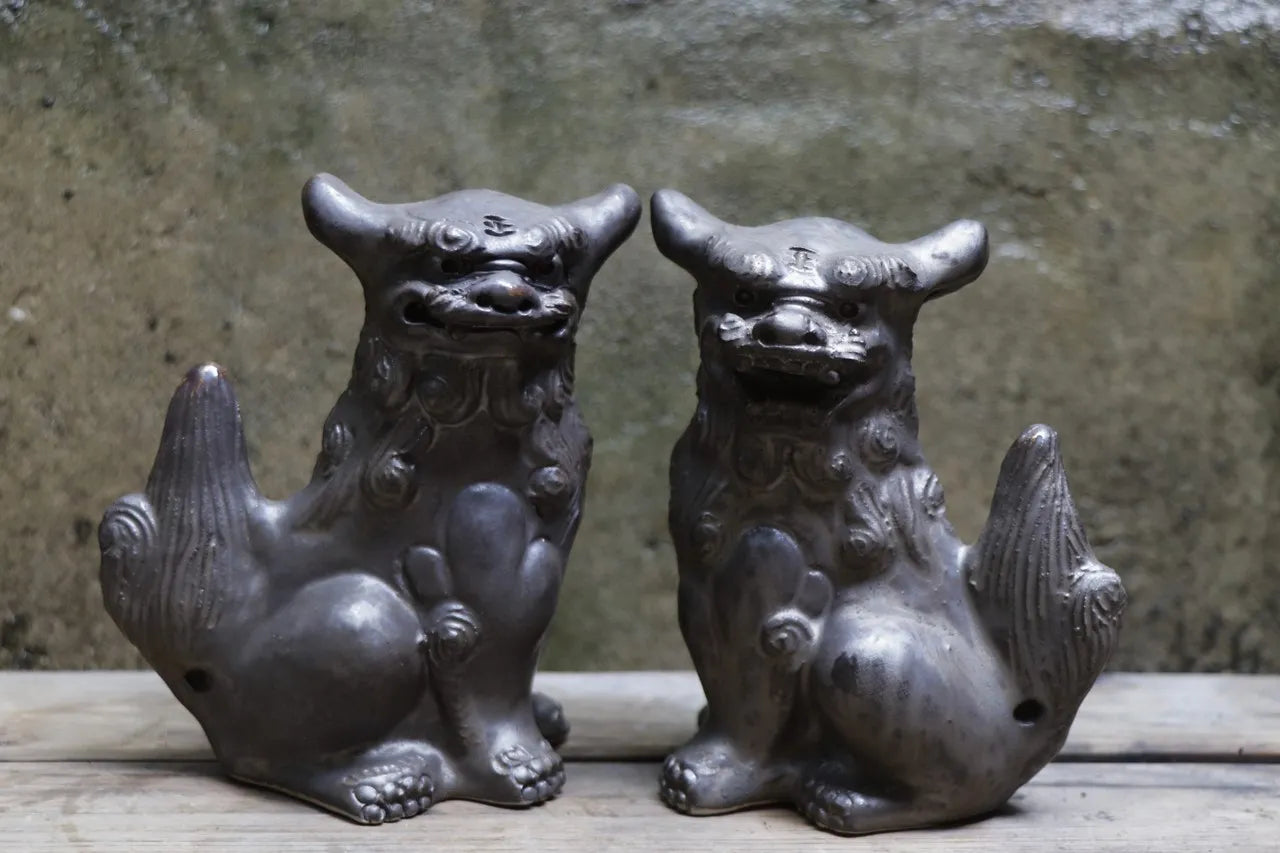
Lion gardien / Shisa / De profil / Cuivre fumé
DESCRIPTION
DÉTAILS
SIZE
MATERIAL
ARTISAN
KOGEI
Attention
Choisir les options


Lion gardien / Shisa / De profil / Cuivre fumé
Prix de vente$6,982.00
Pays
Langue
Panier
Votre panier est vide


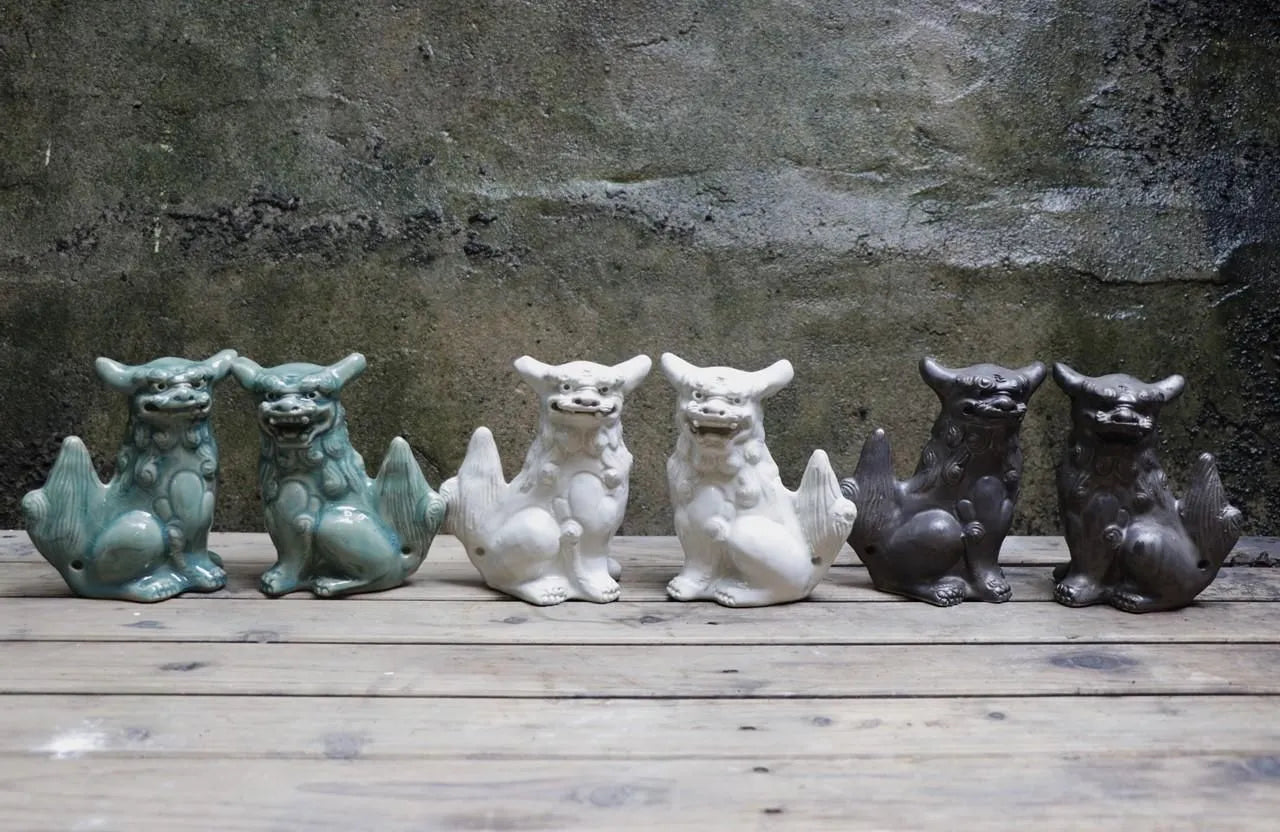
Notre « Shisa de profil » arbore une pose pleine de charme : son corps est fermement tourné sur le côté, tandis que sa tête est tournée avec espièglerie vers vous. Il a un regard loyal et attachant, comme s’il venait de s’arrêter en pleine promenade pour prendre de vos nouvelles et veiller sur vous.
Sculptée à la main une à une par des artisans qualifiés, cette posture unique dégage une vitalité presque vivante qui se distingue des statues traditionnelles tournées vers l’avant. Qu’il soit placé dans votre entrée ou dans un coin de votre bureau, vos regards se croiseront au détour d’un instant, faisant de lui un compagnon spécial qui veille avec douceur et constance sur votre quotidien.
SIZE
Largeur:9,5 cm
Profondeur:5,5 cm
Hauteur:12 cm
Poids:930 g
MATERIAL
Céramiques
IKUTOUEN
Weaving the Spirit of Tsuboya into the Future
For over 300 years, Ikutoen has been a living part of the Tsuboya landscape—a place defined by red-tiled roofs, vine-covered stone walls, and ancient banyan trees. Under sixth-generation master Tadashi Takaesu, we continue to breathe life into Okinawan clay, honoring the "Senbori" carving and Shisa traditions passed down from his father, Ikuo. Our craftsmanship is fueled by a spirit of "Open Radiance"—a burning passion that brings together artisans, locals, and travelers alike. By creating pottery that resonates with the modern era, we aim to convey the warmth of the human hand and the joy of connection, ensuring that the beautiful scenery and soul of Tsuboya endure for generations to come.
ARTISAN STORY
Ikutoen Studio
Located in the historic Tsuboya district of Naha City, Ikutoen is a distinguished pottery studio (kamamoto) with a legacy spanning over 300 years of traditional Tsuboya-yaki craftsmanship.
The Takaesu family, who have stewarded this craft for generations, established Ikutoen as an independent studio during the fifth generation. Today, the lineage continues under the leadership of the sixth-generation master, Tadashi Takaesu.
With an unwavering commitment to using local Okinawan clay and original, handmade glazes, the studio is renowned for its iconic "Karakusa Senbori" (arabesque line carving) collection and its masterfully crafted Shisa (guardian lions).
ACHIEVEMENTS
・Certified Traditional Craftsman (sixth-generation master Tadashi Takaesu)
YACHIMUN / OKINAWAN POTTERY
About 600 years ago / 1400s / Ryukyu Kingdom Period
Yachimun simply means “pottery” in the Okinawan language. Its development was strongly shaped by the Ryukyu Kingdom’s maritime trade with China and Southeast Asia from the fourteenth to sixteenth centuries. In 1682 the royal government consolidated kilns in Tsuboya, Naha, creating a major center of production; after World War II, kilns also spread to places such as Yomitan.
In Okinawa, yachimun is deeply rooted in everyday life, appearing as sake vessels, bowls and plates. Bold brushwork, fish and arabesque motifs, and rich glazes give the ware an unmistakably southern character. It is still widely used in homes and restaurants, where the idea is that the vessel becomes complete through use.
A surprising detail is that Okinawan ceramics were not limited to tableware: elaborate ceramic ossuaries called zushi-game were once used to hold human remains. Tsuboya production also included both unglazed arayachi and colorful glazed joyachi, revealing a ceramic culture that served food, drink, prayer and funerary customs alike.
Différences individuelles
Chaque pièce étant fabriquée à la main individuellement, de légères variations de couleur, de motif, de forme et de texture peuvent survenir. Ces différences subtiles sont une caractéristique naturelle des créations artisanales, ce qui rend chaque pièce véritablement unique. Nous espérons que vous apprécierez ces variations individuelles comme faisant partie de la beauté et du caractère de l'artisanat japonais.
Délai de production
Si un article n'est pas actuellement en stock, il peut être fabriqué sur commande par l'artisan. Comme chaque pièce est soigneusement fabriquée à la main, la production peut prendre plusieurs mois selon l'article et le planning de l'artisan. Nous vous remercions de votre patience et de votre compréhension.

Choisir les options