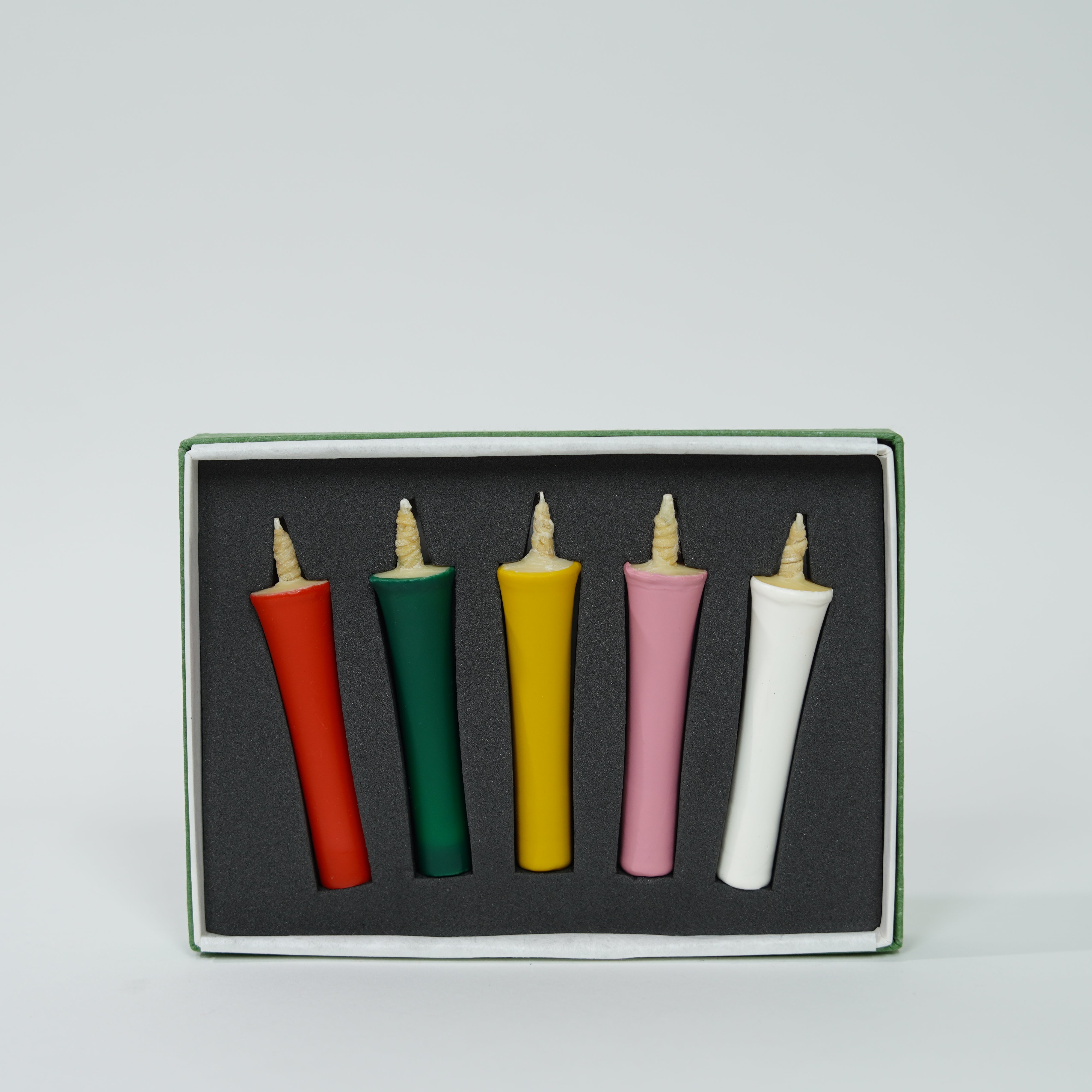
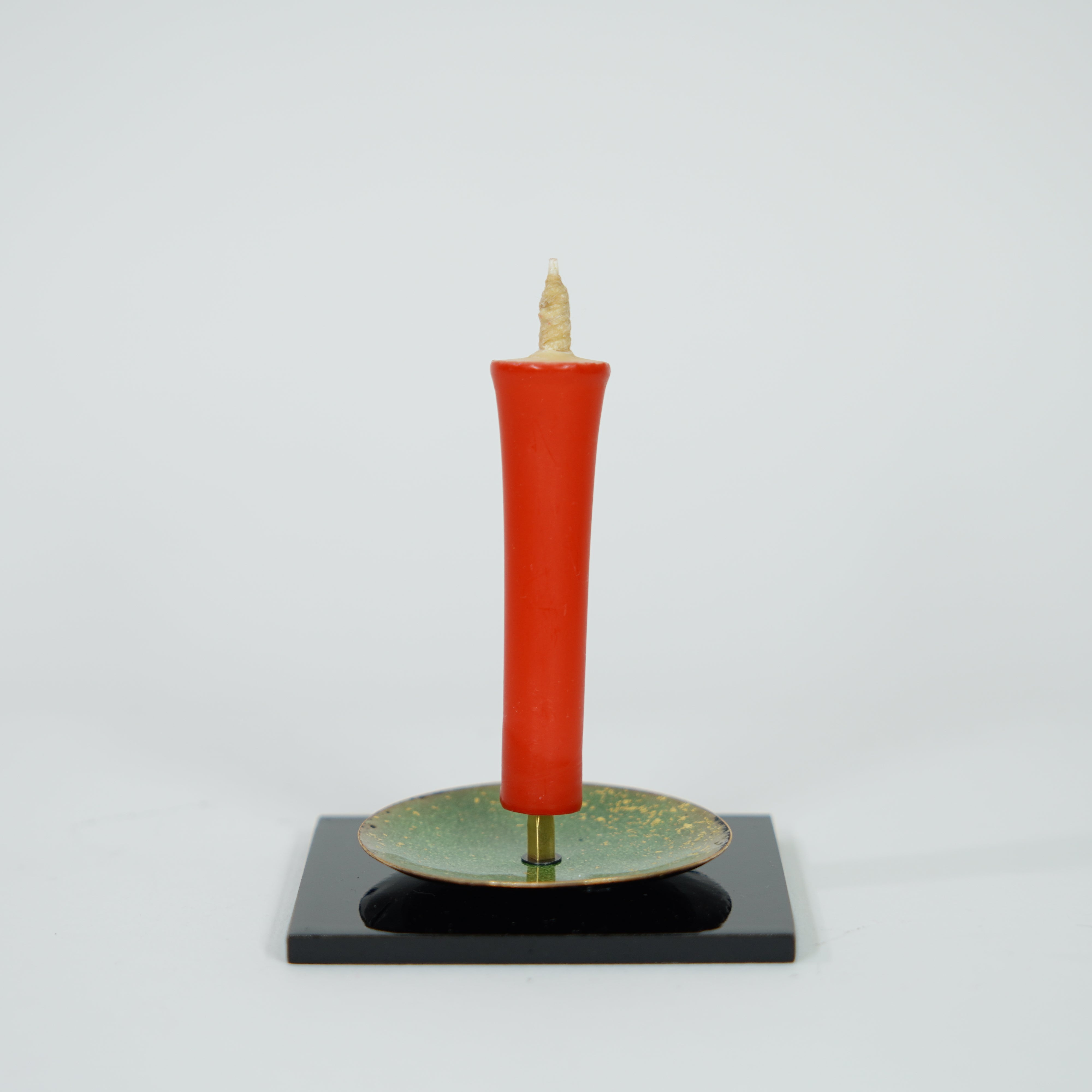
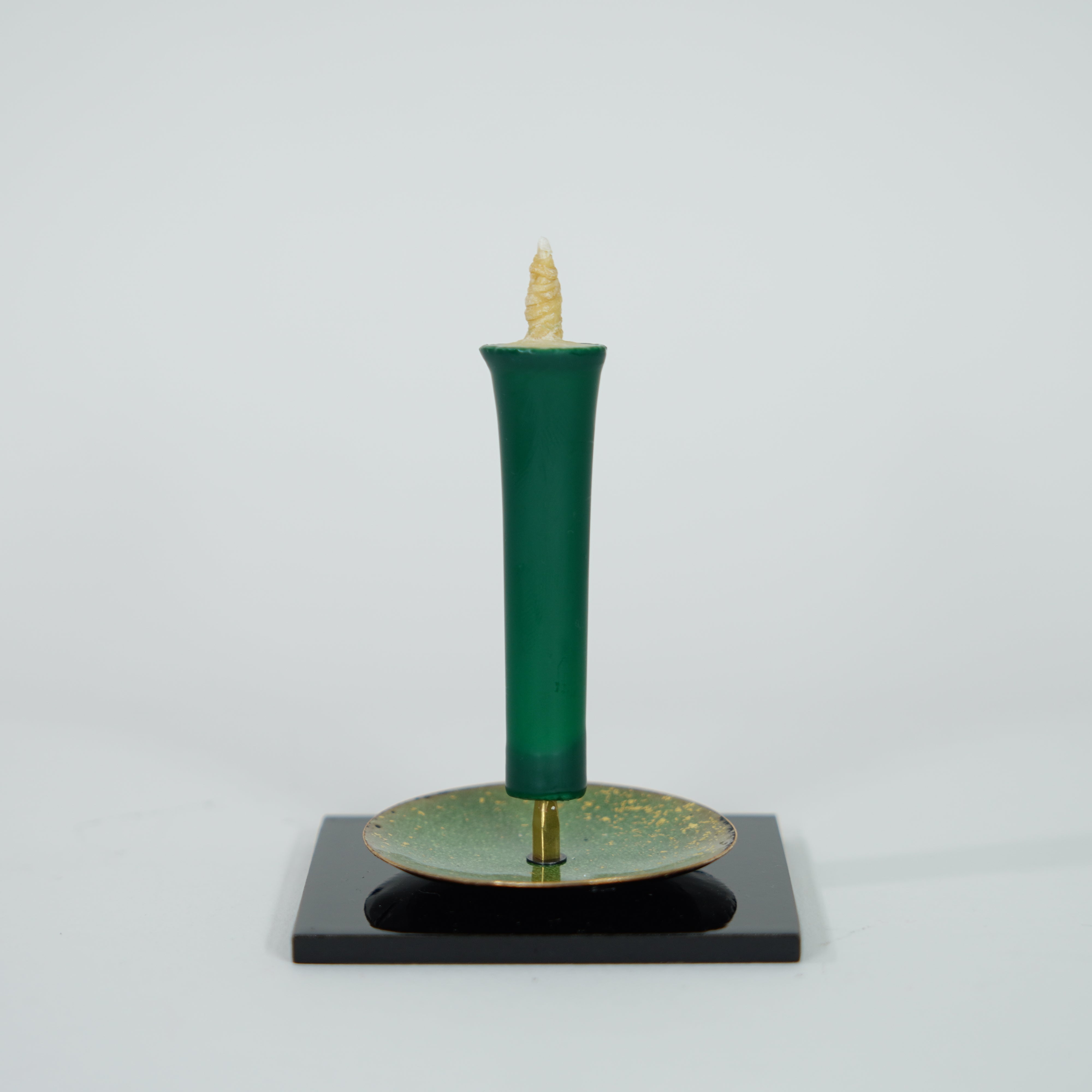
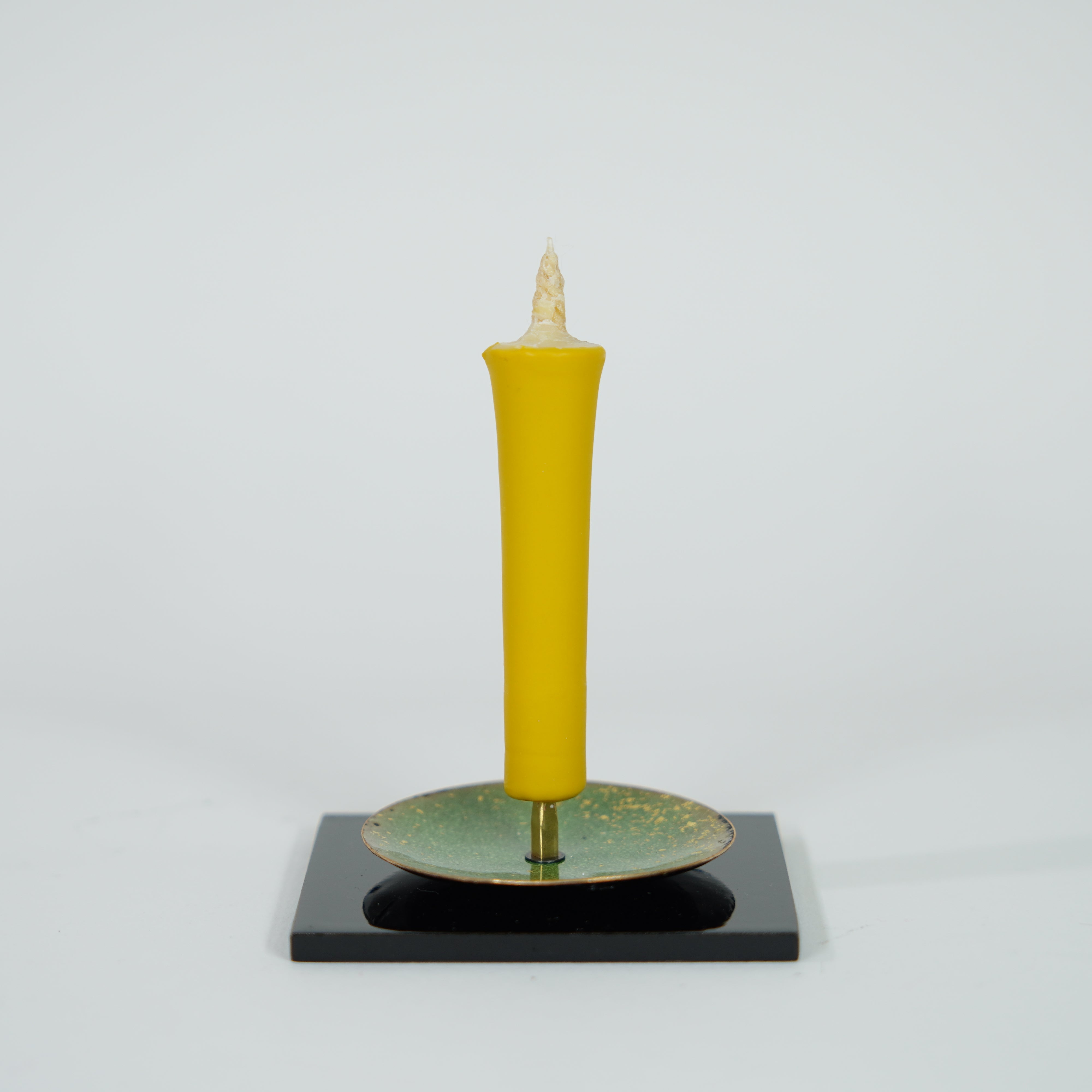
WAROSOKU / JAPANESE WAX CANDLES
About 500 years ago / 1500s / Muromachi Period
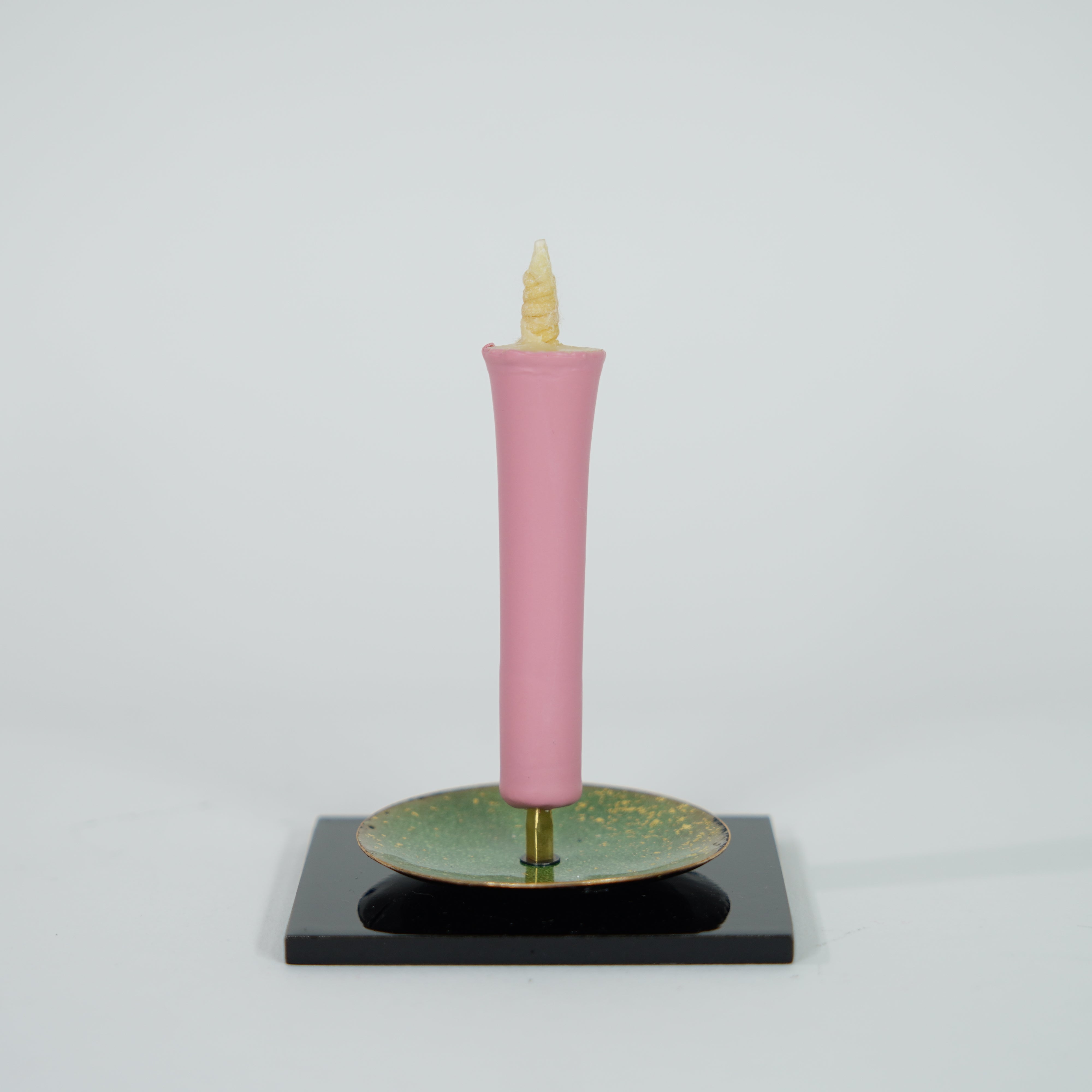
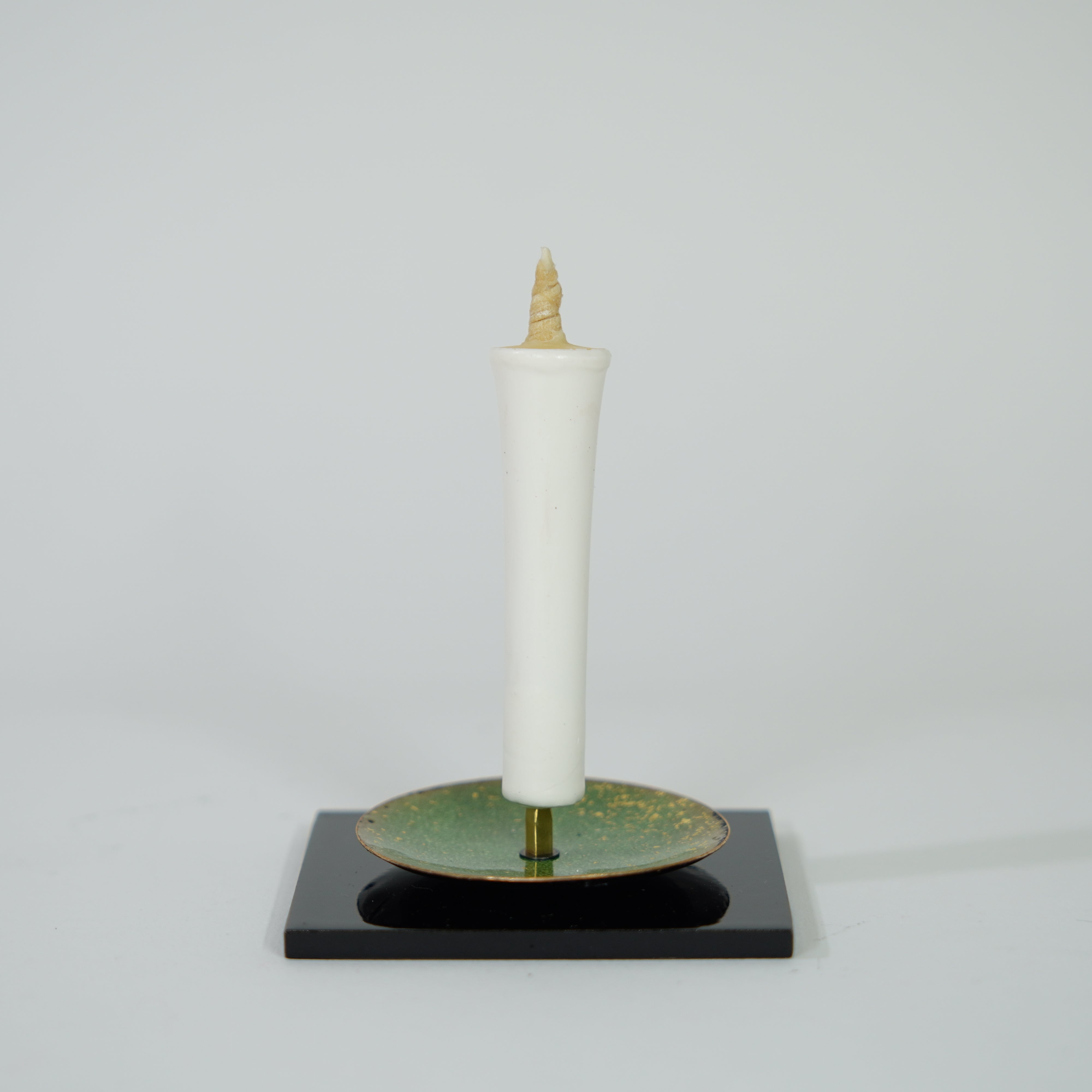
Japanese wax candles use plant-based wax, traditionally from haze tree berries, built up repeatedly around a hollow core of washi and rush pith. Demand expanded from the Muromachi through Edo periods in temples and castle towns, where the candles served ritual and nighttime lighting.
In Japan, warosoku remain closely associated with temples and household altars. Their flames are larger and more animated than those of many Western candles, while the wax tends to drip less. Decorative painted candles and interior uses have also created new audiences.
The wick is not cotton thread. Rush pith is wrapped in washi, leaving a hollow center that draws air and supports a large flame. Makers coat the wick by hand again and again, so a cross-section reveals concentric layers almost like the growth rings of a tree.