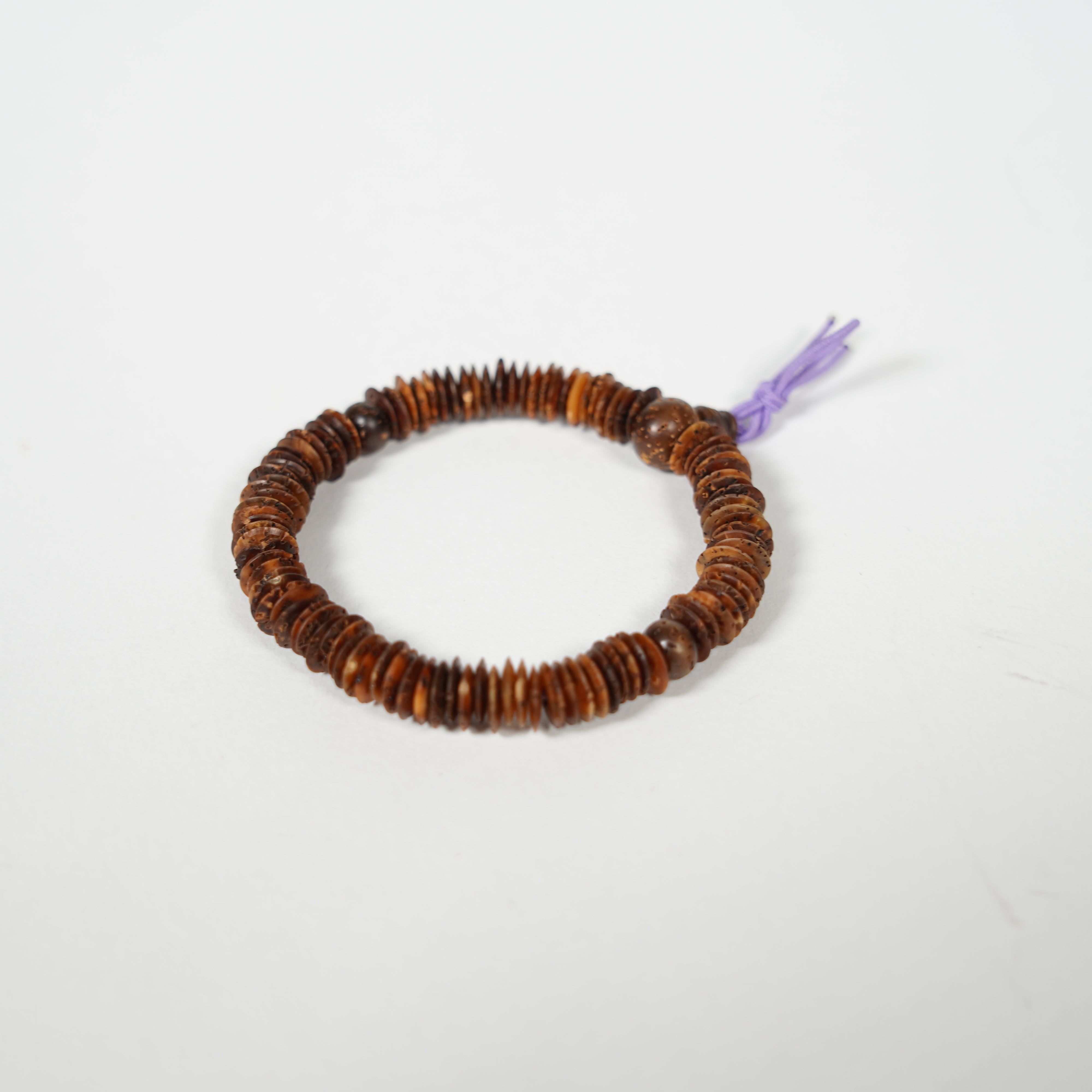
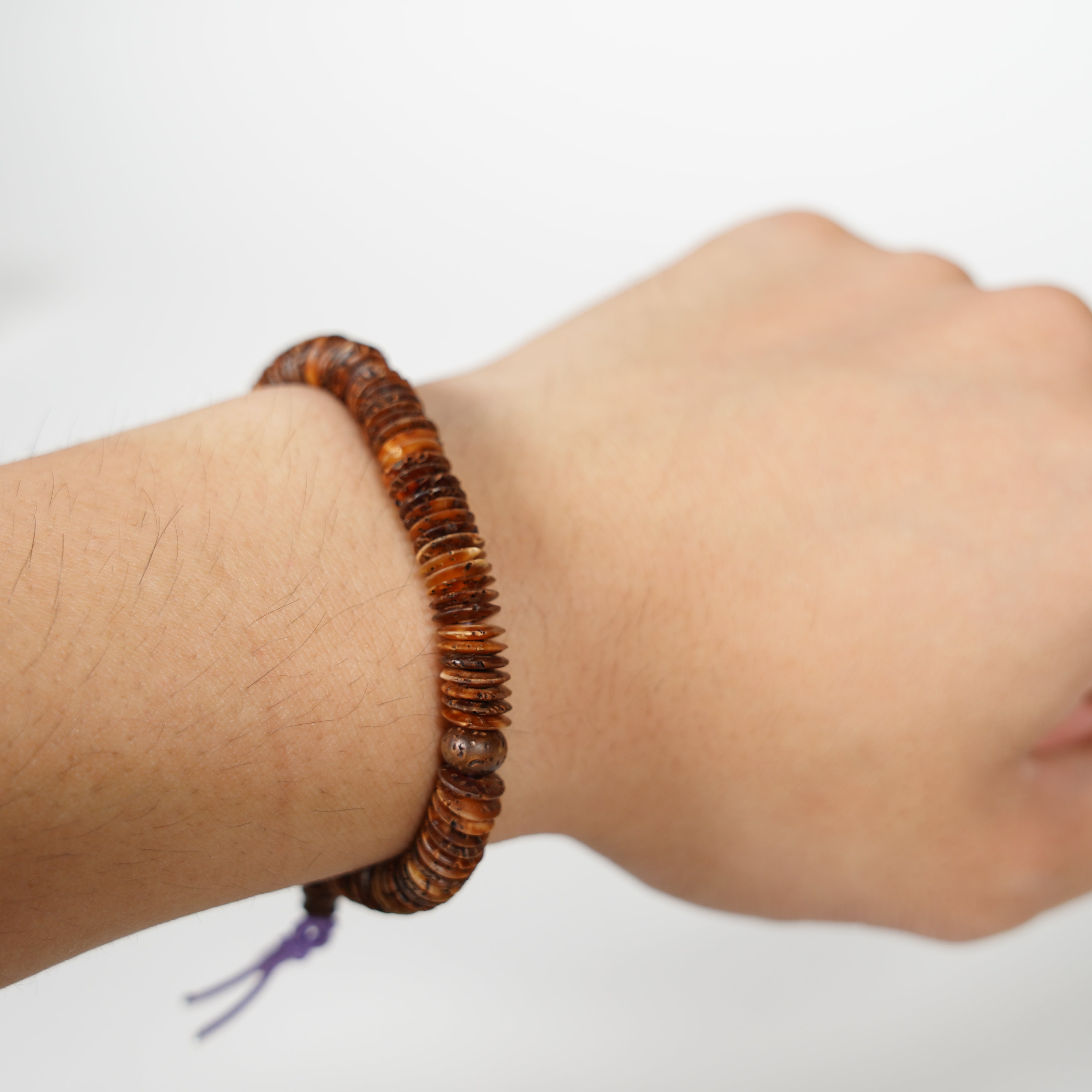
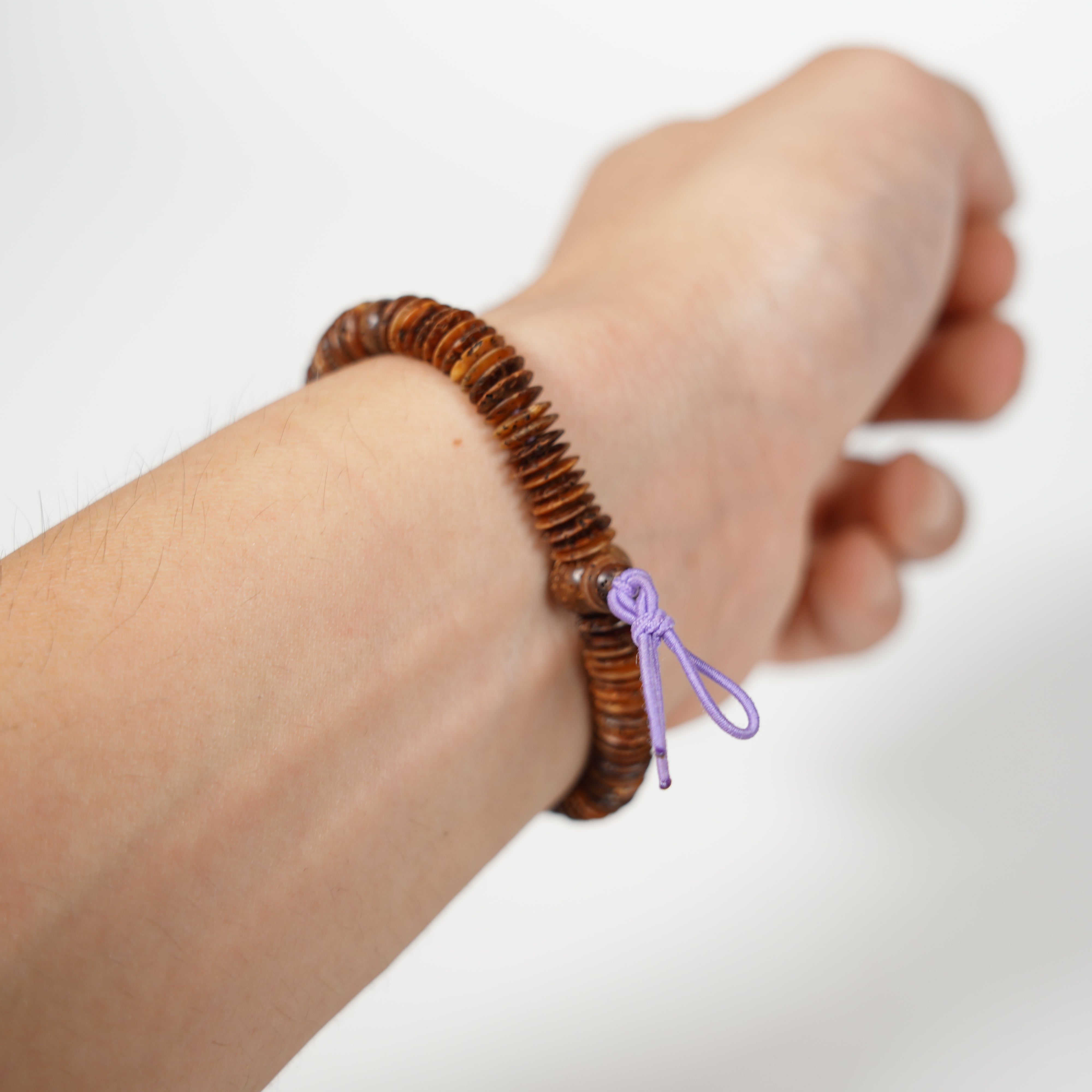
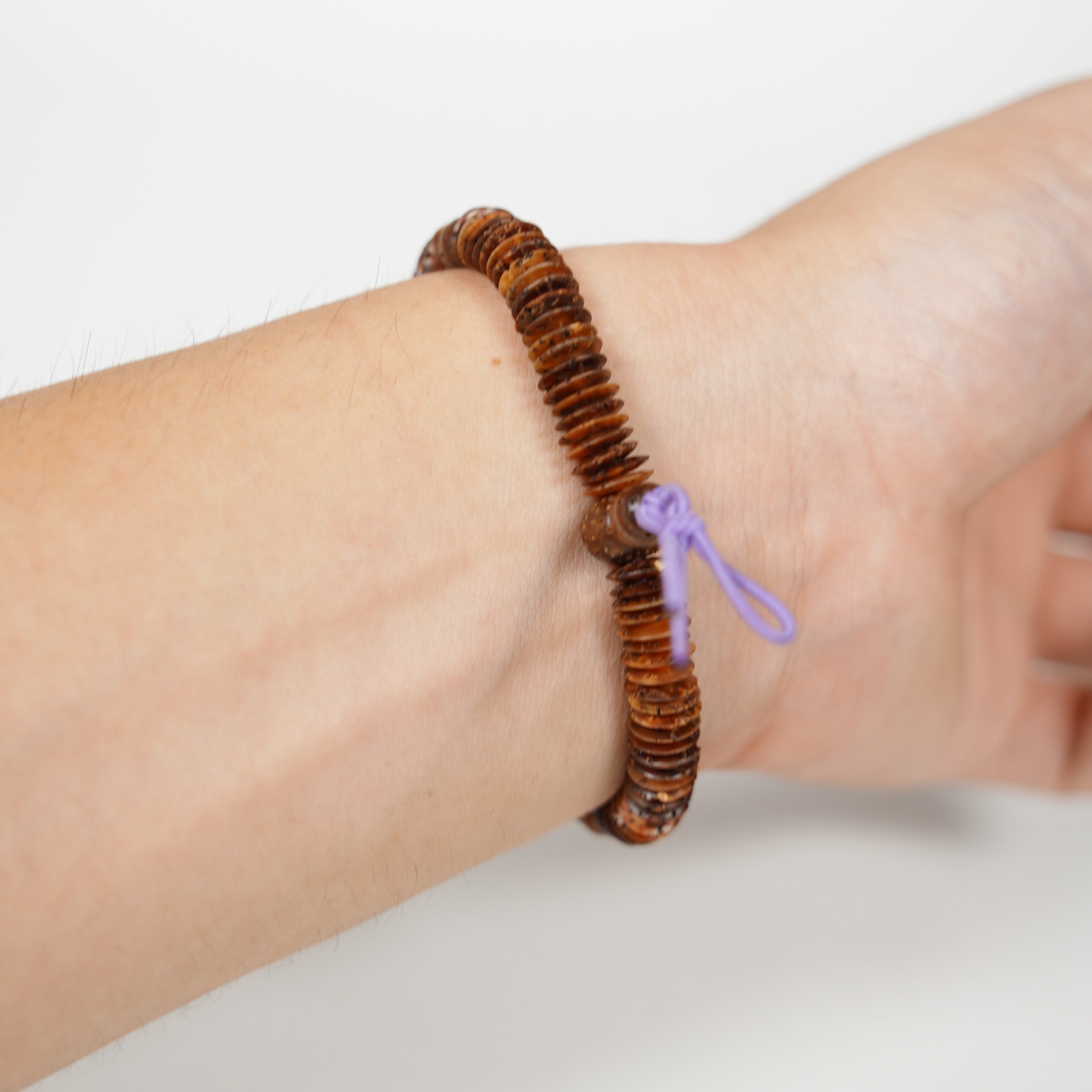
KYO NENJU / KYOTO PRAYER BEADS
About 1,200 years ago / 800s / Heian Period (794–1185)
Prayer beads reached Japan with Buddhism, and by the Heian period different schools were refining bead counts, tassels and methods of use. Because Kyoto became home to many major temples, specialists developed who understood the formal requirements of each sect and mastered drilling, polishing and tassel making.
For Japanese people, nenju are among the most familiar Buddhist implements, commonly held at funerals and memorial services. Formal versions differ by sect, while simplified sets are widely used and may be given to mark adulthood, marriage or other life stages.
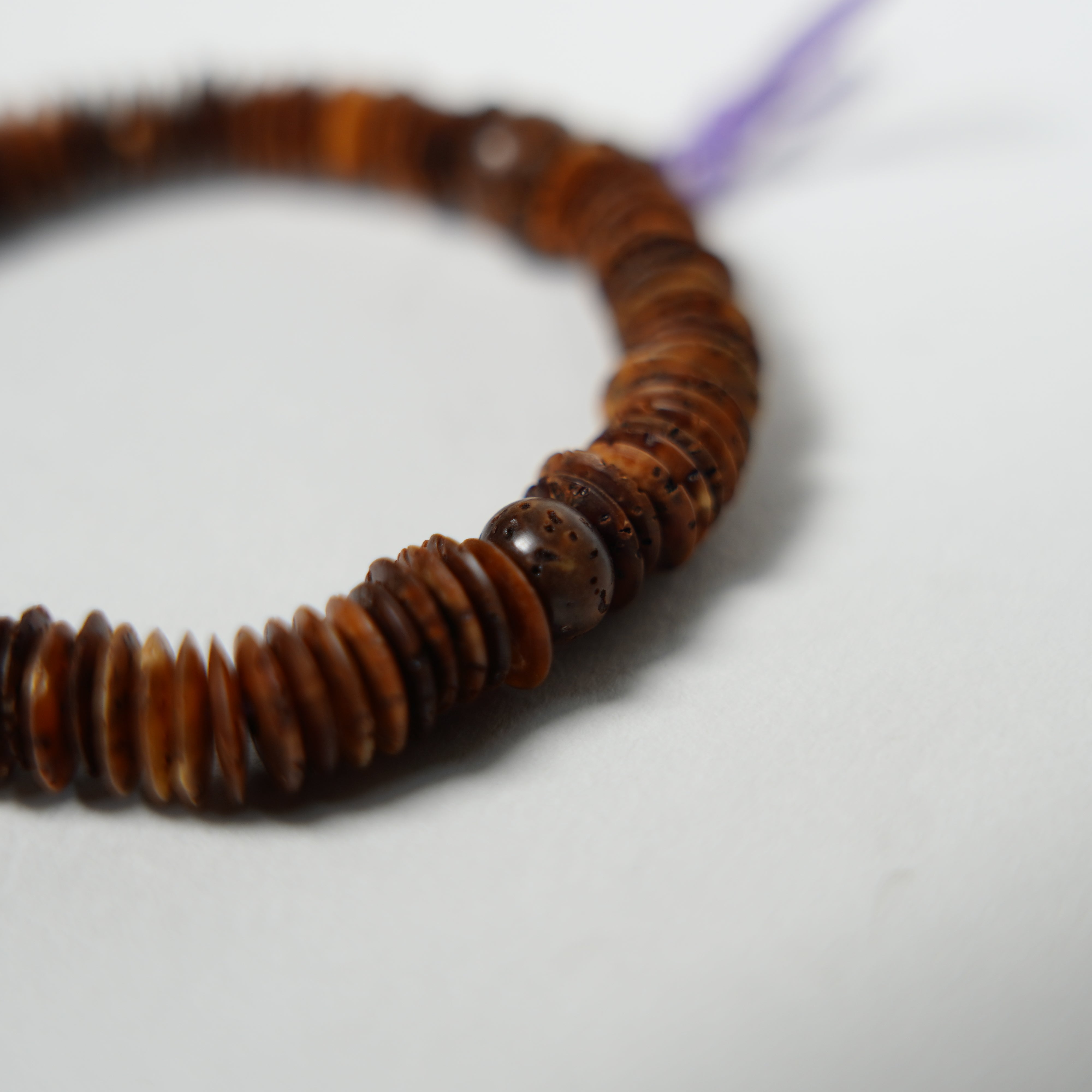
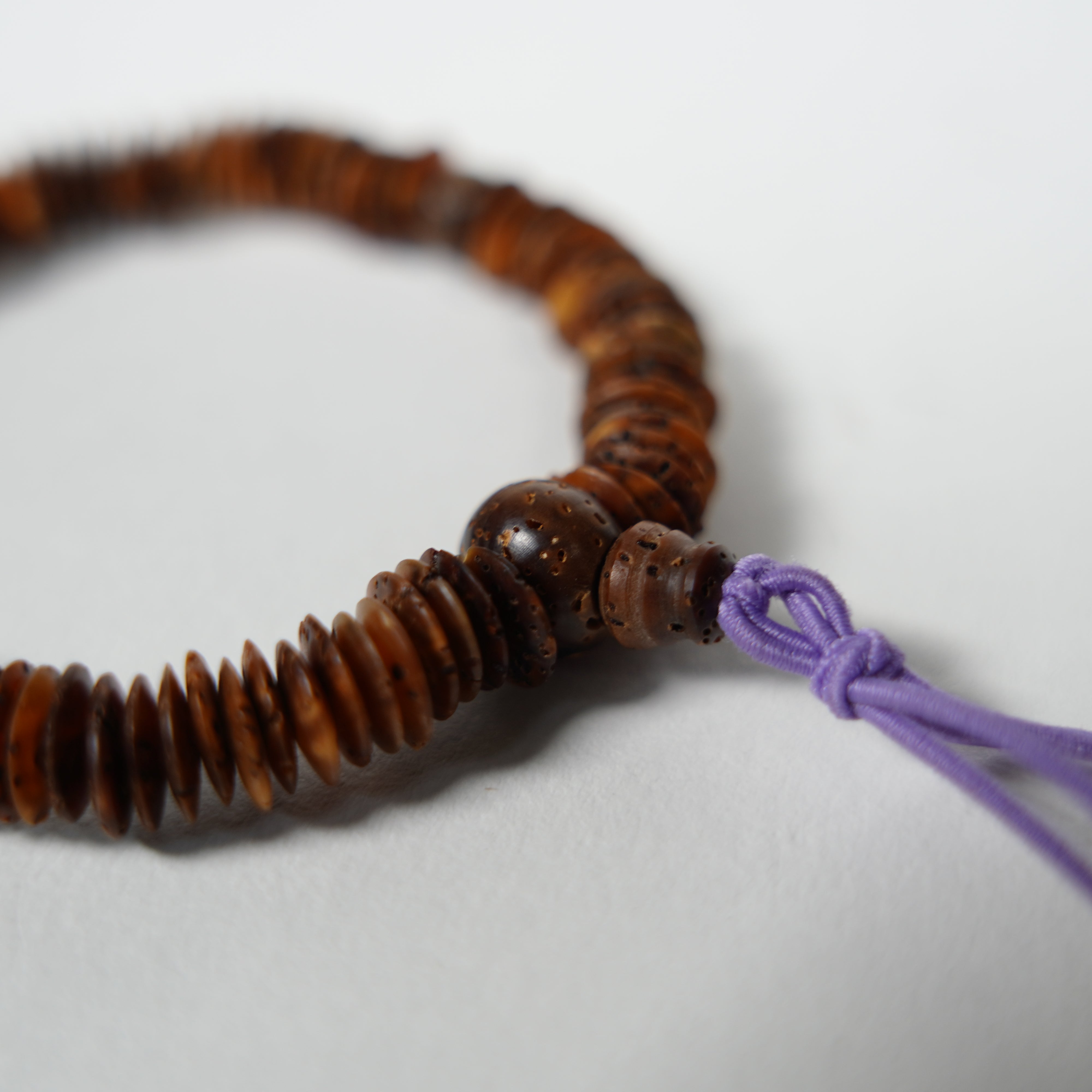
Although many sets look similar at first glance, bead numbers, the position of the larger parent bead and tassel design can vary significantly by Buddhist school. Materials range from bodhi seeds and wood to coral and crystal. The maker therefore needs both craft skill and detailed religious knowledge.