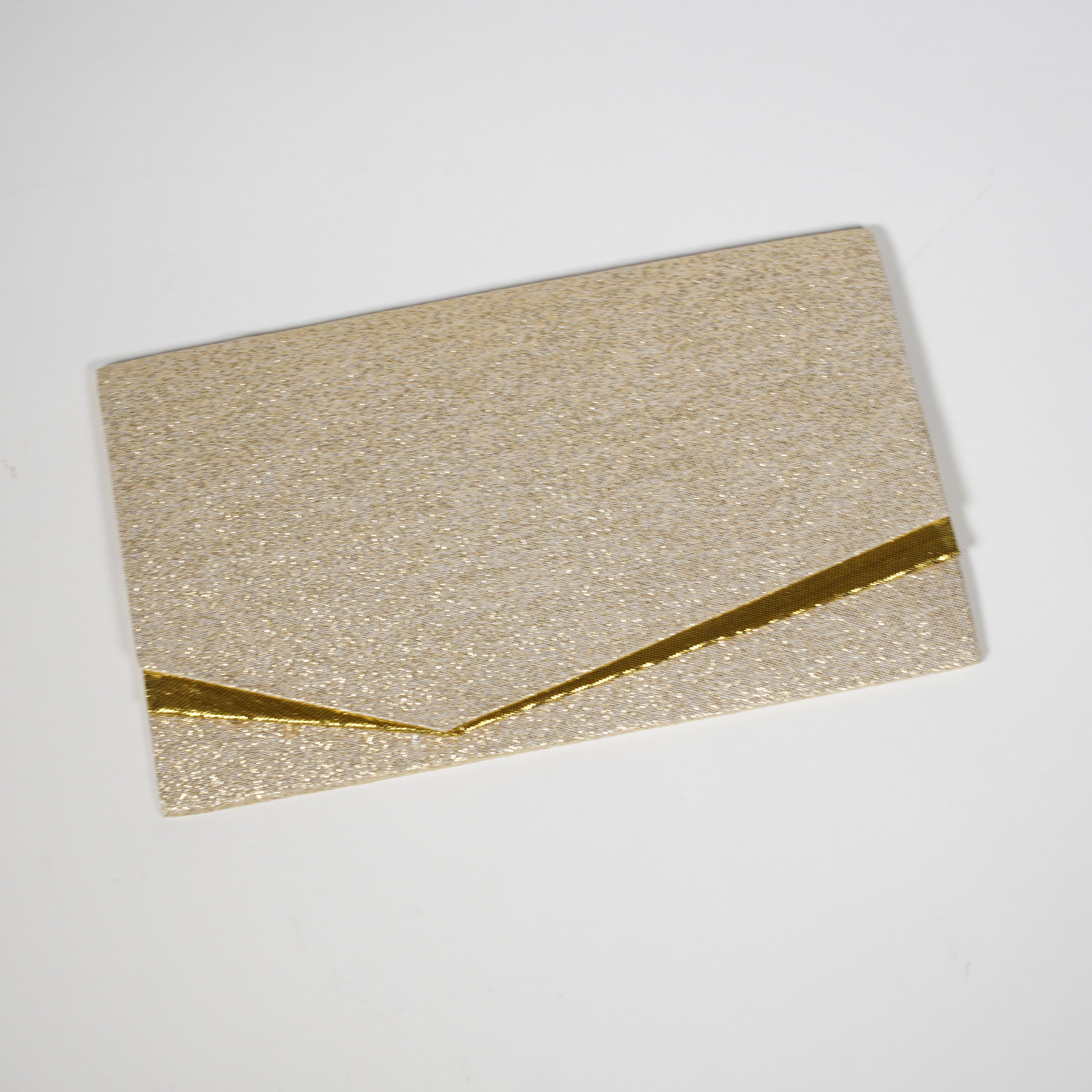
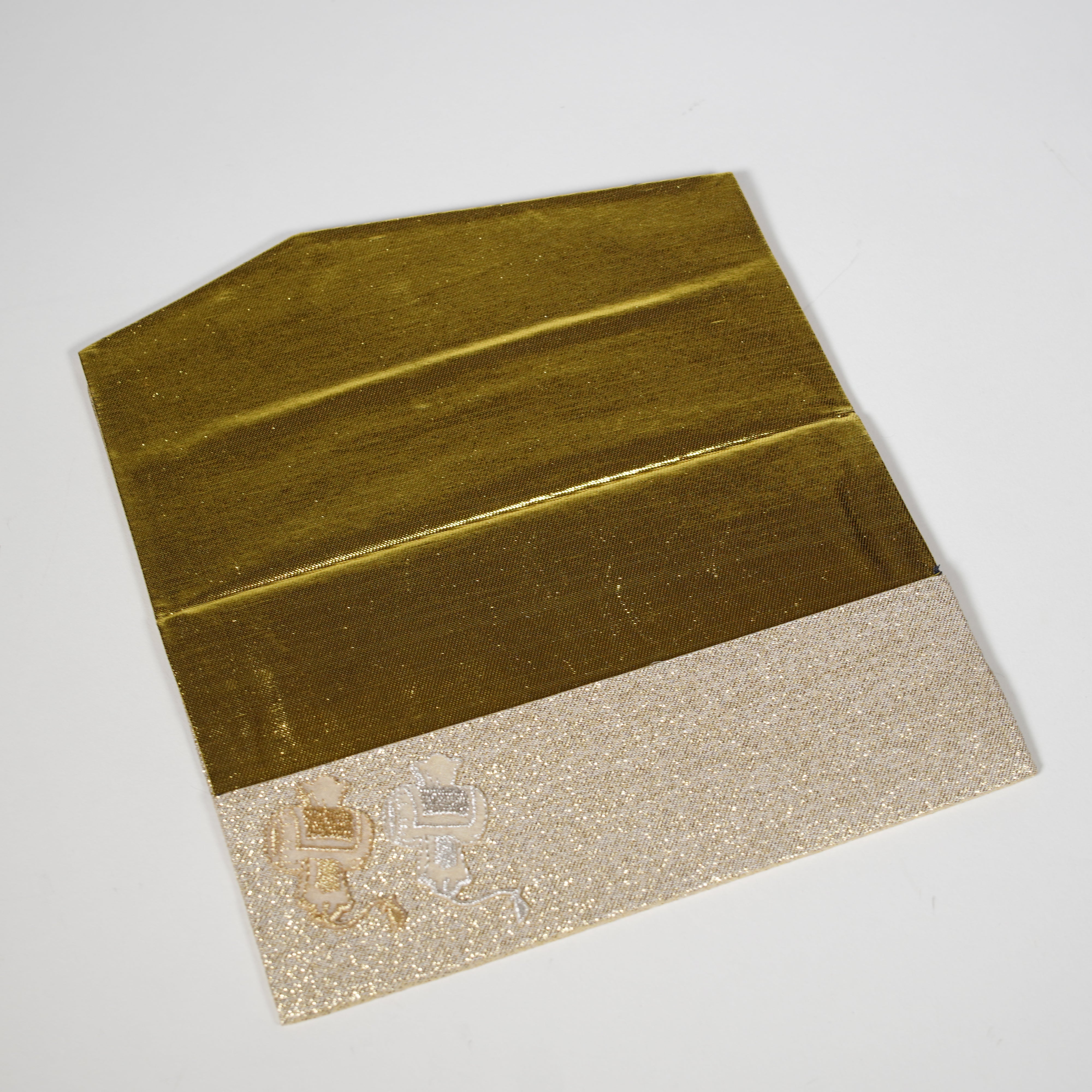
KINGINSHI / JAPANESE GOLD AND SILVER THREAD
About 1,200 years ago / 800s / Heian Period (794–1185)
Gold and silver thread originated from techniques in which metal leaf was applied to paper and cut into extremely narrow strips. In Kyoto it became essential to court textiles, temple fabrics and later Nishijin obi and kinran brocade. Modern production also uses metallic films, expanding the range of applications.
In Japan, these threads support garments meant to shine—formal kimono, obi, Noh costumes and festival wear. They may appear secondary to the main design, yet the quality and direction of their reflection strongly affect the prestige and visual rhythm of a textile. Today they also enter fashion and interiors.
Traditional gold thread is not simply a tiny metal wire. Gold leaf is laid on paper, then sliced into strips almost as fine as hair. Because the thread is flat rather than round, it reflects light as a surface, creating a brilliance very different from ordinary yarn.