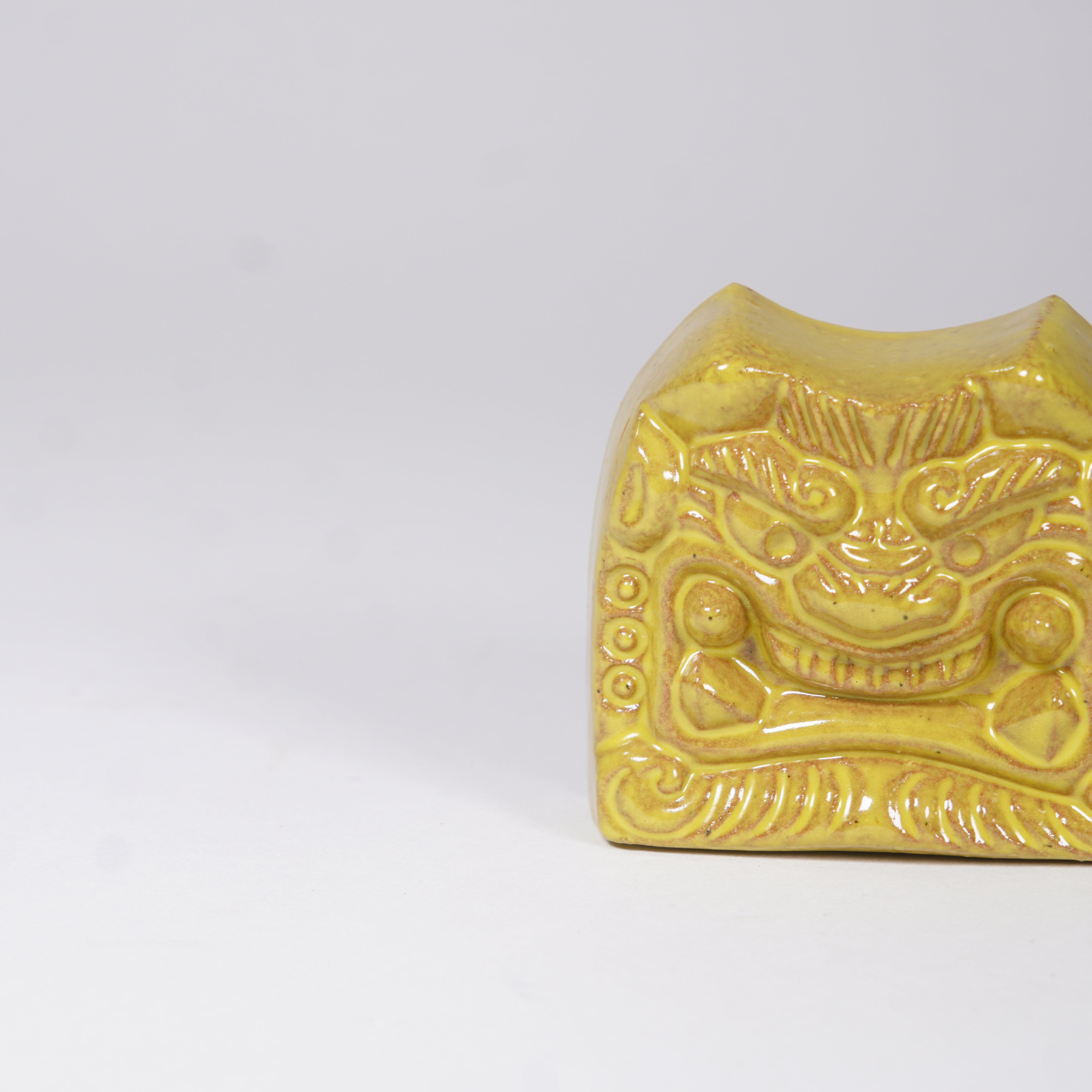
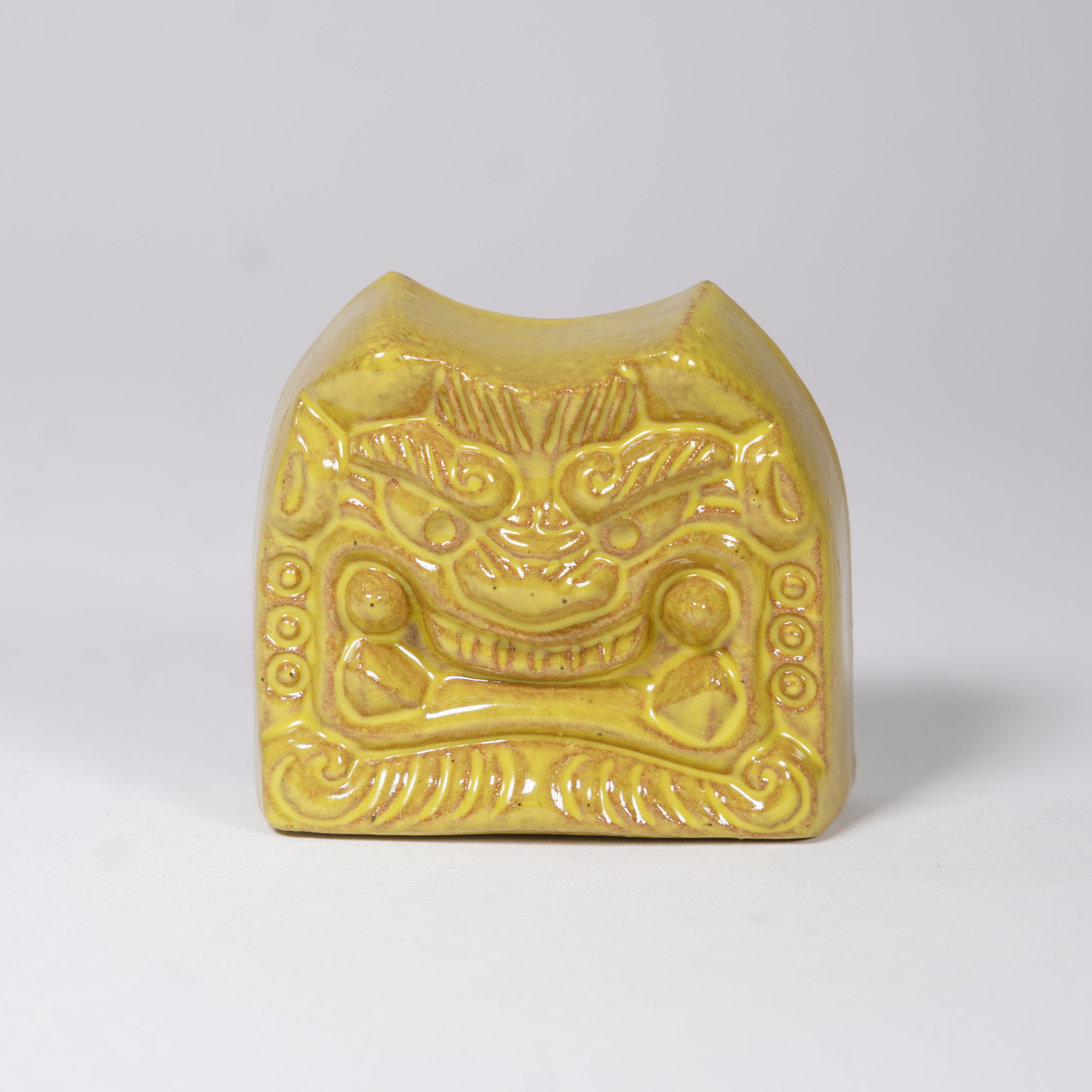
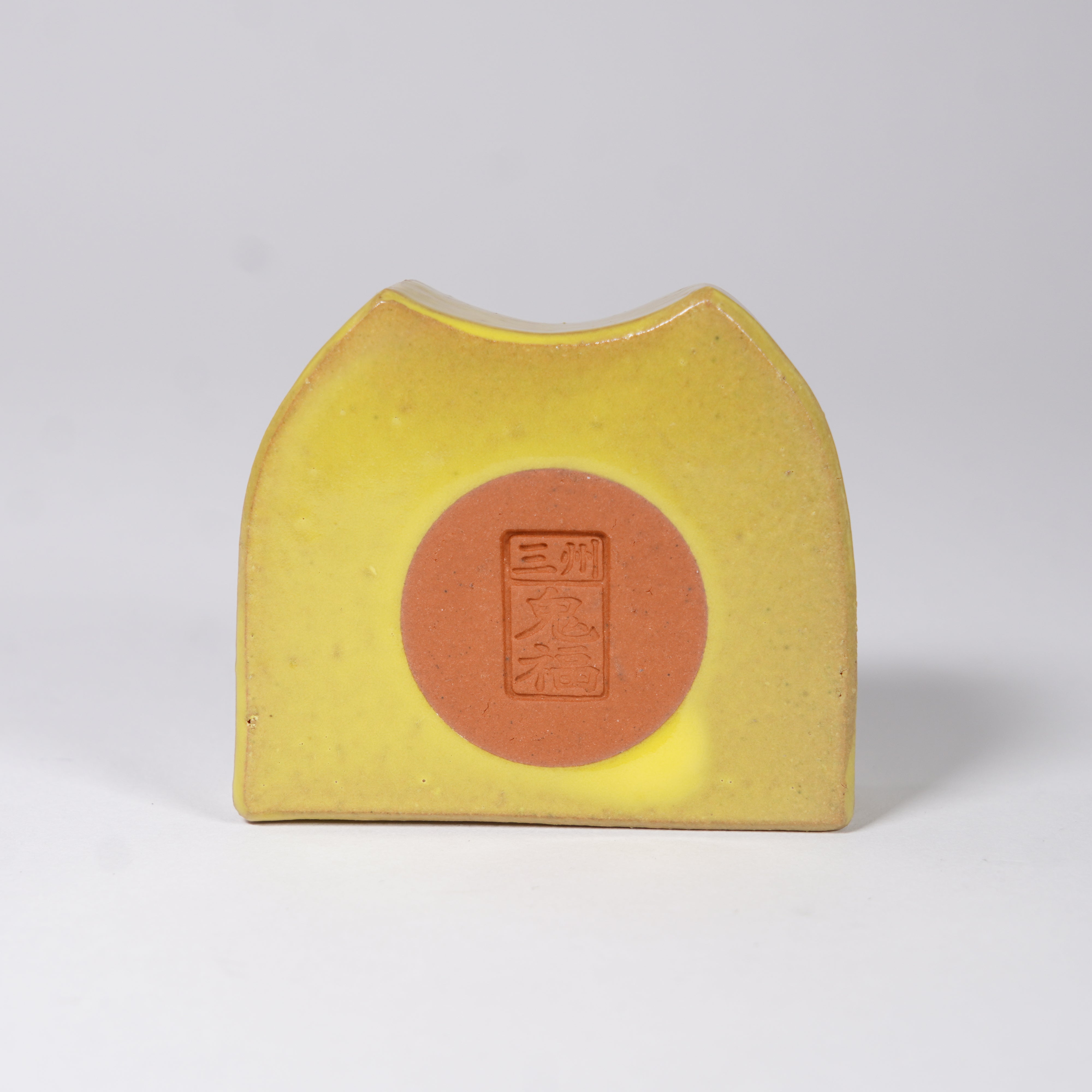
Onigawara Cartappe / Giallo
DESCRIPTION
DETAILS
SIZE
MATERIAL
ARTISAN
KOGEI
Caution
Scegli le opzioni


Onigawara Cartappe / Giallo
Prezzo scontato263,00 kr
Paese/Area geografica
Lingua
Carrello
Il tuo carrello è vuoto


This product is a combination of traditional Sanshu Onigawara techniques and innovative ideas that match the modern age. It can be used as a paperweight, but it can also be used as an interior decoration, such as placed around a desk or in an entranceway.
Onigawara were originally decorated on roofs as a guardian deity of buildings, so they are ideal as a lucky charm for your home. Why don't you pick one up and feel the goodness of Onigawara?
SIZE
Width:6.5cmDepth:2.5cmHeight:6cmWeight:140g
MATERIAL
Clay
ONIFUKU
"Seeking new forms without being bound by materials"
While the demand for roof tiles has been decreasing year by year due to the trend of the times, we would like to find the potential of Sanshu Ornamental roof tiles which is the fruit of traditional techniques cultivated over a long history. I continue to produce products that match the modern age, such as tissue cases and wind chimes.
ARTISAN STORY
Ryo Suzuki / Onifuku
A craftsman who has been making Sanshu Ornamental roof tiles at a long-established tile workshop in Aichi Prefecture since 1916. He graduated from a science university and wanted to work in research sector but decided to take over the family business because he thought he would regret it for the rest of his life if the family business were to disappear.
SANSHU ONIGAWARA / SANSHU ORNAMENTAL ROOF TILES
About 300 years ago / 1720s / Edo Period (1603–1868)
Sanshu ornamental roof tiles grew from the great tile industry of western Mikawa, Aichi. After Tokugawa Yoshimune encouraged fire-resistant tiled roofs in 1720, abundant clay along the Yahagi River and convenient sea transport helped Sanshu become a major production center. Specialist “oni-shi” craftsmen formed dramatic ridge-end ornaments by hand.
In Japan, onigawara are both functional roof components and protective symbols associated with warding off misfortune and safeguarding the household. Today the same skills serve major cultural-property restoration as well as smaller sculptures, plaques and decorative objects.
The characteristic silver-gray surface comes not from glaze but from ibushi firing, which creates a carbon film under oxygen-restricted conditions at high temperature. And “oni” tiles are not always demons: lions, mythical fish, plants and family crests can all be modeled to order, making the artisan part tile maker and part sculptor.
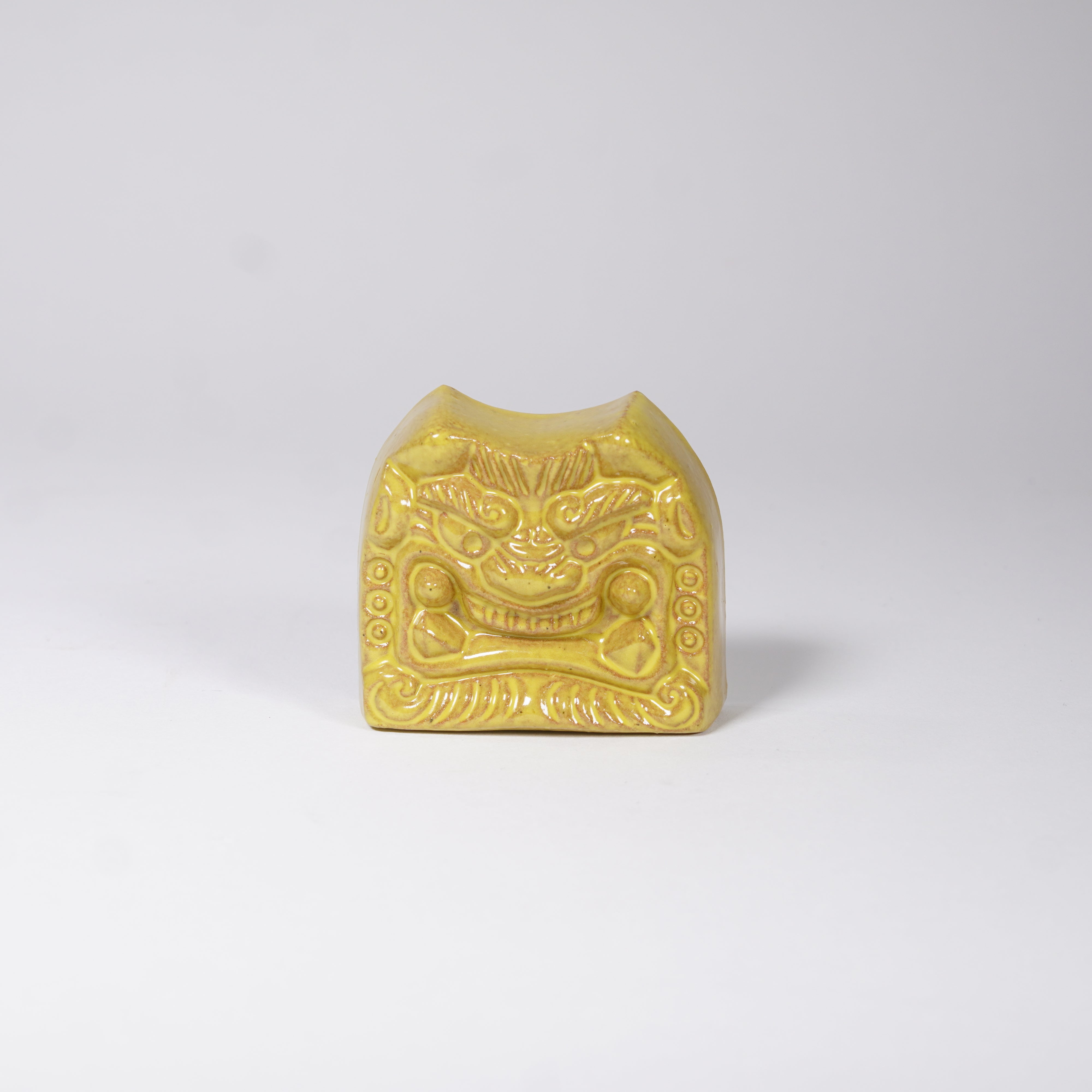
Individual Differences
As each piece is individually handcrafted, slight variations in color, pattern, shape, and texture may occur. These subtle differences are a natural characteristic of handcrafted works, making each piece truly unique. We hope you will enjoy these individual variations as part of the beauty and character of Japanese craftsmanship.
Production Time
If an item is not currently in stock, it may be made to order by the artisan. As each piece is carefully handcrafted, production may take several months depending on the item and the artisan's schedule. We appreciate your patience and understanding.

Scegli le opzioni