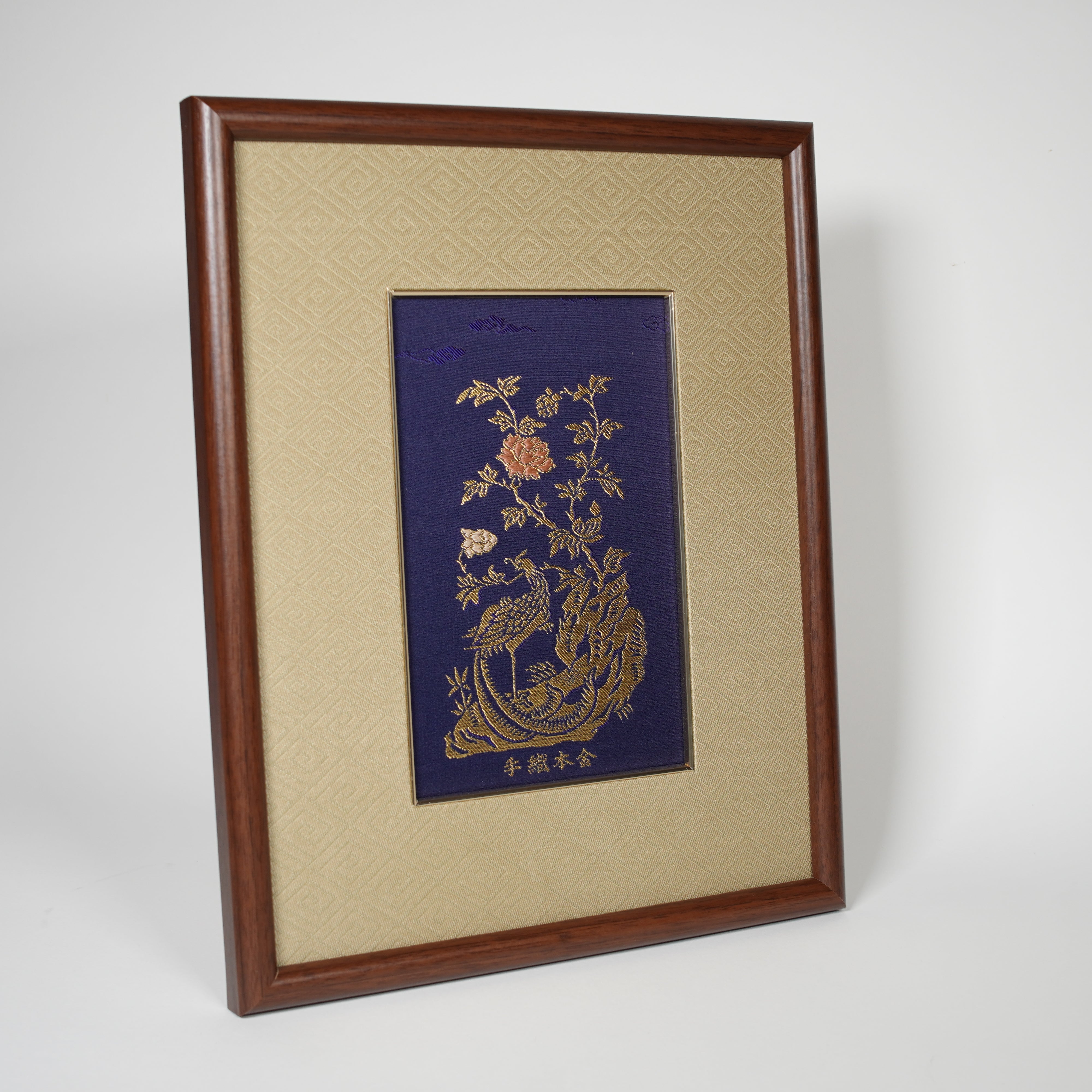
Nishijin Brocade / Art Pannello / Peacock e Thunderbolt
DESCRIPTION
DETAILS
SIZE
MATERIAL
ARTISAN
KOGEI
Caution
Scegli le opzioni


Nishijin Brocade / Art Pannello / Peacock e Thunderbolt
Prezzo scontatoMOP$2,886.00
Paese/Area geografica
Lingua
Carrello
Il tuo carrello è vuoto


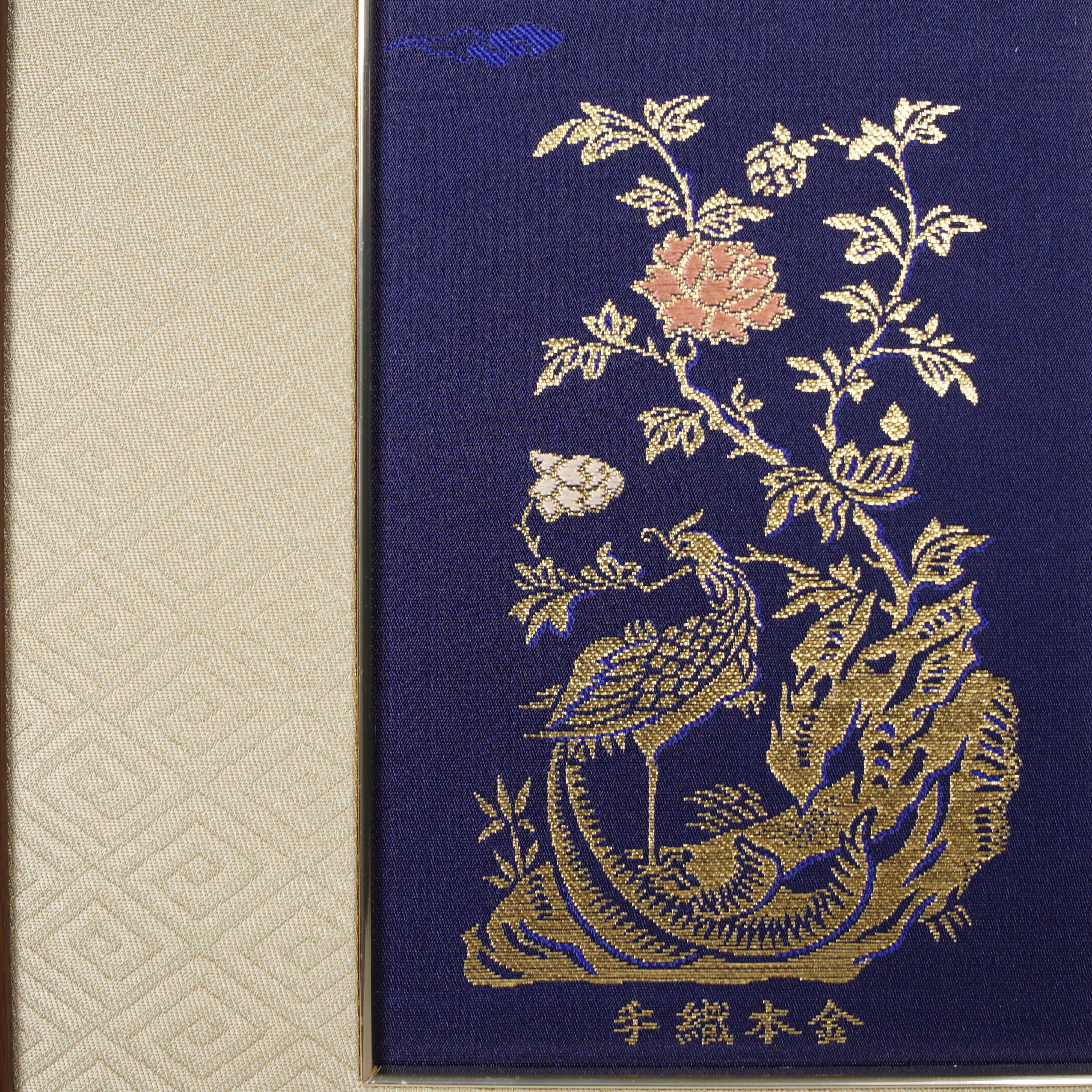
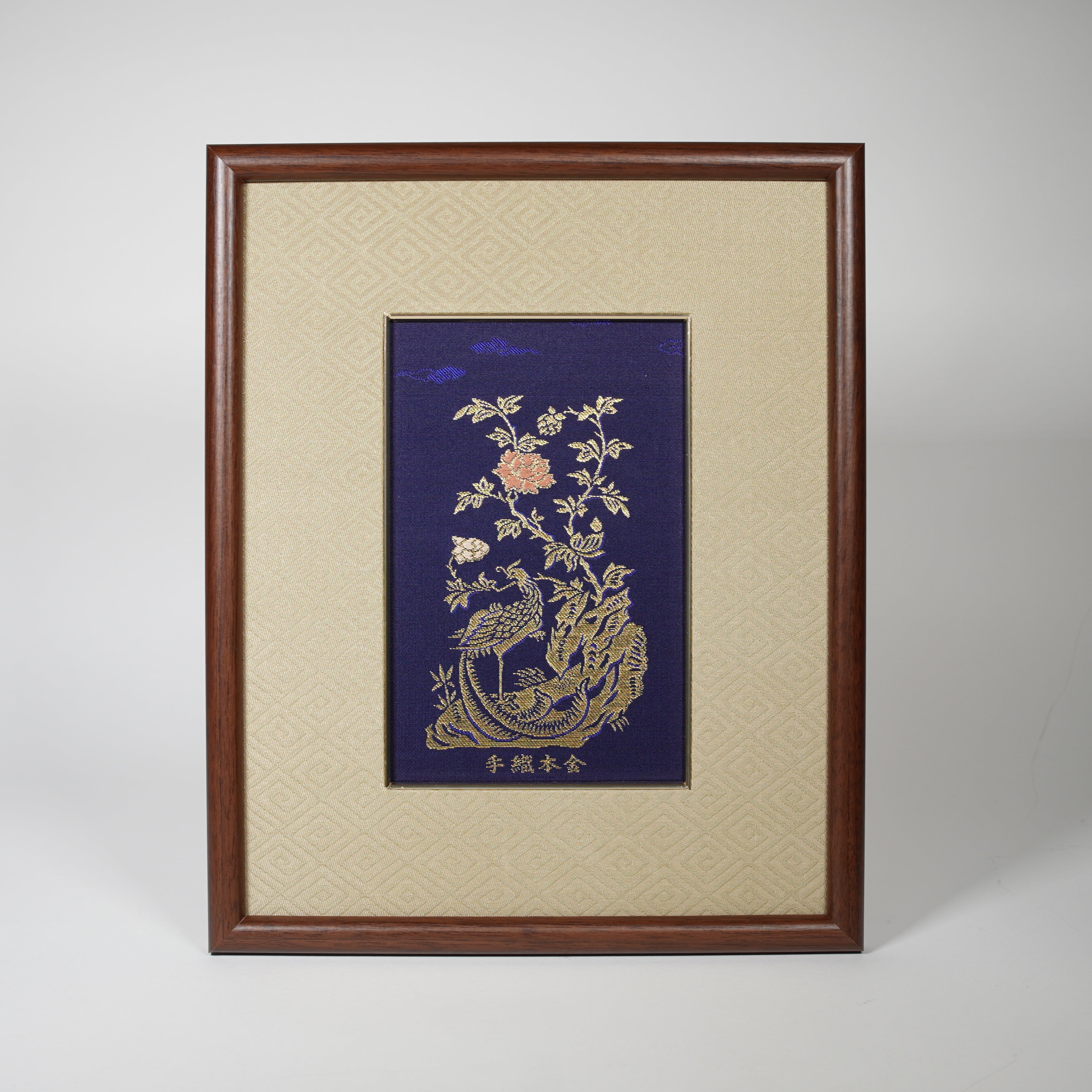
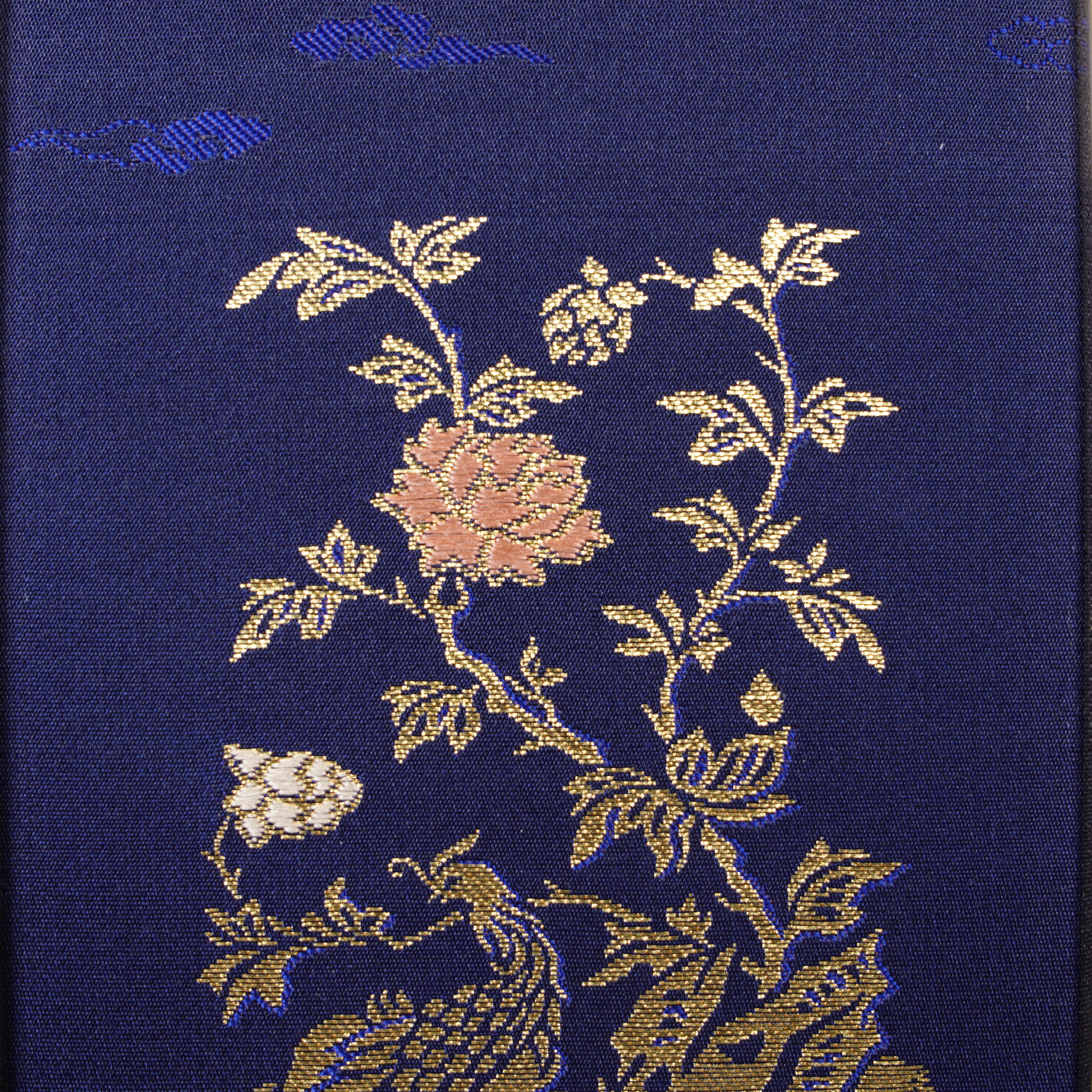
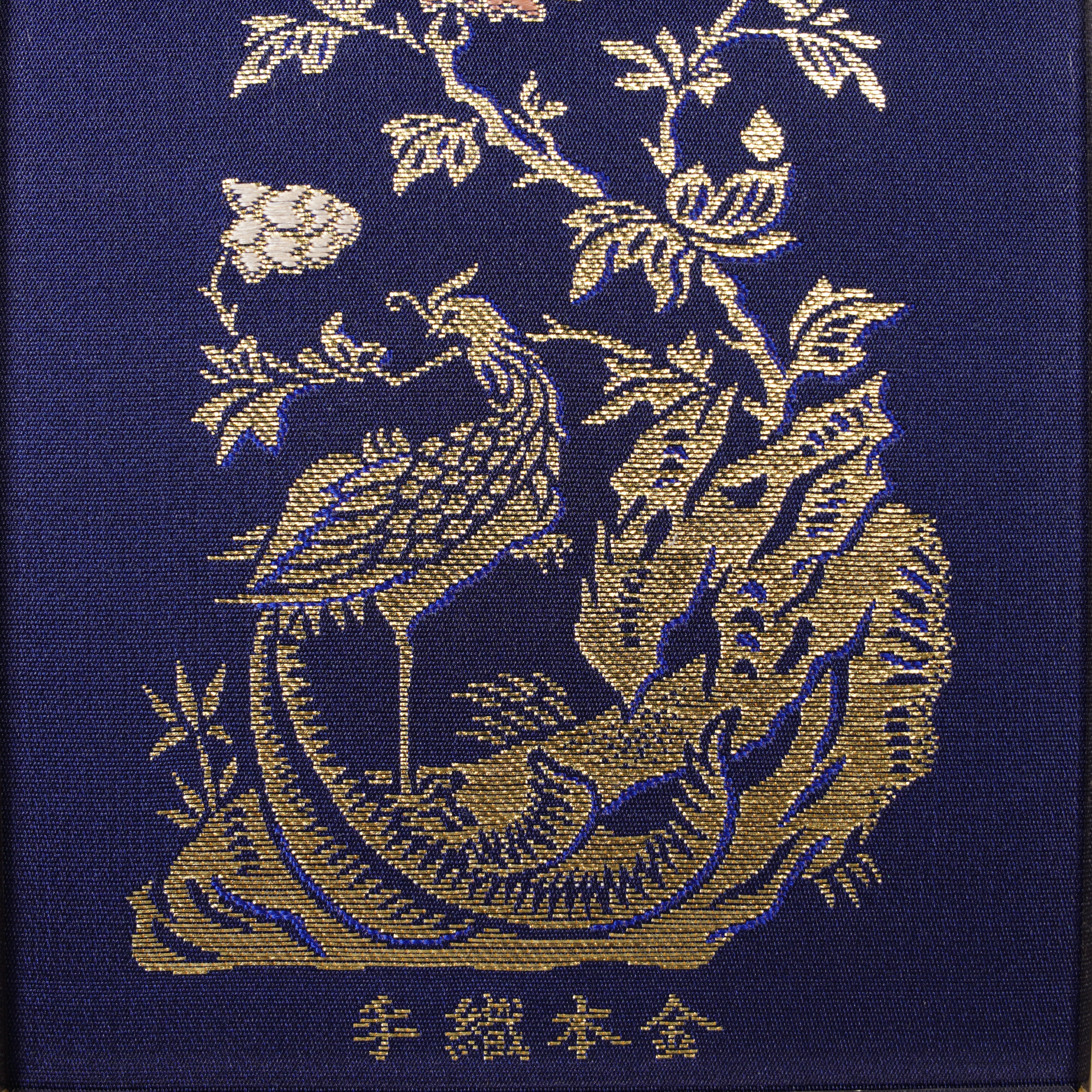
This hand-woven Nishijin brocade art panel depicts a peacock woven by skilled craftsmen.
The peacock is believed to bring good luck for future because its outstretched wings resemble a fan. It is also said that the pattern of the outstretched wings is a charm against evil.
This is a product that allows you to easily feel the charm of genuine Nishijin brocade.
Why don't you display it as an accent in your room?
SIZE
Width : 26.5cm
Depth : 2cm
Height : 32.5cm
Weight : 630g
MATERIAL
Silk
Gold
Acrylic Board
ORISHO HIRAI
"Taking care of every single detail with the highest concentration".
We strive to create products that will please our customers.
When the work is going well, we stop our hands to check for any damage. We value this step and make our products every day, because a mistake that goes unnoticed is very important at a critical stage.
ARTISAN STORY
Mikio Hirai
Mikio Hirai is a fifth-generation weaver at Orisho-Hirai, a weaver founded in the early Meiji period (1868-1912). He has maintained the traditions and techniques that have been passed down for over 100 years, and works with a focus on authenticity in his traditional workshop. He also produces Nishijin brocade art panels that make it easy to experience the charm of Nishijin brocade.
We hope you will enjoy our traditional craftsmanship.
ACHIEVEMENTS
・Received Excellent Prize, Comprehensive Technique Contest for Young Craftsmen in Kyoto
・Certified as an authorized craftsman of Kyoto crafts
・Designated by the Minister of Economy, Trade and Industry as a traditional Nishijin textile craftsman
・Designated by Kyoto City, certified as a future master craftsman
NISHIJIN ORI / NISHIJIN SILK TEXTILES
About 1,200 years ago / 800s / Heian Period (794–1185)
Nishijin textiles trace their technical roots to the Oribe-no-tsukasa, a Heian-period government workshop that produced luxury cloth for the court. Weavers scattered during the Onin War but later returned to the area around the former western army camp—nishi-jin—giving the district its enduring name. In the Meiji period, European Jacquard technology was actively introduced.
In Japan, Nishijin represents some of the country’s most prestigious silk weaving, especially obi and Noh costumes. Because designs are woven from pre-dyed yarn rather than printed afterward, colors can have extraordinary depth. Today the skills also appear in ties, bags, interiors and collaborations with fashion brands.
“Nishijin” was not originally an ancient place-name; it literally refers to the “western camp” of the Onin War. Production is also profoundly distributed: design, pattern preparation, twisting, dyeing and weaving may involve more than twenty specialized stages across the neighborhood. The city district itself functions like a single enormous workshop.
Individual Differences
As each piece is individually handcrafted, slight variations in color, pattern, shape, and texture may occur. These subtle differences are a natural characteristic of handcrafted works, making each piece truly unique. We hope you will enjoy these individual variations as part of the beauty and character of Japanese craftsmanship.
Production Time
If an item is not currently in stock, it may be made to order by the artisan. As each piece is carefully handcrafted, production may take several months depending on the item and the artisan's schedule. We appreciate your patience and understanding.

Scegli le opzioni