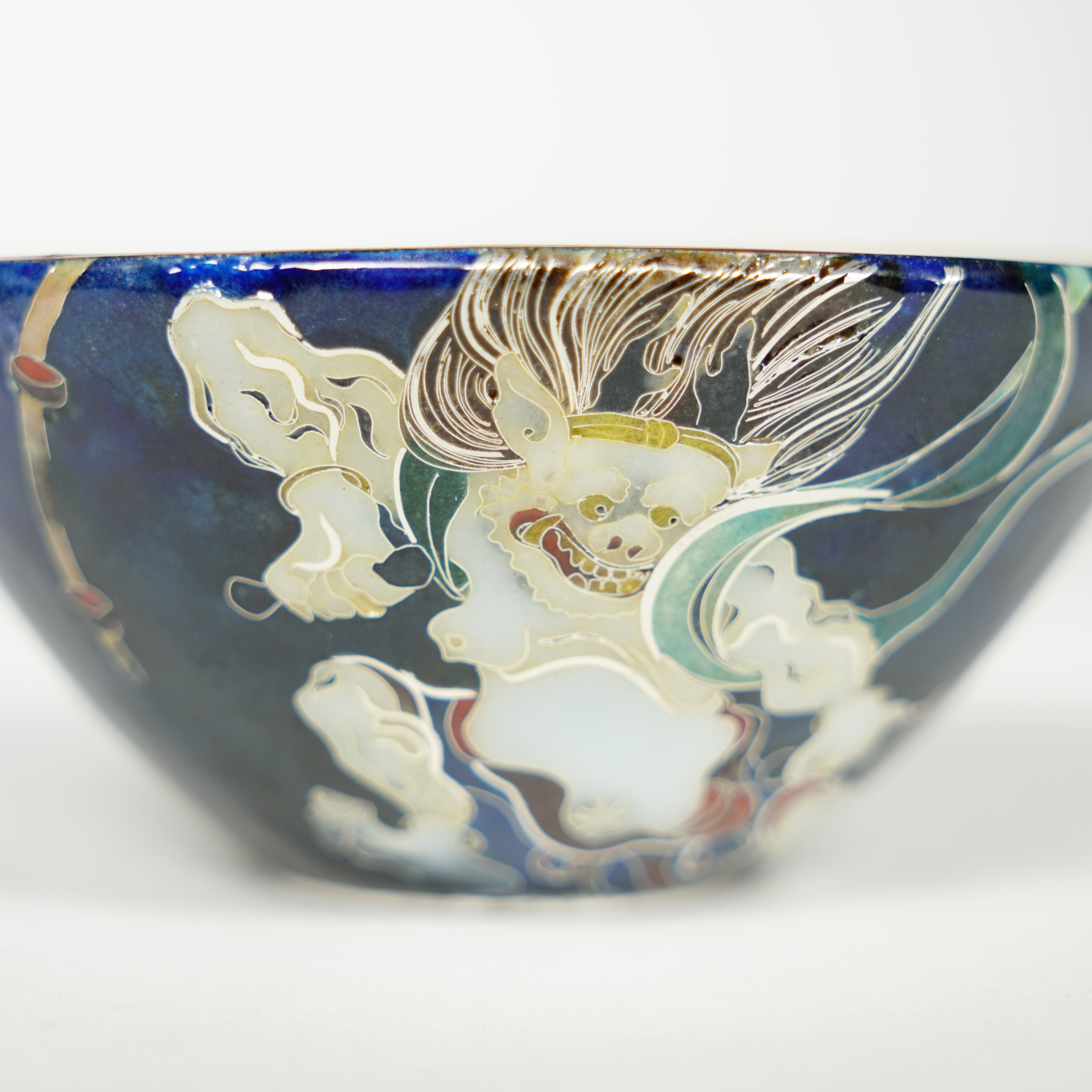
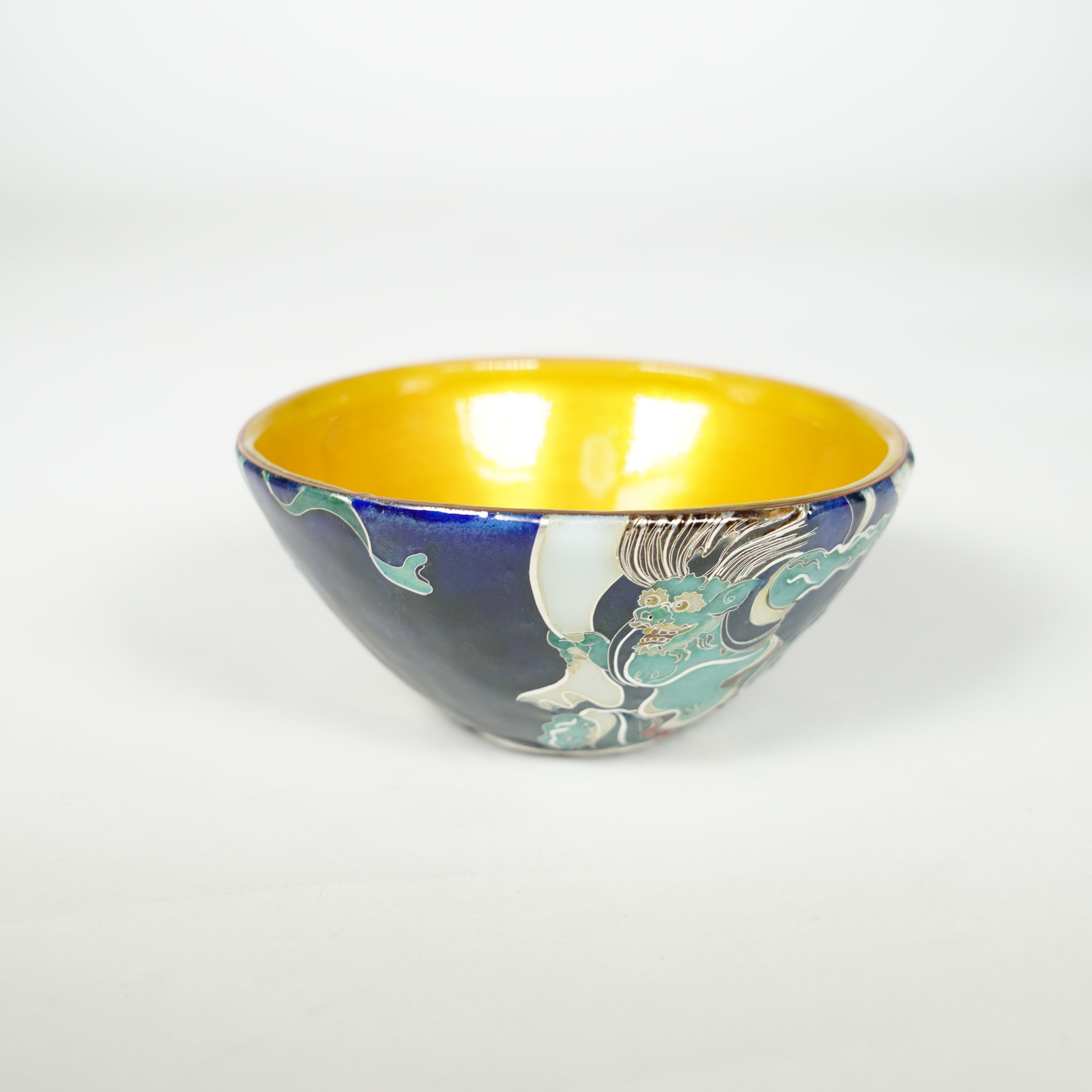
Kyoto Cloisonne / Guinomi / Wind God and Thunder God
DESCRIPTION
DETAILS
SIZE
MATERIAL
ARTISAN
KOGEI
Caution
Scegli le opzioni


Kyoto Cloisonne / Guinomi / Wind God and Thunder God
Prezzo scontato€2.156,95
Paese/Area geografica
Lingua
Carrello
Il tuo carrello è vuoto


This cloisonne gulp is decorated with a powerful wind god and thunder god framed in pure silver wire.
The solid weight and texture of the cloisonne ware are different from ceramic and glass ware, and are one of the unique charms of cloisonne ware.
How about using it to accompany your favorite sake or for a special occasion?
What are the Wind God and Thunder God (Fujin and Raijin)?
The Wind God and Thunder God are gods that appear in Japanese legends and myths, and are believed to be in charge of wind and thunder, respectively.
The Wind God and Thunder God are gods that govern nature, and have been associated with Japanese people's reverence for nature since ancient times.
In addition to warding off bad luck, the god is said to bring rain and fertility, ward off evil and bring success, and protect against natural disasters.
*It takes about 3 months from the time of order because it is a made-to-order product.
SIZE
Width:9.5cm
Depth:9.5cm
Height:4cm
Weight:160g
MATERIAL
Copper
Glass glaze
HIROMI ART
"Commit to flood the streets of Kyoto with cloisonne once again."
Old cloisonne enamel ware is still used in temples. In the Edo period, cloisonne enamel was used for sliding door pulls, cigarette cases, and many other things.
Nowadays, cloisonne enamel is becoming less and less common, so we are working hard to make the streets of Kyoto full of cloisonne enamel again.
ARTISAN STORY
Hiromi Art
Since its establishment in Kyoto in 1970, Hiromi Art has been producing Kyoto cloisonne enamel ware for over 50 years.
Thery are particular about the beauty of color. Each color is carefully layered with the color of the glaze, and is the result of many years of accumulated techniques.
They believe that "old but new" is the traditional Japanese craft of today, and they are creating new cloisonne enamel ware every day, while keeping in mind the old traditions.
KYO SHIPPO / KYOTO CLOISONNE
About 180 years ago / 1840s / Late Edo Period
Kyoto cloisonne advanced rapidly from the late Edo into the Meiji period as artisans mastered firing glassy enamel onto metal. Masters such as Namikawa Yasuyuki pushed wired cloisonne to extraordinary levels of precision and translucent color, and Kyoto pieces became highly celebrated at international expositions.
In Japan, cloisonne appears in jewelry, vases, obi ornaments and decorative objects, valued for a material quality somewhere between metal and glass. Contemporary makers continue traditional birds and flowers while also exploring jewelry and modern art.
Meiji-period Kyoto cloisonne was one of Japan’s great export arts. Hair-thin silver wires outline the design before enamel is repeatedly filled and fired. Under magnification, the wires resemble the lead lines of stained glass—evidence of astonishing precision created specifically for an emerging global art market.
Individual Differences
As each piece is individually handcrafted, slight variations in color, pattern, shape, and texture may occur. These subtle differences are a natural characteristic of handcrafted works, making each piece truly unique. We hope you will enjoy these individual variations as part of the beauty and character of Japanese craftsmanship.
Production Time
If an item is not currently in stock, it may be made to order by the artisan. As each piece is carefully handcrafted, production may take several months depending on the item and the artisan's schedule. We appreciate your patience and understanding.

Scegli le opzioni