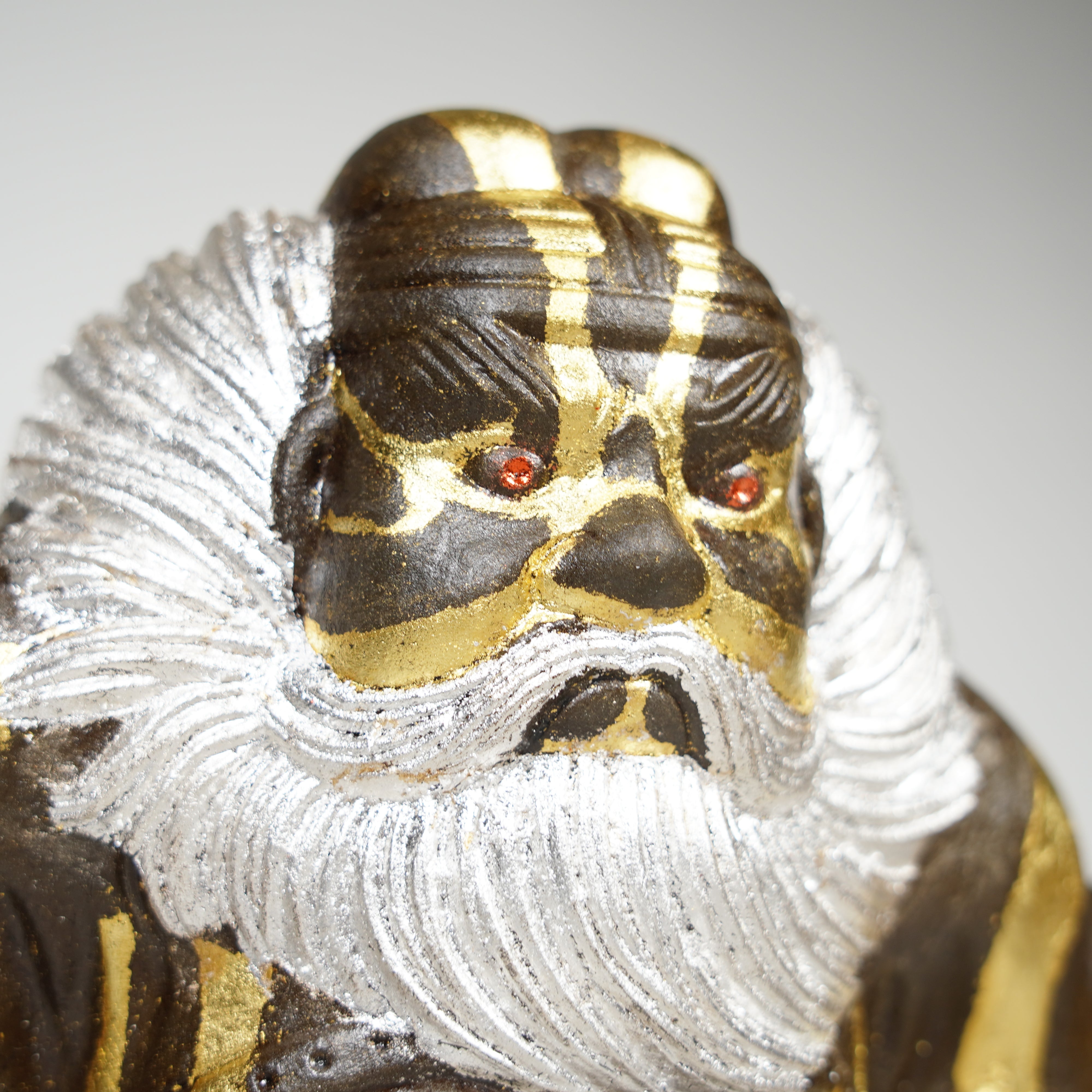
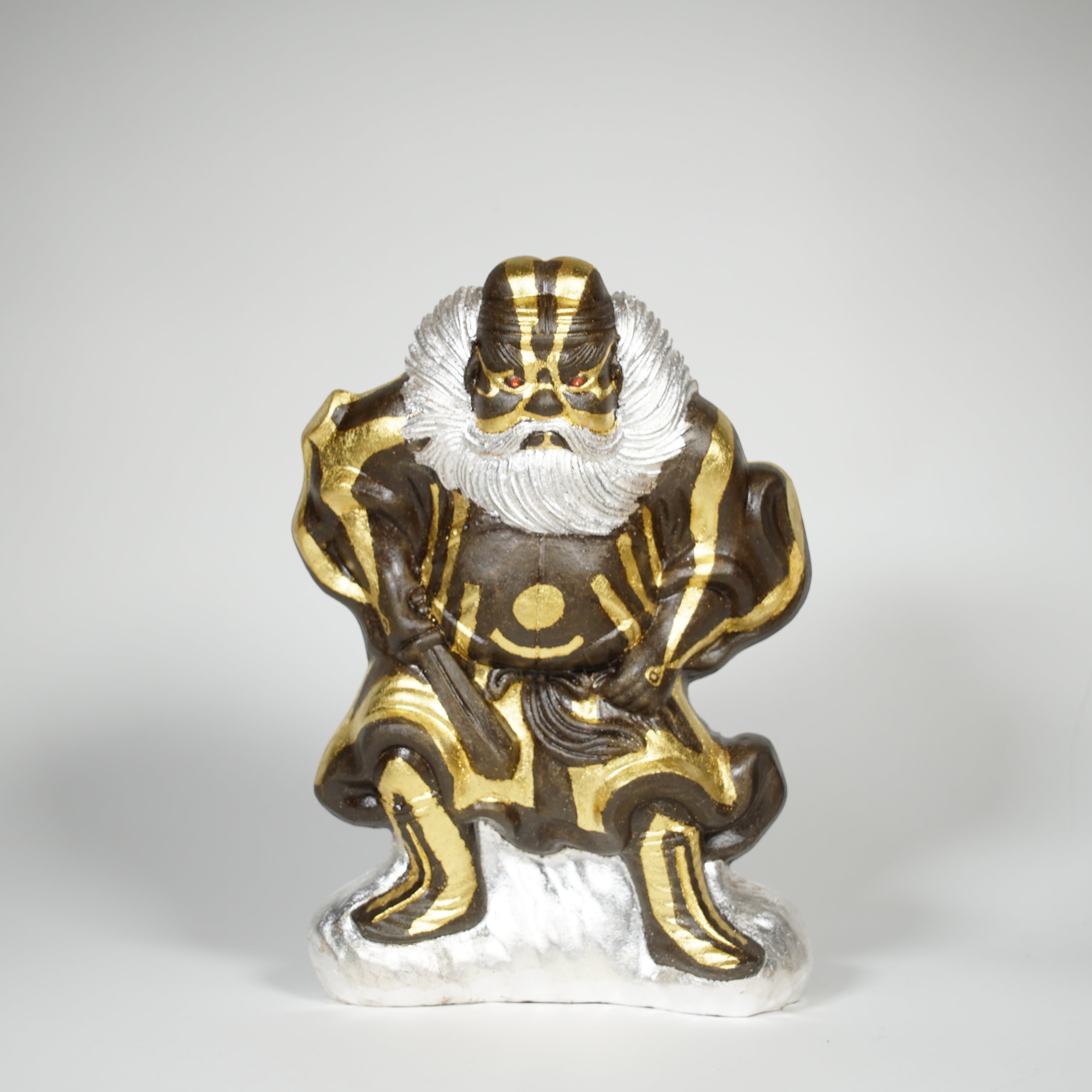
Gilded Art Piece / Shoki (The Demon Queller) / Traditional Gold Leaf
DESCRIPTION
DETAILS
SIZE
MATERIAL
ARTISAN
KOGEI
Caution
Choose options


Gilded Art Piece / Shoki (The Demon Queller) / Traditional Gold Leaf
Sale price€1.279,95
Country
Language
Cart
Your cart is empty


This is the One-Of-A-Kind product that combines elements of the guardian god Shoki and anime characters.
The artist, Sho Sawanoi, was inspired by the anime character and applied the traditional Kyoto technique of "foil stamping" to the statue of Shoki.
A large amount of gold and silver leaf is used to give the statue a gorgeous and beautiful appearance.
What is Shoki?
A Taoist god from China with long whiskers and eyes that seem to be glaring at something.
It is believed that displaying a Shoki is effective in warding off disease, evil, and academic achievement.
We hope you will display it as a guardian deity of your home!
SIZE
Width:20cm
Depth:10cm
Height:28cm
Weight:3,000g
MATERIAL
Soil
Gold leaf
Silver leaf
HAKUTONBO
"Tradition x Subculture"
I thought that even if I became a person who produces in the conventional way, I would not be able to catch up with my predecessors. So, I came up with the idea of using traditional industry techniques to produce products in a field where no one else has tried.
I have been working in an anime store for many years, and I use my knowledge of the field I love and my traditional handiwork I learned from master to create products every day.
I would like to work so that the technique of foil stamping can reach more people in general.
ARTISAN STORY
Hakutonbo / Sho Sawanoi
Sho Sawanoi is the third generation of Hakutonbo, which has been continuing the tradition of foil stamping in Kyoto for more than 80 years. After working at an anime store for two years after graduating from university, he became an apprentice at Hakutonbo in 2013 as its successor.
He started to combine his previous hobby of subculture and foil stamping, and has been recognized for the high quality of his work.
ACHIEVEMENTS
・Shin Godzilla with foil stamping
KYO BUTSUDAN / KYOTO BUDDHIST ALTARS
About 1,000 years ago / 1000s / Heian Period (794–1185)
Kyoto Buddhist altars developed after the Heian period as temple building concentrated sculptors, woodworkers, lacquerers, gilders and decorative metal specialists in the capital. During the Edo period, the growth of major Buddhist sects and household worship increased demand, turning Kyoto into a center for highly sophisticated altars and ritual fittings.
In Japan, a household altar is a place to address ancestors and remember the dead. Large traditional altars have become less common in compact urban homes, but smaller prayer spaces and furniture-like designs continue to adapt the practice to modern life.
A Kyoto altar is rarely the work of one craftsperson. Wood construction, carving, lacquer, gold leaf, maki-e, metal fittings and final assembly can be divided among numerous specialists. In a single cabinet, many of Kyoto’s most important craft traditions are brought together—almost like a miniature temple.
Individual Differences
As each piece is individually handcrafted, slight variations in color, pattern, shape, and texture may occur. These subtle differences are a natural characteristic of handcrafted works, making each piece truly unique. We hope you will enjoy these individual variations as part of the beauty and character of Japanese craftsmanship.
Production Time
If an item is not currently in stock, it may be made to order by the artisan. As each piece is carefully handcrafted, production may take several months depending on the item and the artisan's schedule. We appreciate your patience and understanding.

Choose options