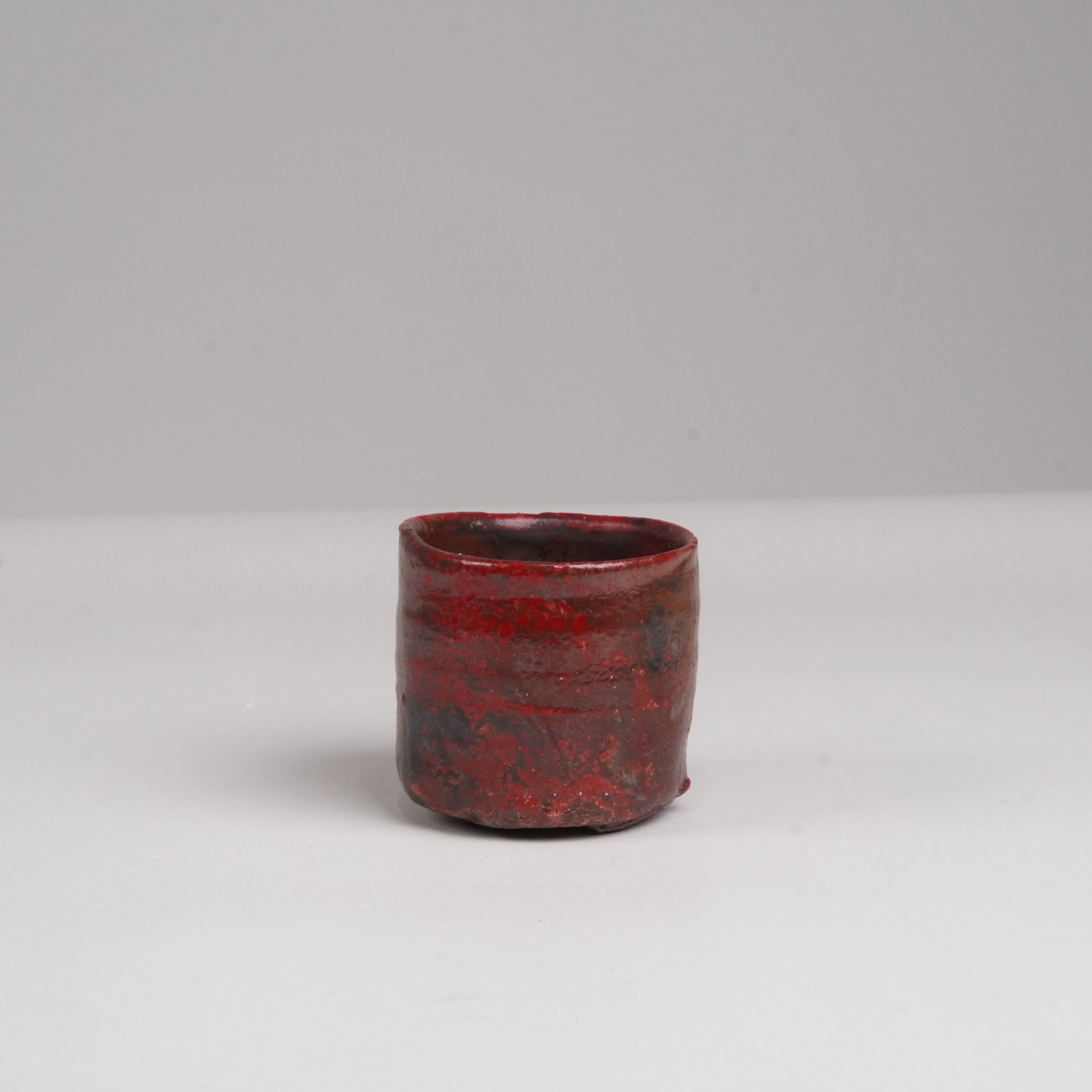
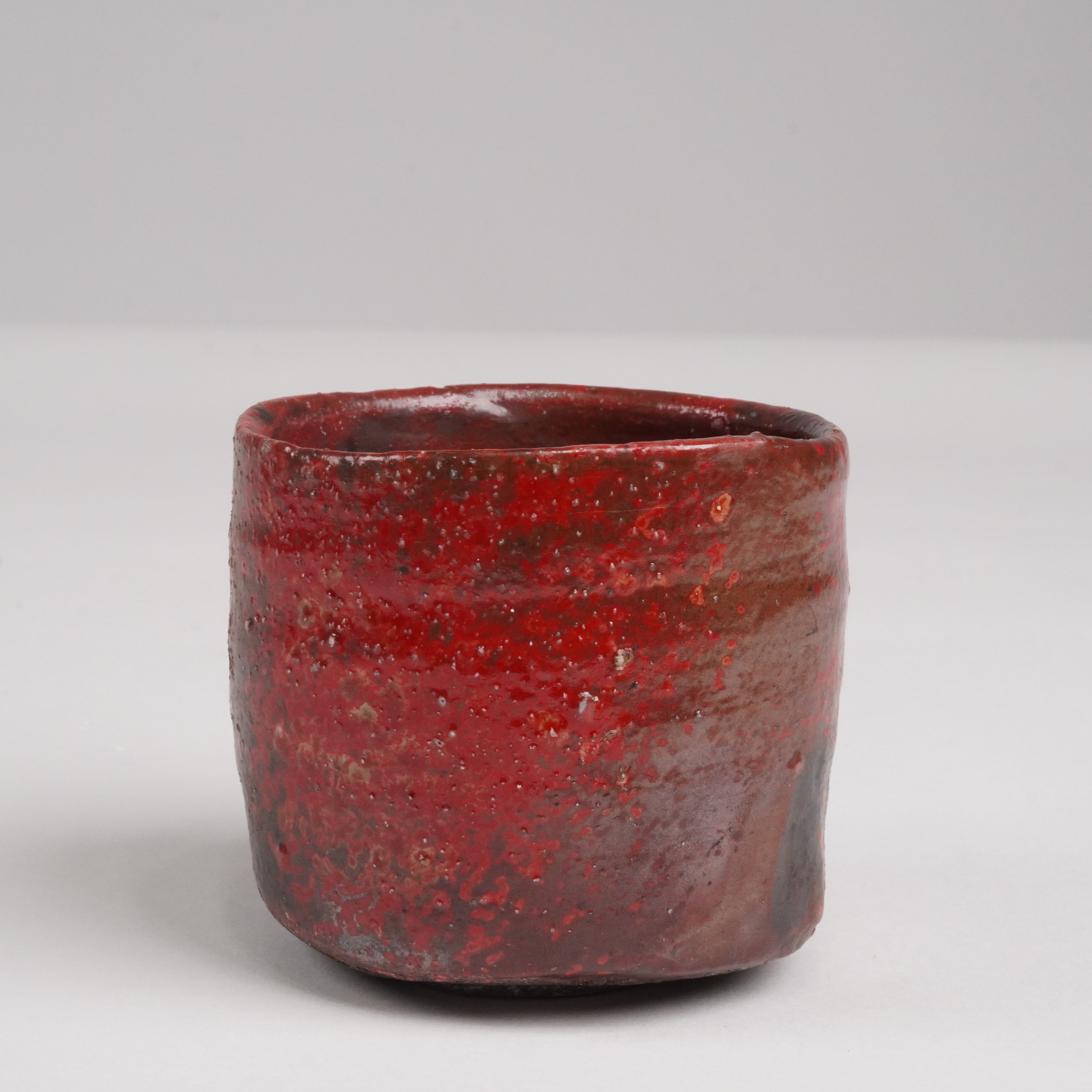
Tea Cup / Tanba Ware / Aka-Tanba Red Glaze
Product Description
Product Story
General Product Information
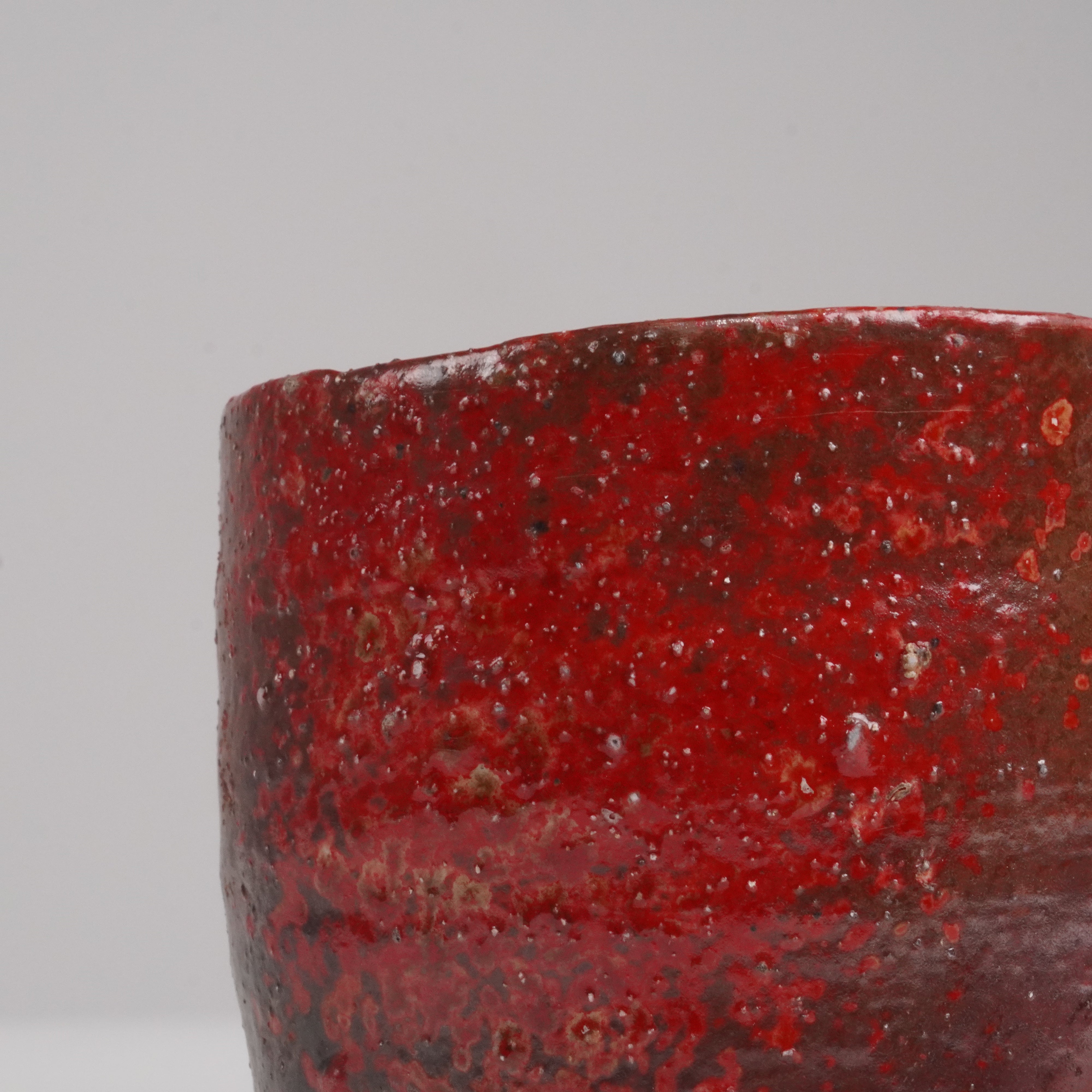
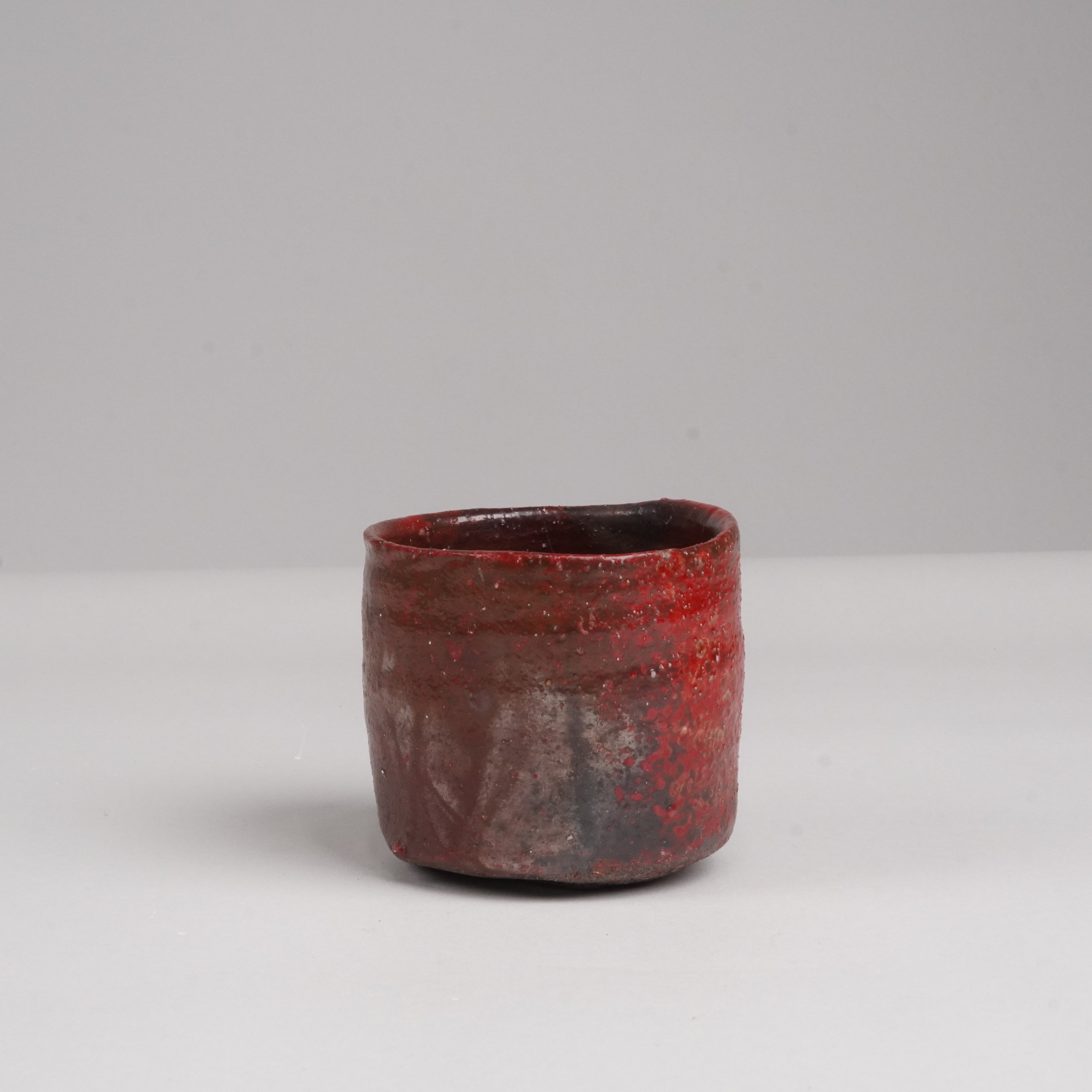
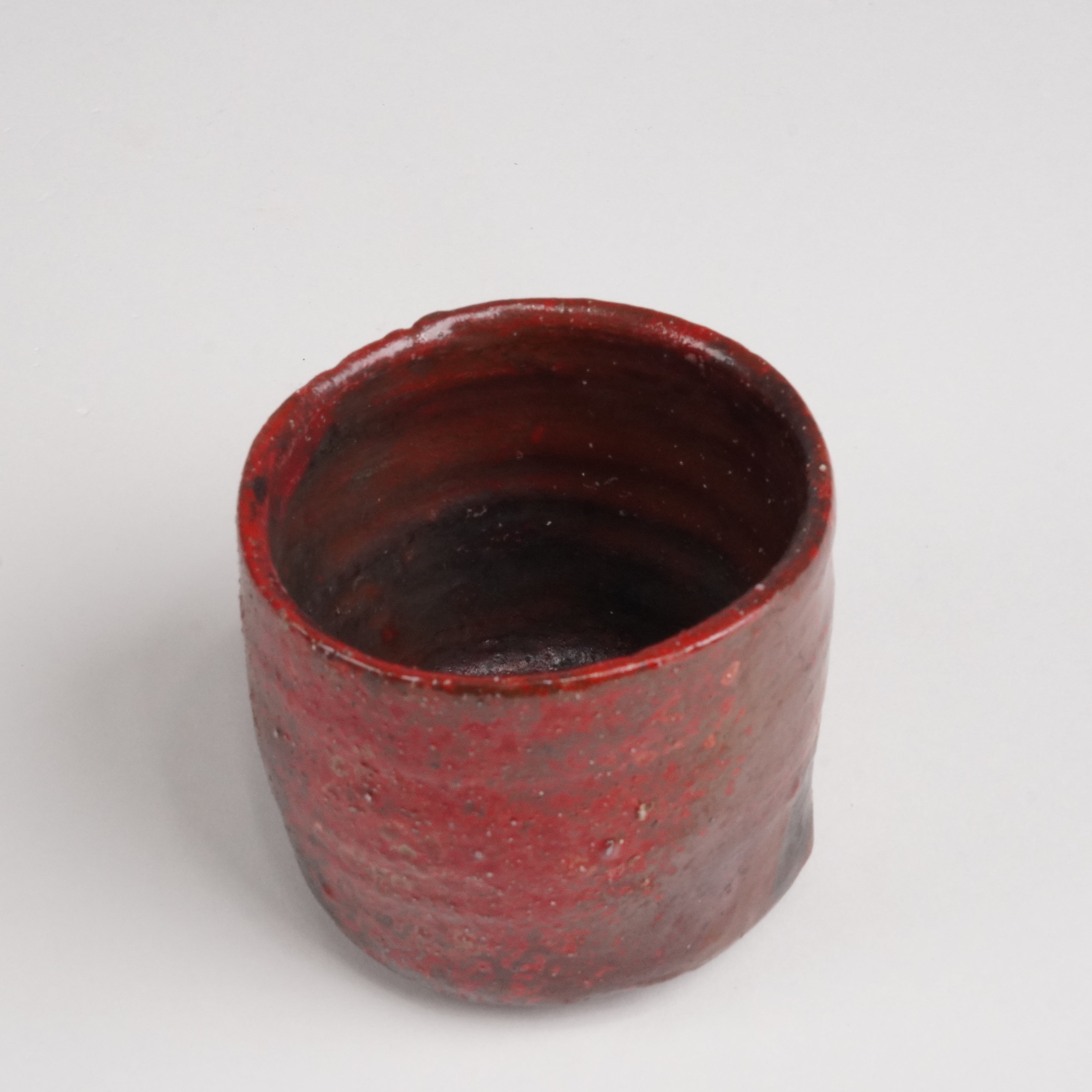
This cup showcases the hallmark of Tanba Ware—its unique patterns and colors created by hai-kaburi (natural ash glaze).
Fired in a climbing kiln for about 60 hours at temperatures reaching 1,300°C, the pine wood fuel turns to ash, which gently falls onto the surface. This ash fuses with the clay minerals and glaze, sparking chemical reactions that form distinctive natural patterns.
No two pieces are ever the same. Each cup embodies the harmony of nature and craftsmanship, transforming everyday tea moments into something truly special.
Product History
When did these crafts start to craft?:1200 years ago / 800AD / Heian period in Japan
Tanba Ware is counted among the Six Ancient Kilns of Japan, along with Seto, Tokoname, Shigaraki, Bizen, and Echizen. Its origins are said to date back to the late Heian period through the early Kamakura period. Until the Momoyama period, anagama (single-chambered tunnel kilns) were used, but around 1611 (Keichō 16), the semi-underground Korean-style noborigama (climbing kiln) was introduced. At the same time, the keri-rokuro (a kick wheel that rotates counterclockwise, uniquely preserved in Tachikui) was also adopted, and these traditional techniques continue to be handed down to this day.
In its early stages, the main products were jars, pots, and mortars. However, under the guidance of tea masters such as Kobori Enshū in the early Edo period, many outstanding tea utensils—including tea caddies, fresh-water jars, and tea bowls—were produced. Later, under the protection and encouragement of the Sasayama Domain in the mid-to-late Edo period, renowned artisans such as Naosaku, Ichifusa, Kayū, and Ichikono competed in skill, further elevating the reputation of Tanba Ware.
Handed down through the Meiji, Taishō, and Shōwa eras, Tanba Ware overcame hardships following World War II and has since been devoted to the production of folk craft items, particularly tableware and flower vases.
As for its name, during the anagama period it was known as “Onogahara Ware.” With the introduction of the noborigama, it came to be called “Tanba Ware” or “Tachikui Ware.” In 1978 (Shōwa 53), it was officially designated a National Traditional Craft under the name “Tanba Tachikui Ware.” Today, however, the cooperative association has unified its name as simply “Tanba Ware.”
Craftsman Story
Craftsman Profile
Tanbungama
Tanbungama is a kiln that has been passed down through generations. Today, there are more than 60 Tamba ware kilns, but when the first generation began, there were only about 20 to 30, making Tanbungama one of the historic kilns in the Tachikui area. In its early days, the kiln mainly produced sake barrels, which were supplied to breweries in Nada. Nowadays, we focus on creating Japanese tableware and folk crafts that can be widely enjoyed in everyday life. Many of our works are fired in a traditional climbing kiln, which we use four to five times a year.

Craftsman Passion
Bringing out the full strength of Tamba clay.
In the unique works created with clay and pigments, the spirit of Tamba’s nature and history is alive. Dynamic forms brought to life with vibrant modern reds, the rustic beauty of clay left in its natural state, and pieces that reveal different worlds on the front and back—all embody the challenge of artisans who honor the timeless tradition of Tamba ware while breathing new life into it.
Your Contribution to Craftsman
Customer Voice
Due to the market structure (link for full articles are attached bottom), craftsman have not known who the customer is and how customer reacts to their work. We made a “Message to Craftsman” box at purchase page. We will deliver all message to every craftsman. Our review will be also shared to craftsman so please leave your comment and evaluation on review section!
Income for Craftsman: Craftsman get only less than 10% of selling price?
As written above, craftsman have not controlled last phase of sales channel that resulting in selling price is set by third-party without craftsman’s recognition. There are some cases that only less than 10% of selling price is given to craftsman. We promise with our customer / craftsman that we offer the fair trade with craftsmen in our contract!
We made an article about above problem and our challenge. Please have a read from below link.
Current state of the Crafts Market / Benefits brought by Suigenkyo
Measurement
Width:9cm
Depth : 9cm
Height:8cm
Weight:234g
Material & Caution
Materials
Ceramics
Caution
Individual Difference
Each piece is handmade, so there are individual differences even in the same series. We hope that you will understand the change by handmade.
Delivery Date
If the product is out of stock, please allow approximately three months for shipment.
Each item features a unique pattern arrangement, and no two pieces are exactly alike.
Therefore, the pattern on the item you receive may differ from the photograph.
Please be aware of this in advance.
Choose options