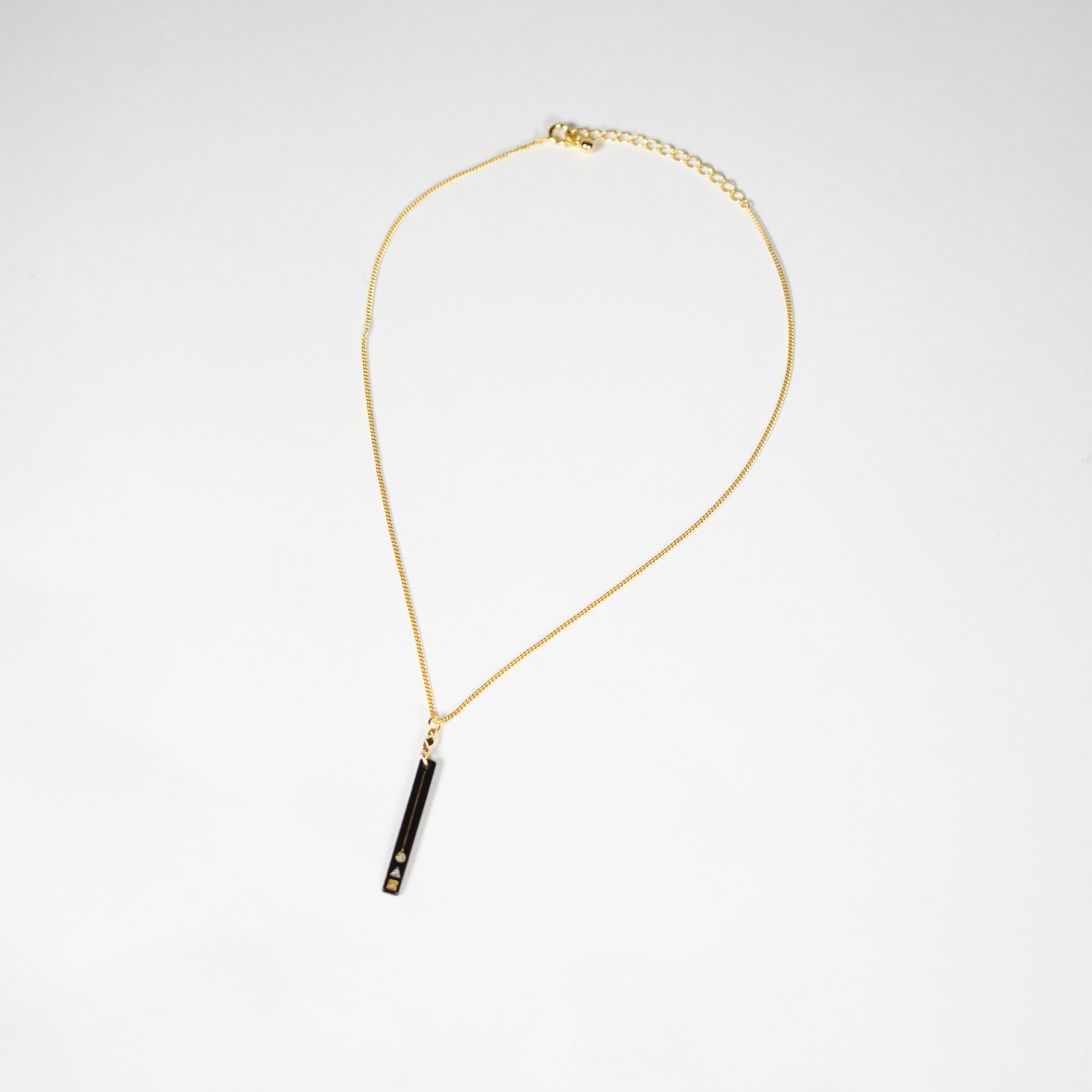
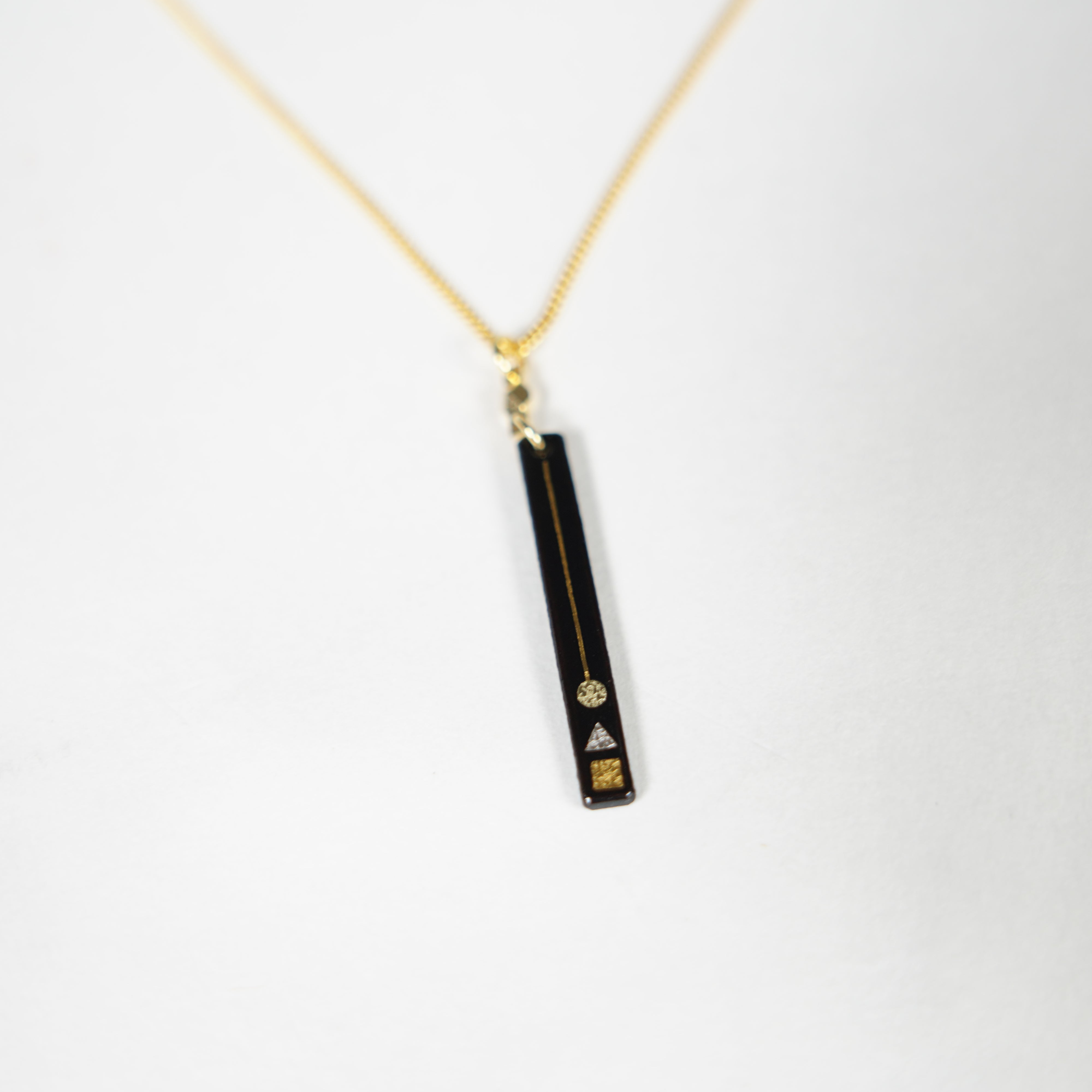
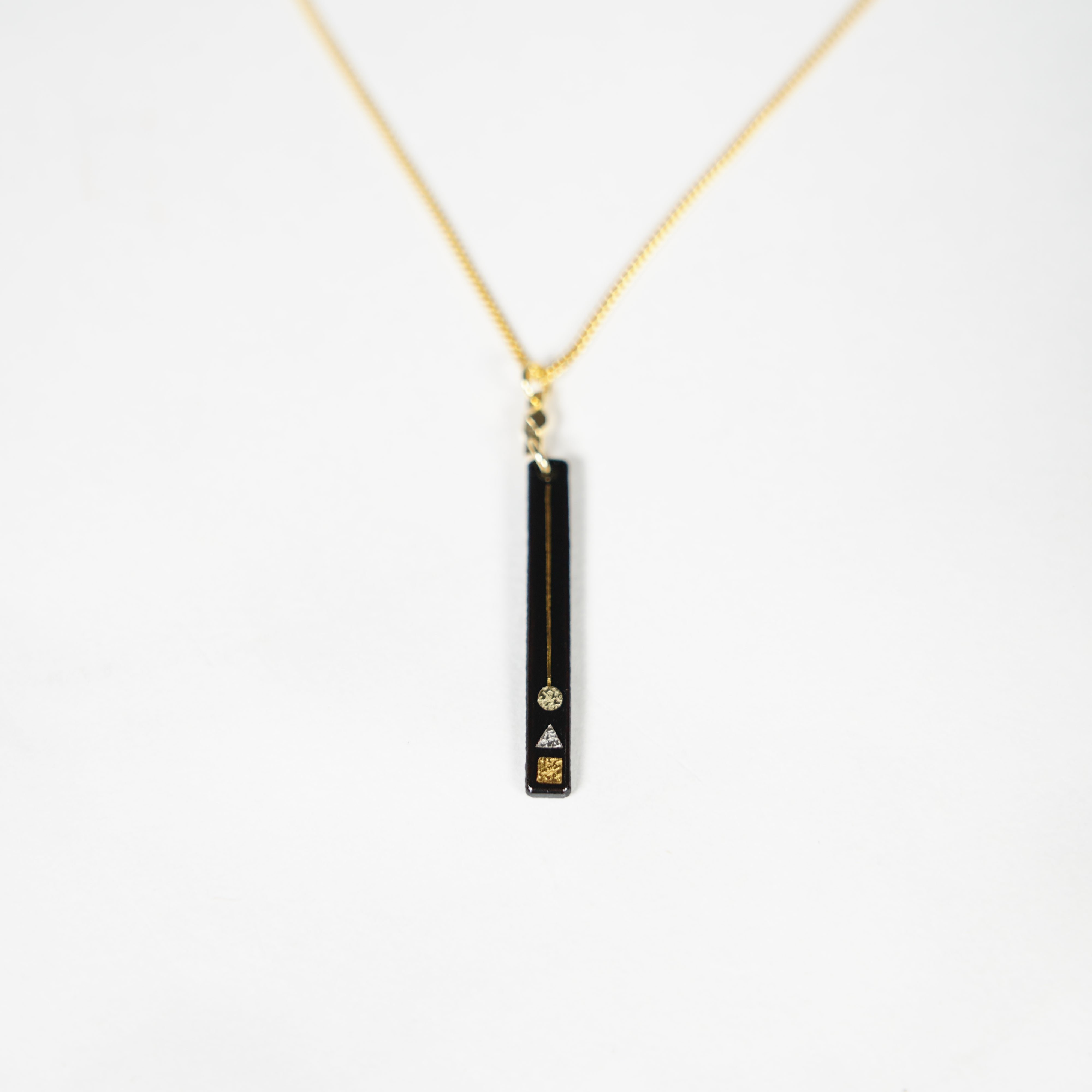
京都大坝 /吊坠 /构建块
DESCRIPTION
This is a rare item in the studio, with inlaying on both sides. “Appreciating all things and searching for one's own existence...” This is a calming design inspired by the world of Zen.
The surface of the iron fabric is uneven. We call this "Nashiji-style pattern" because the fine grainy pattern looks like the skin of a pear, and it is their original technique. This unevenness can also be applied to create various patterns.
“Ishime”, one of the techniques of carving, is also applied to gold and silver to create a three-dimensional effect. The flat surface of the iron fabric and Nashiji-style pattern, with or without engraving applied to gold and silver. Also, the shimmering craftsmanship as well as an elegance of Damascening are enhanced by the reflection of light.
Was originally used for armor ?
Originally, Damascening was used to decorate swords and other armaments, but this technique declined with the abolition of the Sword Law in 1876. Then, Damascening began to be used for decorative accessories. The elegant colors of gold and silver with the calm and elegant luster of Damascening were highly praised as the 'king of metal crafts', which have been used to this day.
DETAILS
SIZE
Width:0.3cmHeight:3cmweight:2g
MATERIAL
Iron
Gold
Silver
ARTISAN
KYO ZOGAN ONO
"We want to give back to society by preserving as much goodness as possible for future generations."
Our affluent society is the result of the efforts of our predecessors. It will not be a smooth road to realize our ideals, but we are committed to be such a workshop every day.
ARTISAN STORY
Kyoto metal inlay Ono / Shinji Ono
Ono inlays and produces accessories and tea ceremony utensils such as iron kettles.
Ono's unique technique, "Nashiji-style pattern," which expresses the texture of unevenness on the inlaid base material, is a distinctive feature of his work.
Please take a look at the accessories and feel the charm of Zogan close at hand.
KOGEI
KYO ZOGAN / KYOTO METAL INLAY
About 1,300 years ago / 700s / Nara Period (710–794)
Metal inlay reached Japan from continental Asia by the Nara period, and examples in gold and silver survive on swords and Buddhist objects in the Shosoin. In Kyoto, metalworking lineages such as the Umetada and Shoami schools refined the art during the early Edo period, expanding from sword fittings to braziers and smoking implements. After the Meiji sword ban, export markets became crucial.
Today Kyoto inlay is recognized for elegant gold and silver patterns set against darkened iron. Rather than sword fittings, contemporary pieces are often small personal or interior objects—pendants, tie pins and framed works.
Its signature nunome-zogan technique is unexpectedly mechanical. The iron surface is cut with countless microscopic crosshatched grooves, then thin gold or silver is hammered into those ridges. No adhesive is needed: the precious metal is literally locked into the base through friction and deformation.
Caution
Individual Differences
As each piece is individually handcrafted, slight variations in color, pattern, shape, and texture may occur. These subtle differences are a natural characteristic of handcrafted works, making each piece truly unique. We hope you will enjoy these individual variations as part of the beauty and character of Japanese craftsmanship.
Production Time
If an item is not currently in stock, it may be made to order by the artisan. As each piece is carefully handcrafted, production may take several months depending on the item and the artisan's schedule. We appreciate your patience and understanding.

选择选项