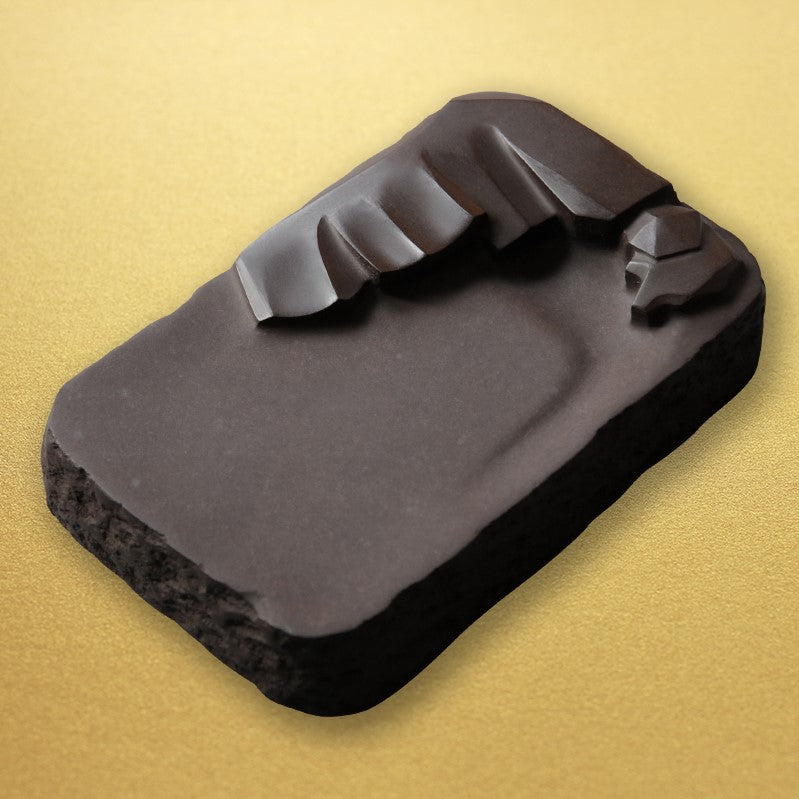
AKAMA SUZURI / AKAMA INKSTONE
About 800 years ago / 1200s / Kamakura Period (1185–1333)
Akama inkstones are carved from reddish Akama stone found around Shimonoseki, Yamaguchi, and were already known by the Kamakura period. During the Edo era, the Choshu domain controlled and encouraged production, and the stones gained prestige as formal gifts associated with daimyo travel.
In Japan, an inkstone is a working tool for grinding solid ink, yet Akama examples are also appreciated for the color and natural strata of the stone itself. Makers produce everything from professional calligraphy stones to highly carved pieces with lids and sculptural decoration.
What matters is not simply hardness. The grinding surface contains microscopic texture known as ho-bo, tiny abrasive points that slowly shave solid ink into liquid. A stone that looks polished and smooth to the eye is, at a microscopic level, covered with countless miniature cutting edges.