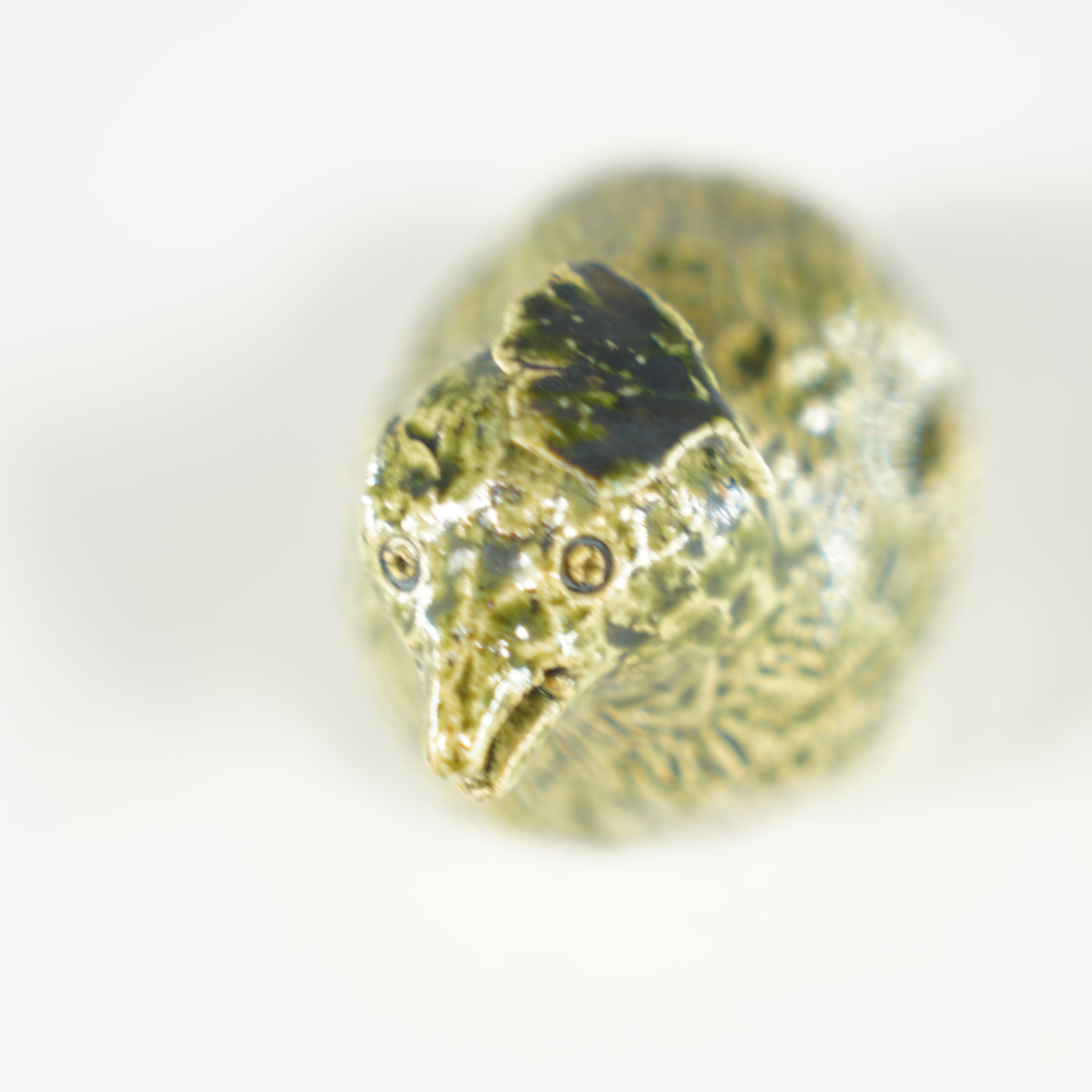
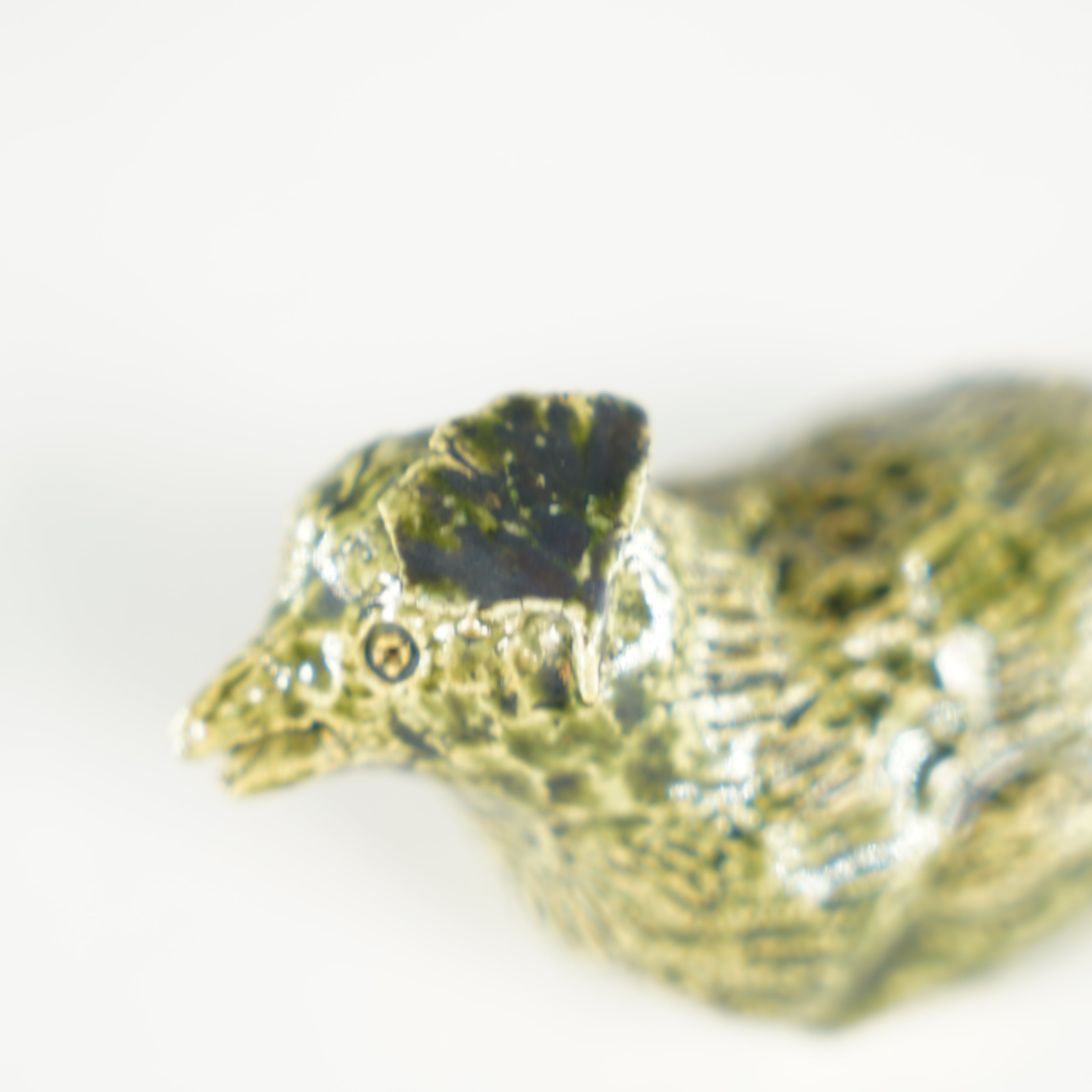
Figurine de caille en céramique / vert
DESCRIPTION
DÉTAILS
SIZE
MATERIAL
ARTISAN
KOGEI
Attention
Choisir les options


Figurine de caille en céramique / vert
Prix de vente$291.00
Pays
Langue
Panier
Votre panier est vide


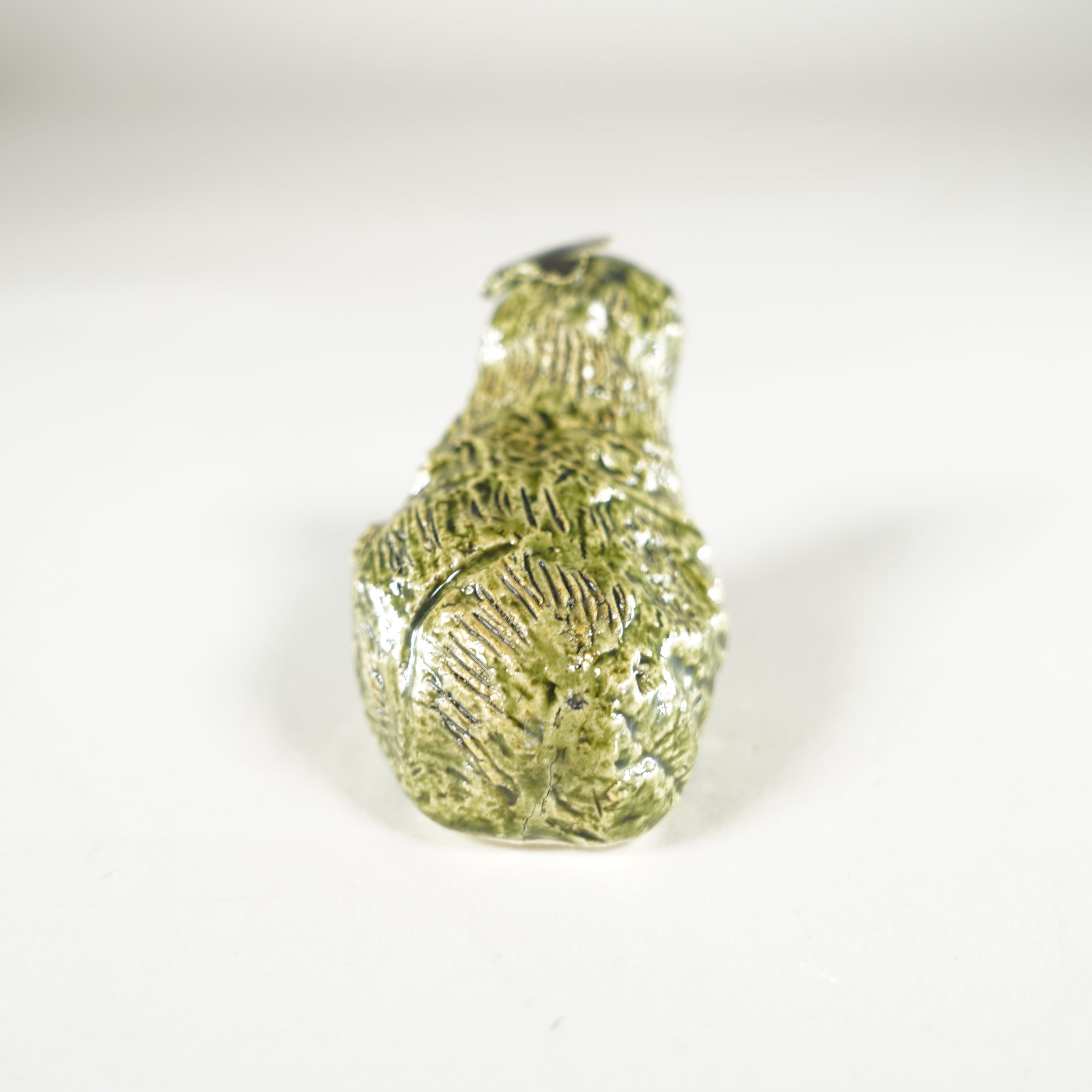
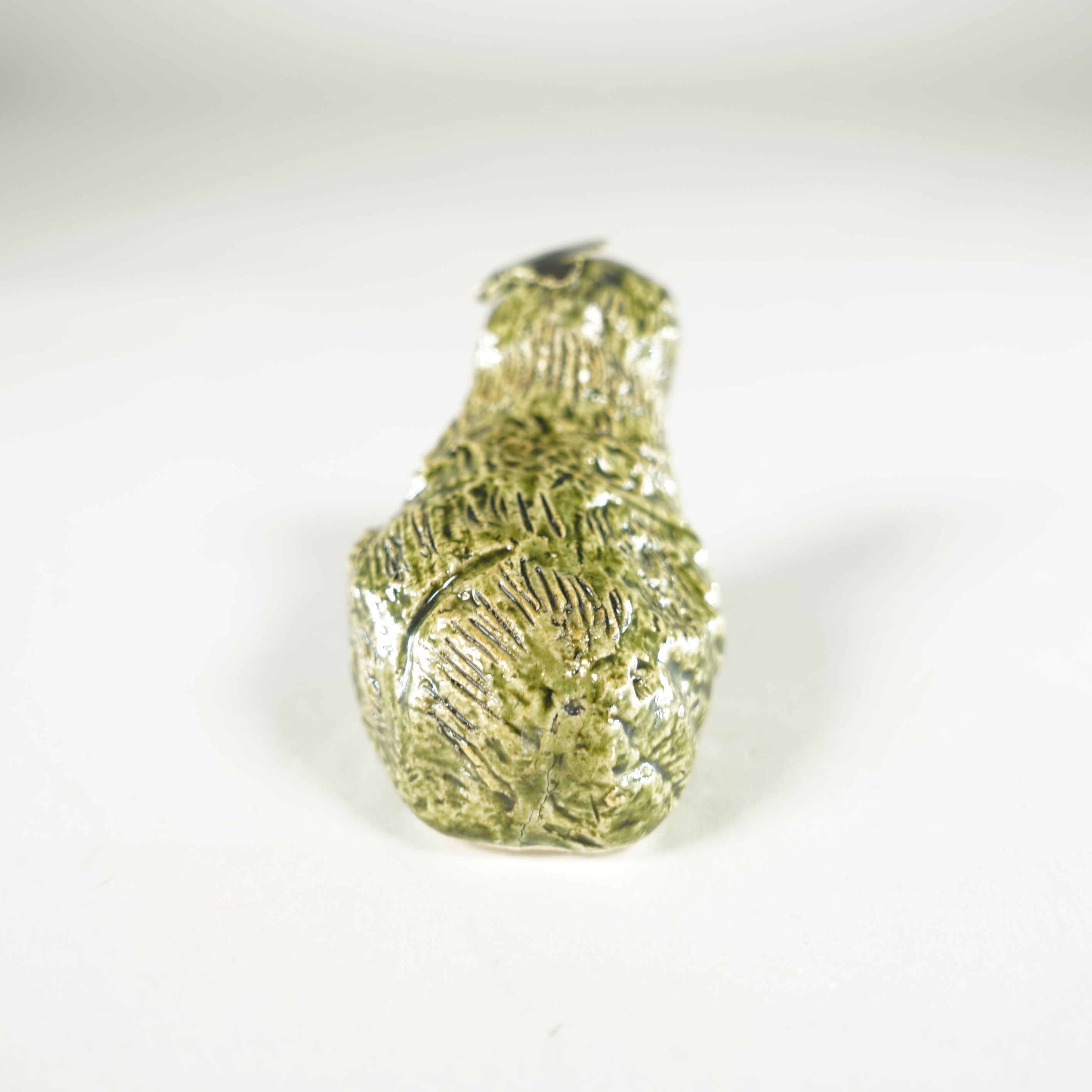
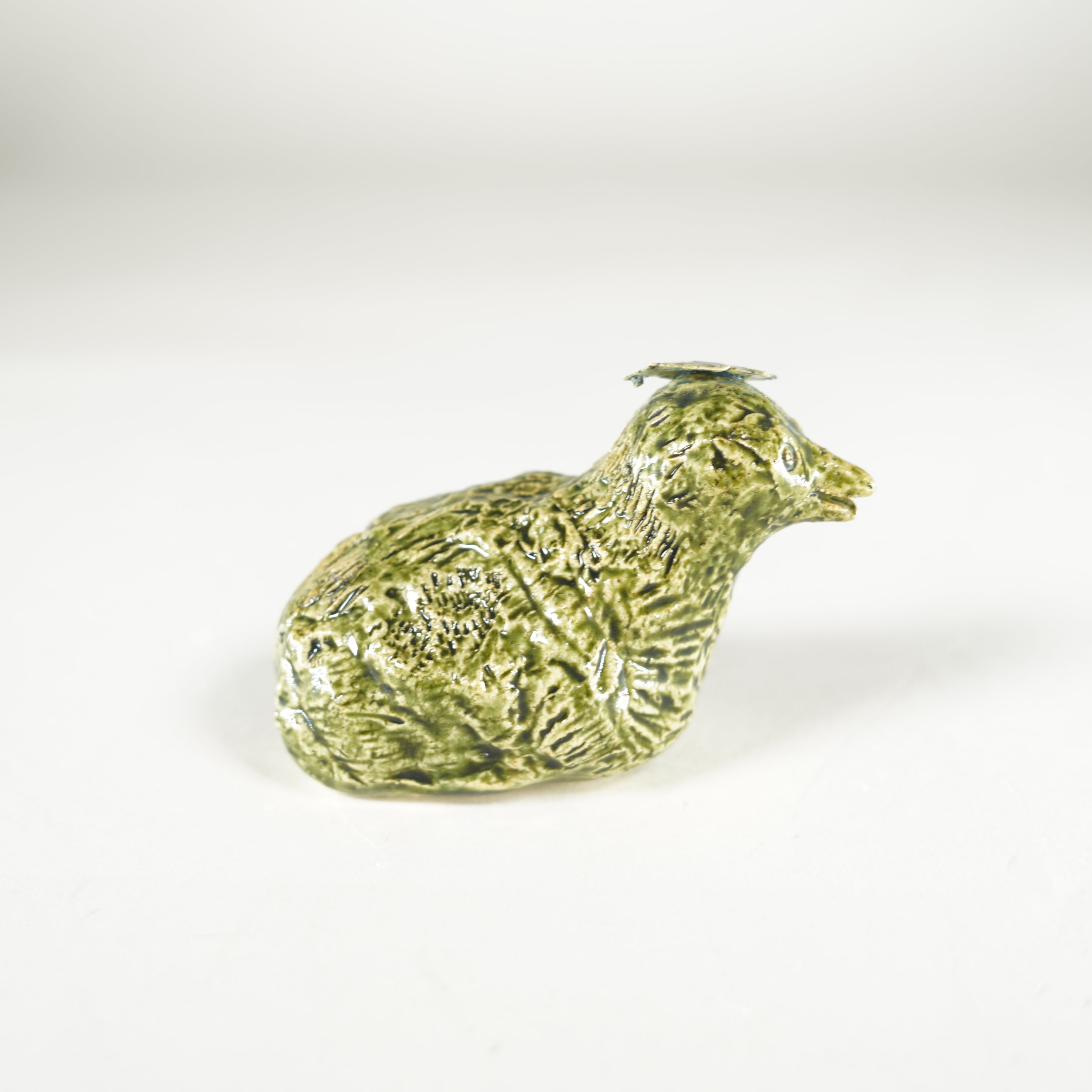
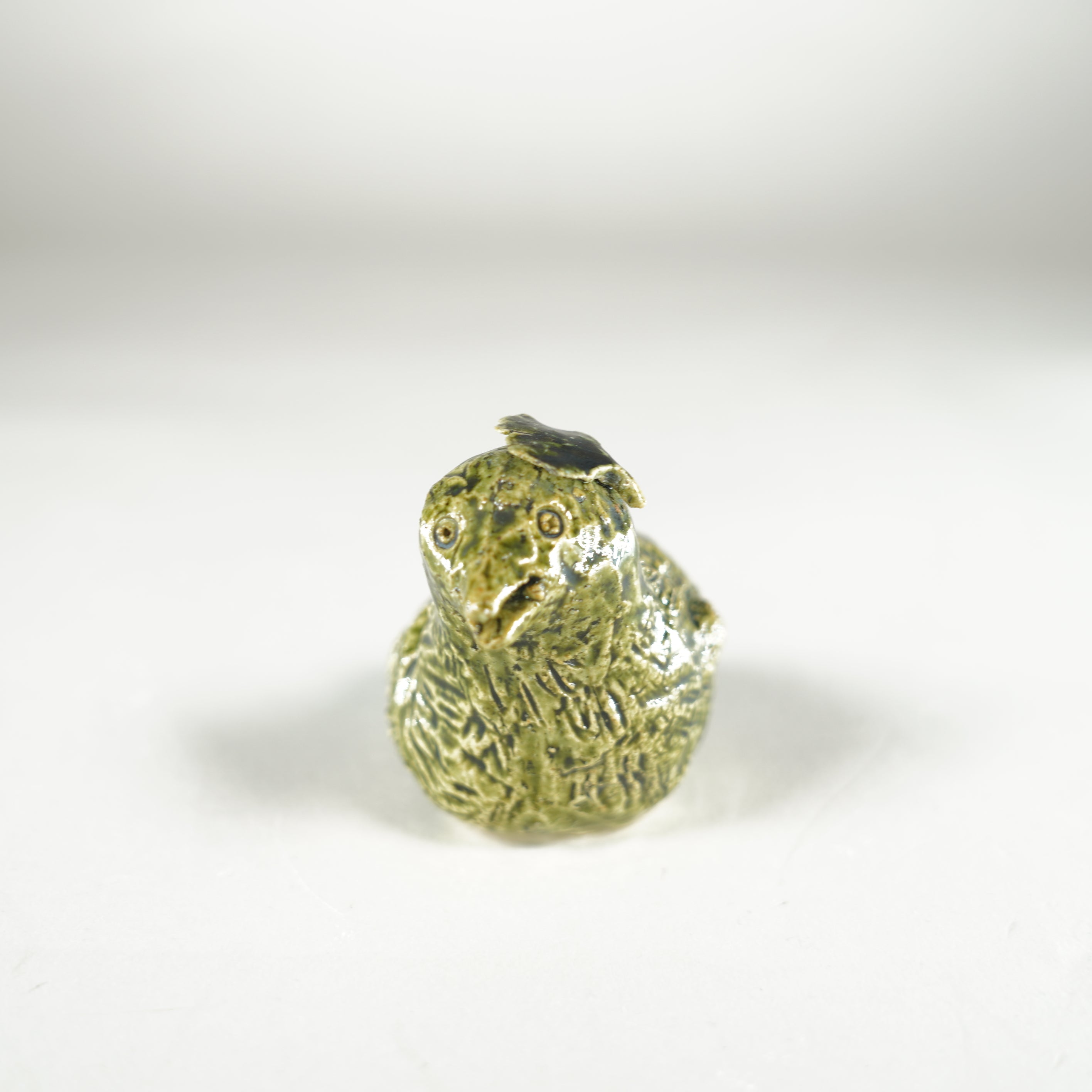
Cette figurine saisit l’instant où une feuille de ginkgo tombe sur la tête d’une caille, dont la forme évoque celle d’un taro. Elle est recouverte d’une glaçure verte et humide de style Oribe, une glaçure japonaise traditionnelle. Les cailles symbolisent la bonne fortune et sont un motif populaire dans de nombreuses peintures et créations artisanales. Placez cette figurine sur une étagère ou un meuble d’exposition pour en apprécier la beauté.
SIZE
Largeur : 8 cm
Hauteur : 6,5 cm
Profondeur : 5 cm
Poids : 100 g
MATERIAL
Céramique
SHUKO KAWAHARA
"Fusing Tradition and Creativity"
Based on traditional Kiyomizu-ware techniques, I am exploring entirely new shapes and concepts of imaginary animals, aiming to provide viewers with fresh surprises and joy. These ceramic creatures offer moments of delight in daily life, captivating hearts with their delicacy and creativity.
ARTISAN STORY
Shuko Kawahara
Shuko Kawahara is a ceramic artist based in Kyoto. She creates artworks centered around imaginary animals, utilizing traditional glazes. These pieces are small enough to fit in the palm of your hand, shaped like droplets or water pitchers, and possess a unique charm that soothes the viewer's heart. Ms. Kawahara aims to bring moments of joy into everyday life with these tiny beings, carefully crafting each piece to achieve this goal.
KIYOMIZU WARE
About 400 years ago / 1600s / Edo Period (1603–1868)
Kiyomizu ware takes its name from ceramics historically produced around Kiyomizu-dera and Kyoto’s eastern hills. It grew during the Edo period with tea culture and temple pilgrimage, absorbing the brilliant decoration associated with Ninsei and Kenzan as well as porcelain, blue-and-white and many other techniques.
In Japan, the name suggests refined Kyoto tableware, ranging from formal tea and kaiseki vessels to everyday dishes. Even after many kilns moved to districts such as Yamashina, the tradition retained an unusual stylistic diversity: each workshop may look completely different from the next.
Despite the name, many contemporary Kiyomizu workshops are no longer located near Kiyomizu-dera. Urban development and environmental concerns led to relocation, while the old place-name remained as a brand remembering the craft’s origin. Geography moved, but the name stayed.
Différences individuelles
Chaque pièce étant fabriquée à la main individuellement, de légères variations de couleur, de motif, de forme et de texture peuvent survenir. Ces subtiles différences sont une caractéristique naturelle des créations artisanales, rendant chaque pièce véritablement unique. Nous espérons que vous apprécierez ces variations individuelles comme faisant partie de la beauté et du caractère de l'artisanat japonais.
Délai de production
Si un article n'est pas actuellement en stock, il peut être fabriqué sur commande par l'artisan. Comme chaque pièce est soigneusement fabriquée à la main, la production peut prendre plusieurs mois selon l'article et le planning de l'artisan. Nous vous remercions de votre patience et de votre compréhension.

Choisir les options