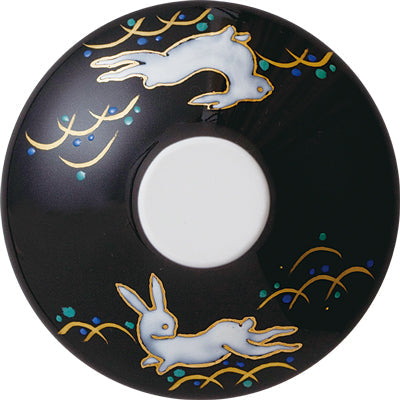
Kutani Verre / lapin / plaid / plaid
DESCRIPTION
DÉTAILS
SIZE
MATERIAL
ARTISAN
KOGEI
Attention
Choisir les options


Kutani Verre / lapin / plaid / plaid
Prix de venteR$ 546,00
Pays
Langue
Panier
Votre panier est vide


Il s’agit d’un verre gratuit (motif treillis) de « Kutani Wa Glass », une fusion entre la poterie Kutani et le verre soufflé à la main.
Le design mêle les styles japonais et occidentaux pour s’intégrer facilement au mode de vie actuel. Le cristal de baryum de la partie en verre offre transparence et éclat, ne contient pas de plomb, une préoccupation environnementale, et possède une excellente dureté ainsi qu’une grande résistance aux rayures. Vous pouvez choisir parmi 30 motifs différents et êtes certain de trouver celui qui vous plaira !
SIZE
Largeur:8cm
Profondeur:8cm
Hauteur:14,5cm
Poids:155g
Volume:280ml
MATERIAL
Poterie pierreArgileVerre:Cristal de baryum
SEIHODO
"Fusion of Tradition and Modernity"
We believe that rather than preserving tradition, collaboration with areas that have never crossed paths will create a chemical reaction. In the midst of changing lifestyles, both Japanese and Western, we will build a new era by creating products that blend into modern life.
ARTISAN STORY
Seihodo
A company that has been making Kutani pottery in Ishikawa Prefecture since 1964. In addition to normal Kutani pottery, the company specializes in developing products that fuse handmade craftsmanship, such as Kutani Wa Glass, which is a combination of Kutani pottery and Edo glass. The company has many products that reveal new possibilities of traditional craftsmanship that harmonize with living spaces in both Japanese and Western styles.
ACHIEVEMENTS
・Received Good Deisgn Award
KUTANI WARE
About 370 years ago / 1650s / Edo Period (1603–1868)
Kutani ware is traditionally traced to a kiln established in Kutani village around 1655 under the Daishoji domain. The first Ko-Kutani production ended after only several decades, but a nineteenth-century revival created a series of influential kilns—Kasugayama, Yoshidaya, Miyamotoya and others—and established the broad family of styles known today.
In Japan, Kutani is immediately associated with bold overglaze color, often covering much of the vessel. It remains popular for gifts and display pieces, while contemporary artists work in very different traditions, including aka-e red painting, aode green-dominant decoration and extensive gold.
The classic palette is known as the Kutani Five Colors: deep blue, green, yellow, purple and red. Aode pieces can almost eliminate red and saturate the surface with green and yellow. Few ceramic traditions contain so many distinct “schools” of painting under a single regional name.
Différences individuelles
Chaque pièce étant fabriquée à la main individuellement, de légères variations de couleur, de motif, de forme et de texture peuvent survenir. Ces subtiles différences sont une caractéristique naturelle des créations artisanales, rendant chaque pièce véritablement unique. Nous espérons que vous apprécierez ces variations individuelles comme faisant partie de la beauté et du caractère de l'artisanat japonais.
Délai de production
Si un article n'est pas actuellement en stock, il peut être fabriqué sur commande par l'artisan. Comme chaque pièce est soigneusement fabriquée à la main, la production peut prendre plusieurs mois selon l'article et le planning de l'artisan. Nous vous remercions de votre patience et de votre compréhension.

Choisir les options