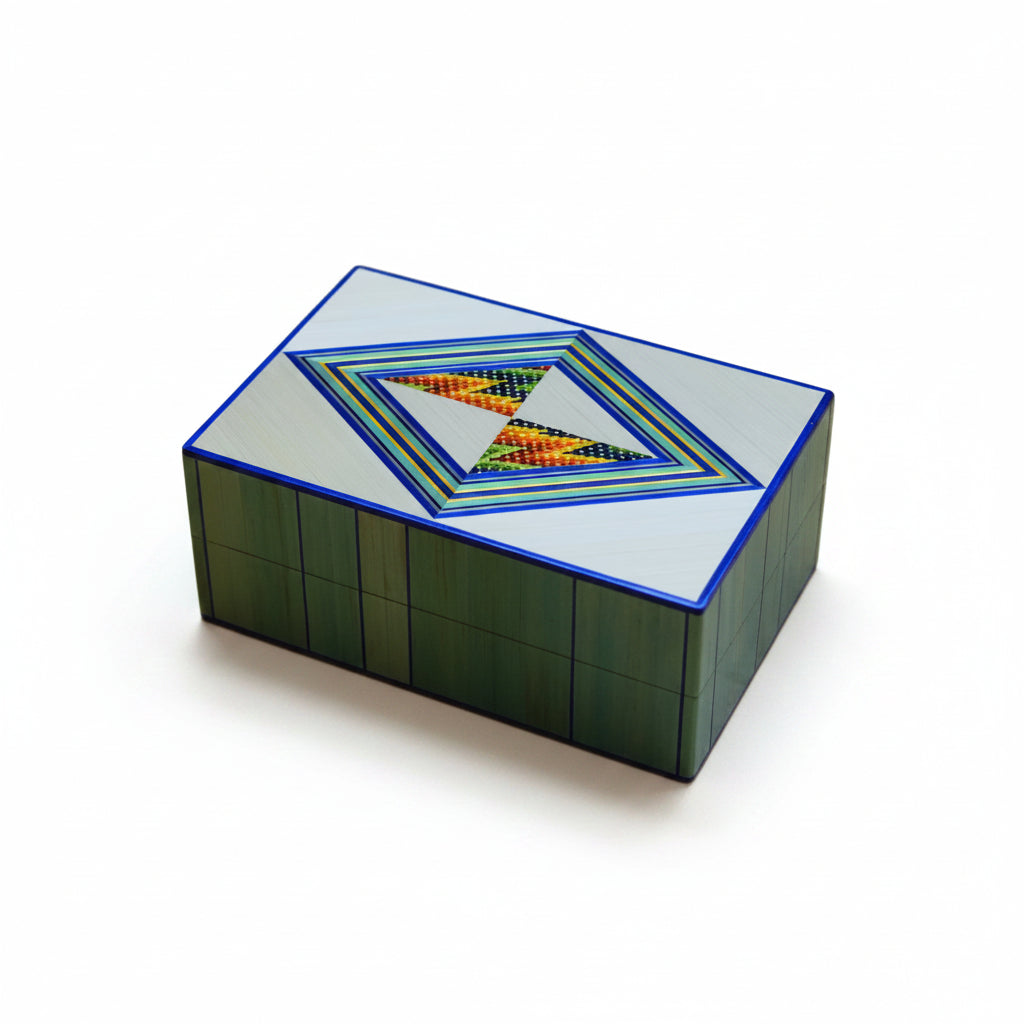
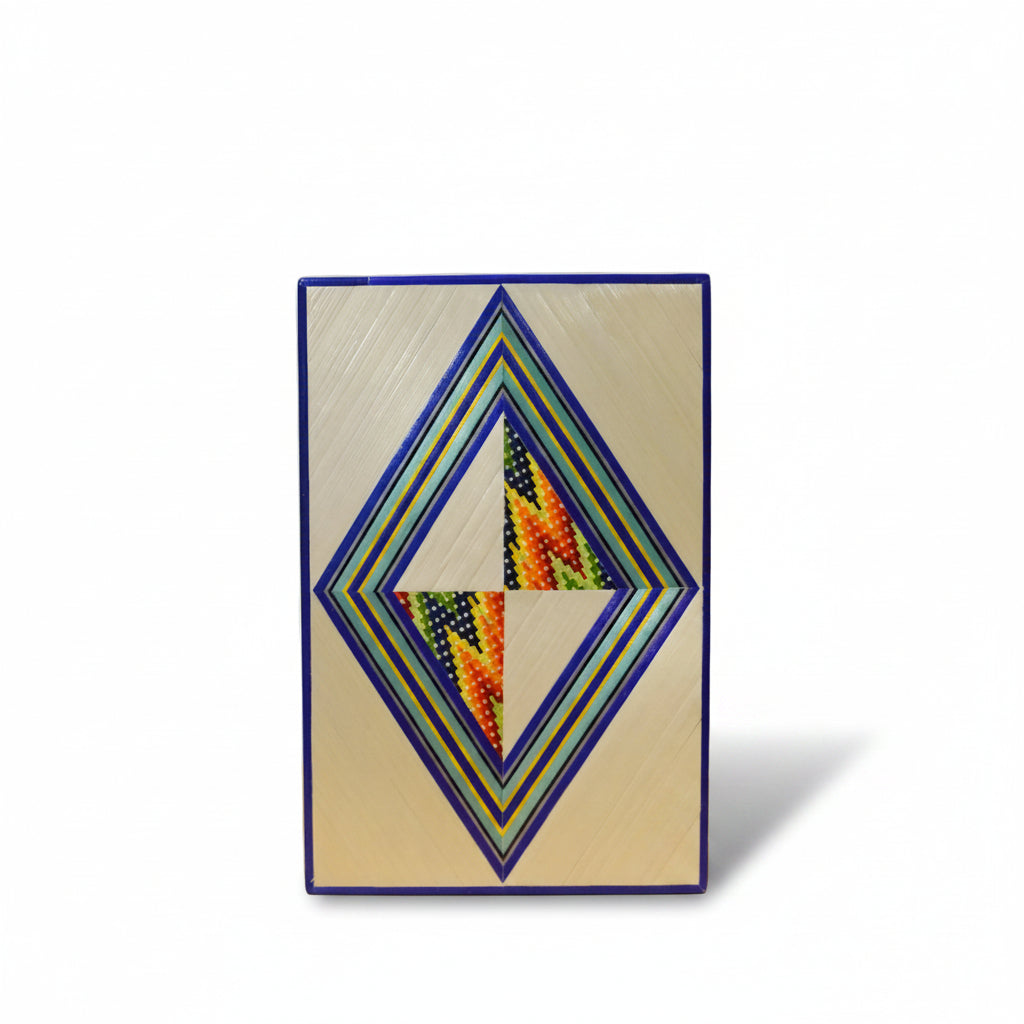
WARA ZAIKU / JAPANESE STRAW CRAFT
About 300 years ago / 1700s / Edo Period (1603–1868)
Kinosaki straw craft is said to have begun in the Edo period when a traveler visiting the hot-spring town decorated flutes and spinning tops with colored barley straw and sold them to help pay for lodging. Over time, artisans learned to dye, split and arrange the straw into geometric surfaces on paulownia boxes, transforming a souvenir into a highly refined decorative craft.
Straw is normally an ordinary agricultural by-product in Japan, making Kinosaki’s use of it as a lustrous decorative material especially unusual. Today the technique survives in boxes, framed works, accessories and other objects closely associated with the identity of the hot-spring town.
The material itself is the surprise. Once dyed, barley straw can produce brilliant color, and polishing gives it a sheen that can resemble silk or even metallic foil. A humble plant stem becomes a mosaic-like surface simply through the direction of the cut and the precision of placement.