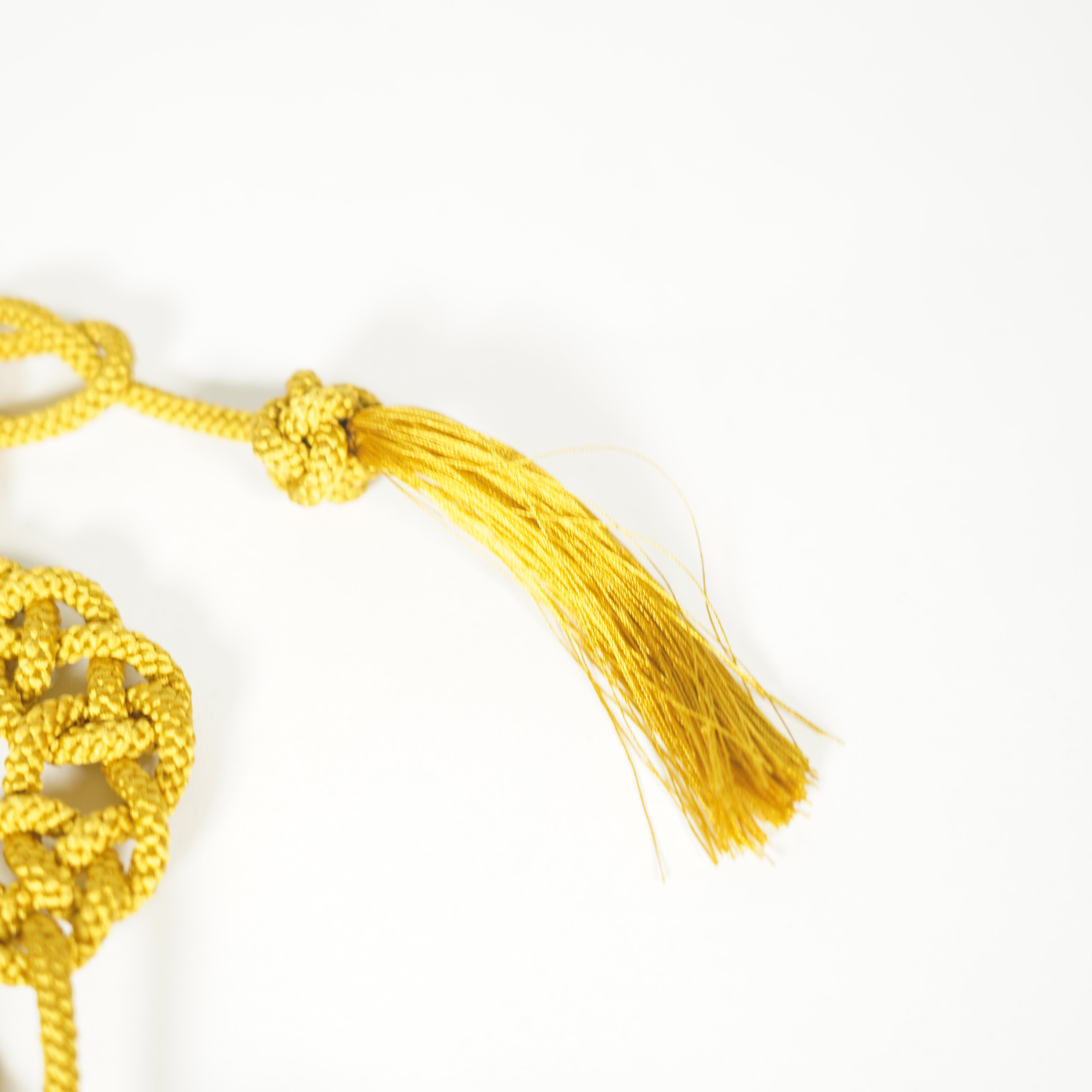
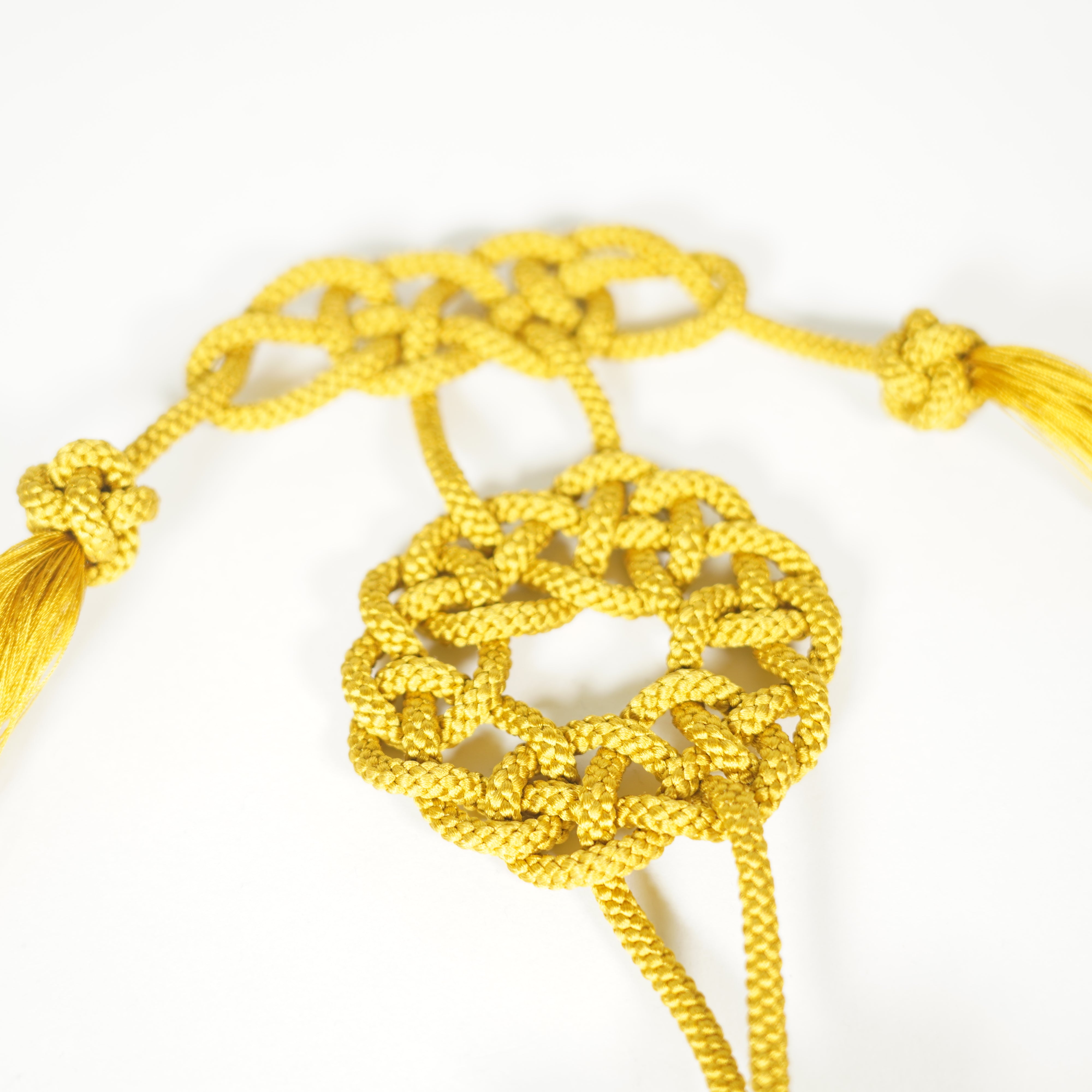
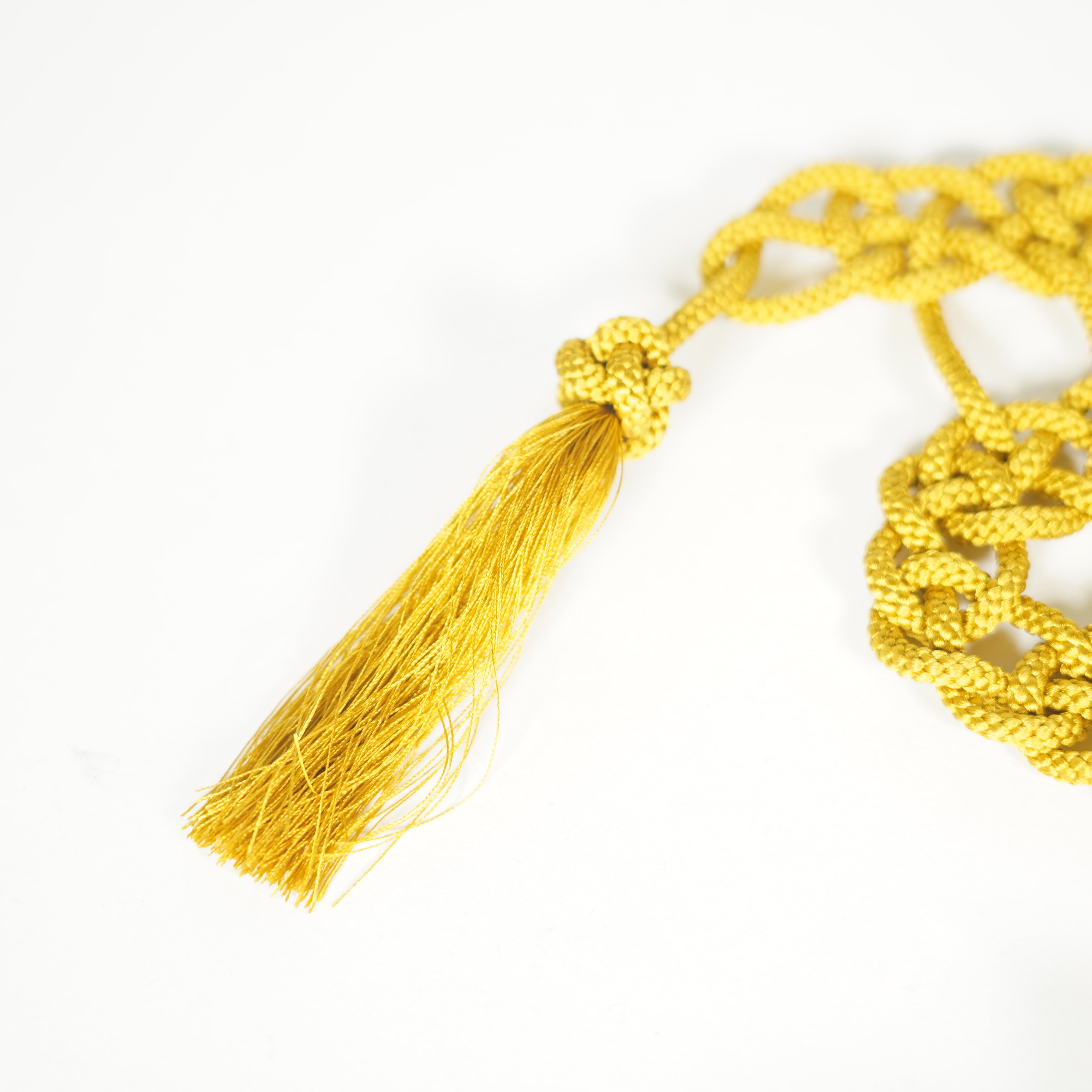
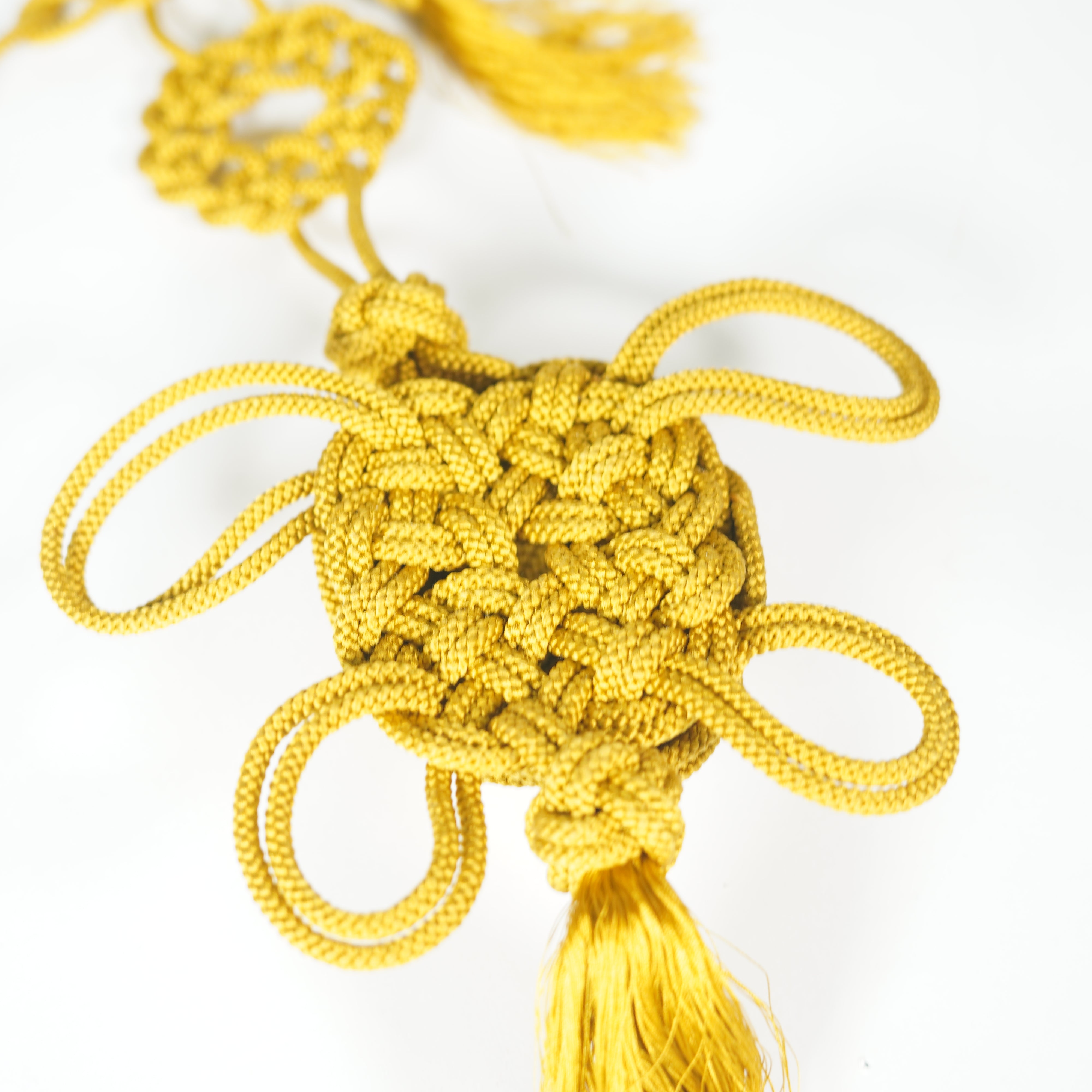
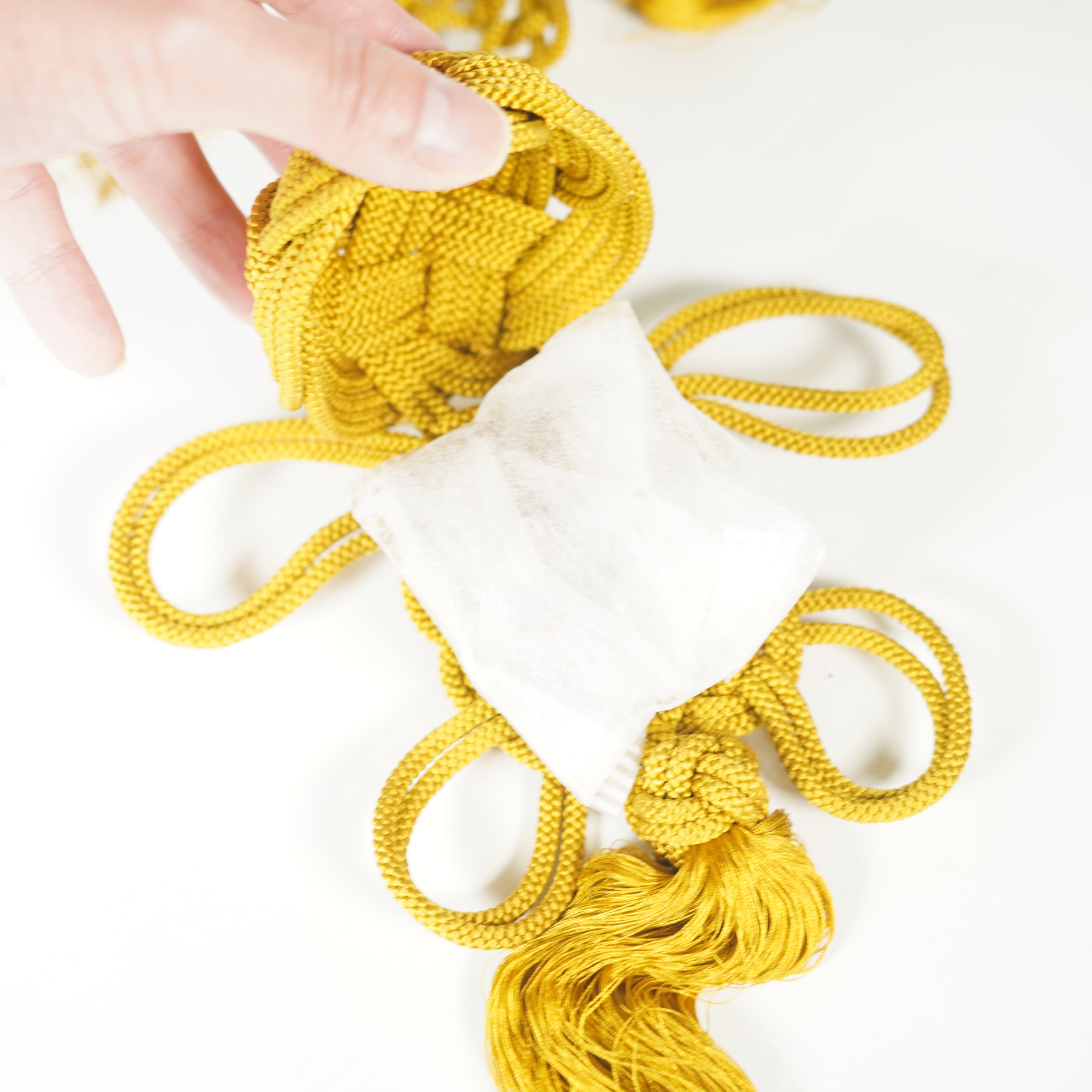
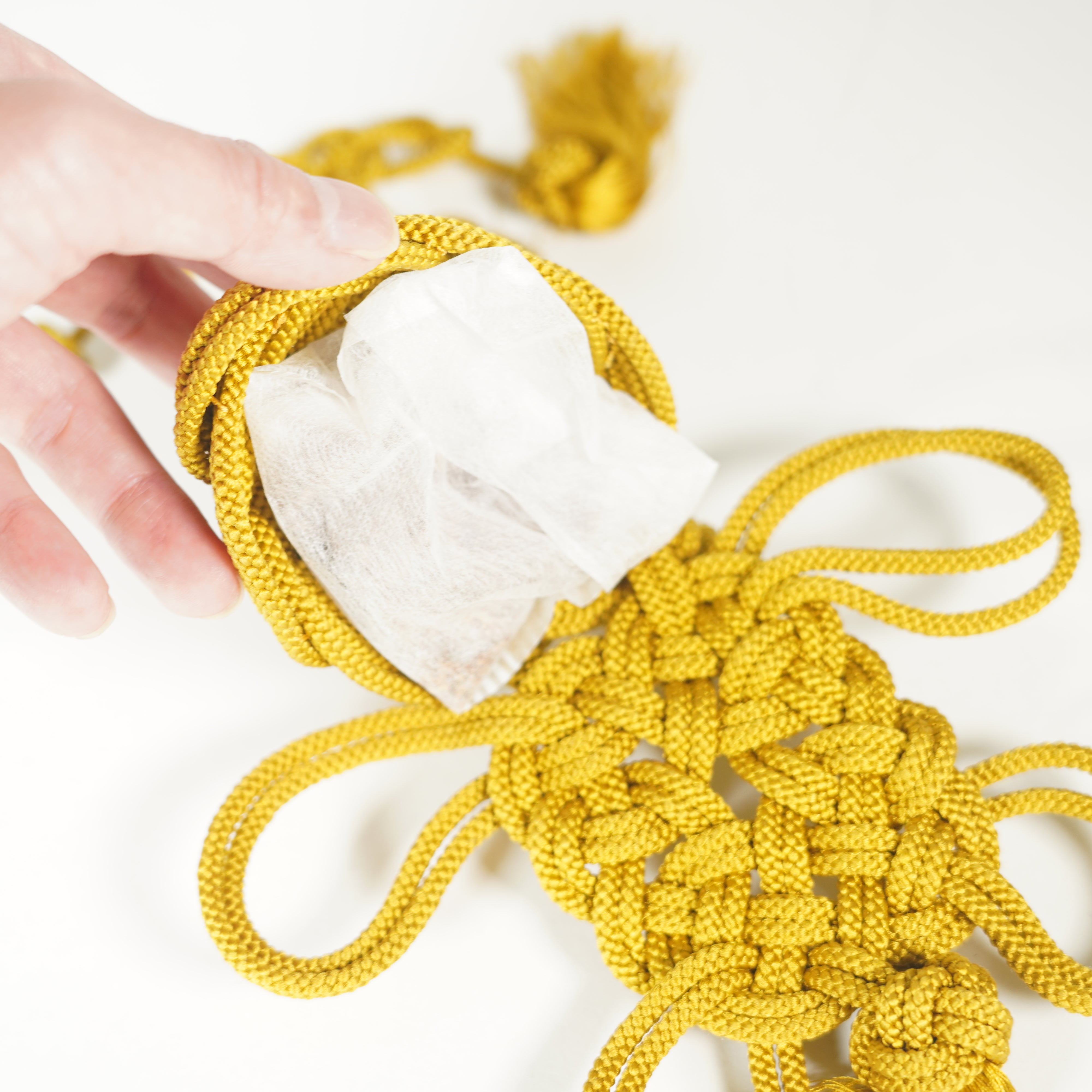
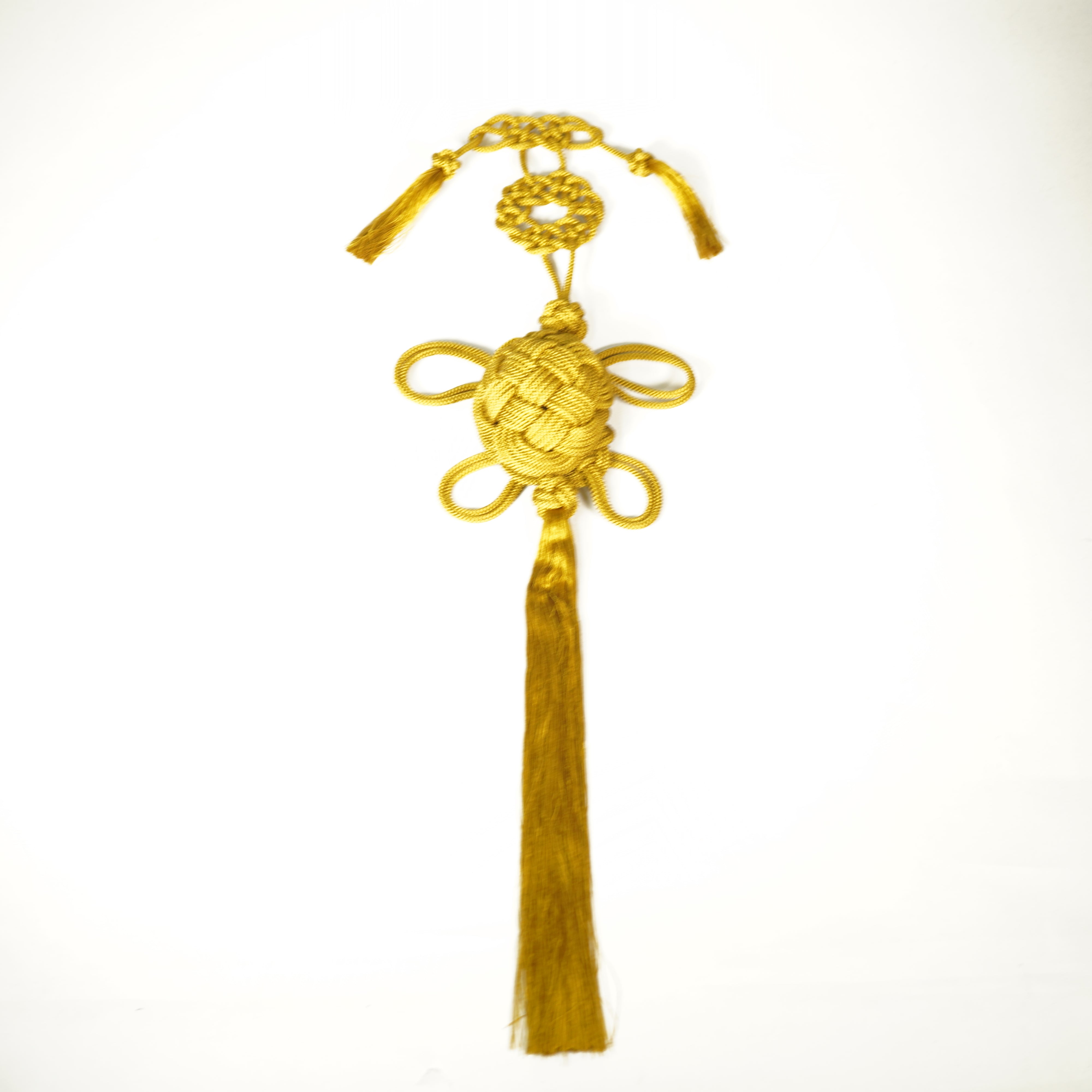
Gantung penyu
DESCRIPTION
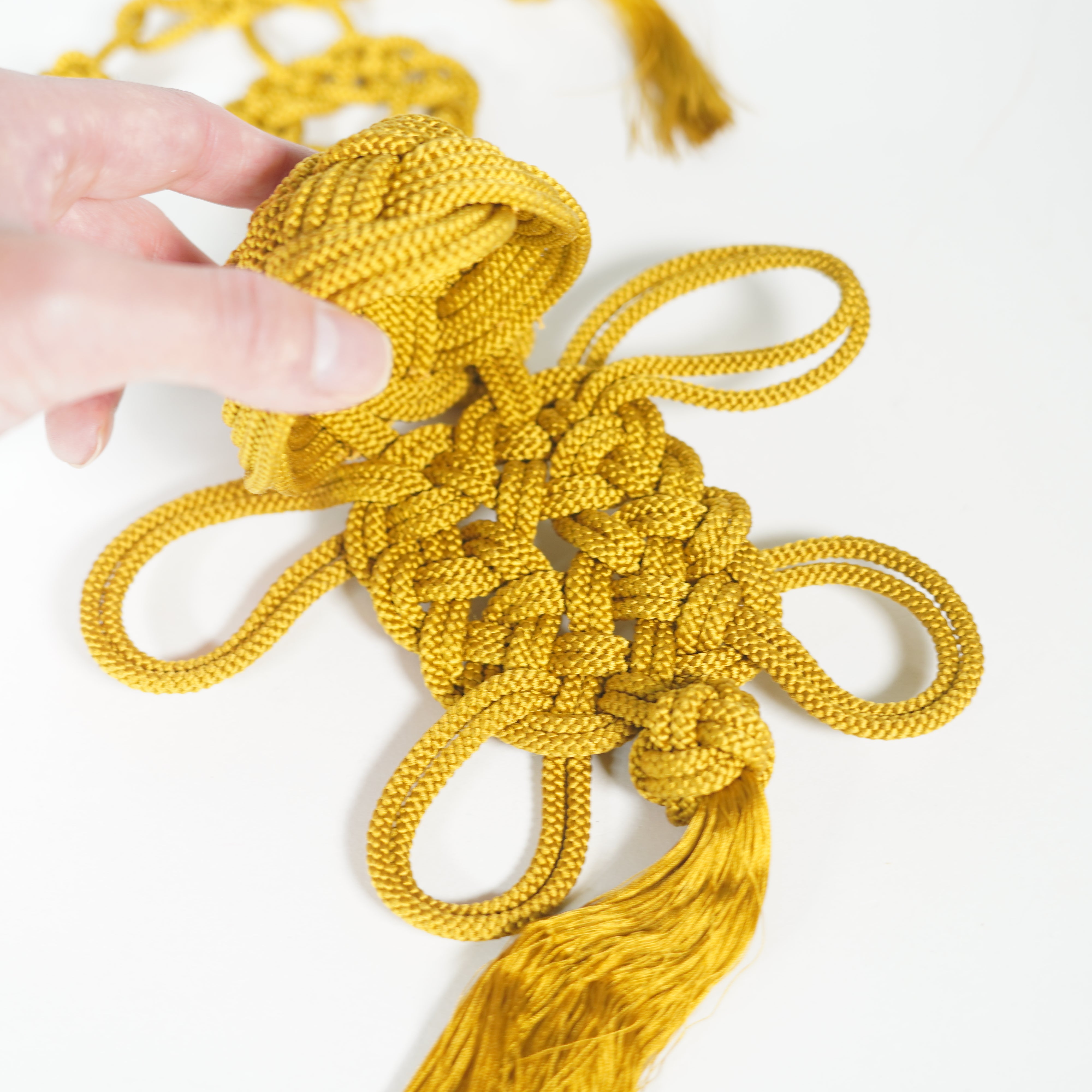
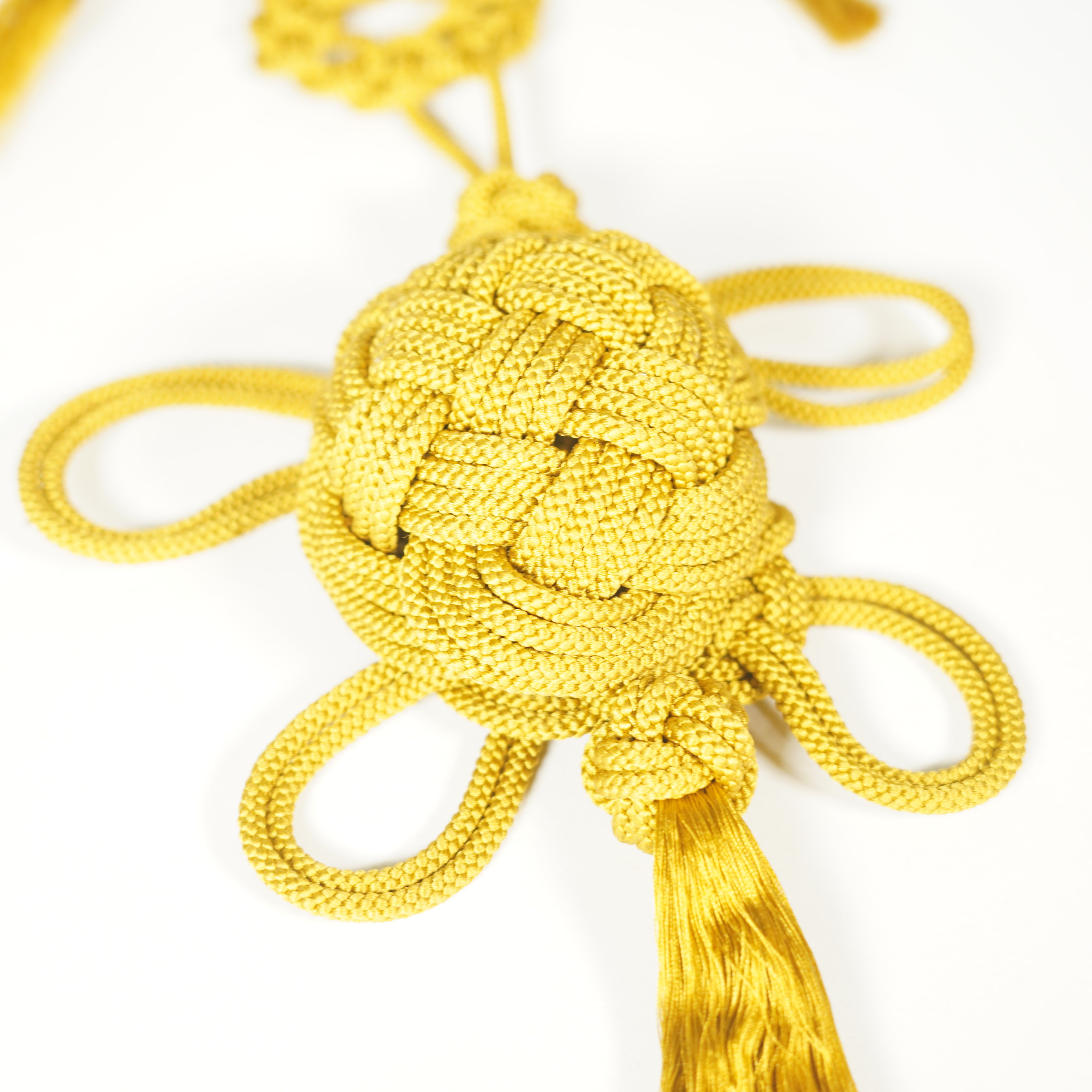
Put your favorite incense inside the turtle shell and hang to decorate your wall or pillar. It is made from a single rope from head to tail. In Japan, turtles symbolize long life and is respected as a lucky animal that brings good economic fortune. In many countries around the world, turtles are considered sacred animals or messengers of god. Enjoy the scent that purifies the air by using this sachet, or you can use it as an ornament without the incence, as well.
DETAILS
SIZE
Width : 18cm
Height : 58cm
Weight : 91g
MATERIAL
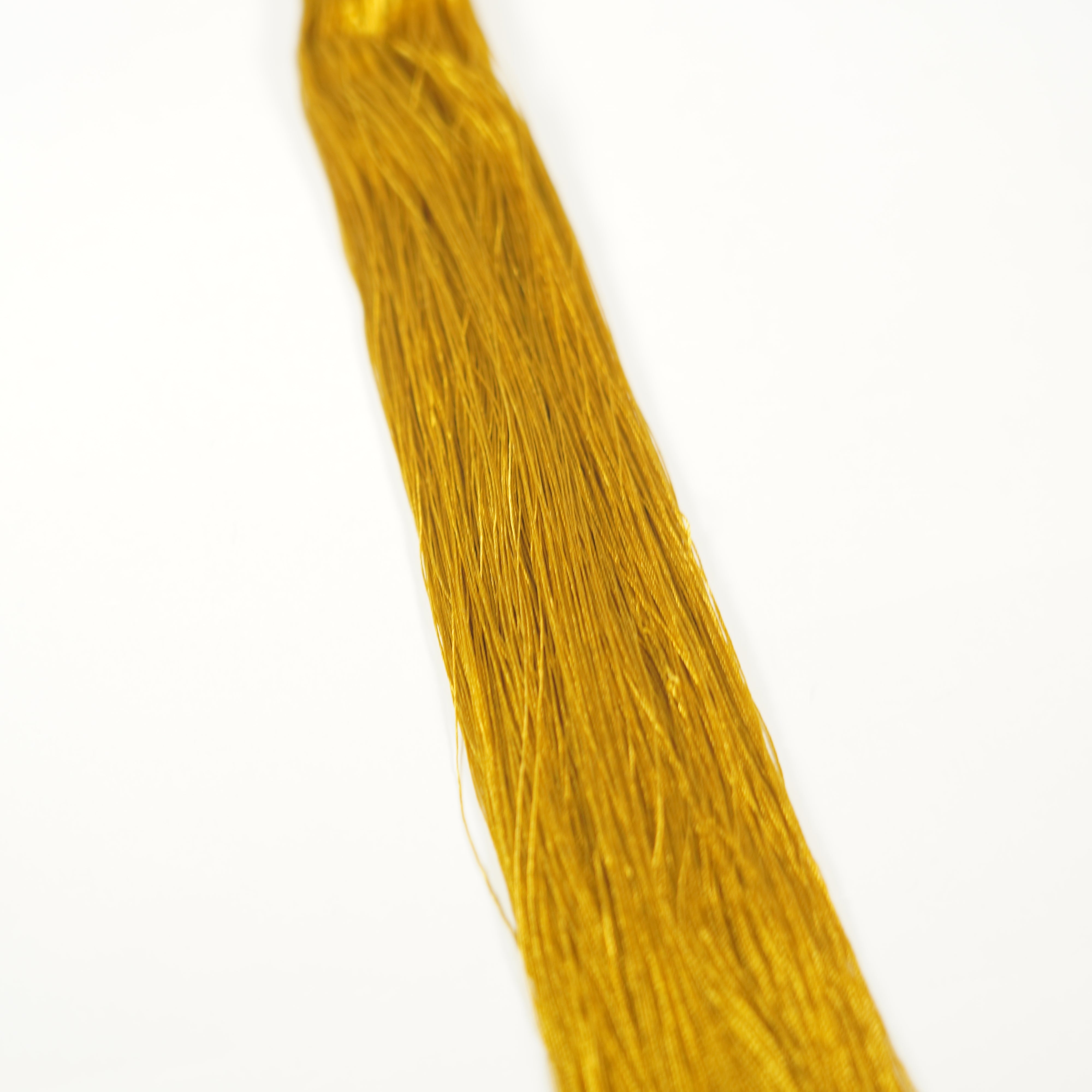
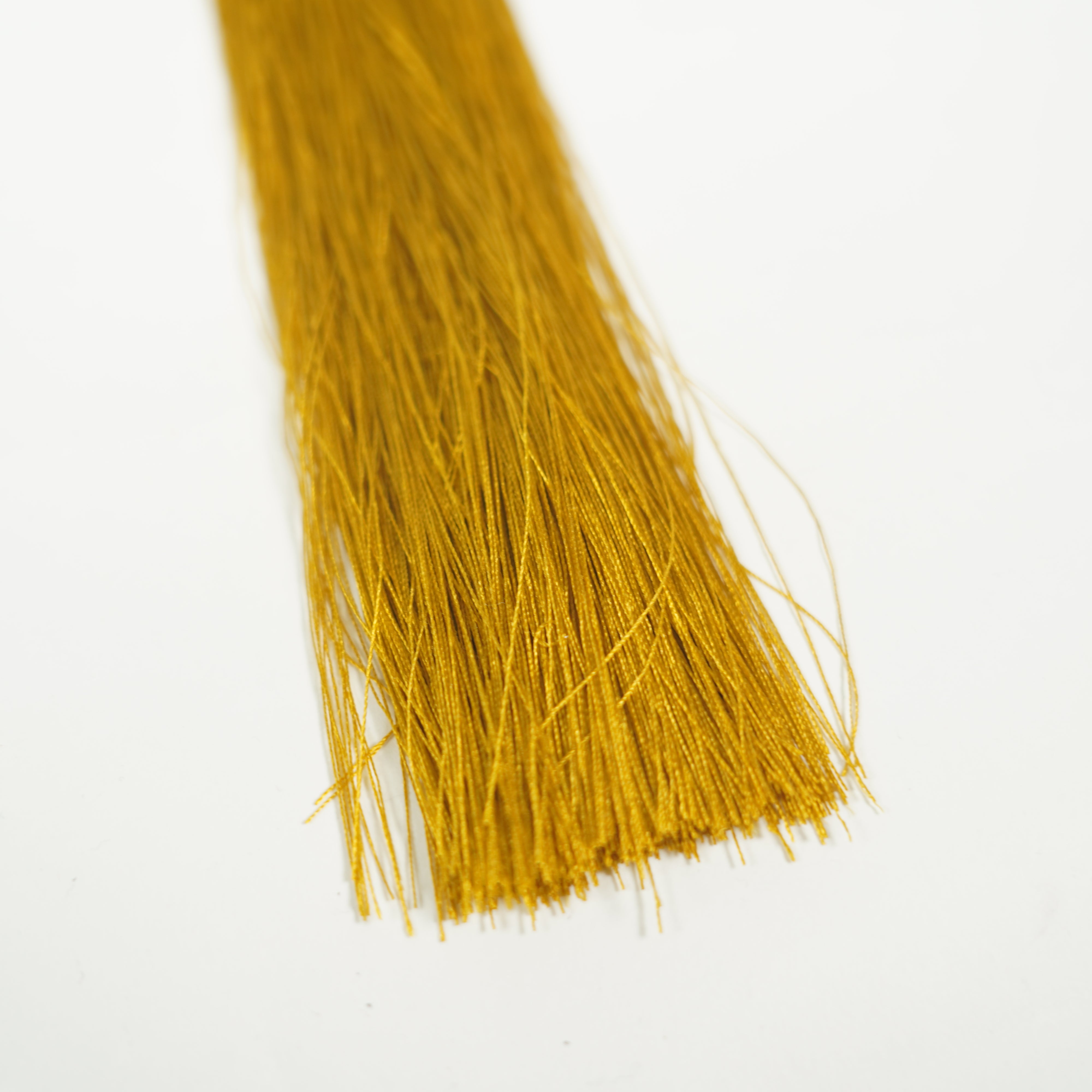
Silk
ARTISAN
KEIKO ISHII
Carrying on the tradition
There are over 100 knots in decorative knotting and artwork made by combining the knots seems infinite. I find wonder in the endless possibility of decorative knots. A unique characteristic of Japanese decorative knotting is that it uses a single, continuous rope from beginning to end, without cutting or joining. This comes from the culture of valuing something that is long and continuous, and avoiding discontinuity or interruption, for example with relationships and personal contact. Some artwork uses 10~20 m of rope and it requires much concentration and perseverence to continuously tie it. It is tough work, but I value such Japanese tradition and strive to make my artwork from single, uncut rope.
In my work, I honor tradition while striving to create artwork that will add color to modern life. Decorate your room or wear the knots to ward off evil or as a symbol of happiness.
ARTISAN STORY
I began decorative knotting in 2012. Attracted by the intricate methods of knotting and the beauty of Japanese braided cord braided ropes, I decided to become an artist because, despite being a traditional art, decorative knots are not well known and there are few artisans. In 2015, I held my first exhibition at Banshu Kiyomizu Temple, because knots are deeply associated with Bhuddism. In addition to traditional designs, I make earings, necklaces and other accessories, as well as interior decorations for restaurants and historic hotels (ryokan).
KOGEI
KUMIHIMO / JAPANESE BRAIDED CORD
About 1,300 years ago / 700s / Nara Period (710–794)
Kumihimo is made by moving multiple bundles of thread diagonally around one another to create a single cord. By the Nara period, braided cords were used for sutras, ceremonial robes and court dress; warrior society expanded their use into armor and swords, and later regional centers produced obijime for kimono.
In Japan, kumihimo is most familiar as the cord that helps secure a kimono obi, where color and knot can express season and formality. Contemporary applications include jewelry, straps, bag handles and even shoelaces, with growing appreciation for the beauty of the structure itself.
Unlike ordinary woven cloth, where warp and weft cross at right angles, kumihimo threads are continually moving diagonally. This distributes tension along the cord and gives great strength at small diameter. Decoration and engineering come from exactly the same structure.
Caution
Individual Differences
As each piece is individually handcrafted, slight variations in color, pattern, shape, and texture may occur. These subtle differences are a natural characteristic of handcrafted works, making each piece truly unique. We hope you will enjoy these individual variations as part of the beauty and character of Japanese craftsmanship.
Production Time
If an item is not currently in stock, it may be made to order by the artisan. As each piece is carefully handcrafted, production may take several months depending on the item and the artisan's schedule. We appreciate your patience and understanding.

选择选项