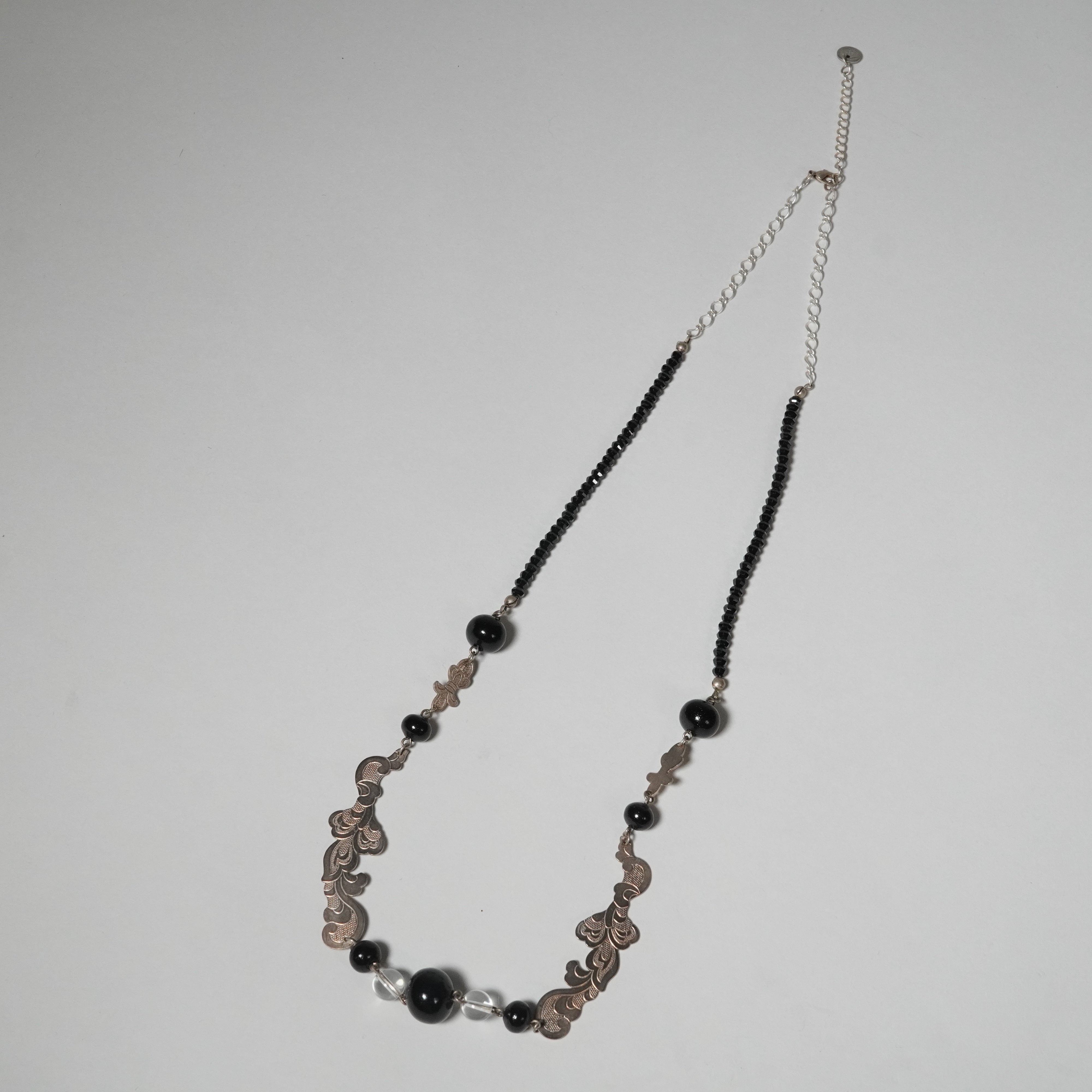
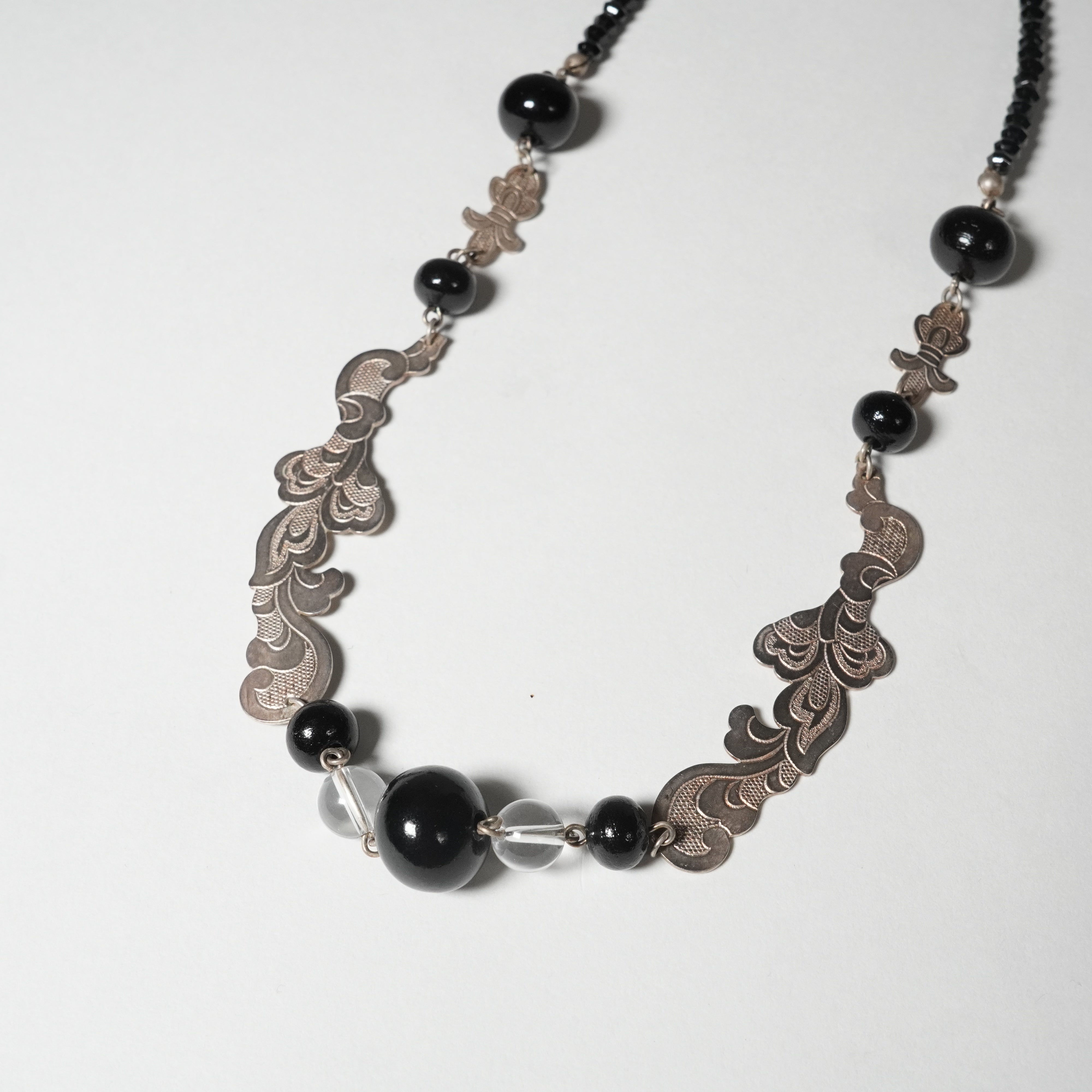
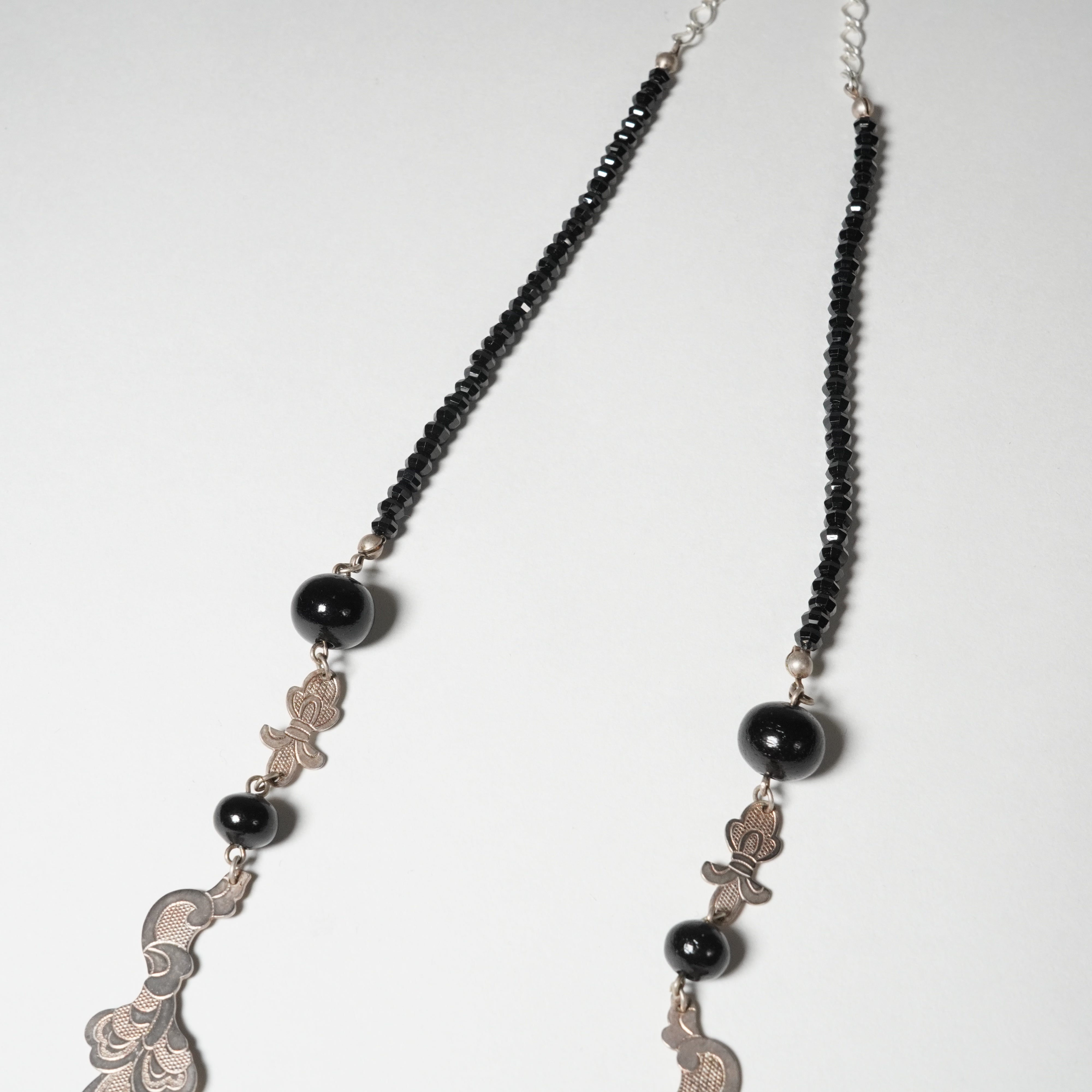
Kalung / arabesque / black spinel
DESCRIPTION
DETAILS
SIZE
MATERIAL
ARTISAN
KOGEI
Caution
Kalung / arabesque / black spinel
促销价格¥2,466.00
选择选项
Kalung / arabesque / black spinel
促销价格¥2,466.00
国家/地区
语言
购物车
您的购物车为空
This pattern symbolizes beauty and prosperity and is rooted in Buddhist thought.
It has the meaning of symbolizing beauty, richness, and prosperity.
This is a necklace with beautiful sparkling black spinel stones.
The stone's meaning is “good fortune” and “defeating evil.”
Ebony is known for its deep, calm color and high hardness,
and is considered a symbol of “concentration,” “strong will,” and “protection.”
SIZE
Width of main parts : 7cm
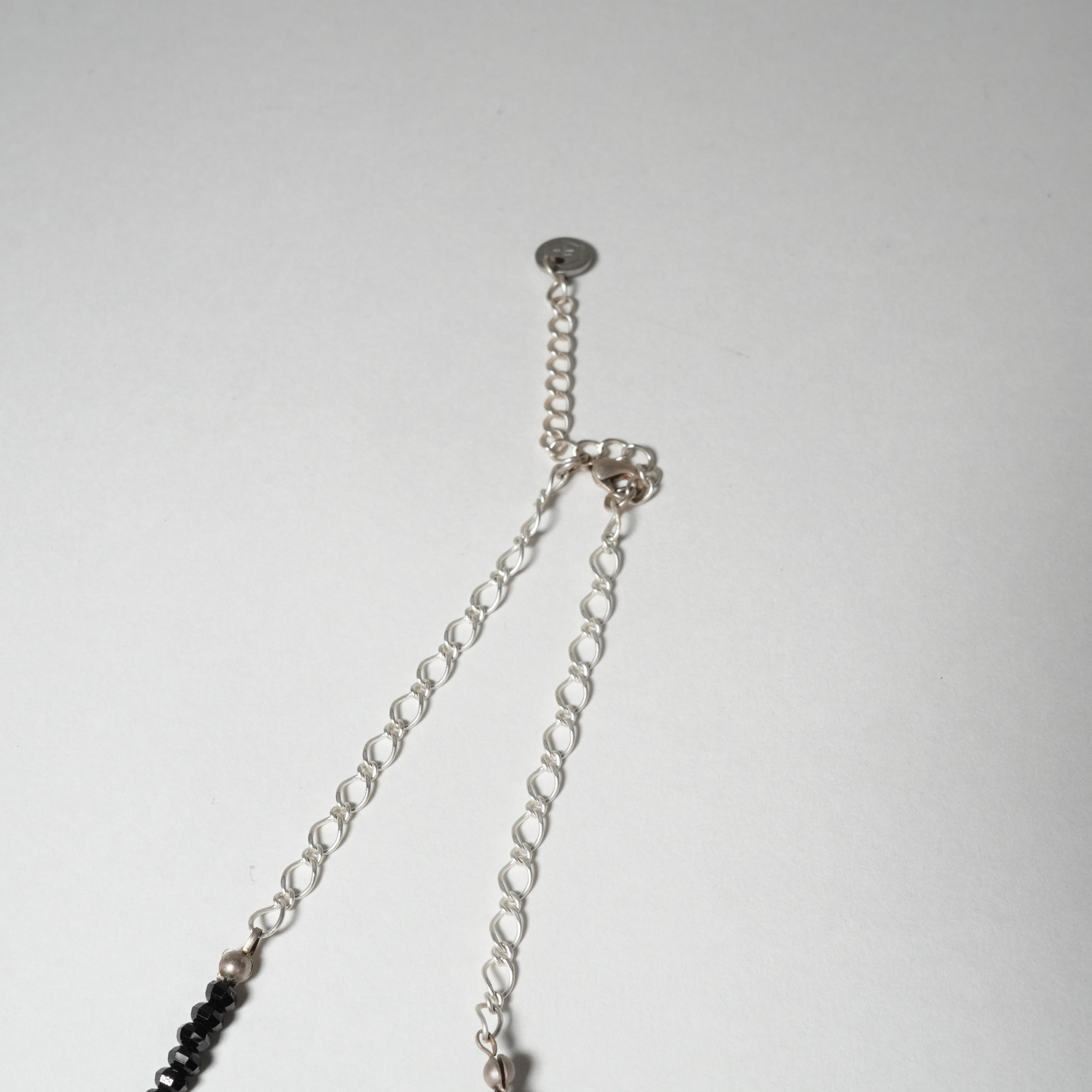
Chain length:70cm
Weight : 26g
MATERIAL
Copper
Brass
Ebony
Black spine
Crystal
HOMARE
"Traditional techniques that have been passed down and innovated over the years need to be passed on to the next generation, with the evolution and transmission of these techniques to the rest of the world."
Traditional crafts are highly valued for their advanced techniques, but demand for them is trending toward a downward. We hope to match such traditional crafts with modern lifestyles, create new value, and make people around the world feel the appeal of traditional crafts.
ARTISAN STORY
HOMARE
HOMARE is an accessory brand created by harmonizing traditional craftsmanship and traditional Japanese culture. By combining traditional techniques with contemporary design, HOMARE creates new value and appeal, and offers products that fit today's lifestyles. We hope you will enjoy our accessories, which are a fusion of the sensitivity and imagination of our designers and the technical skills of our craftsmen.
KAZARI KANAGU / JAPANESE DECORATIVE METAL FITTINGS
About 1,200 years ago / 800s / Heian Period (794–1185)
Decorative metal fittings reinforce and embellish the joints of architecture, furniture, portable shrines, Buddhist implements and boxes. They have accompanied temples and palaces since ancient times, later spreading to the tiny hinges, pulls and corner plates of warrior and merchant household objects.
In Japan, kazari-kanagu are a “supporting craft” that people may overlook. They appear on door corners, chest handles and temple pillars, protecting structures while quietly raising the dignity of an interior. Today the skills remain important in cultural-property restoration and are also adapted to furniture and jewelry.
Small fittings can be more difficult than large ones. Scrollwork or family crests may be engraved, repoussed, pierced and gilded on a plate only a few centimeters wide, yet the finished hinge or pull must still function precisely. Decoration and mechanical performance are inseparable.
Individual Differences
As each piece is individually handcrafted, slight variations in color, pattern, shape, and texture may occur. These subtle differences are a natural characteristic of handcrafted works, making each piece truly unique. We hope you will enjoy these individual variations as part of the beauty and character of Japanese craftsmanship.
Production Time
If an item is not currently in stock, it may be made to order by the artisan. As each piece is carefully handcrafted, production may take several months depending on the item and the artisan's schedule. We appreciate your patience and understanding.
选择选项