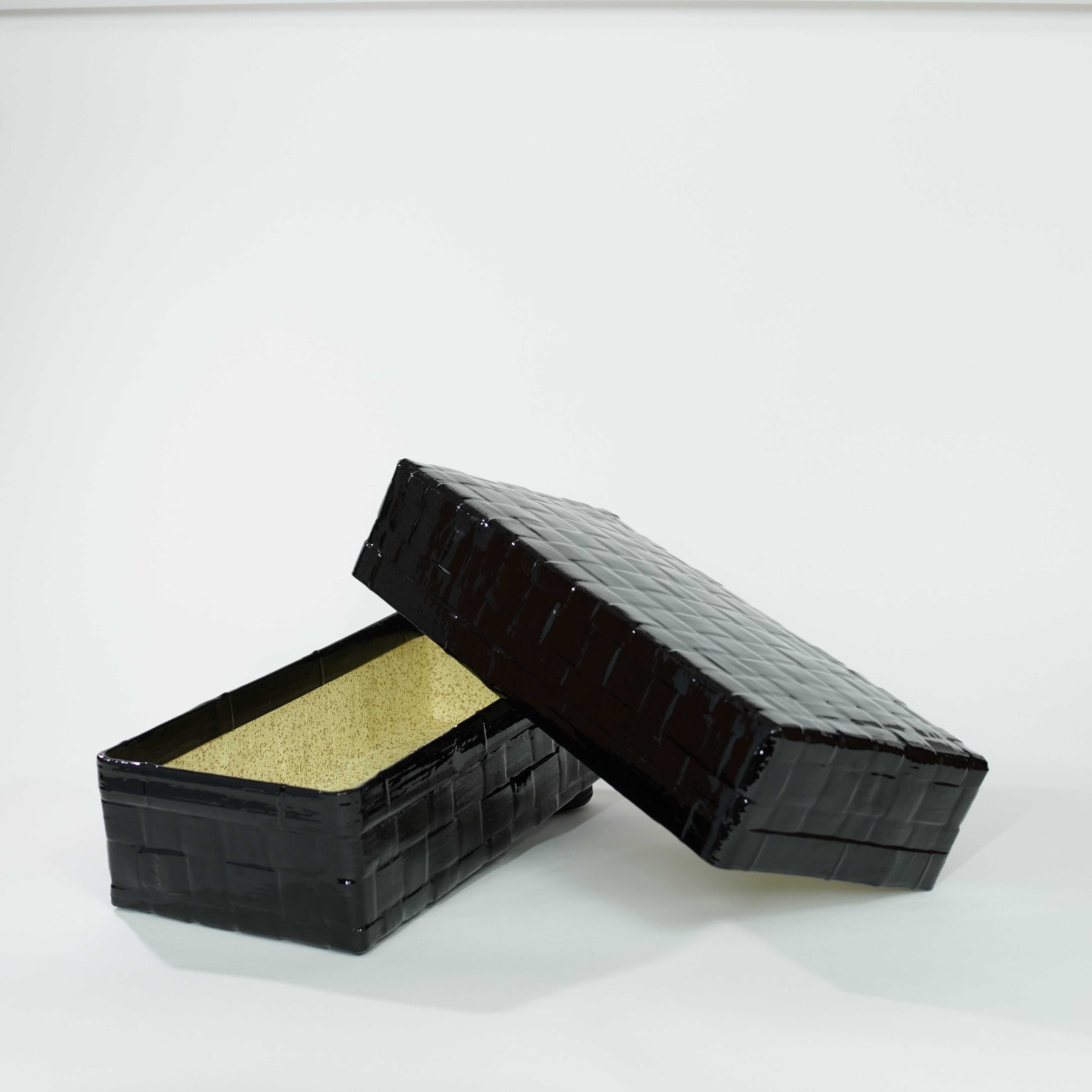
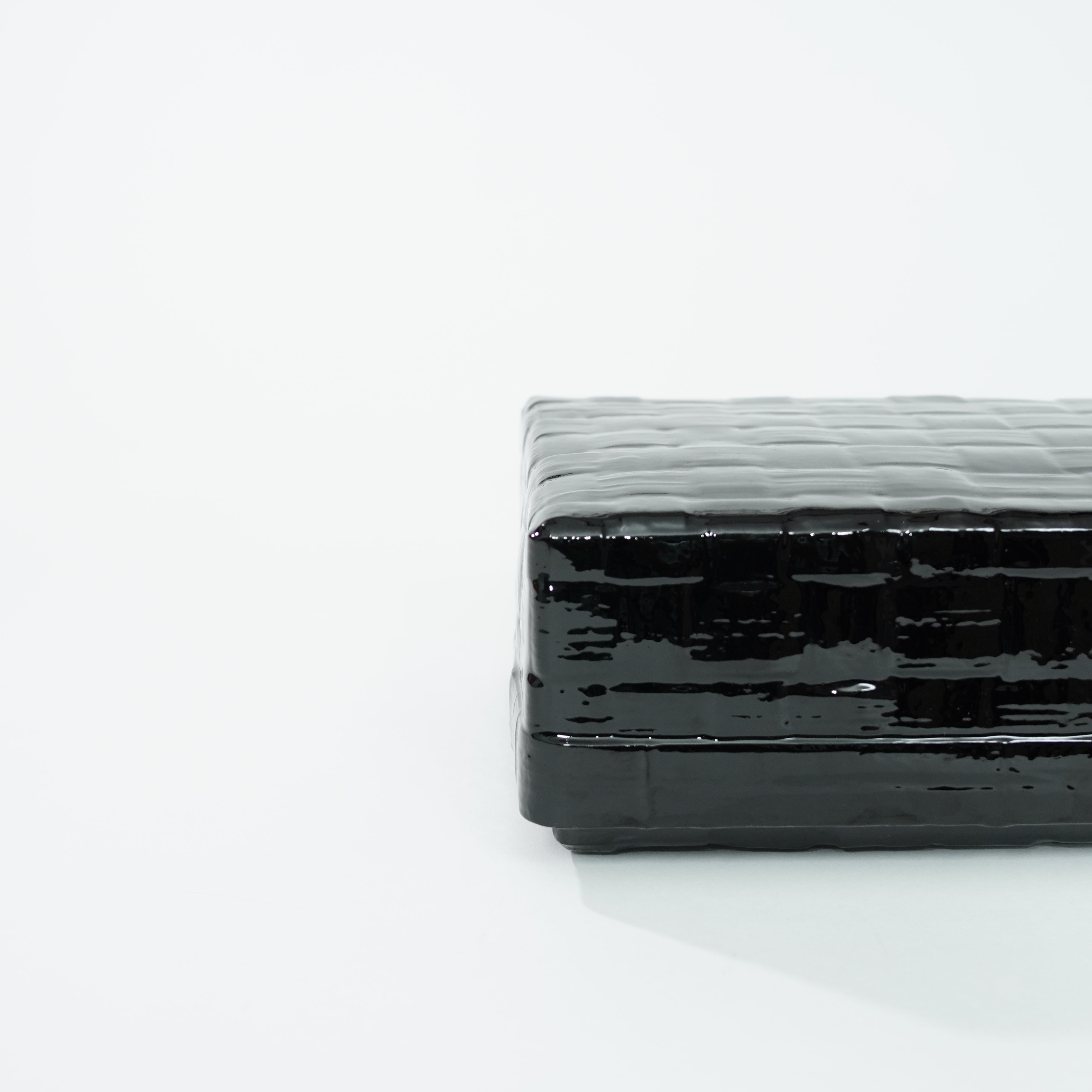
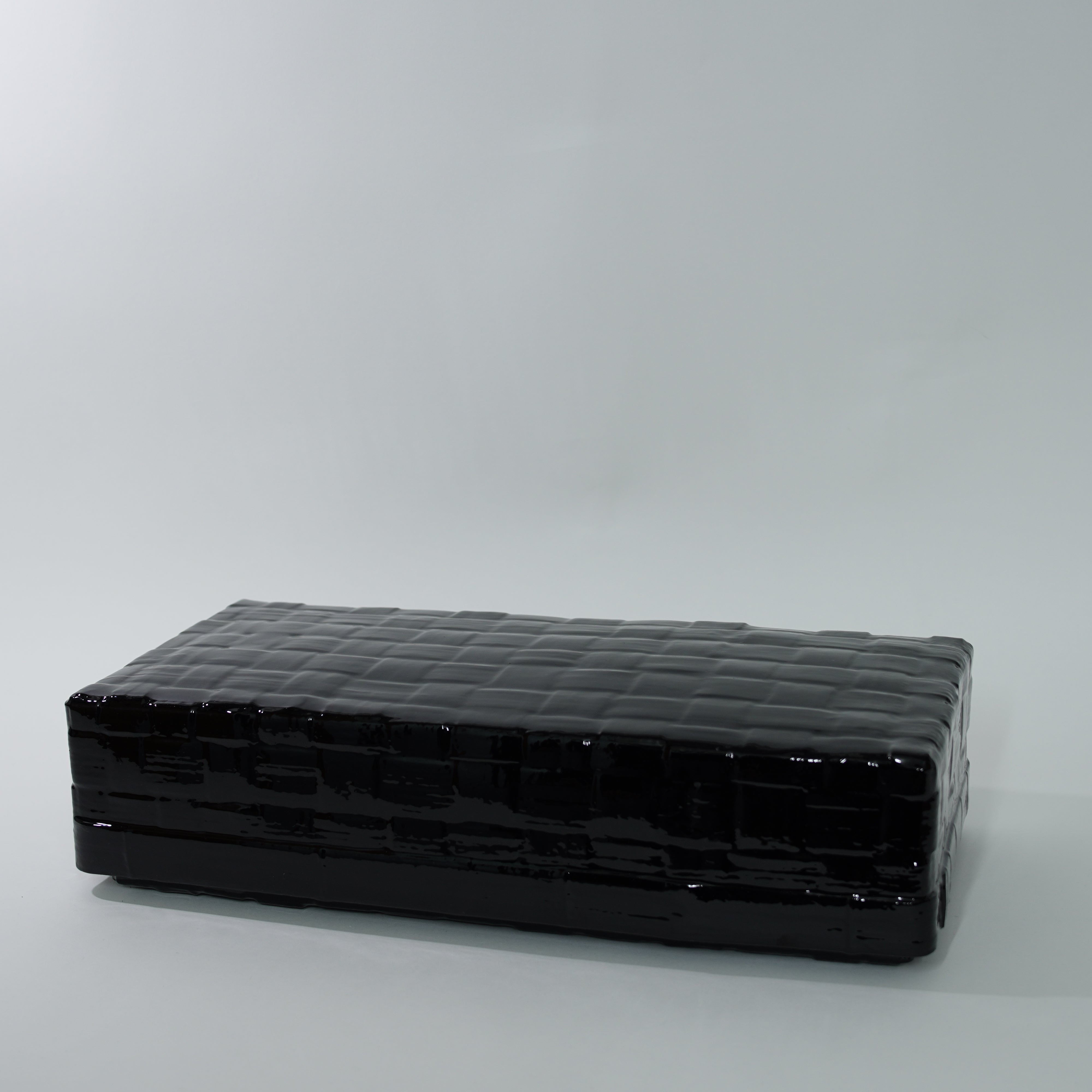
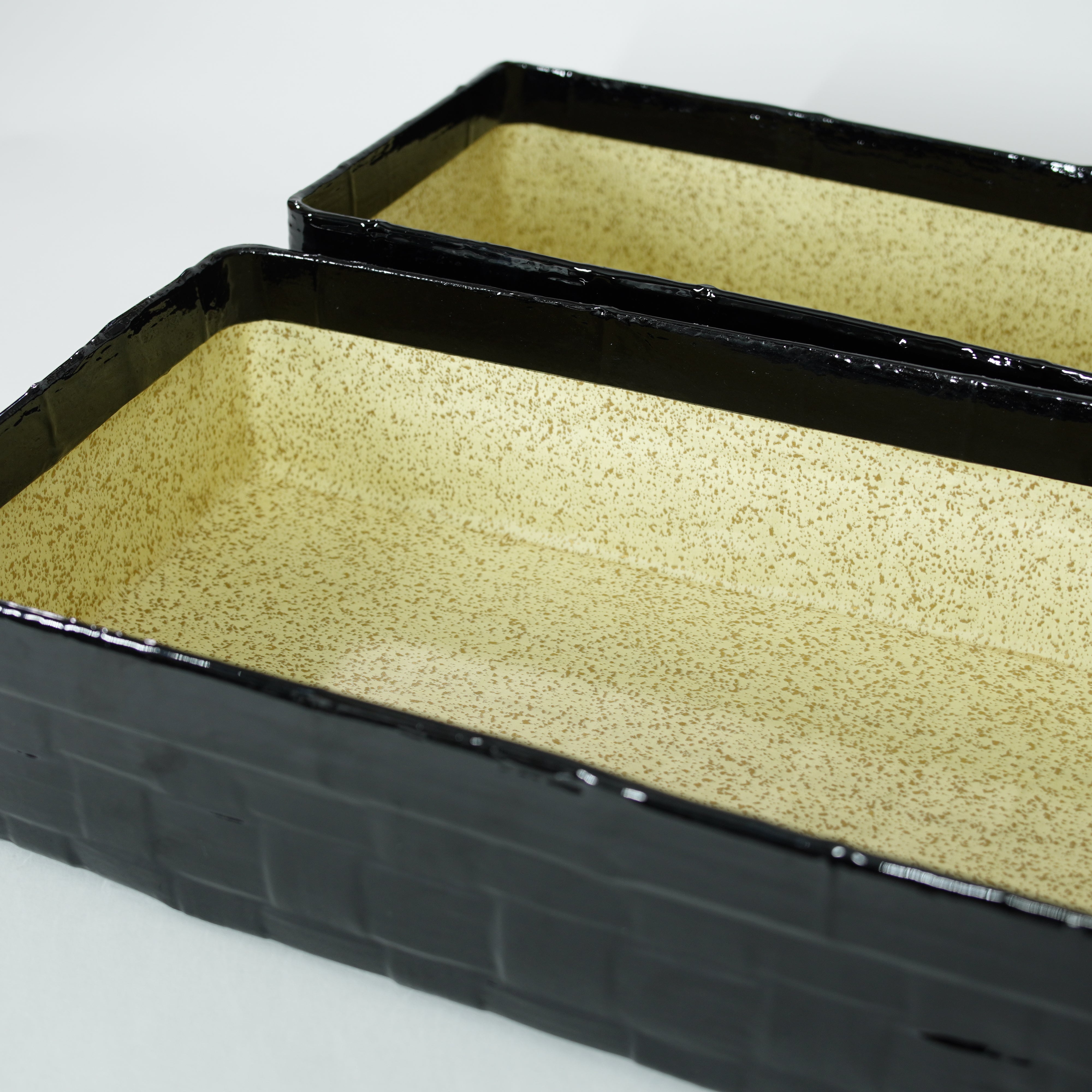
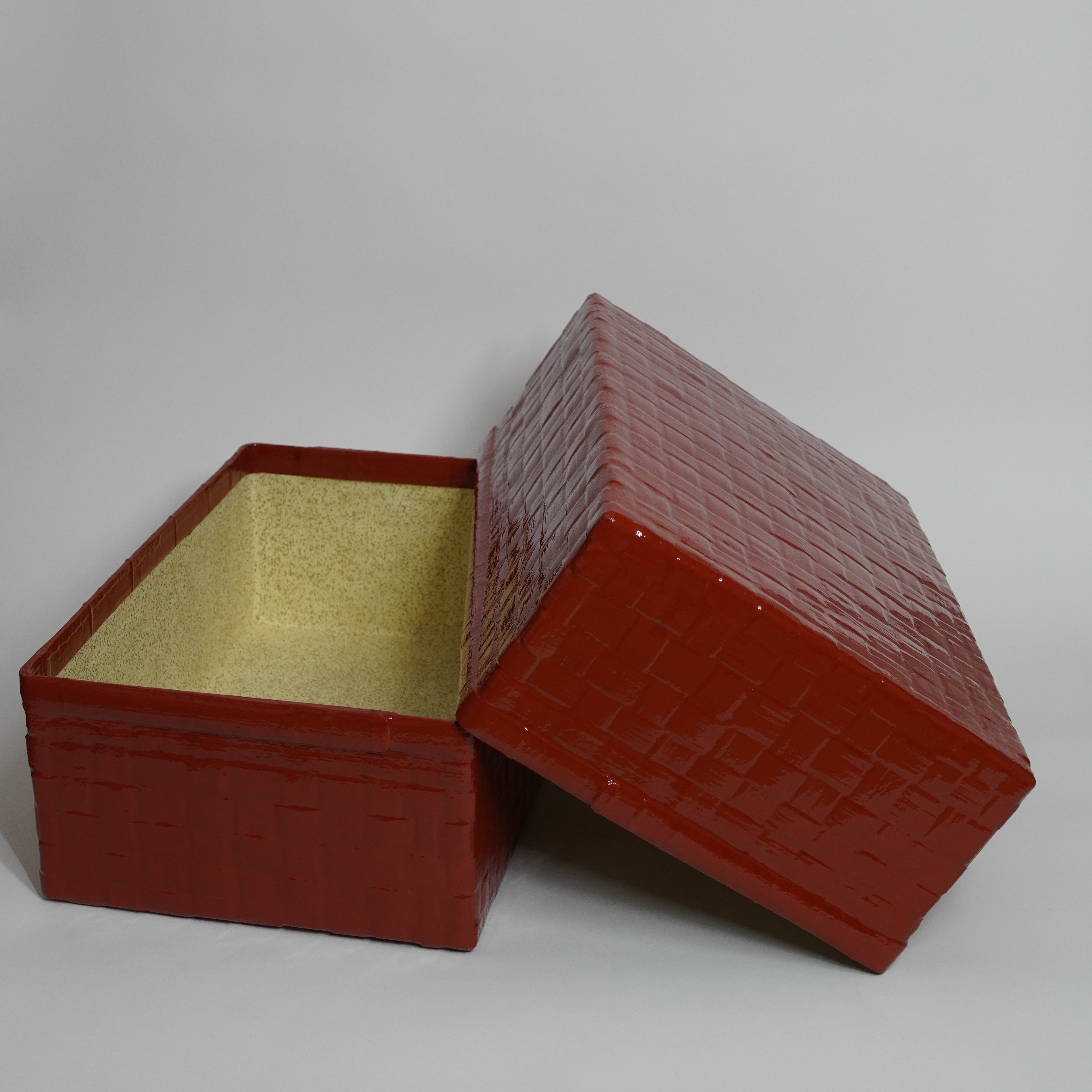
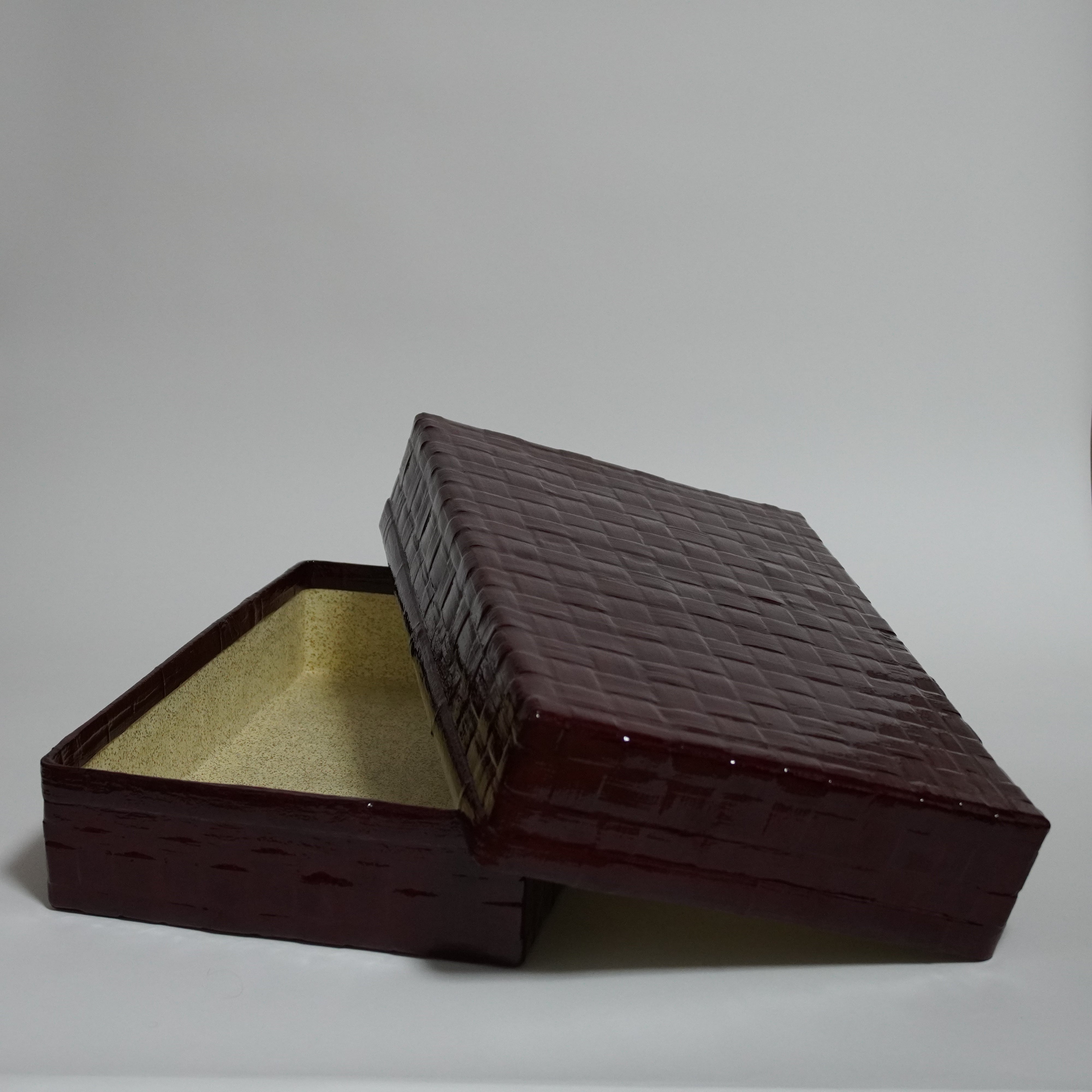
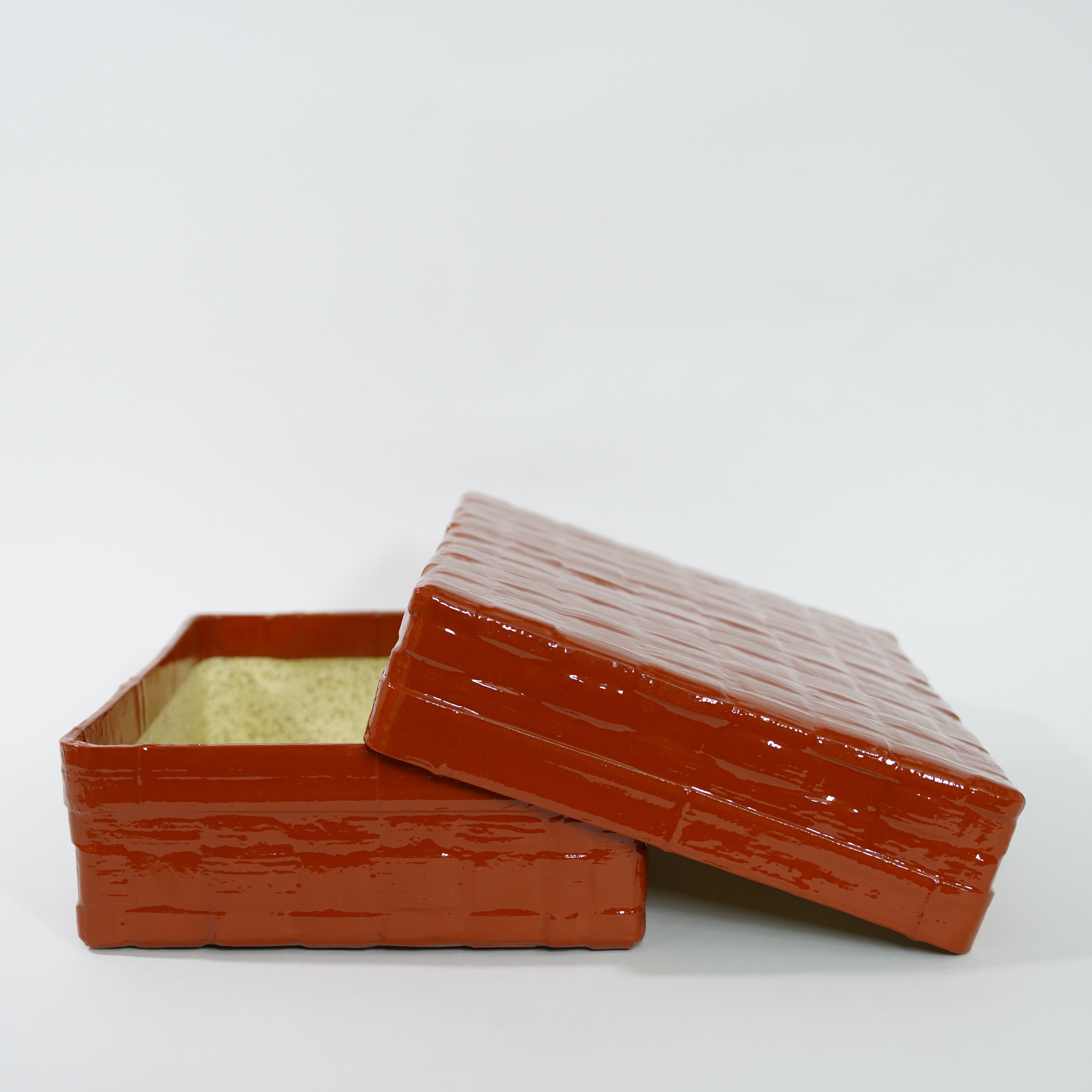
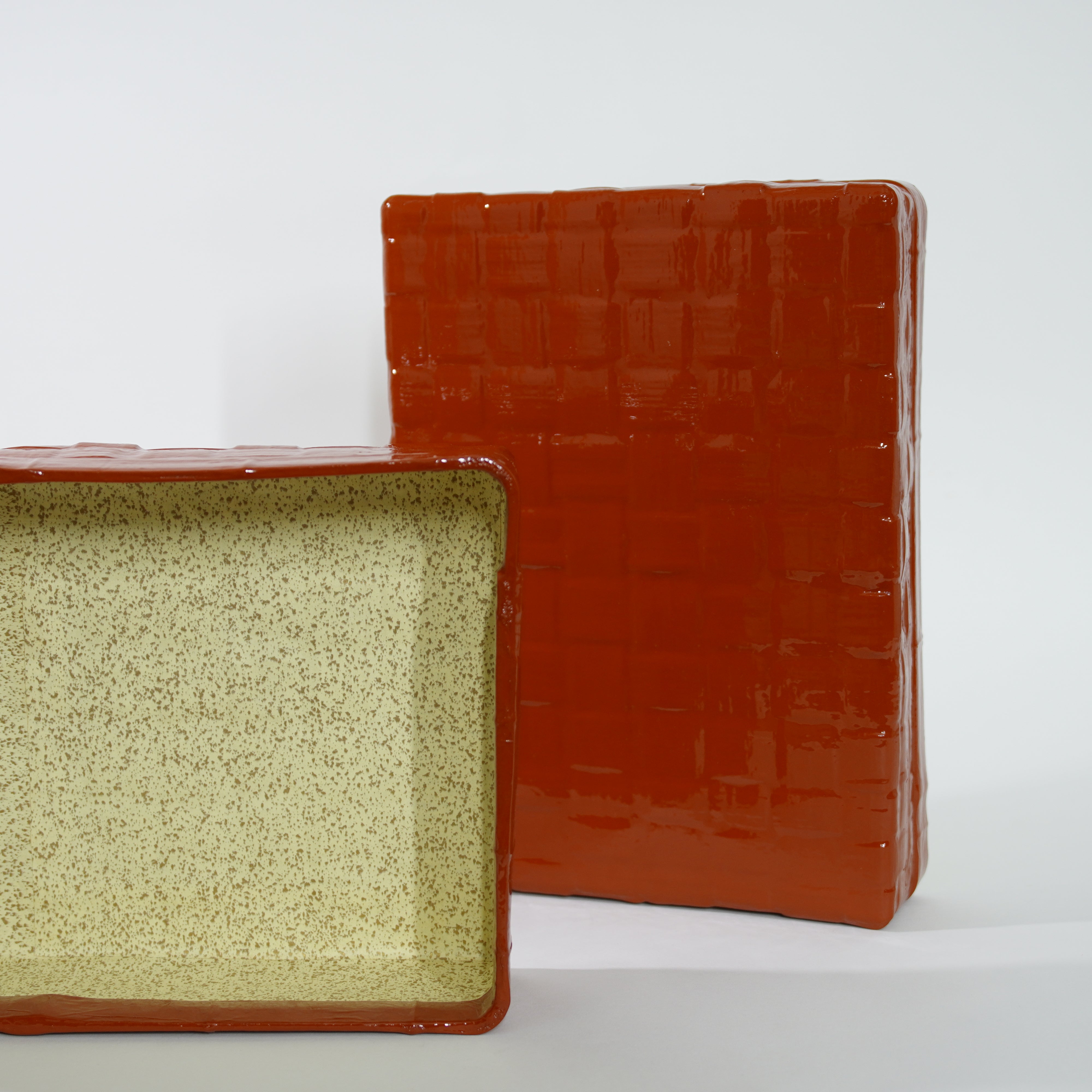
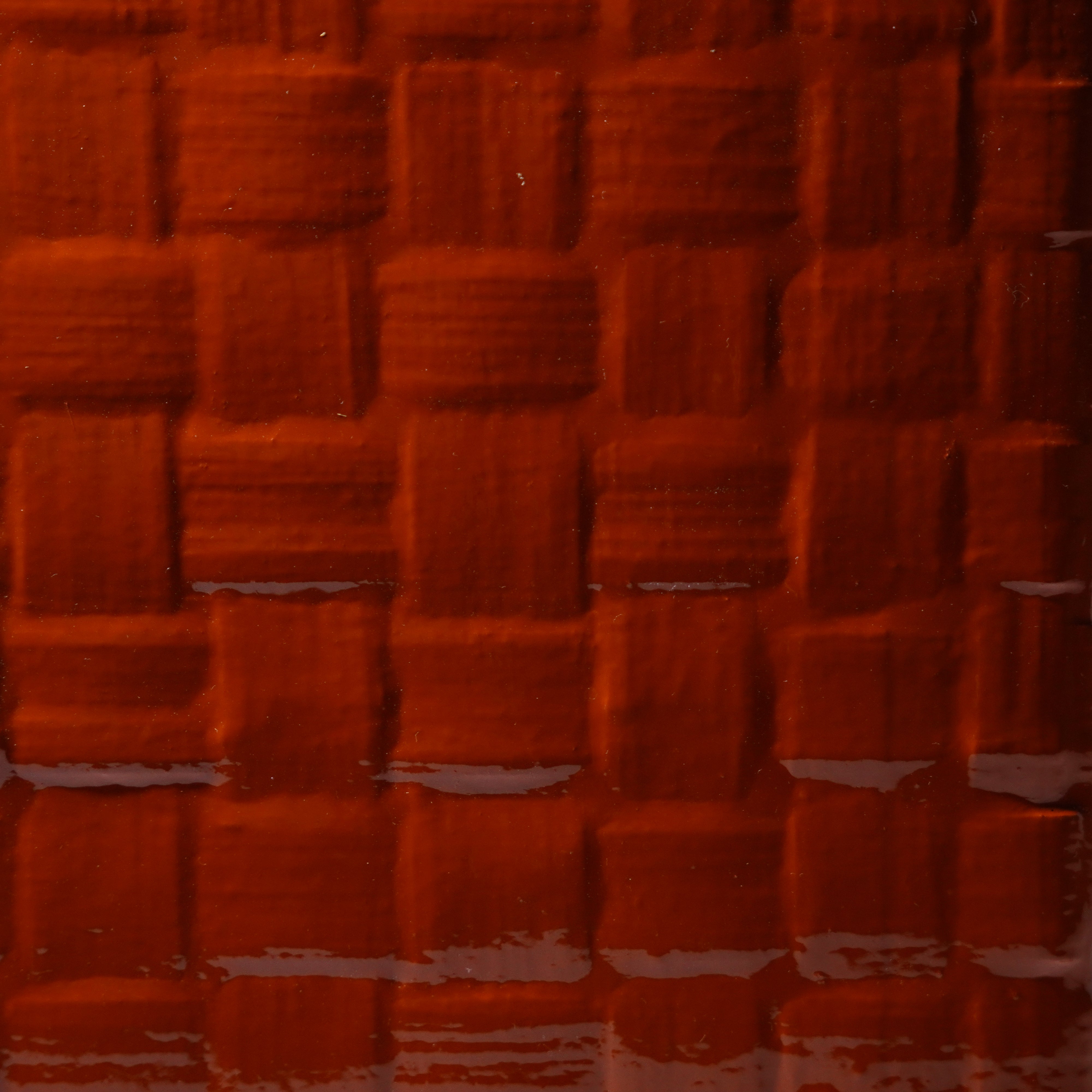
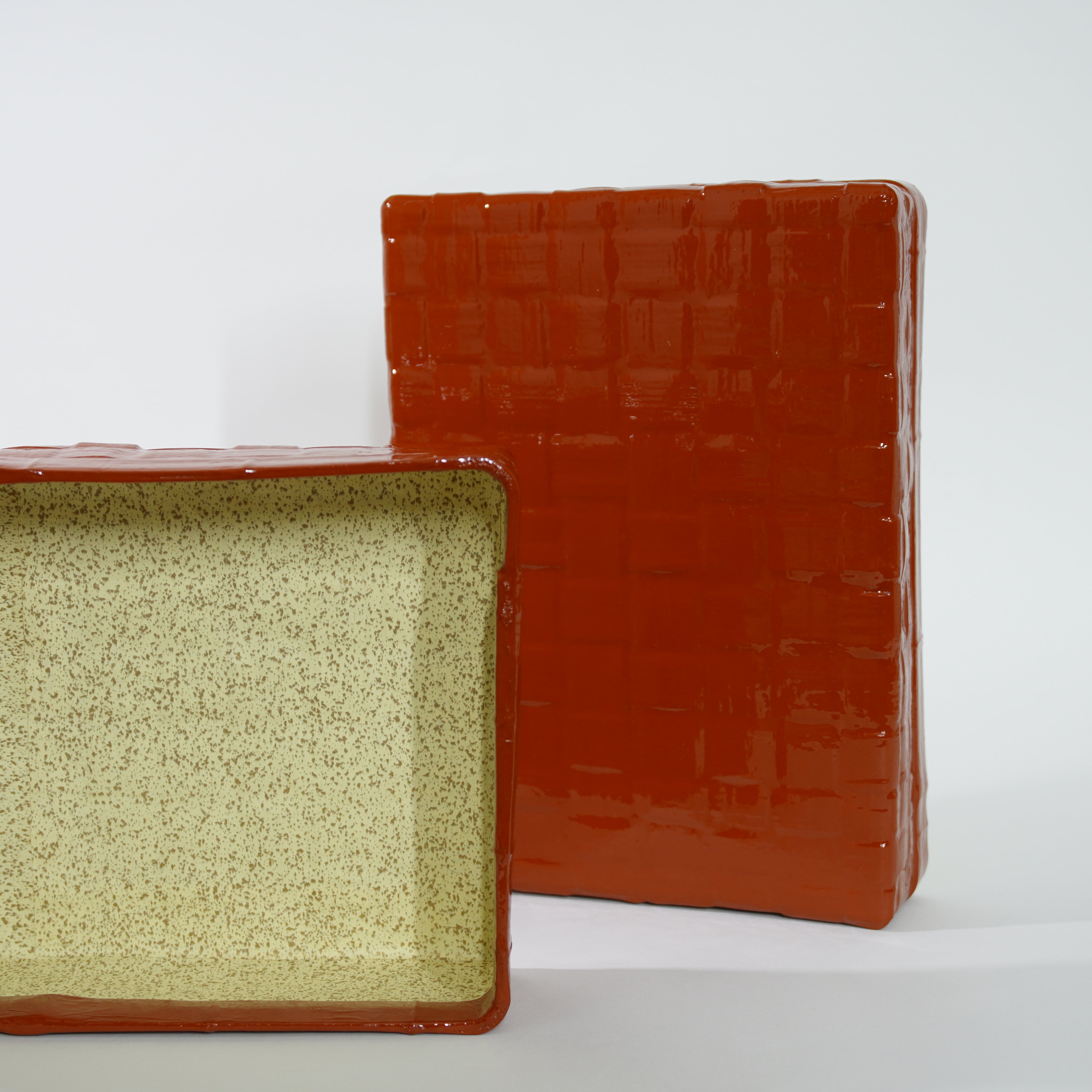
KYO TSUZURA / KYOTO WOVEN BAMBOO BOXES
About 1,000 years ago / 1000s / Heian Period (794–1185)
Tsuzura are storage chests made from woven bamboo frames covered with washi and finished with persimmon tannin or lacquer. In Kyoto, they were refined alongside court, temple and kimono culture as lightweight, repairable containers for clothing and valuable implements.
For Japanese people, tsuzura are so familiar that they appear in traditional folktales as symbols of old-fashioned storage. Lighter than wooden chests and naturally breathable, they are especially suited to kimono. Today they survive as clothing cases, tea-utensil boxes and distinctive interior storage.
Although the surface can look like a paper box, the hidden structure is a flexible bamboo basket. Bamboo, paper, tannin and lacquer are layered to combine strength with very little weight. Damaged areas can be rewoven or repapered, making tsuzura an early example of what might now be called repairable design.