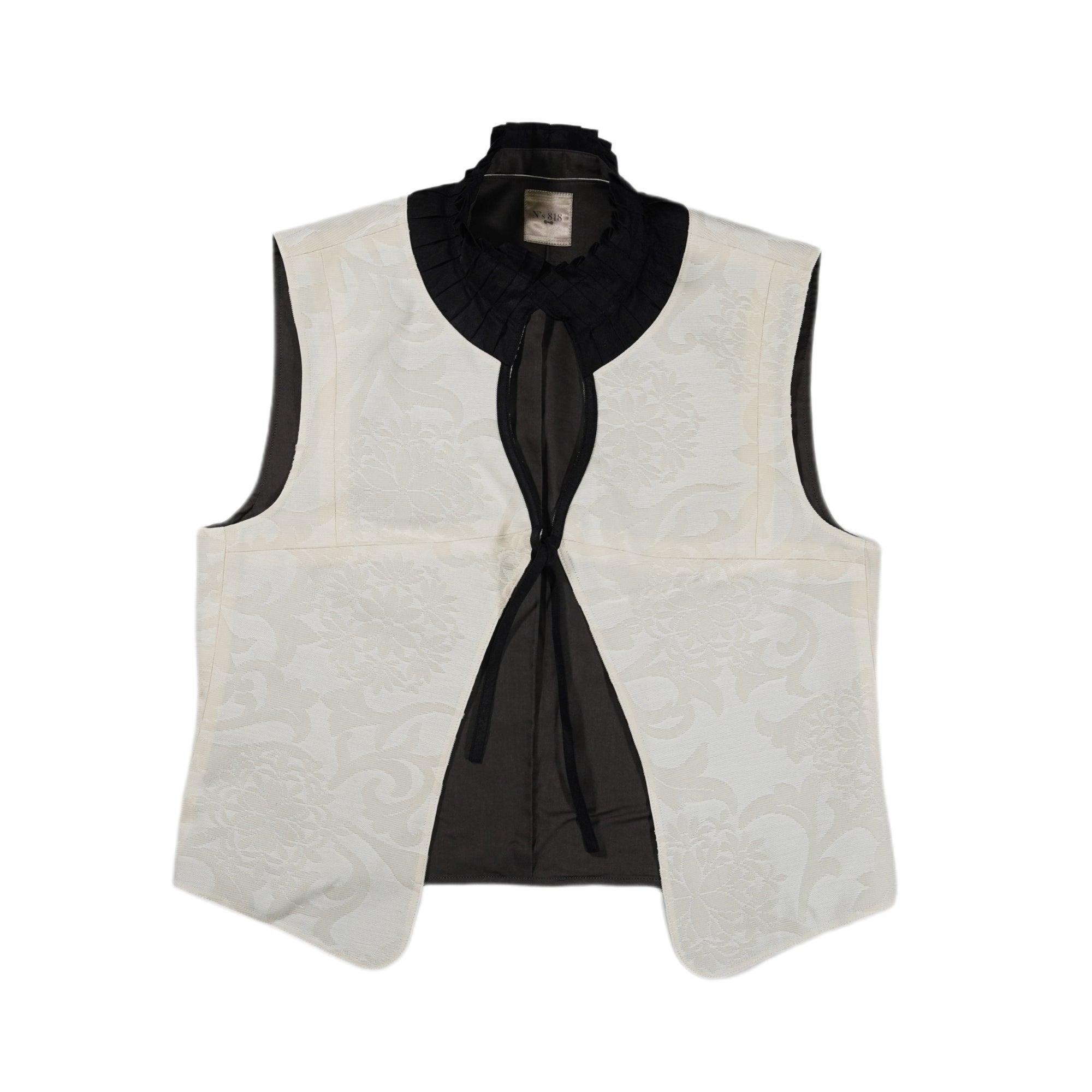
Omigoromo Vest / 3
促销价格¥9,998.00
选择选项
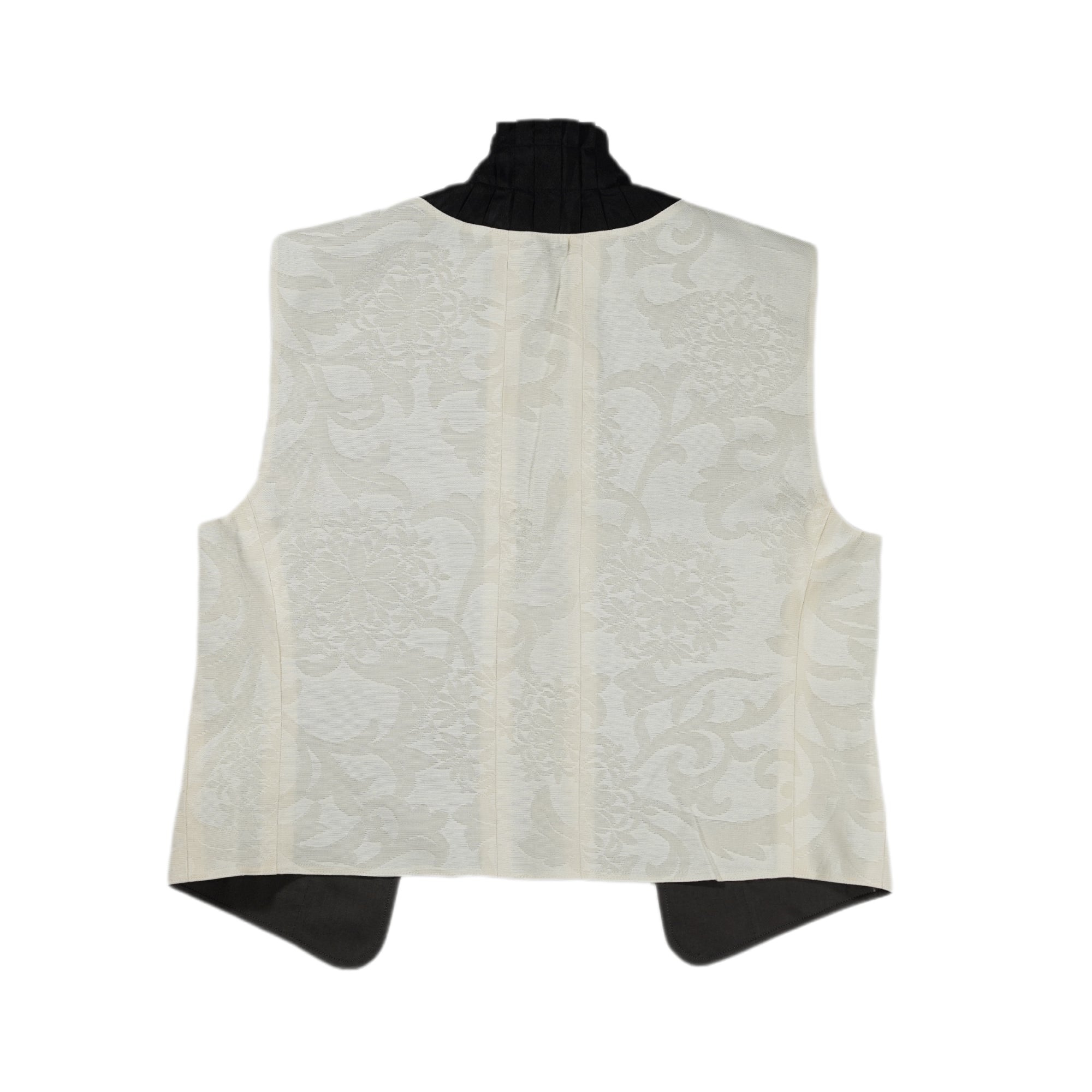


Omigoromo Vest / 3
促销价格¥9,998.00
国家/地区
语言
购物车
您的购物车为空
This product is made from damaged or disused obi fabrics.
The Nishijin textile has a long history, which is why it is designed in a way that allows the design to be incorporated into the modern age.
OMIGOROMO (小忌衣) is a costume that appears in kabuki episode "Jidaimono" that deals with topics far removed from the common people, such as samurai and court nobles.
The collar is surrounded by a cloth with a thin stripe of fabric, and the collar stands up at the back of the neck.
The OMIGOROMO Vest is inspired by Japanese historical costumes. The width of the fabric is approximately 31 cm, which allows for a unique fabric turnover to be incorporated into the design. It can be used for casual occasions or as a dress-up item.
SIZE
Small size
Body length:52cm
Shoulder width:41cm
Chest:98.5cm
Sleeve width:47.5cm
MATERIAL
Cotton
Silk
N'S 818
"Pleasure in revolution of tradition"
In this age of continuous technological development, a wide variety of materials, machines, and AI have been created.
However, in our region, craftsmen are still making things today using traditional techniques, preserving the beauty of their craftsmanship.
In this brand, we believe that the beauty and warmth of analog objects can only be created by human beings, and we will continue to transmit this belief.
We are working to grow a brand that can share new values with everyone.
ARTISAN STORY
N's 818 / Yusuke Maeda
"Bringing beauty and elegance to everyday life"
N's 818 is a collection of one-of-a-kind items made from Nishijin textile obi fabrics that incorporate the Japanese aesthetic of subtraction to find the external and internal beauty of wabi-sabi.
The development of items is based on the philosophy of universal and eclectic craftsmanship that incorporates social issues and SDGs for "craftsmen, the times, the environment, materials, and customers".
NISHIJIN ORI / NISHIJIN SILK TEXTILES
About 1,200 years ago / 800s / Heian Period (794–1185)
Nishijin textiles trace their technical roots to the Oribe-no-tsukasa, a Heian-period government workshop that produced luxury cloth for the court. Weavers scattered during the Onin War but later returned to the area around the former western army camp—nishi-jin—giving the district its enduring name. In the Meiji period, European Jacquard technology was actively introduced.
In Japan, Nishijin represents some of the country’s most prestigious silk weaving, especially obi and Noh costumes. Because designs are woven from pre-dyed yarn rather than printed afterward, colors can have extraordinary depth. Today the skills also appear in ties, bags, interiors and collaborations with fashion brands.
“Nishijin” was not originally an ancient place-name; it literally refers to the “western camp” of the Onin War. Production is also profoundly distributed: design, pattern preparation, twisting, dyeing and weaving may involve more than twenty specialized stages across the neighborhood. The city district itself functions like a single enormous workshop.
Individual Differences
As each piece is individually handcrafted, slight variations in color, pattern, shape, and texture may occur. These subtle differences are a natural characteristic of handcrafted works, making each piece truly unique. We hope you will enjoy these individual variations as part of the beauty and character of Japanese craftsmanship.
Production Time
If an item is not currently in stock, it may be made to order by the artisan. As each piece is carefully handcrafted, production may take several months depending on the item and the artisan's schedule. We appreciate your patience and understanding.
选择选项