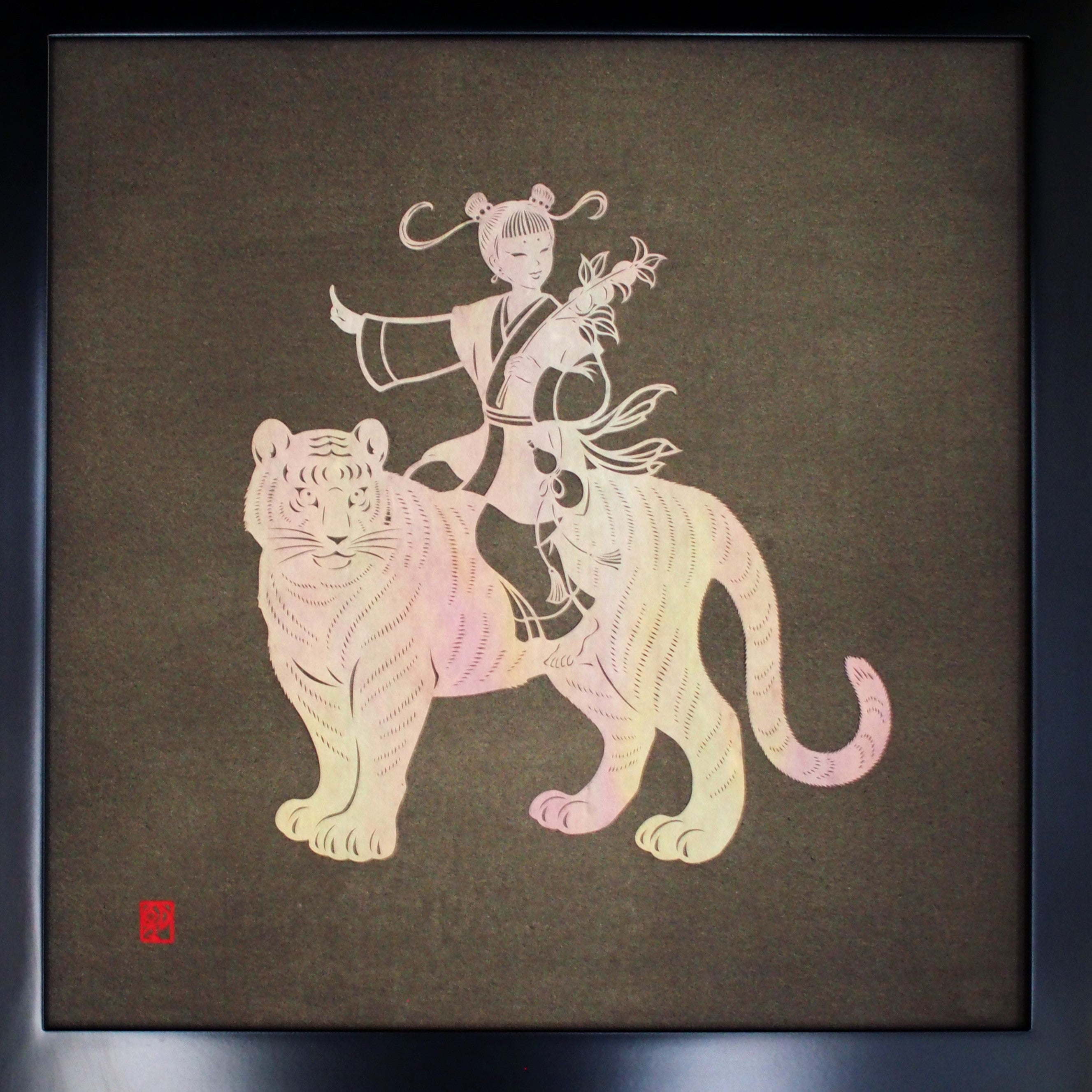
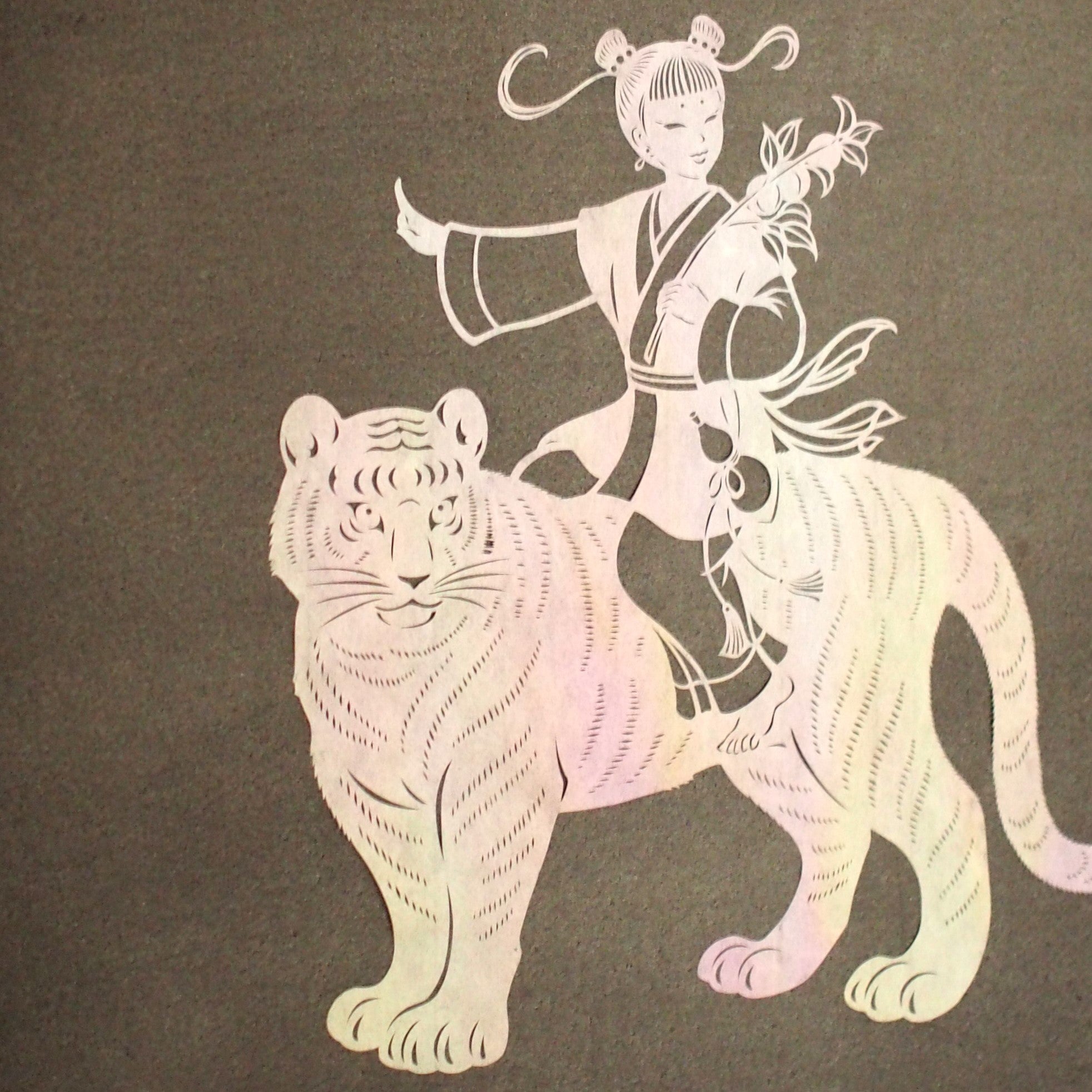
KIRIE / JAPANESE PAPER CUTTING
About 1,000 years ago / 1000s / Heian–Kamakura Period
Cut-paper imagery has deep roots in Japanese paper culture, appearing in ritual ornaments, stencils and decorative cutting. In the modern era, kirie moved beyond its role as a tool for dyeing or ceremony and became an independent art form in which black or colored paper is cut directly into a finished image.
In Japan, kirie ranges from festival decoration and children’s craft to sophisticated contemporary art. Some artists work with pure silhouette, others layer colored papers or create three-dimensional forms, and regional scenery or traditional motifs are common subjects.
The artist cannot simply “paint” a white area. To create white, paper must be removed so the background shows through. At the same time, bridges must remain so every part of the sheet stays physically connected. The maker therefore thinks like both an illustrator and a structural engineer.