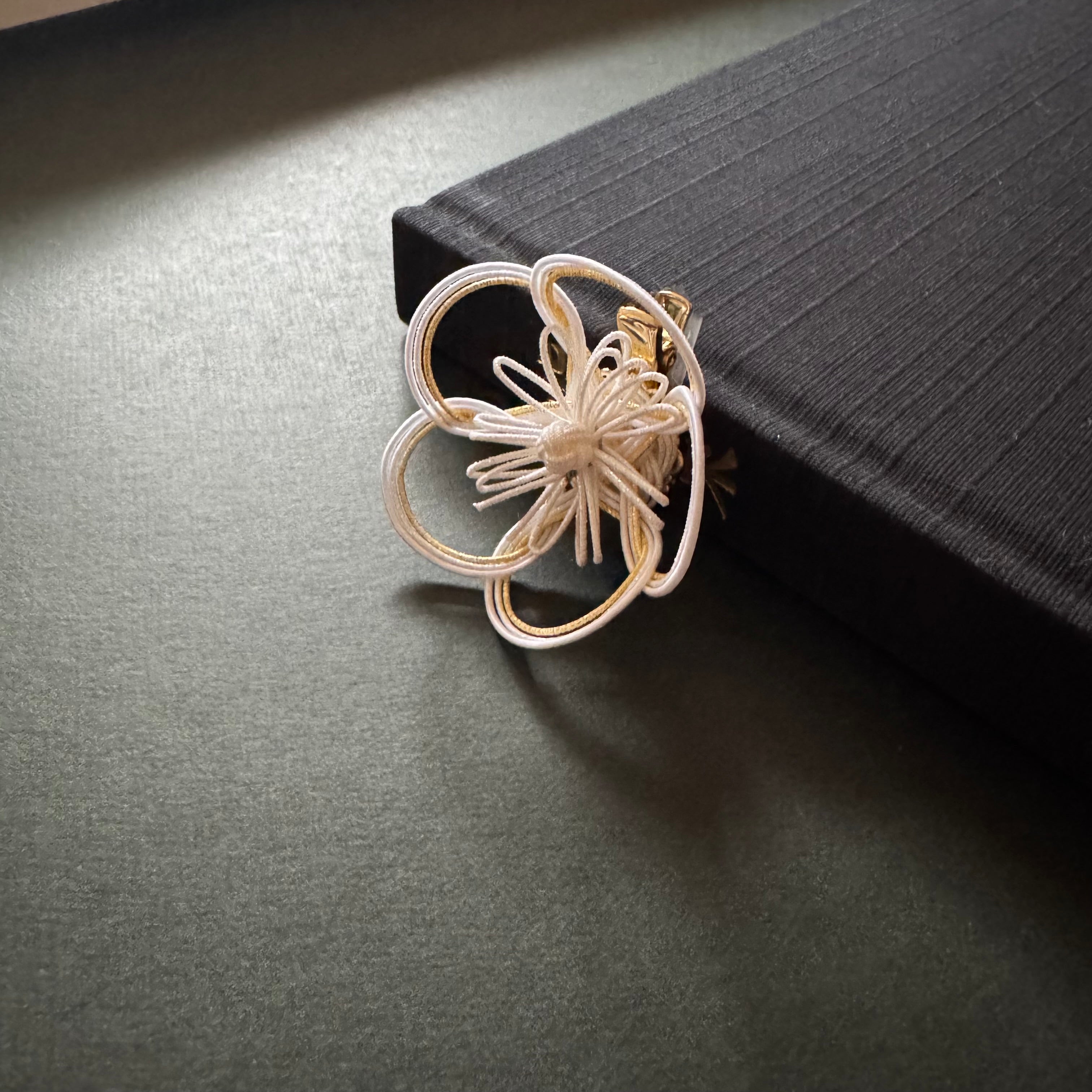
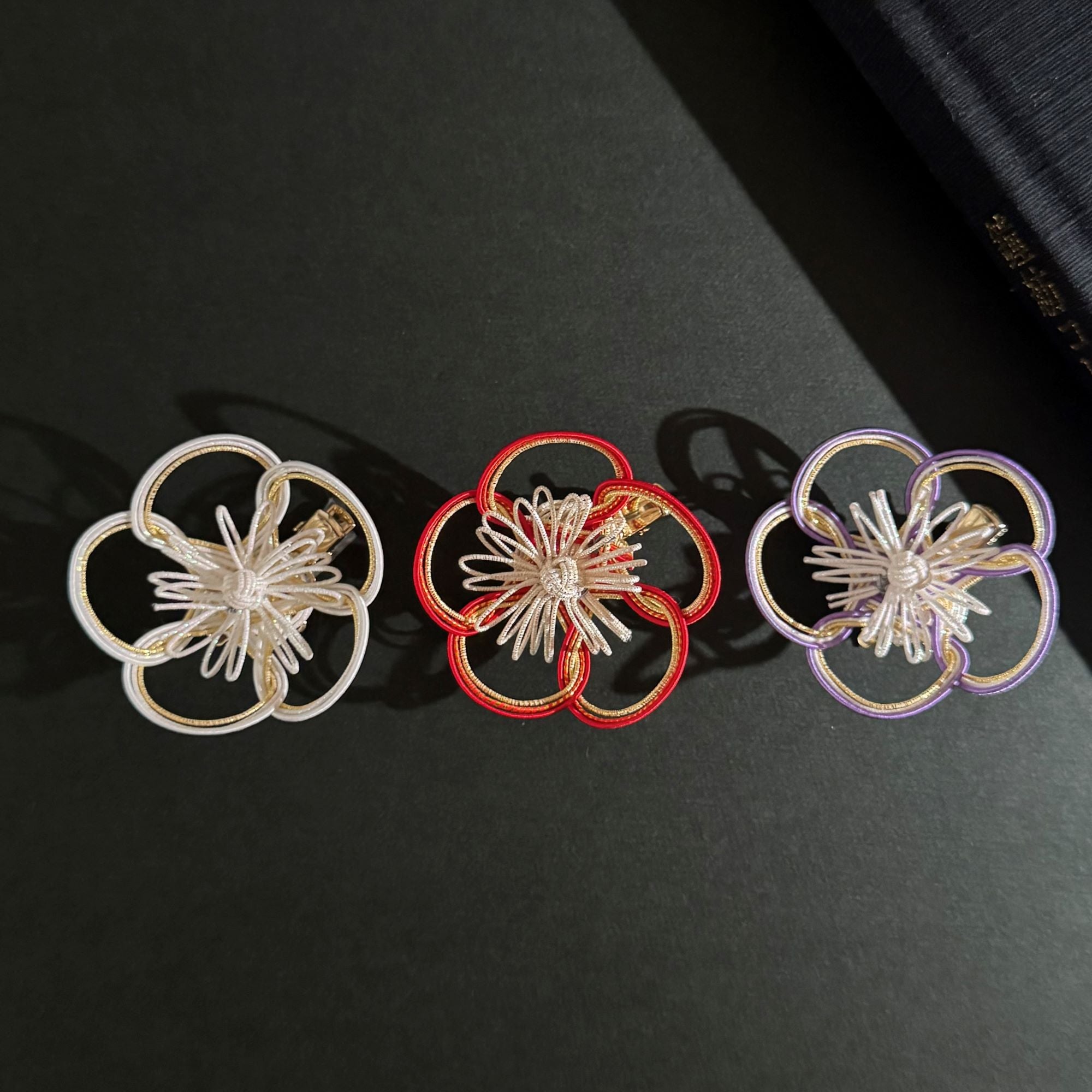
Plum Blossom Clip -White-
DESCRIPTION
DETAILS
SIZE
MATERIAL
ARTISAN
KOGEI
Caution
Plum Blossom Clip -White-
促销价格¥68,476.00
选择选项
Plum Blossom Clip -White-
促销价格¥68,476.00
国家/地区
语言
购物车
您的购物车为空
This ornament is delicately handcrafted using Mizuhiki cords, inspired by the plum blossom, a flower deeply cherished in Japan.
Blooming in the cold of early spring, the plum blossom symbolizes resilience, renewal, and hope, making it a meaningful motif rooted in Japanese culture.
Made with traditional Mizuhiki crafted in Kyoto, this piece reflects a long-standing heritage of tying wishes, celebrations, and heartfelt connections into form.
The ornament reinterprets this traditional material for modern, versatile use.
With its clip design, it can be worn as a hair accessory, or attached to a bag or jacket pocket, allowing you to style it freely according to your outfit and occasion.
A subtle yet elegant accent that brings a touch of Japanese refinement to everyday life.
SIZE
Width:5.5cm Depth : 1.0cmHeight:5.5cmWeight:4g
MATERIAL
PaperClip: Iron with plated finish
MIZUHIKI MOTOYUI GENDA
MIZUHIKI / JAPANESE DECORATIVE KNOTS
About 1,400 years ago / 600s / Asuka Period (592–710)
Mizuhiki is traditionally linked to ceremonial cords attached to gifts brought back by Japanese envoys from China. From court gift etiquette it spread through warrior and merchant society, evolving into thin paper cords whose colors and knots communicate whether an occasion is a wedding, birth, memorial or other event.
In Japan, mizuhiki works like a visual language for gifts. A knot that should not be repeated is used for marriage, while an easily retied bow suits celebrations that may happily happen again. The knot itself conveys meaning before the package is opened.
Mizuhiki began as part of wrapping, yet the knot eventually became the main object. Paper cords can be transformed into cranes, turtles, pine branches and other three-dimensional forms, and today the technique appears in jewelry and art. A culture of packaging has effectively evolved into sculpture.
Individual Differences
As each piece is individually handcrafted, slight variations in color, pattern, shape, and texture may occur. These subtle differences are a natural characteristic of handcrafted works, making each piece truly unique. We hope you will enjoy these individual variations as part of the beauty and character of Japanese craftsmanship.
Production Time
If an item is not currently in stock, it may be made to order by the artisan. As each piece is carefully handcrafted, production may take several months depending on the item and the artisan's schedule. We appreciate your patience and understanding.
选择选项