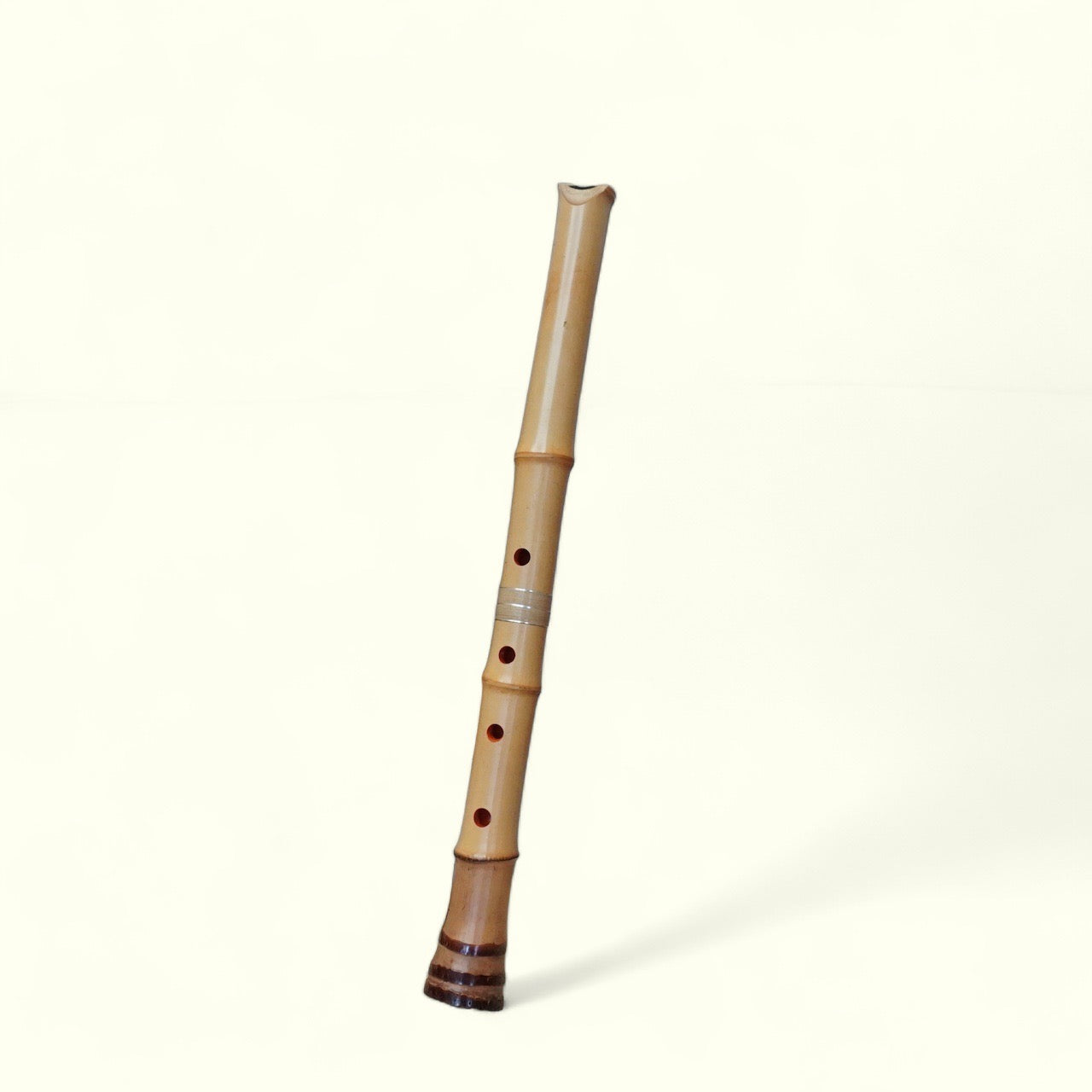
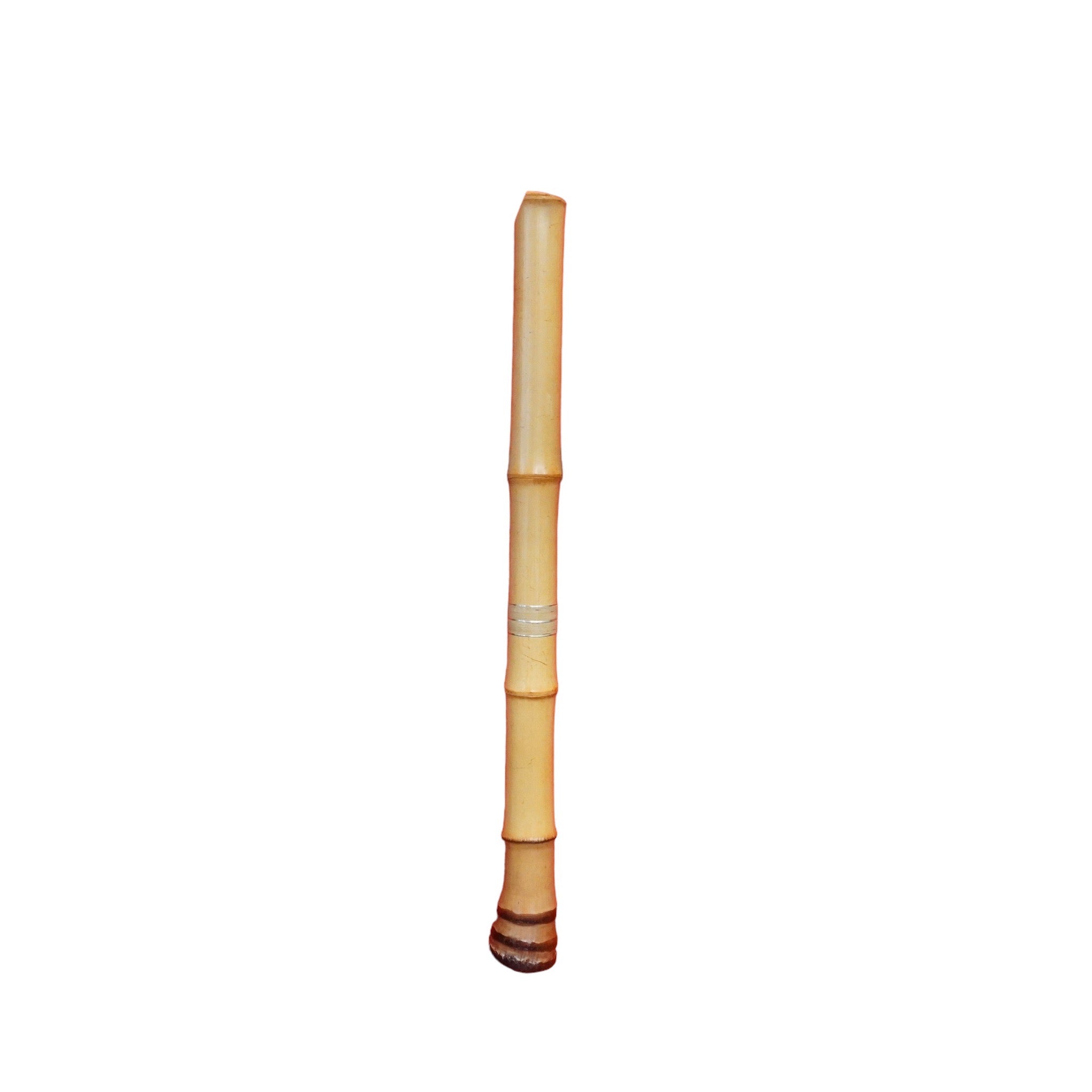
SHAKUHACHI / JAPANESE BAMBOO FLUTE
About 1,300 years ago / 700s / Nara Period (710–794)
The ancestor of the shakuhachi reached Japan from continental Asia as a gagaku instrument in the Nara period, then disappeared before returning in different bamboo-flute traditions. In the Edo period, komuso monks of the Fuke school used it as a religious instrument, developing a repertoire of solo honkyoku. After the Meiji Restoration, it entered chamber music and eventually contemporary genres.
In Japan, the shakuhachi stands beside koto and shamisen as a major traditional instrument while also symbolizing music built around breath, silence and space. Today it appears in jazz, film scores and orchestral works, with players active around the world.
The name means “one shaku and eight sun,” about 54.5 centimeters, though many other lengths exist. With only five finger holes, the instrument can still produce subtle microtones because pitch is shaped dramatically by breath angle, lip position and movement of the jaw.