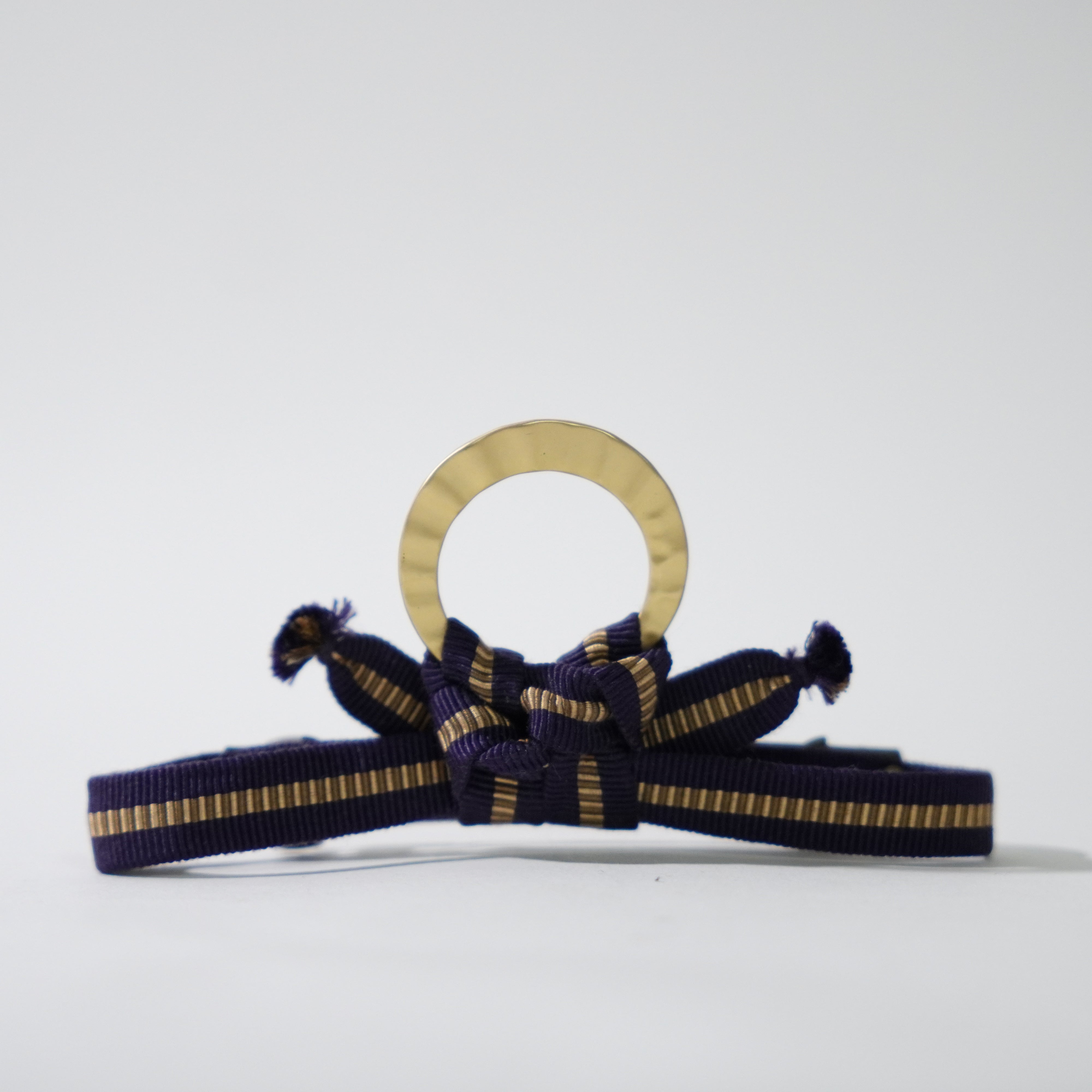
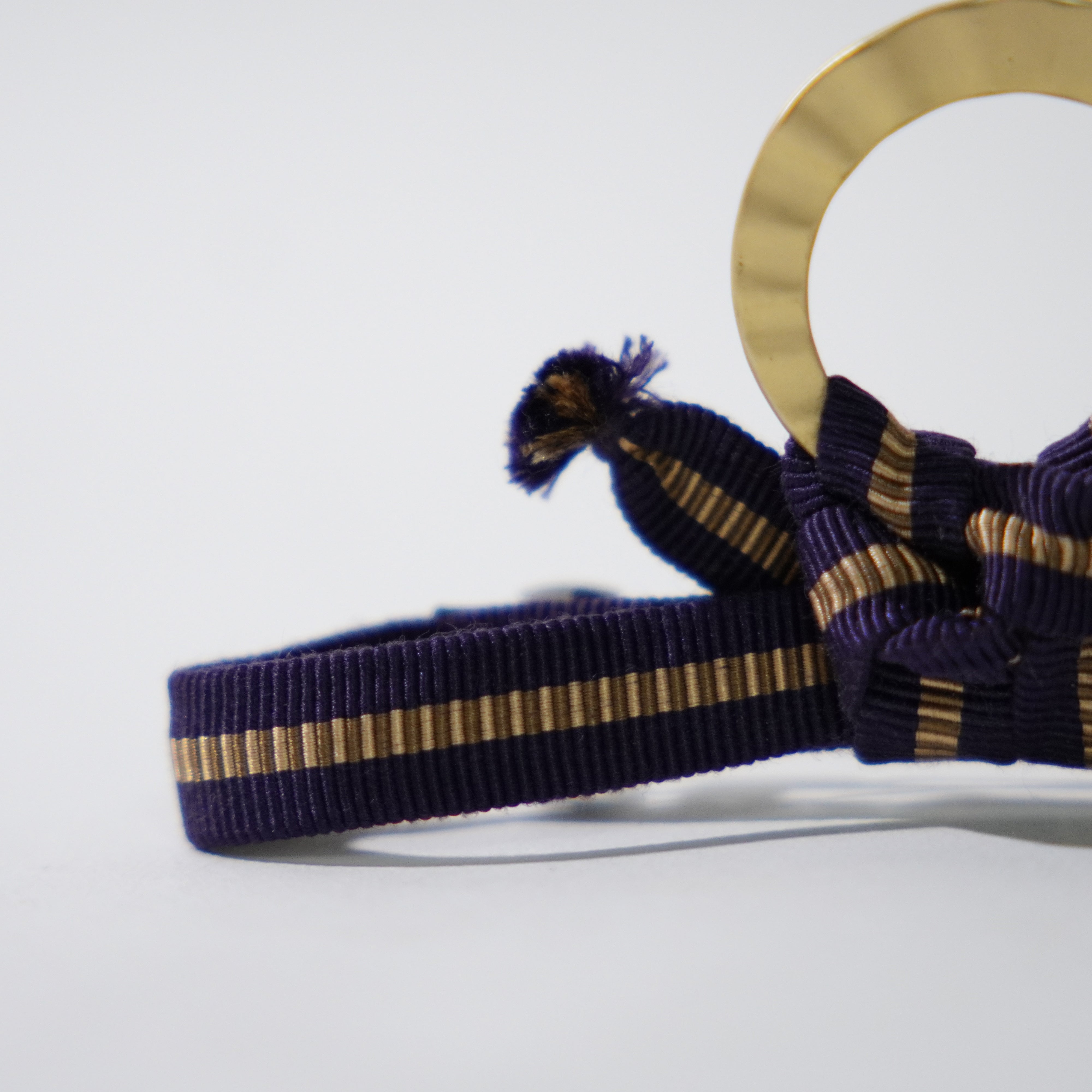
SANADAHIMO / JAPANESE BRAIDED CORD
About 500 years ago / 1500s / Sengoku Period
Sanada-himo is a flat, densely woven cord traditionally made from cotton or silk. It is associated with practical military and transport uses in the Sengoku period and became firmly established in the Edo era as the cord used to tie paulownia boxes for valuable tea utensils.
In Japan, the name suggests a cord that is narrow but exceptionally strong. Because it stretches little and holds knots securely, it appears not only on tea boxes but in belts, bags and contemporary straps, combining decoration with function.
In tea culture, the color and stripe pattern of the cord can help identify a school, maker or provenance. The cord therefore acts as more than packaging: in some contexts it functions almost like a brand label or authentication marker wrapped around the box.